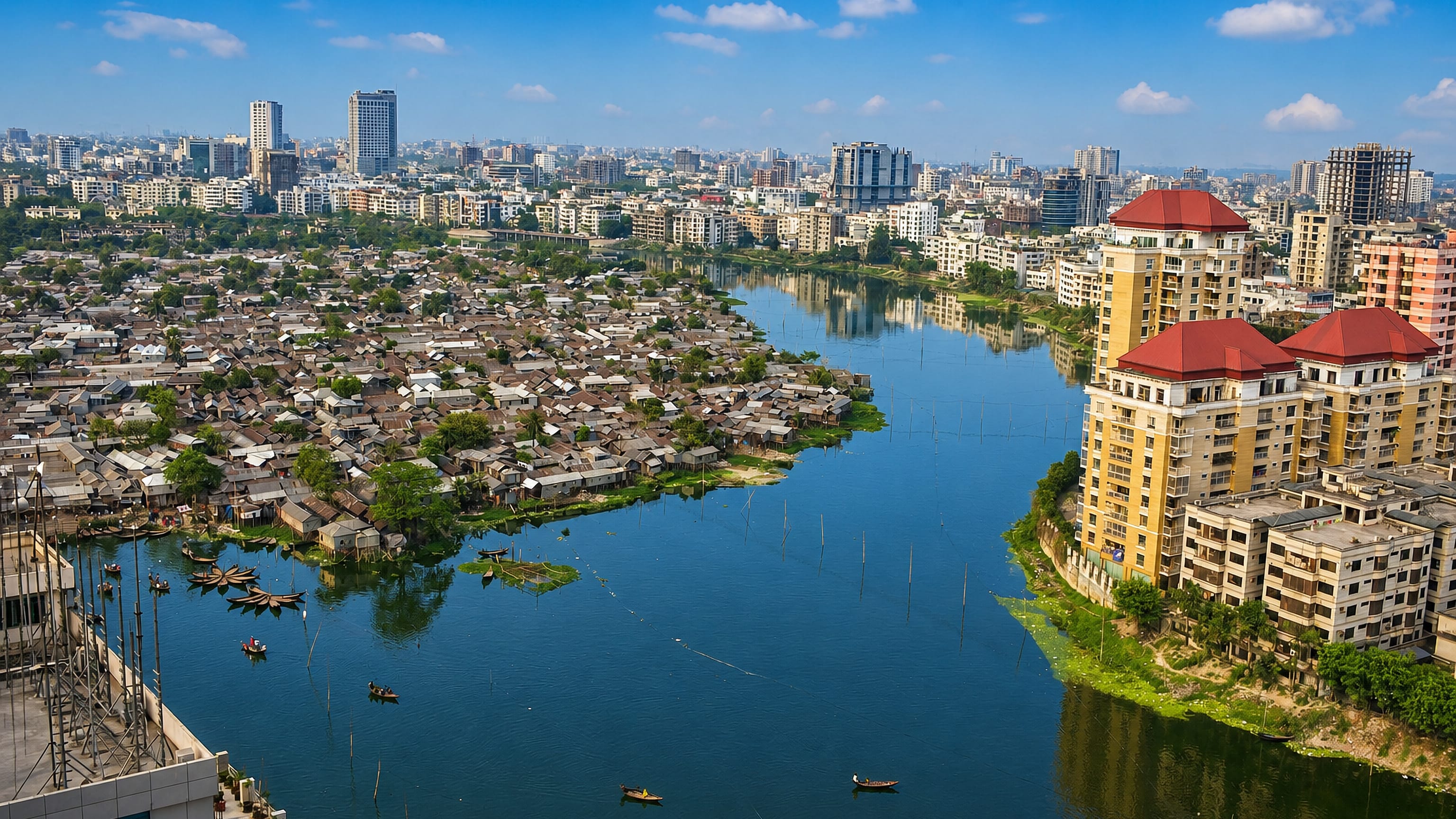
Bangladesh: Regions, Cities & Travel Guide
Bangladesh is a country in South Asia on the Bay of Bengal, bordered by India and Myanmar, a land of beaches and forests centred on Dhaka.
Hotel links are affiliate links: booking through them may earn us a commission, at no extra cost to you. It never affects how places are ranked. How this works


Top destinations in Bangladesh
Cities to start from, then drill into areas and hotels.
 Bangladesh
Dhaka
Dhaka is the capital of Bangladesh, a Bengali city on the Buriganga river, long known as the City of Mosques and the Venice of the East.Where to stay →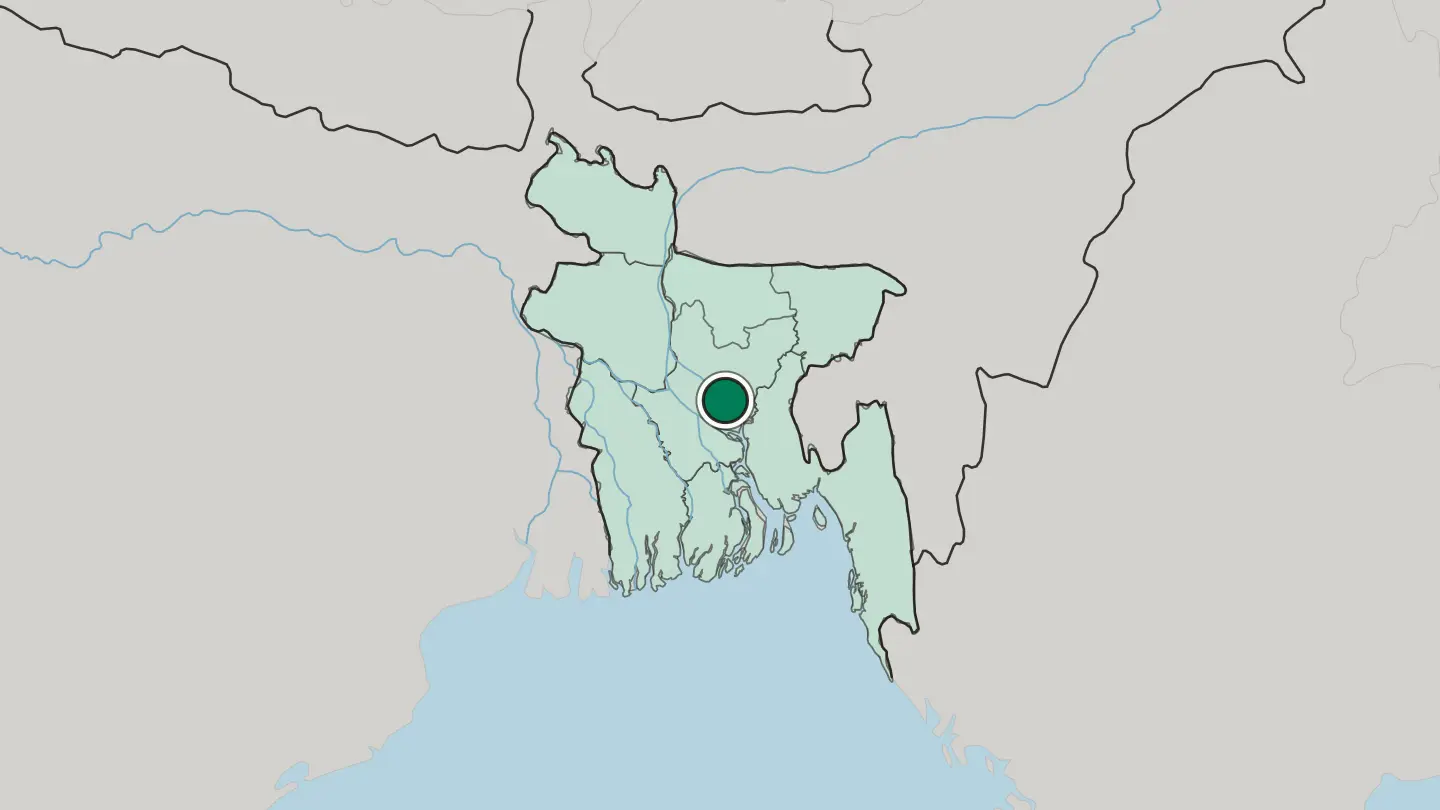
 Bangladesh
Chattogram
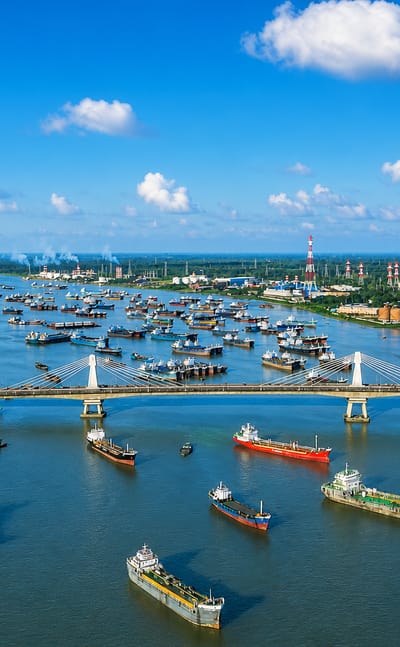
Chattogram is Bangladesh's second-largest city, a port on the Karnaphuli River near the shore of the Bay of Bengal.Where to stay →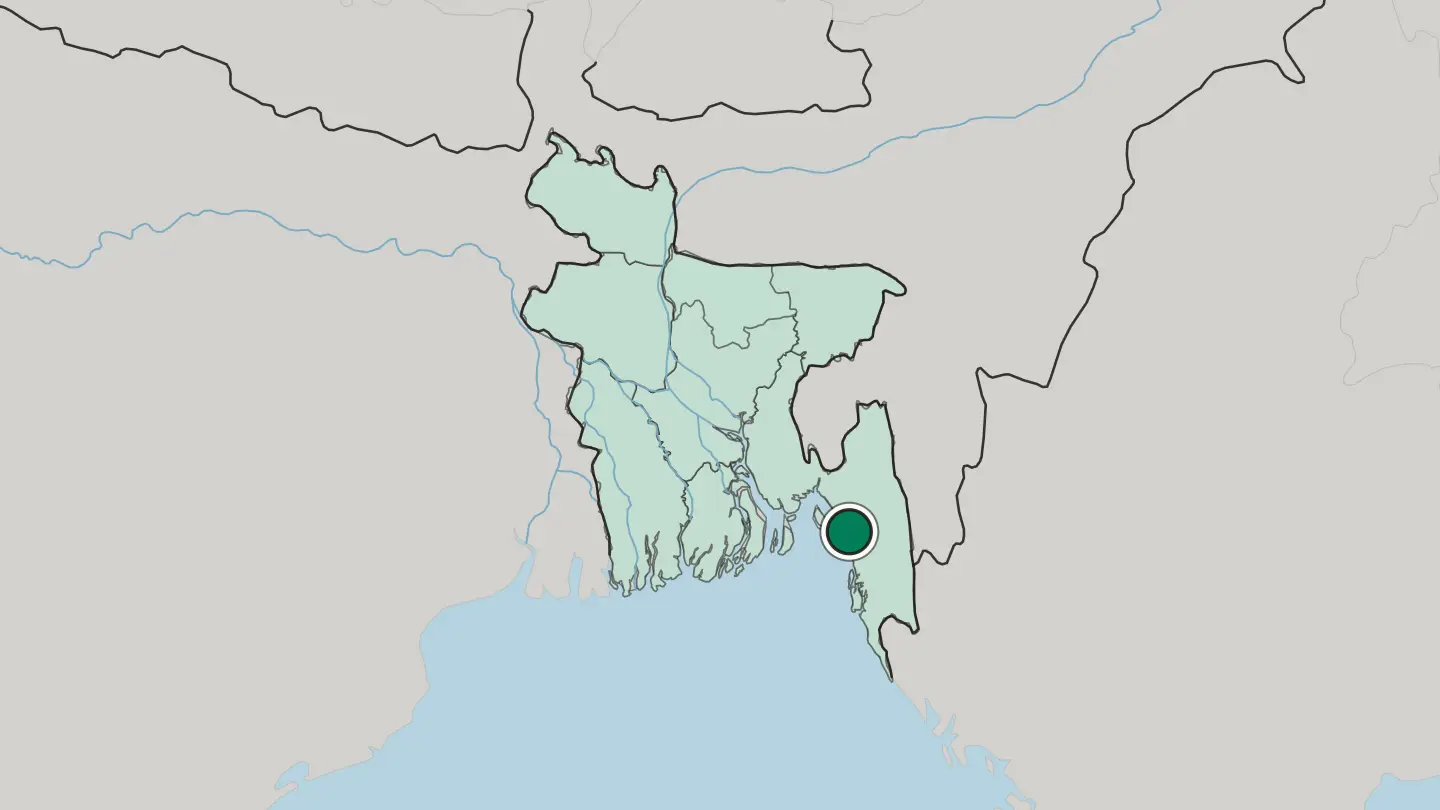
 Bangladesh
Cox’s Bāzār
Cox's Bazar is a coastal town of southeastern Bangladesh, famed for the longest natural sea beach in the world along the Bay of Bengal.Where to stay →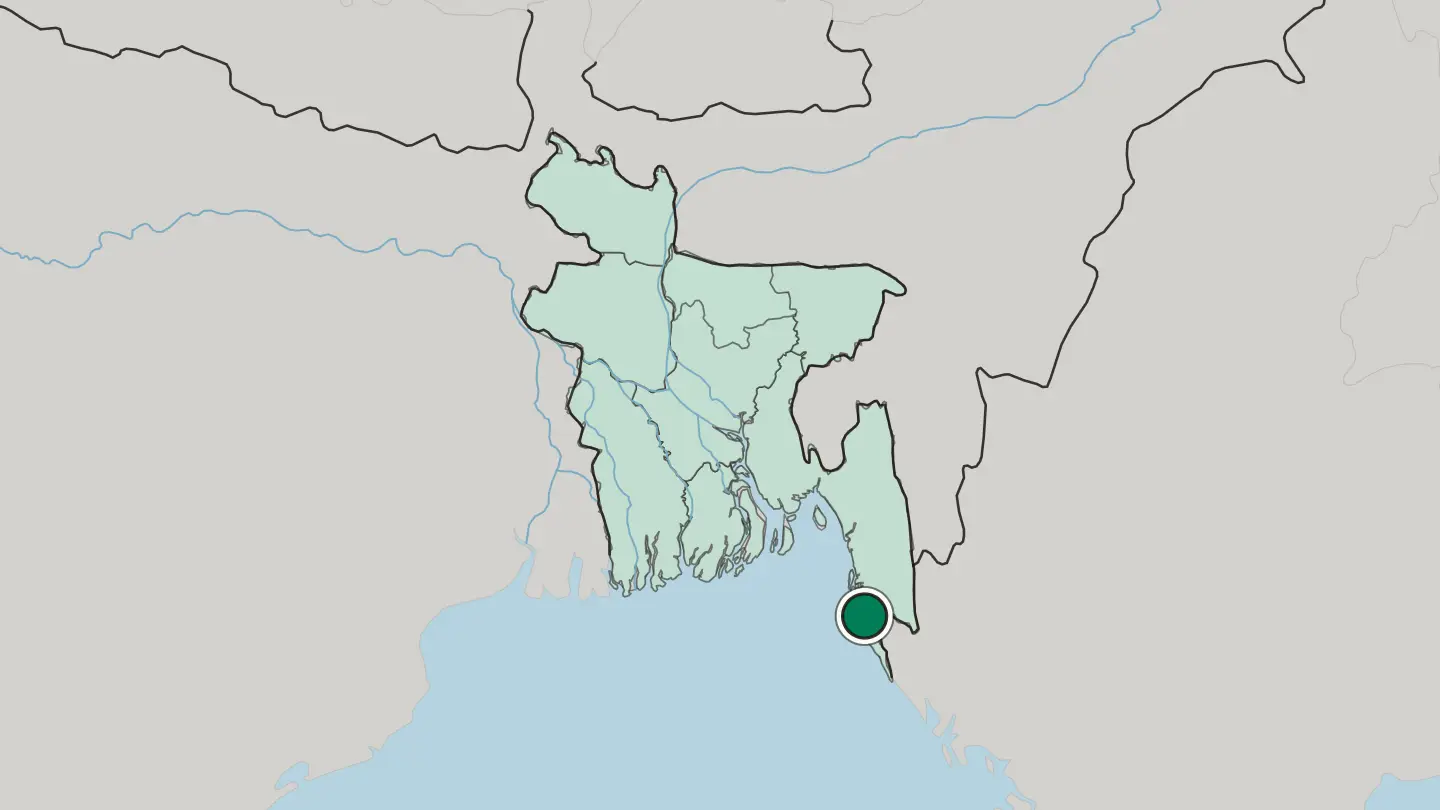
 Bangladesh
Sylhet
Sylhet is a tea-country city of northeastern Bangladesh, a shrine town on the Surma river ringed by green tea gardens below the hills of the border.Where to stay →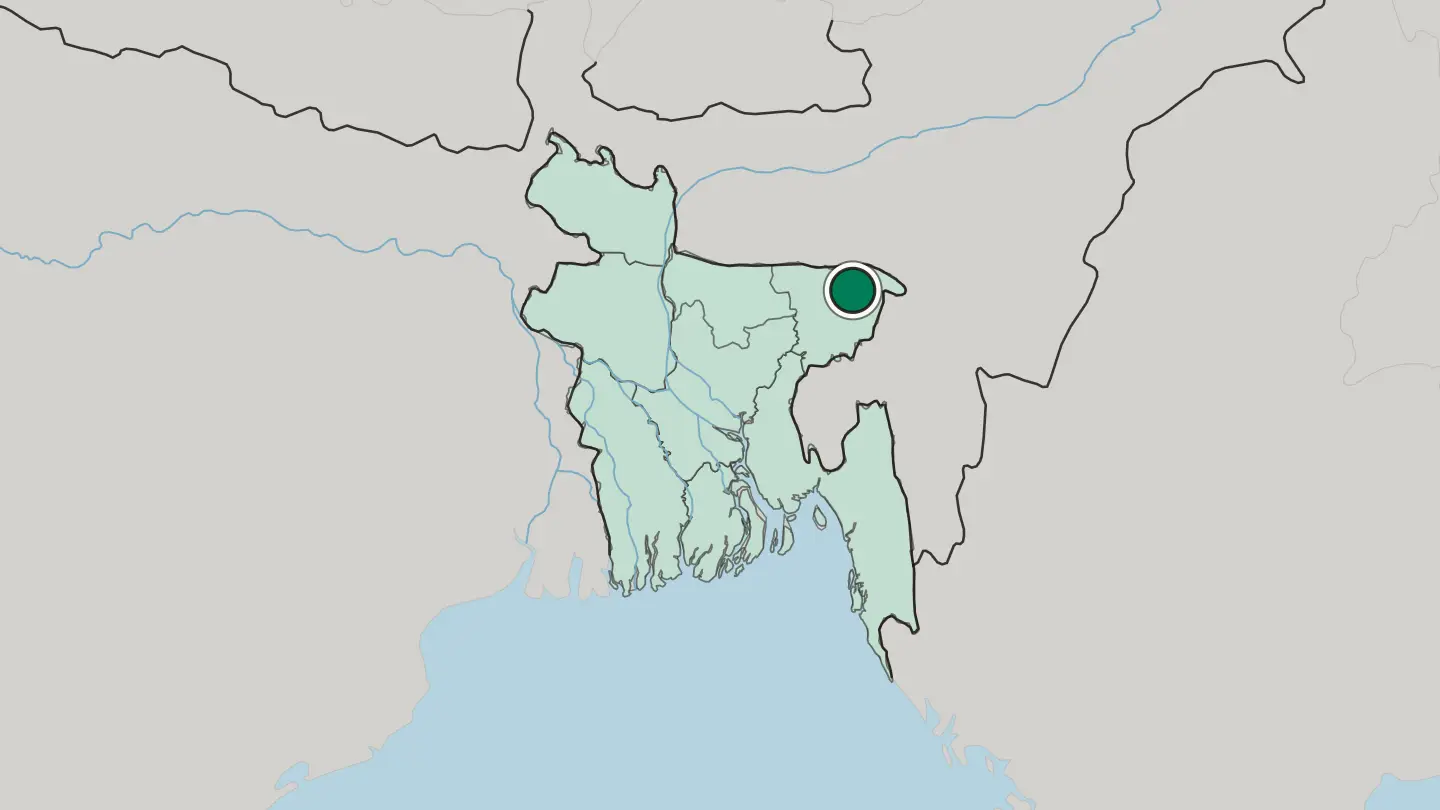
 Bangladesh
Rajshahi
Rajshahi is a city of northwest Bangladesh on the Padma, the country's Silk City, known for its mango orchards, terracotta temples, and riverside quiet.Where to stay →
 Bangladesh
Mymensingh
Mymensingh is a city of north-central Bangladesh on the old Brahmaputra, an old zamindar town of palaces and folk ballads, near the Garo hills.Where to stay →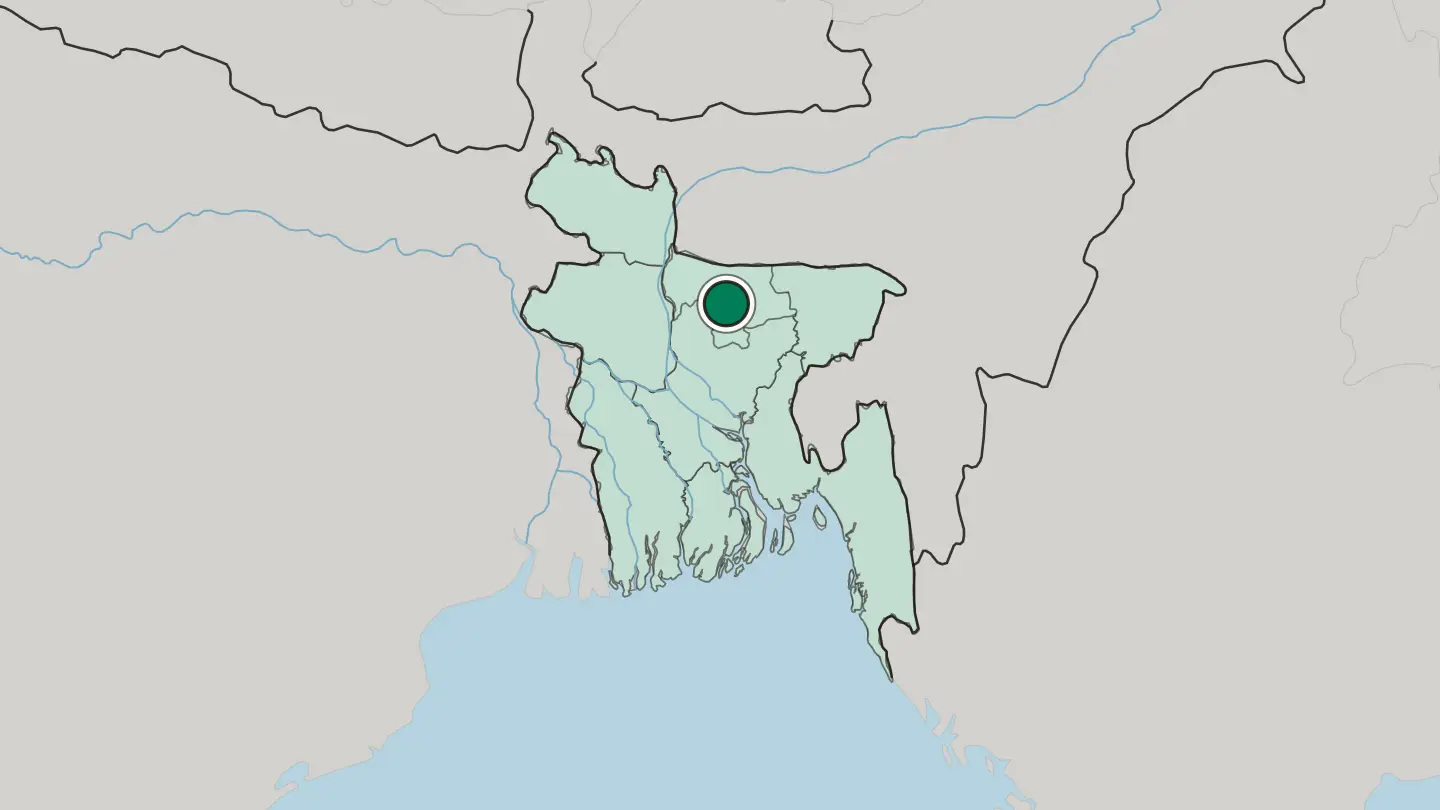
 Bangladesh
Comilla
Comilla is a city in eastern Bangladesh, famous for the ancient Buddhist ruins of Mainamati in the low hills nearby.Where to stay →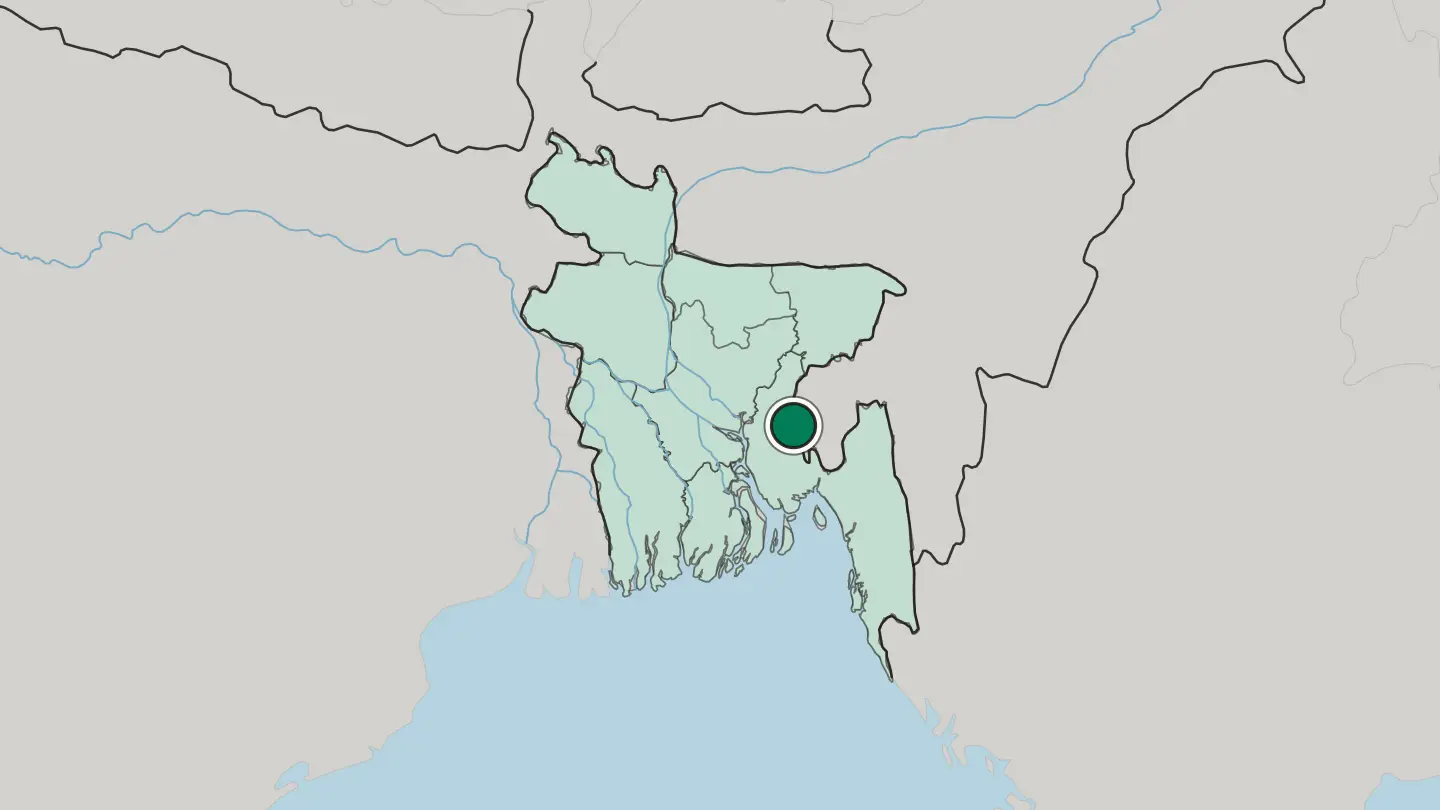 Bangladesh
Khulna
Khulna is a city of southwest Bangladesh on the Rupsha river, the base for the Sundarbans, the mangrove forest where the Royal Bengal tiger still roams.Where to stay →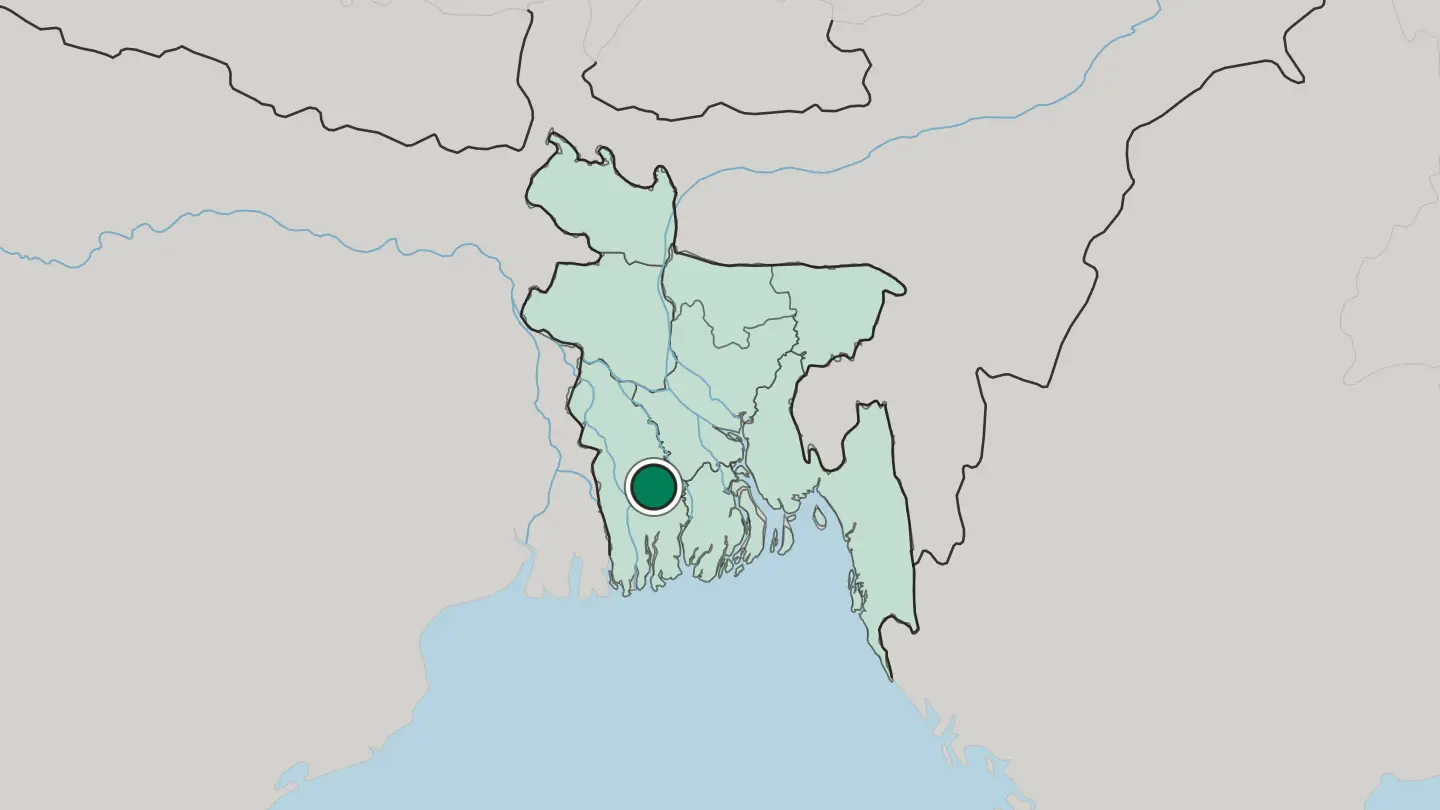
 Bangladesh
Brāhmanbāria
Brāhmanbāria sits on the Gangetic Plain farmland of eastern Bangladesh, the seat of Brahmanbaria District in the Chittagong Division.Where to stay →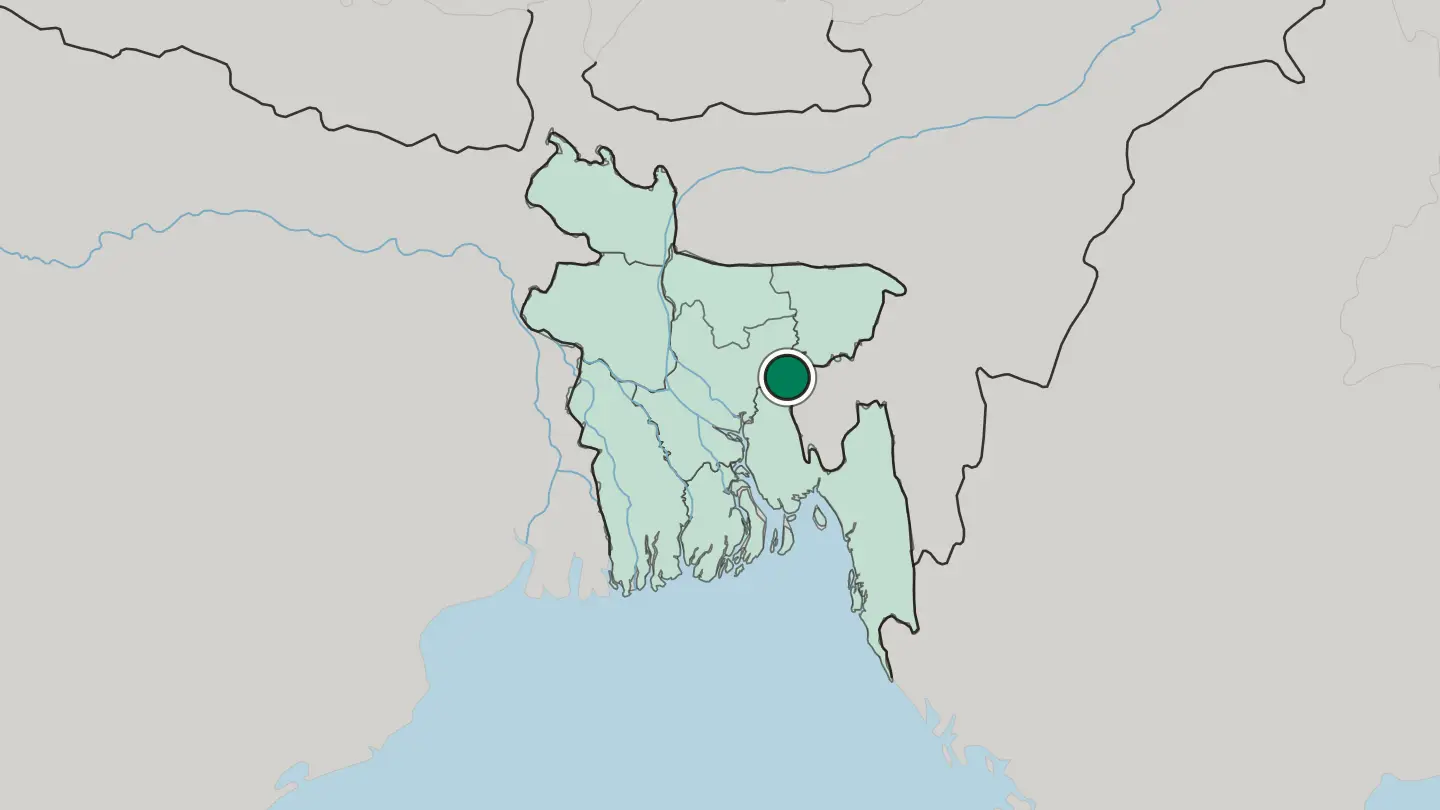
Hotel links are affiliate links: booking through them may earn us a commission, at no extra cost to you. It never affects how places are ranked. How this works
Regions of Bangladesh
 Bangladesh
Barisal Division
Barisal Division is Bangladesh's river country, a delta of rice, canals and floating guava markets south of Dhaka.Towns & cities →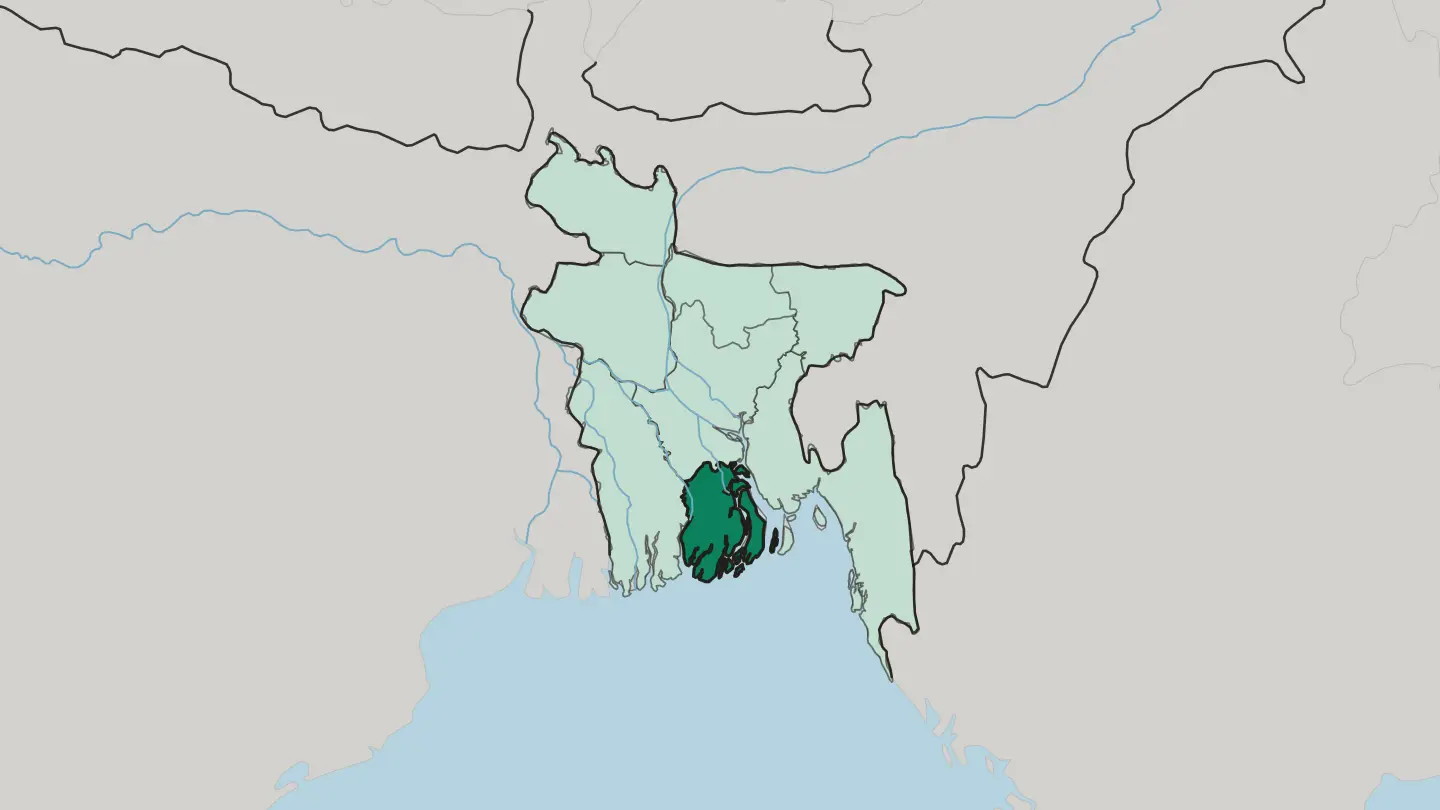 Bangladesh
Chittagong
Chittagong is Bangladesh's south-eastern division: a busy port, hill country and the long Cox's Bazar beach.Towns & cities →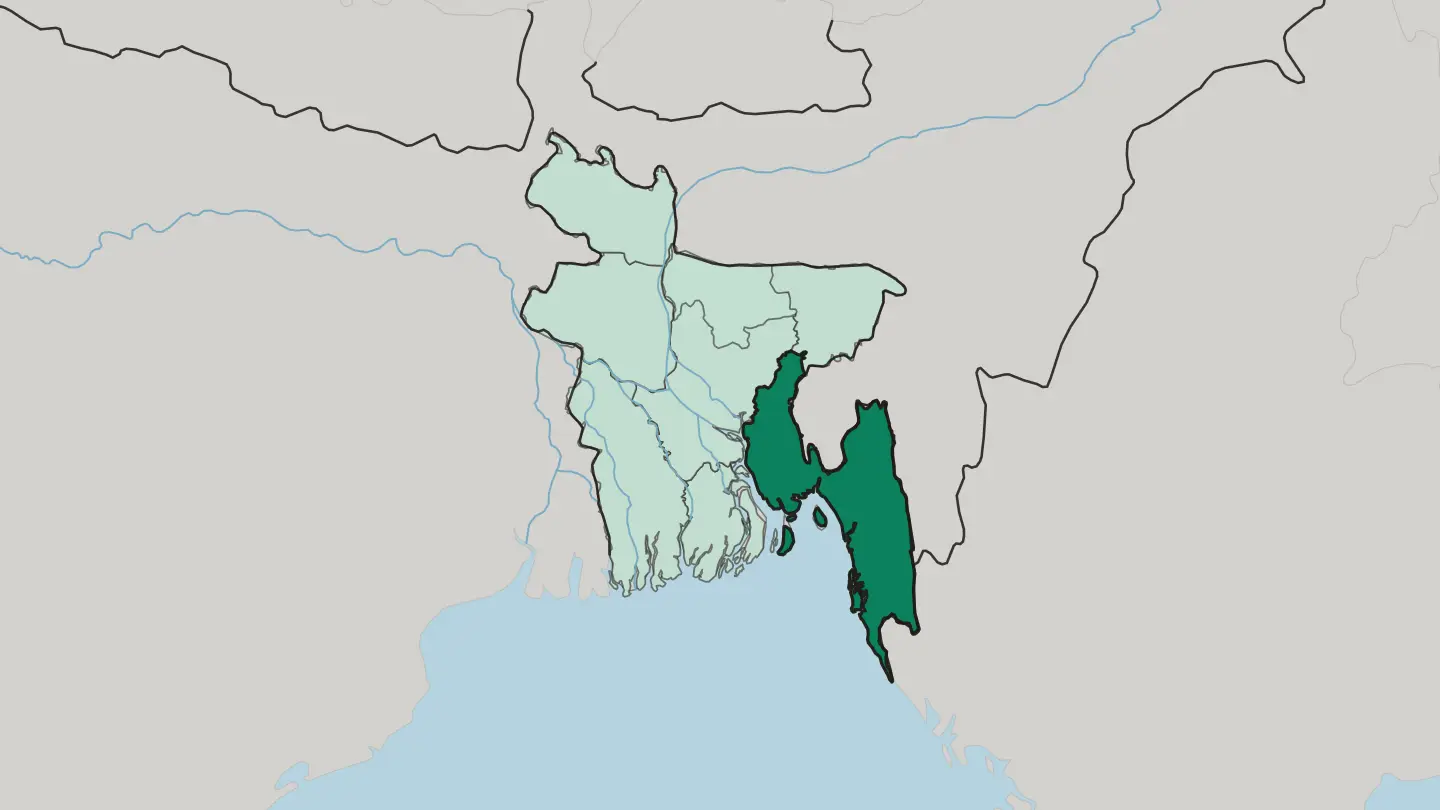 Bangladesh
Dhaka Division
Dhaka Division is one of the major administrative divisions of Bangladesh, gathered around the national capital, Dhaka.Towns & cities →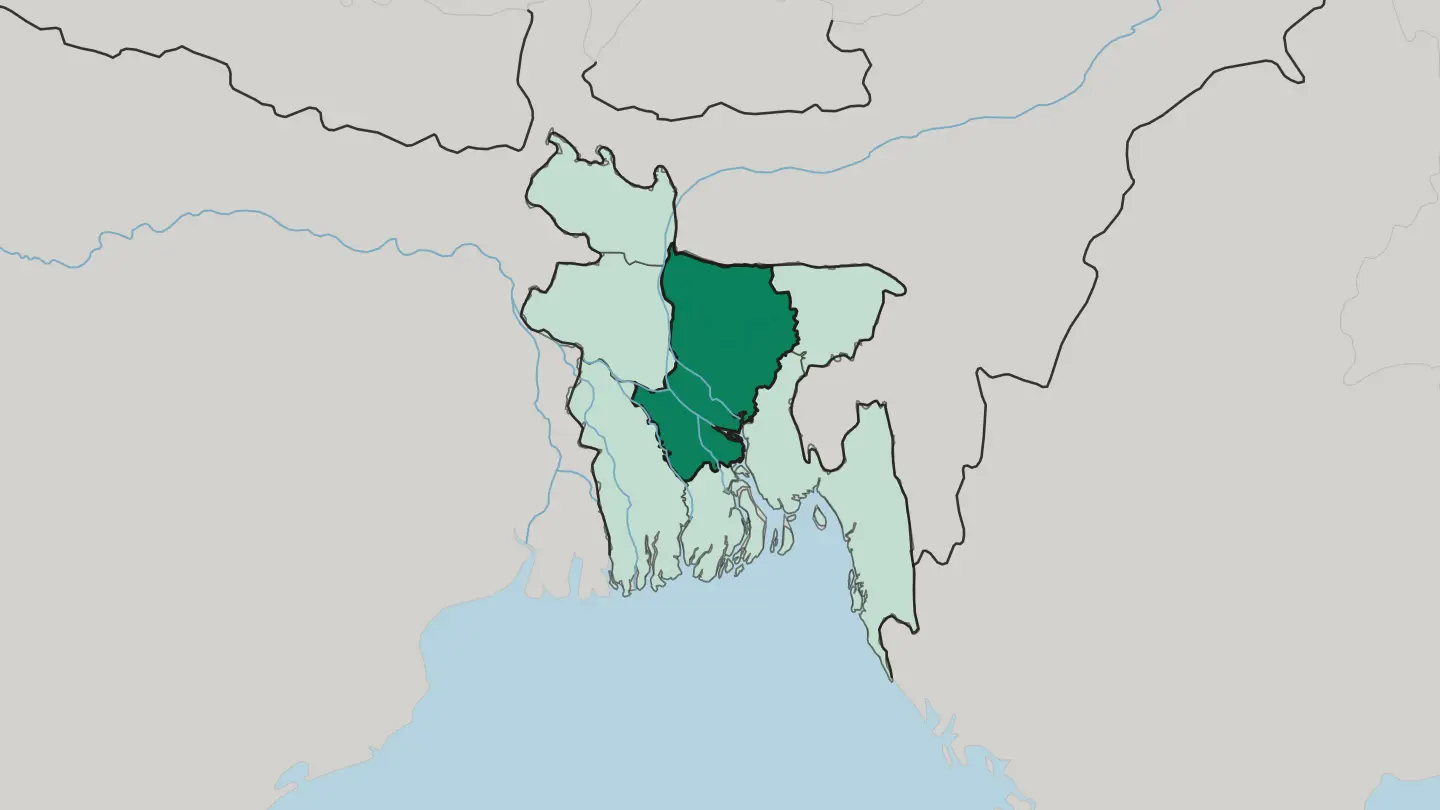
 Bangladesh
Khulna Division
Khulna Division fills the south-west corner of Bangladesh, where the Sundarbans mangroves meet the Bay of Bengal.Towns & cities →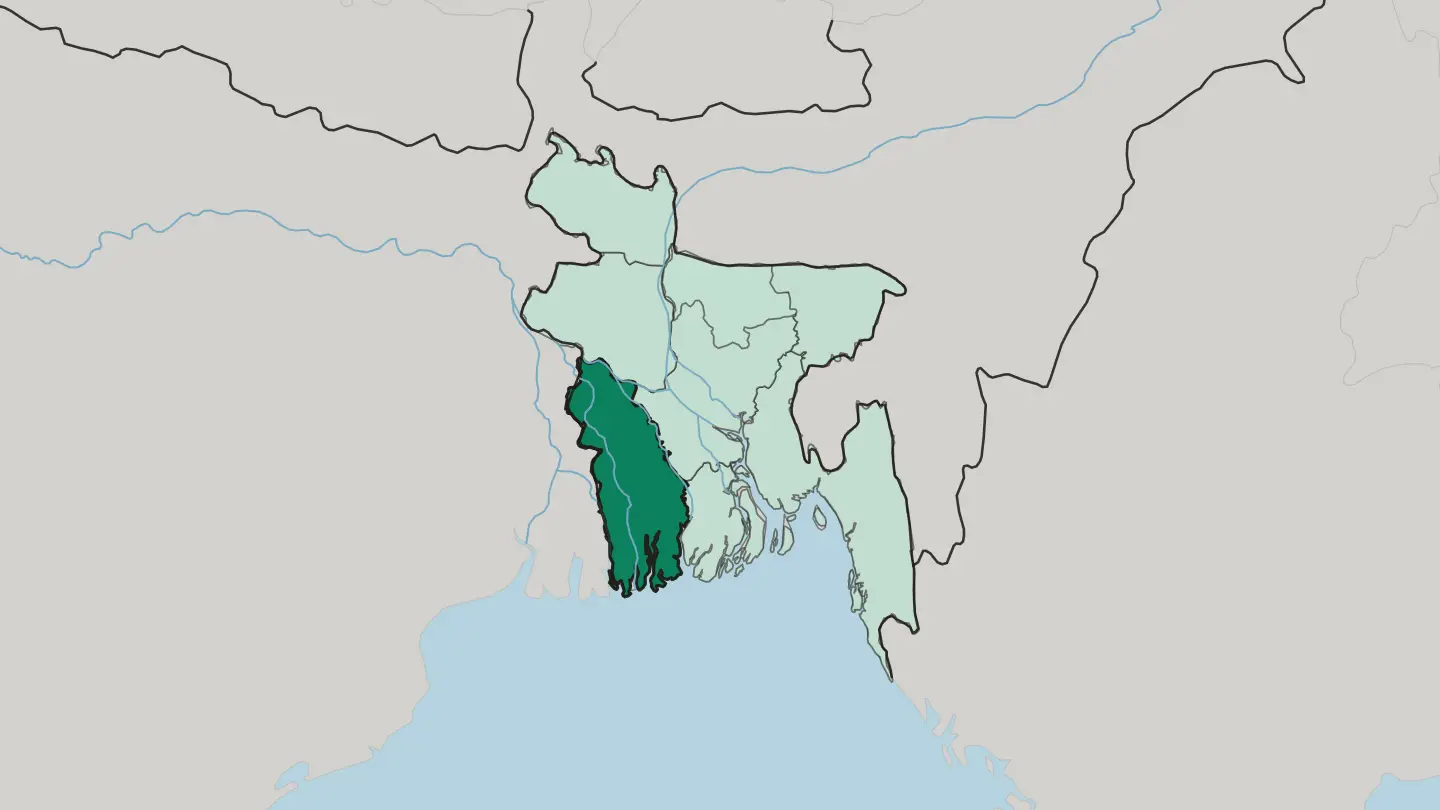 Bangladesh
Mymensingh Division
Mymensingh Division fills north-central Bangladesh, a plain of paddy and old river channels below the Garo Hills border with India.Towns & cities →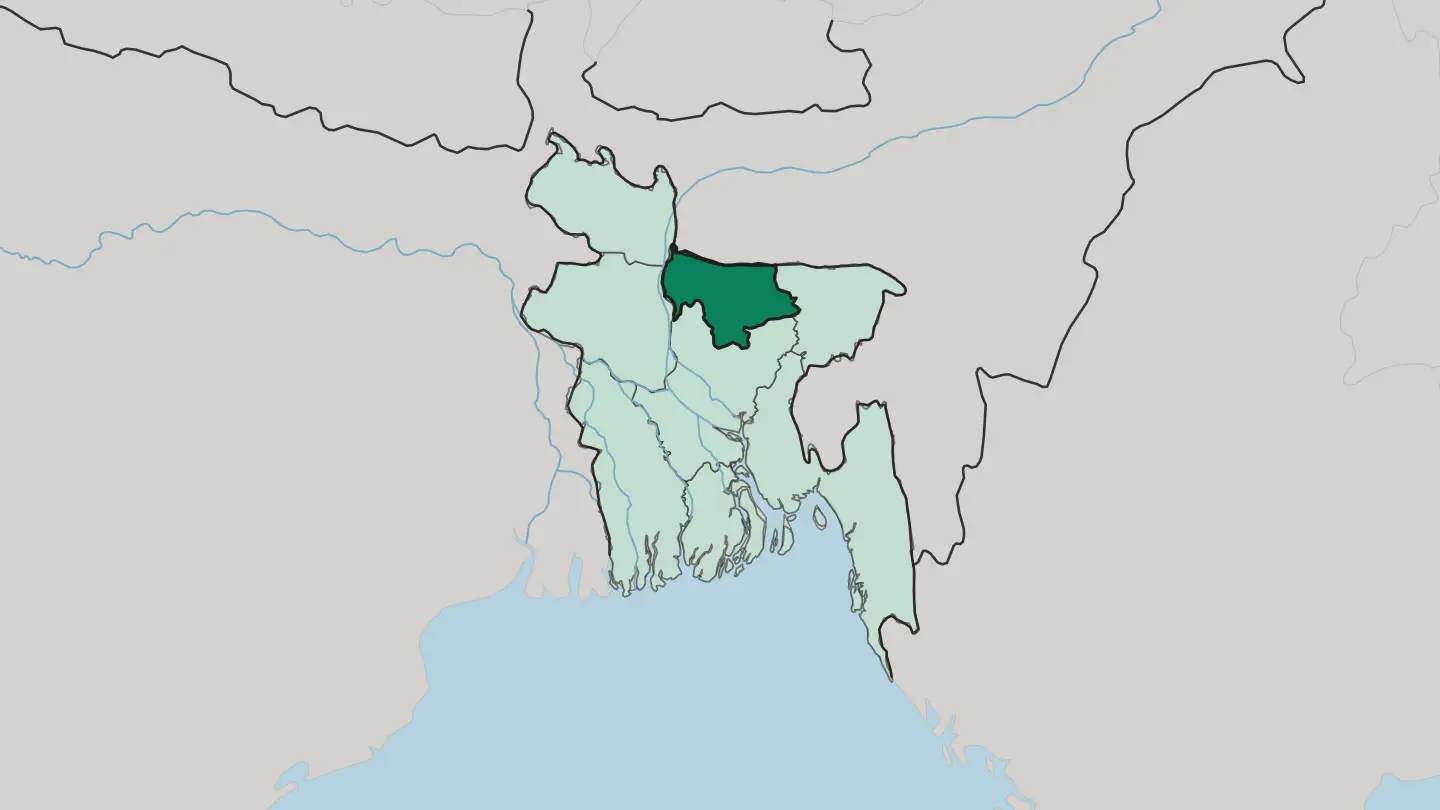 Bangladesh
Rajshahi
Rajshahi is Bangladesh's silk and mango region, spread across the Barind terrace on the north bank of the Padma River.Towns & cities →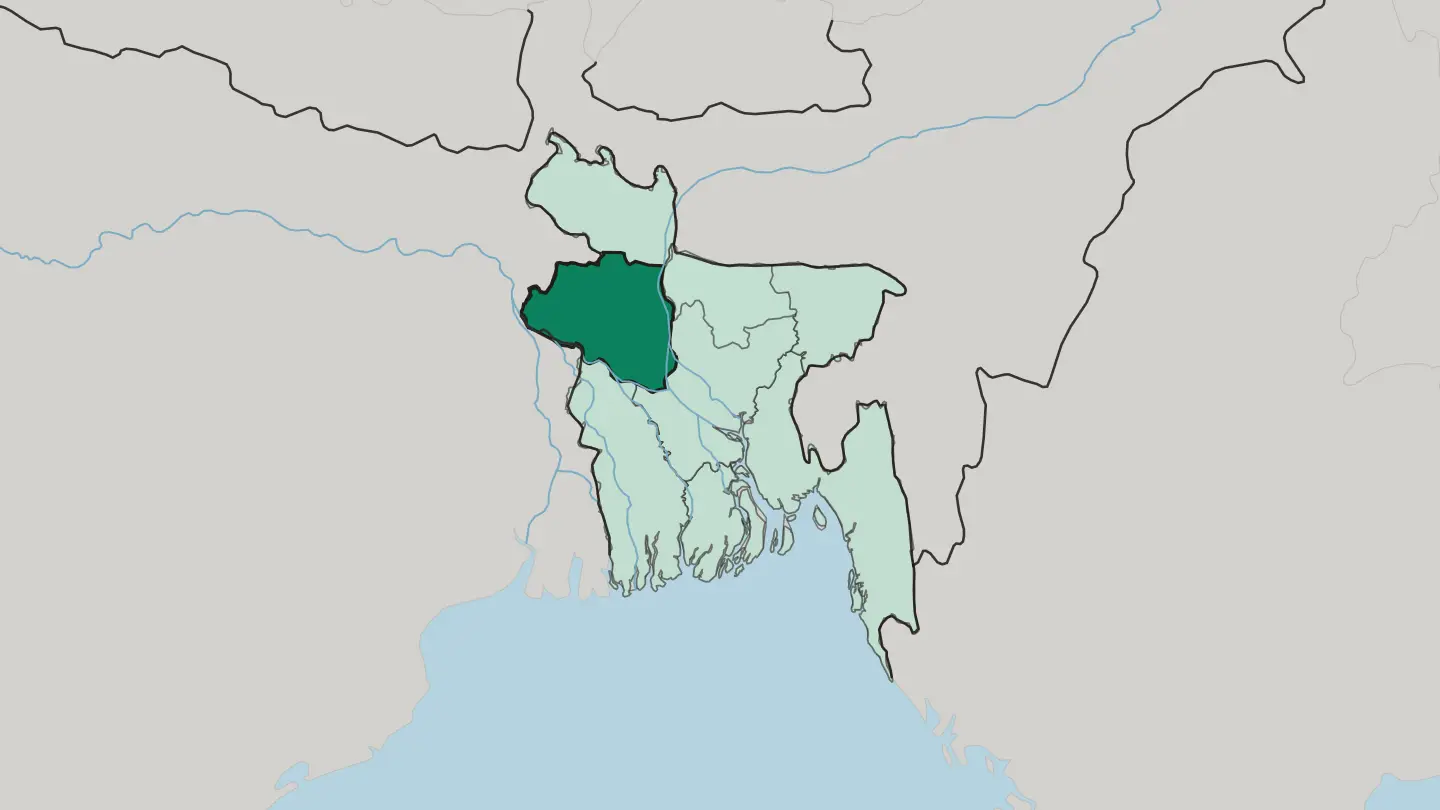
 Bangladesh
Rangpur Division
Rangpur Division is the northernmost of Bangladesh, a flat farming country between the Teesta and Jamuna rivers.Towns & cities →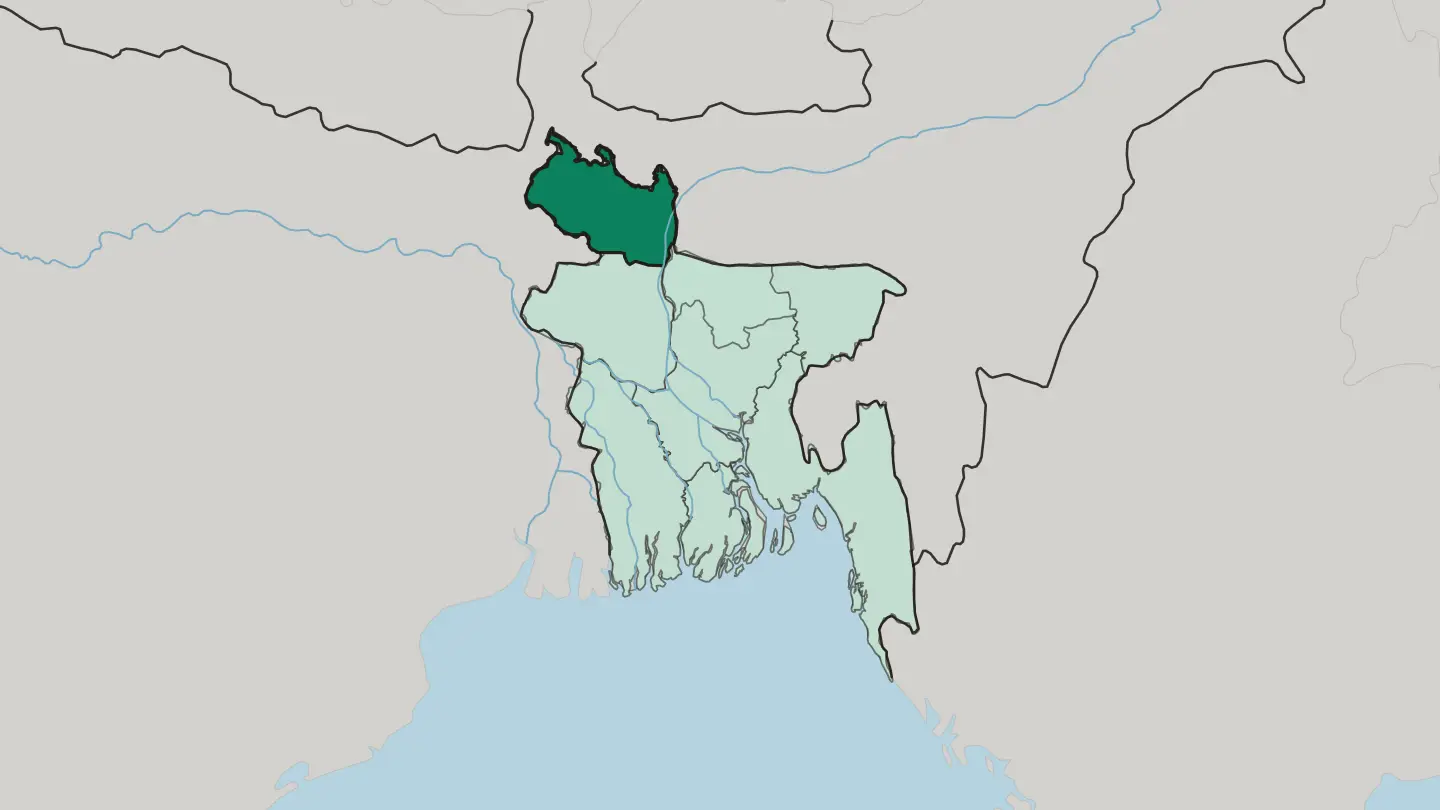 Bangladesh
Sylhet Division
Sylhet Division is Bangladesh's tea country in the far north-east, where hills, rivers and haor wetlands meet the Meghalaya border.Towns & cities →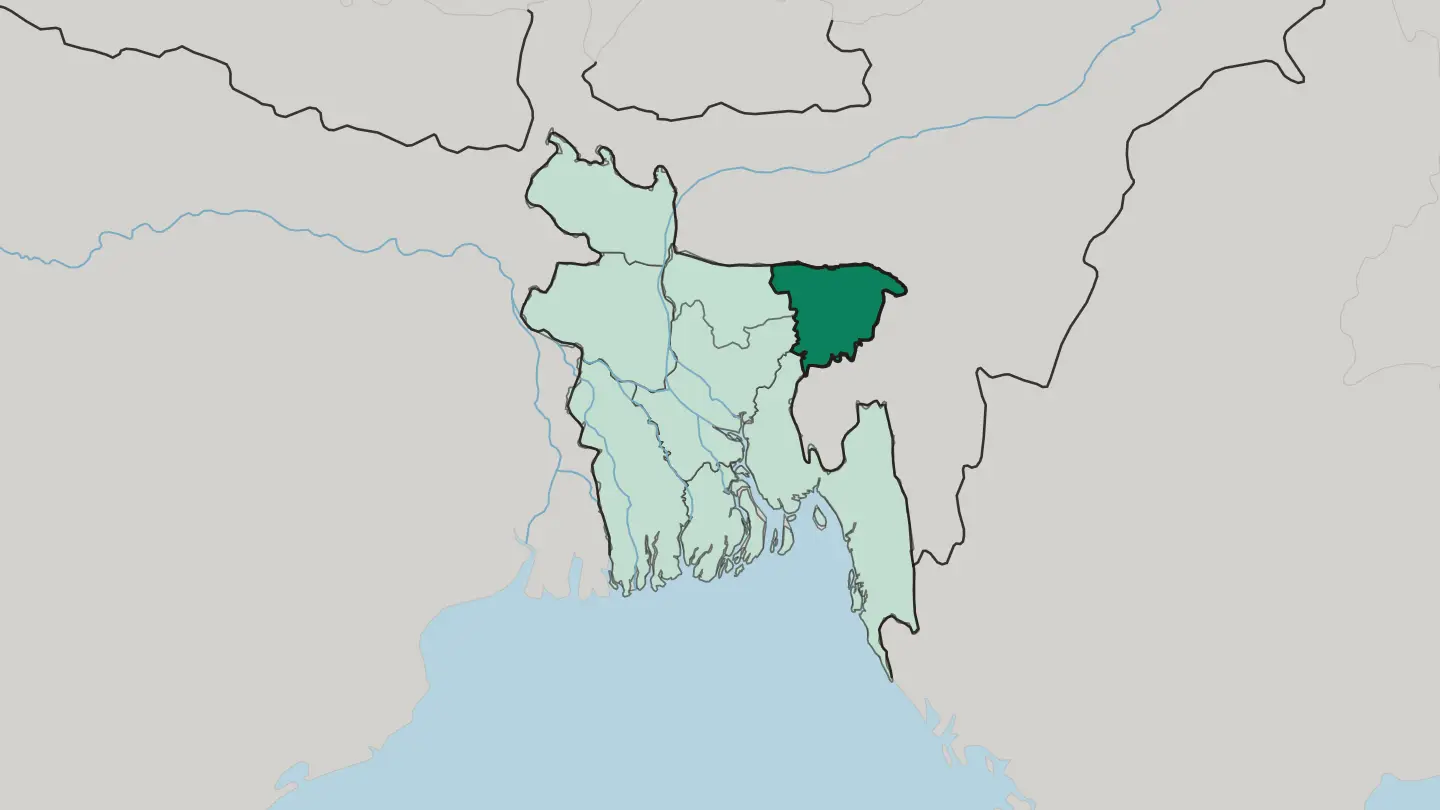
Explore by experience
Not sure which place? Start from how you want to travel.

About Bangladesh
What is Bangladesh known for?
Bangladesh sits on the edge of the Indian subcontinent, facing the Bay of Bengal. The country draws travellers for its long coastline, pristine beaches, deep forests, and old archaeological sites, along with markets and many sites of religious importance. Its people are known as warm and hospitable.
Dhaka, the capital and largest city, anchors trade and culture, while the port of Chittagong keeps the country tied to the sea.
Where is Bangladesh?
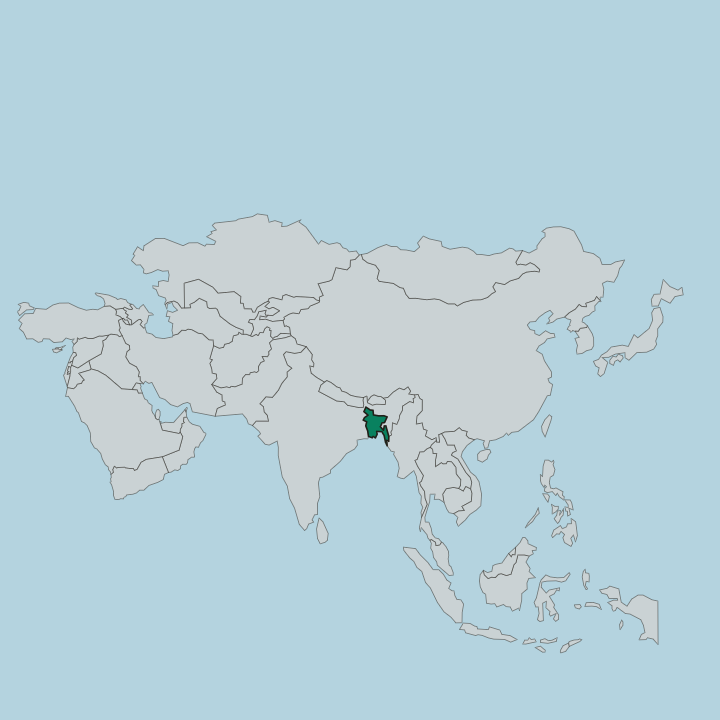
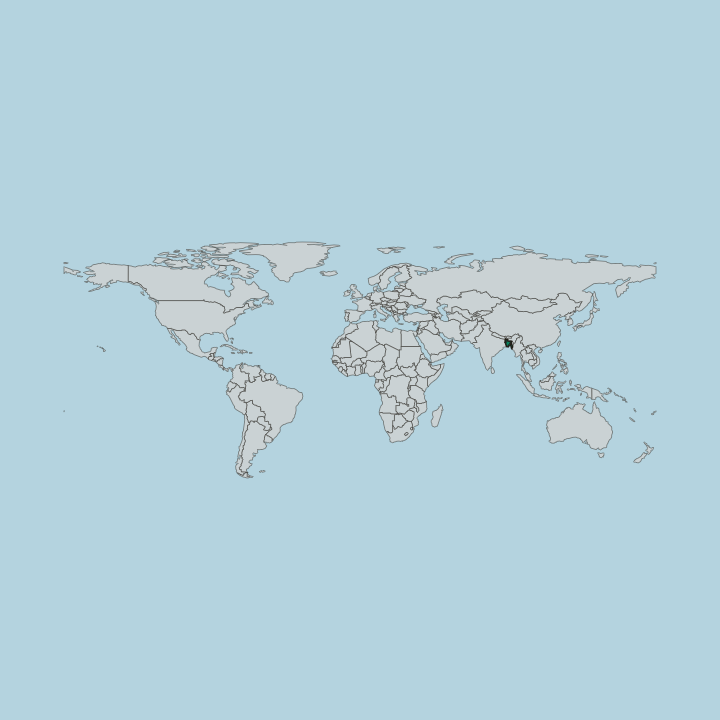
Bangladesh lies in South Asia, on the edge of the Indian subcontinent. India wraps around it to the north, west, and east, while Myanmar meets it along the south-east. To the south the land gives way to the Bay of Bengal, a long coastline that defines the country's lower edge.
The frontiers are intricate. A narrow band called the Siliguri Corridor separates the country from Bhutan and Nepal, while the Indian state of Sikkim stands between it and China to the north. The land lies low.
Most of the country sits close to the sea, its coast opening onto pristine beaches and belts of forest along the Bay of Bengal. Dhaka stands near the centre as the capital and largest city, the hub around which the rest of the country turns. Chittagong holds the south-eastern coast as the main port, facing Myanmar and the open water of the Bay of Bengal.
The two cities anchor the map, one inland and one on the sea. Beyond them stretch farmland, forest, and the beaches of the southern shore. From the Indian border to the coast of the Bay of Bengal, Bangladesh stays low, green, and close to the water.
What is the history of Bangladesh?
Bangladesh became an independent country in 1971. The land itself has been settled far longer, part of the deep past of the Indian subcontinent. Numerous archaeological sites survive across the country.
They mark old towns, places of worship, and the routes of trade that crossed the region long before its modern borders were fixed. The coast on the Bay of Bengal has drawn people for many centuries. Trade linked the shore to the sea lanes of the Bay of Bengal and to the lands of the Indian subcontinent around it.
The founding of 1971 gave the country its present shape. Dhaka became the capital, the centre of politics, trade, and culture, while Chittagong grew as the main port on the south-eastern coast. Around them the older pattern of village and farmland endured.
Much of what the country holds from earlier ages survives in its archaeological sites and places of religious importance, rather than in grand ruins alone. The change came in one generation. From that long past to the young state of 1971, Bangladesh carries both a very old land and a modern national life.
What is Bangladesh like?
Daily life in Bangladesh turns on its markets, its food, and its people. The country is famed for gracious and welcoming hosts, and its cooking is well regarded across South Asia. Bengali is the shared language, spoken from Dhaka to the far coast, and it carries the culture in poetry, song, and everyday speech.
Markets fill the towns. Around them stand places of worship of several faiths, part of the many sites of religious importance found across the land. The setting shapes the culture as much as the crowds and the markets do.
Life bends toward the water, from the Bay of Bengal in the south to the forests and farmland of the interior, and fishing and farming still order the year. Dhaka gathers the arts, trade, and learning as the capital, while Chittagong brings the character of a port to the south-eastern coast. Beyond the cities lie forests, beaches, and quiet villages that keep older rhythms of work and worship.
Faith, food, and language hold it together. Through all of it, Bangladesh keeps a culture rooted in hospitality and in the land itself.
What is the climate of Bangladesh?
Bangladesh has a warm, subtropical climate shaped by the sea and the monsoon. Long hot summers give way to a heavy rainy season, when moist winds off the Bay of Bengal bring the year's downpours. Winters are short, dry, and mild.
The far coast feels the ocean most, warm and humid through much of the year, while the interior swings a little wider between the seasons. Water and warmth set the tone.
How do you get to Bangladesh?
Bangladesh is reached by land, air, and sea. India rings the country on three sides, and its border crossings carry much of the overland traffic, while Myanmar meets the south-eastern corner. Most long-haul travellers fly into Dhaka, the capital and the main point of arrival.
The sea is the third door. Chittagong works as the country's busiest port on the Bay of Bengal, and coastal shipping ties the shore together. Bhutan, Nepal, and the lands beyond the Siliguri Corridor lie a short way north.
Common questions
What is the best area to stay in Bangladesh?
Dhaka: a first base tying together the country's trade and transport. Chittagong: reaching the coast and the sea route toward Myanmar.
Good for
Updated September 2026