Brazil · Bahia
Where to Stay in Itabuna, Bahia
Itabuna is an inland city of Bahia, back from the Cocoa Coast, and the sixth largest of the state's cities.
Hotel links are affiliate links: booking through them may earn us a commission, at no extra cost to you. It never affects how places are ranked. How this works


Where to stay in Itabuna
How the choice of base plays out on the ground.
Itabuna is a city you stay in for the city, not for a beach. The centre carries the shops, the everyday business and the Museu Casa Verde, and a room among those streets puts the working life of the sixth largest city in Bahia immediately outside the door. That suits a working trip.
You are inland here, so the sea takes a drive rather than a walk, and the Cocoa Coast has to be planned into a day instead of stepped into from the lobby. Outside the centre the pattern loosens. The ground toward the Museu da Fazenda Primavera keeps the old fazenda country in view, and a stay on that side trades restaurants and traffic for space, quiet and a shorter run out into the farmed interior of Bahia.
Rooms thin out that way. Anyone using Itabuna as a base for the wider region will find the centre the easier place to sleep, since that is where the city's own life is concentrated and where the links toward Salvador and the coast are picked up. The municipality is compact enough that neither side costs much time.
Find hotels in Itabuna
Direct booking searches for these neighbourhoods.
The centre
The Museu Casa Verde stands among the streets that carry the city's everyday businessFind hotels in The centreQuiet nights in the fazenda country outside ItabunaToward the Museu da Fazenda Primavera
Old plantation ground around the Museu da Fazenda Primavera, with the Cocoa Coast a drive away. Beds are limited here, so book early.Find hotels in Toward the Museu da Fazenda PrimaveraHotel links are affiliate links: booking through them may earn us a commission, at no extra cost to you. It never affects how places are ranked. How this works
About Itabuna
What is Itabuna known for?
Size is the first fact about Itabuna: only Salvador, Feira de Santana, Camaçari, Vitória da Conquista and Juazeiro rank above it among the cities of Bahia, which makes it one of the larger inland centres of the state. The Cocoa Coast lies beyond it. Two museums carry the town's public memory, the Museu Casa Verde and the Museu da Fazenda Primavera, the second named for a fazenda.
It sits away from the beaches.
What are the main landmarks in Itabuna?
Itabuna's list is short. The Museu Casa Verde keeps its collection in a house in the city, while the Museu da Fazenda Primavera takes both its name and its subject from a fazenda, the kind of plantation estate the cocoa country of Bahia was worked from. Both are museums rather than monuments.
Beyond them the interest is the city itself and its position back from the Cocoa Coast, rather than any single building visitors are sent to see.
What is the history of Itabuna?
Itabuna dates from 1910. The municipality of Bahia, in Brazil, was constituted in that year, so the city's story is a twentieth-century one, worked out inland from the Cocoa Coast rather than on the shoreline itself. Cocoa runs through it.
The Museu da Fazenda Primavera names one of the estates outright, and the fazenda it commemorates is the kind of holding the cocoa country around the city was farmed from. Growth followed. Itabuna became one of the largest cities in Bahia, ranking behind only Salvador, Feira de Santana, Camaçari, Vitória da Conquista and Juazeiro, which is a considerable position for a municipality constituted as late as 1910.
The Museu Casa Verde holds the city's own record of that century. The ranking is the plainest measure of what happened here, since a municipality of 1910 does not reach sixth place among the cities of a state the size of Bahia without a hundred years of steady pull from the country around it. Two museums for that century is not much, and Itabuna's past reads more readily in the shape of the place, an inland centre serving the ground behind the Cocoa Coast, than in any assembled collection.
Where is Itabuna?
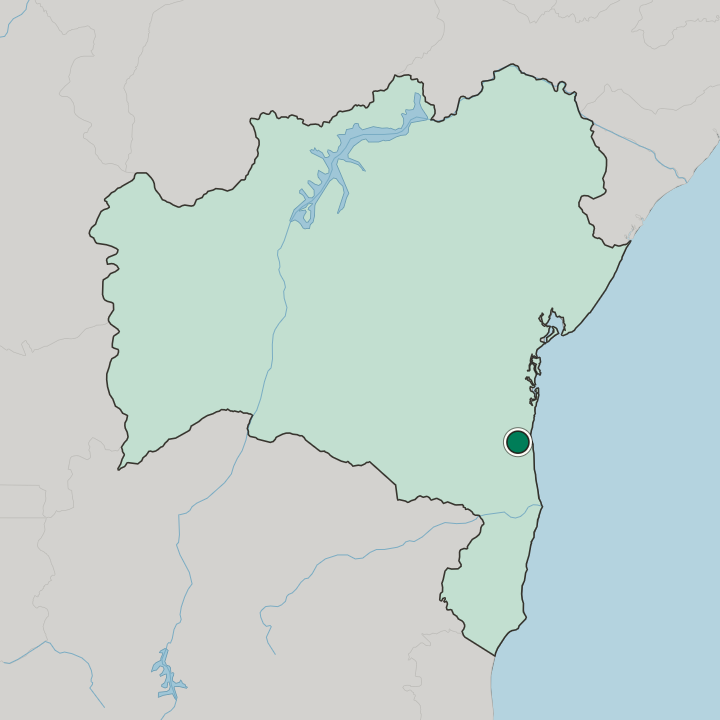
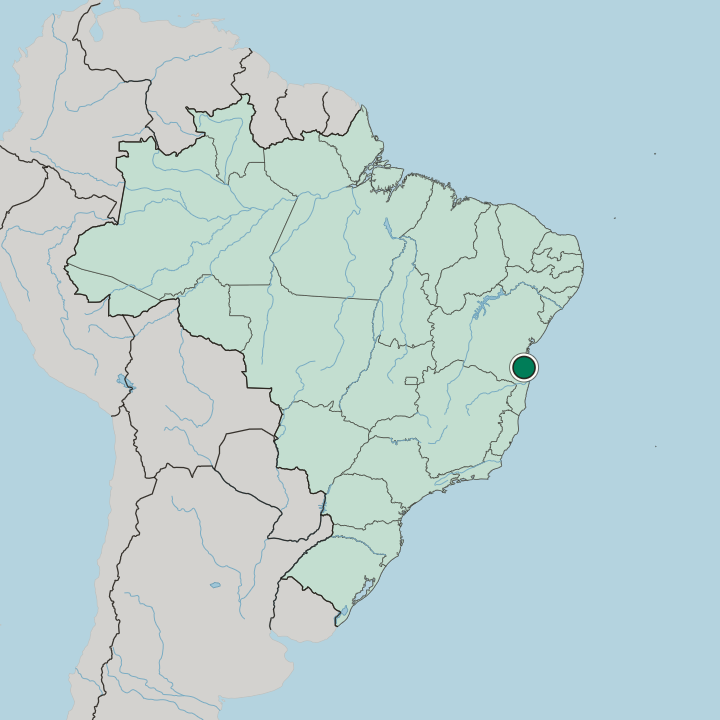
Itabuna stands inland. The city sits back from the Cocoa Coast in Bahia, on ground that belongs to the farmed interior rather than to the shoreline, and its municipal territory covers 401 square kilometres. The land around is cocoa country.
That inland position separates Itabuna from the coastal cities of Brazil, and it is why a visit here is spent among streets and countryside instead of sand.
What is the climate of Itabuna?
Warmth never lets go of Itabuna. Itabuna sits inside the tropics and inland from the Cocoa Coast, which leaves it without the steady sea breeze that works on the shoreline, and warm, humid air holds over the city in every month. Frost has no place in Bahia's cocoa country.
Because the equator lies to the north, the year runs opposite to the northern one, with the warmest weather at its start and end and the coolest in between.
How do you get to Itabuna?
Reaching Itabuna means driving. Itabuna sits inland from the Cocoa Coast, so most approaches come across country rather than along the shore, and the drive in crosses the farmed ground of Bahia before the city's streets begin. Salvador lies well away.
The state capital is the usual reference point for distances, and Feira de Santana, Vitória da Conquista and Juazeiro are the other Bahian cities of comparable weight on the map.
Common questions
What is the best area to stay in Itabuna?
The centre: Working trips anchored on the Museu Casa Verde and Itabuna's shops. Toward the Museu da Fazenda Primavera: Quiet nights in the fazenda country outside Itabuna.
Good for
More cities in Bahia
Updated September 2026