Brazil
Bahia, Brazil — Towns & Travel Guide
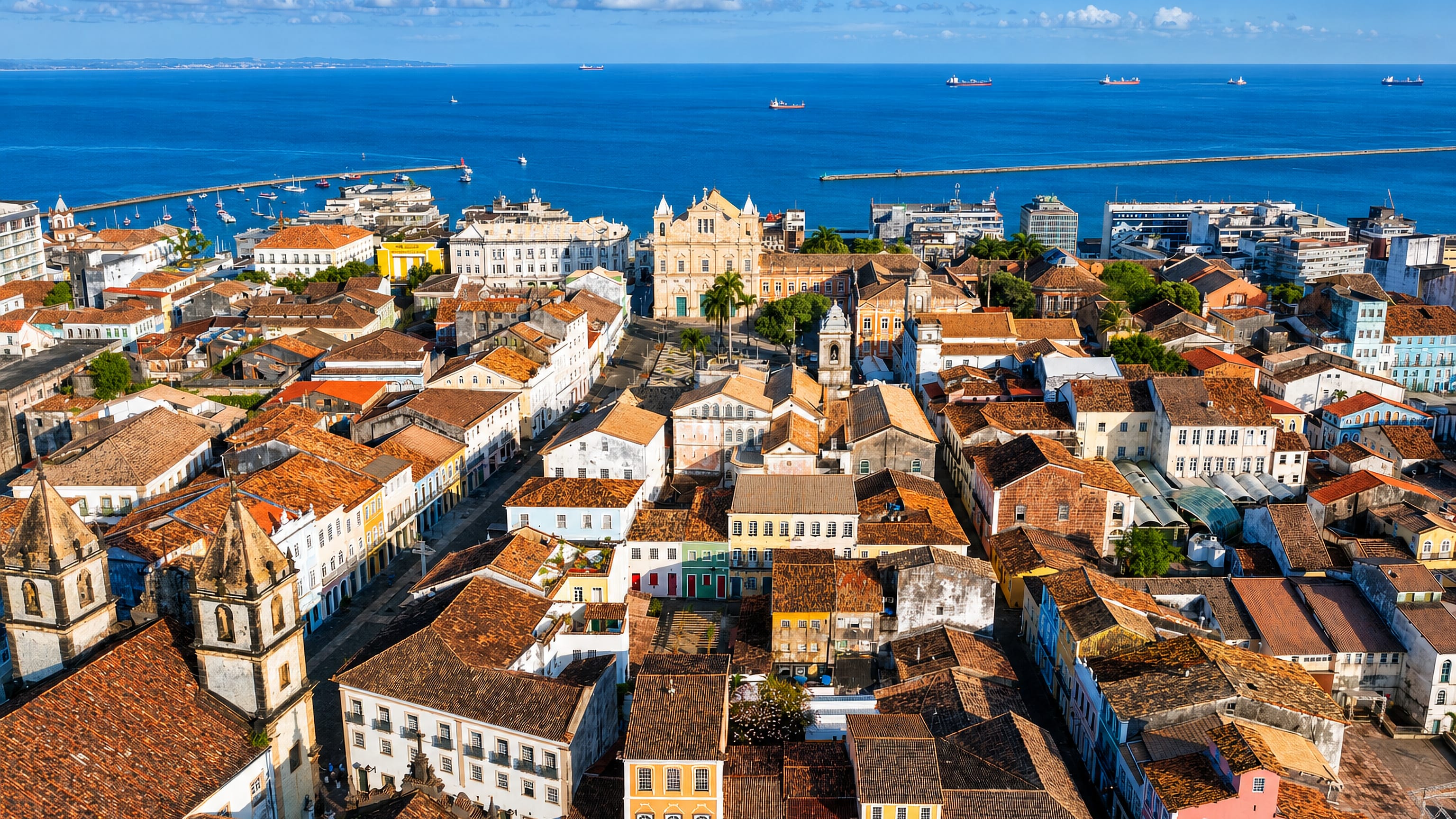
Bahia is Brazil's Afro-Brazilian heartland, the northeastern state where Salvador overlooks the Bay of All Saints.
Hotel links are affiliate links: booking through them may earn us a commission, at no extra cost to you. It never affects how places are ranked. How this works


Towns & cities in Bahia
Pick a town or city — each links to where to stay.

 Brazil
Salvador
Salvador is the capital of Bahia and the first capital of Colonial Brazil, founded in 1549 by Tomé de Sousa and a centre of Afro-Brazilian culture.Where to stay →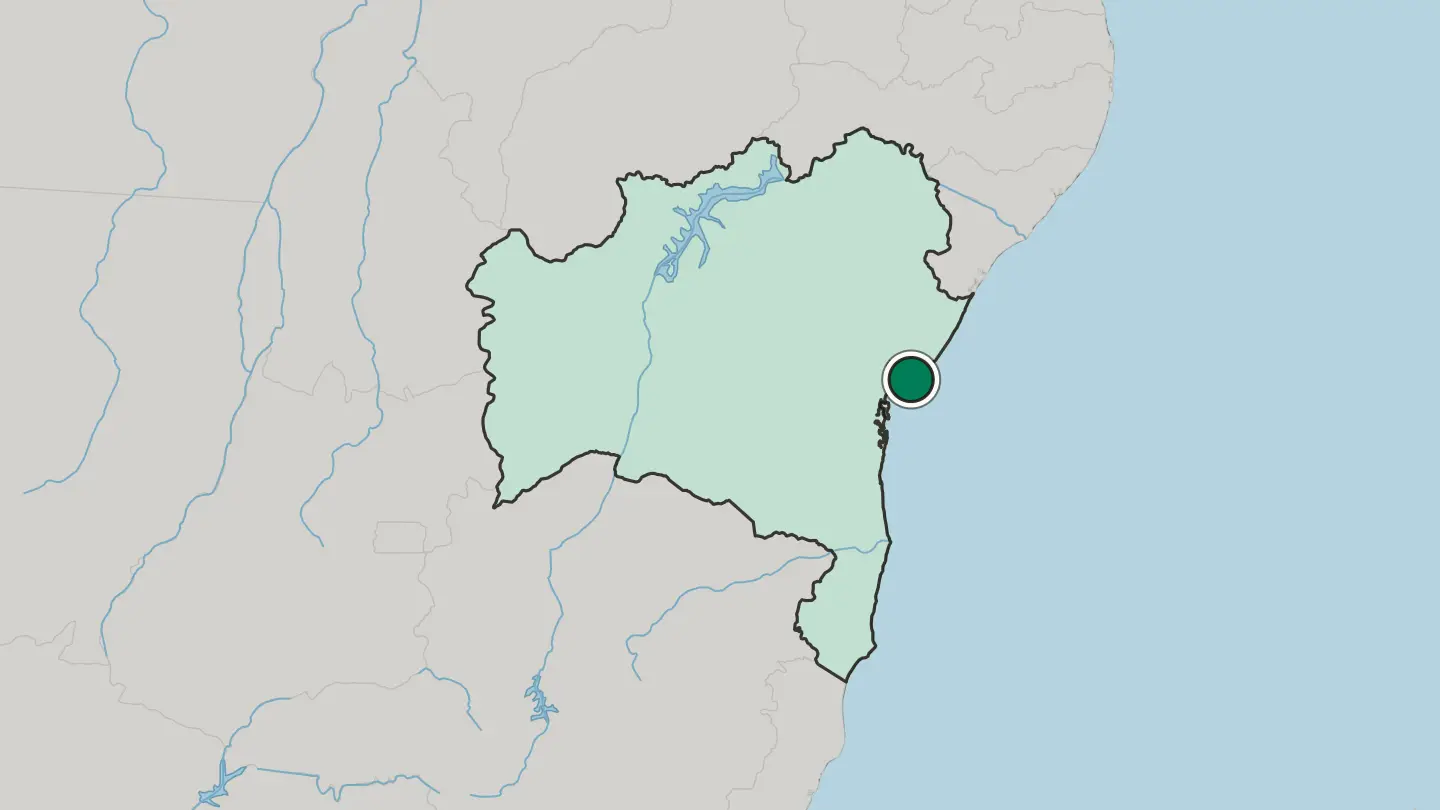 Brazil
Feira de Santana
Market first, city after. Feira de Santana holds the Bahia Interior, a hundred kilometres northwest of Salvador.Where to stay →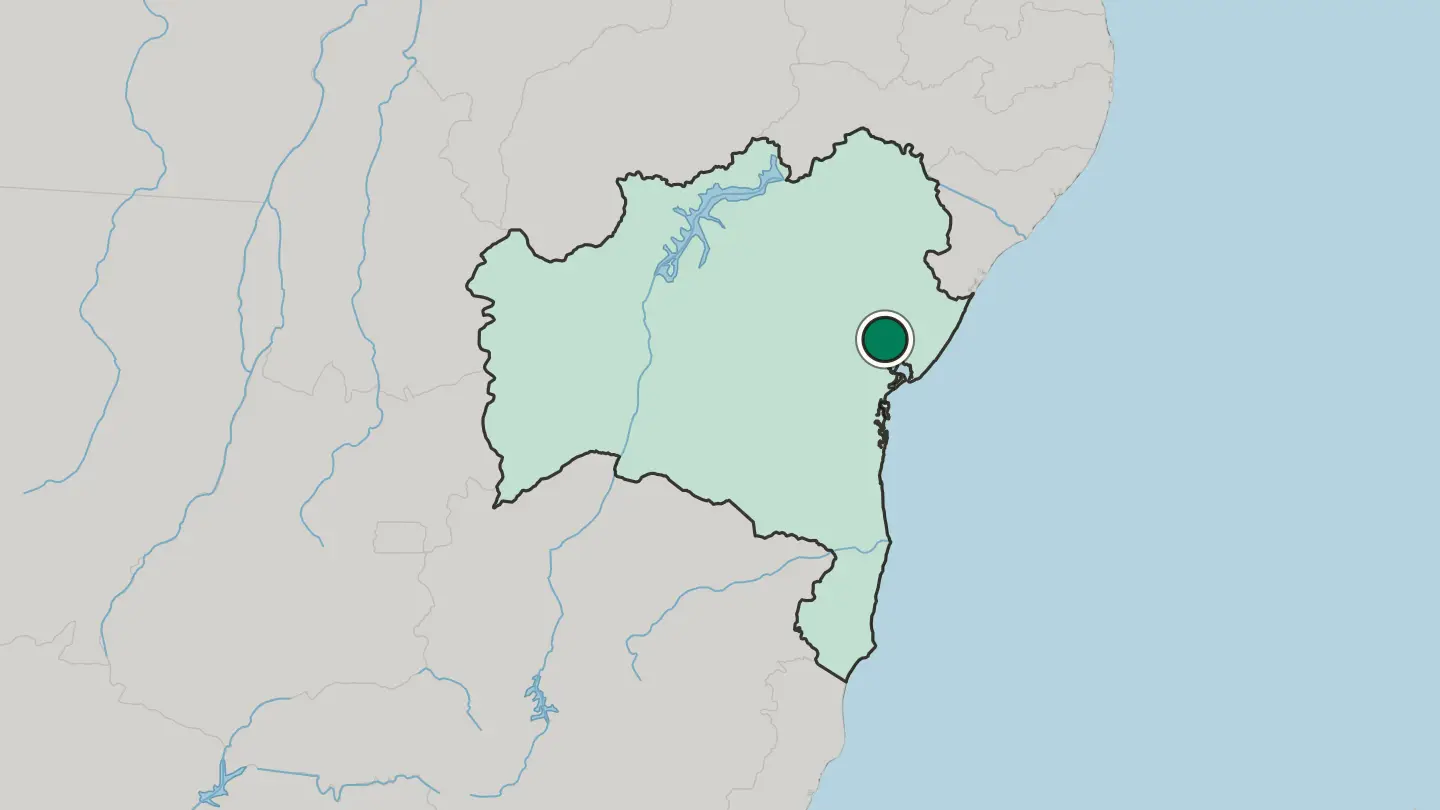 Brazil
Itabuna
Itabuna is an inland city of Bahia, back from the Cocoa Coast, and the sixth largest of the state's cities.Where to stay →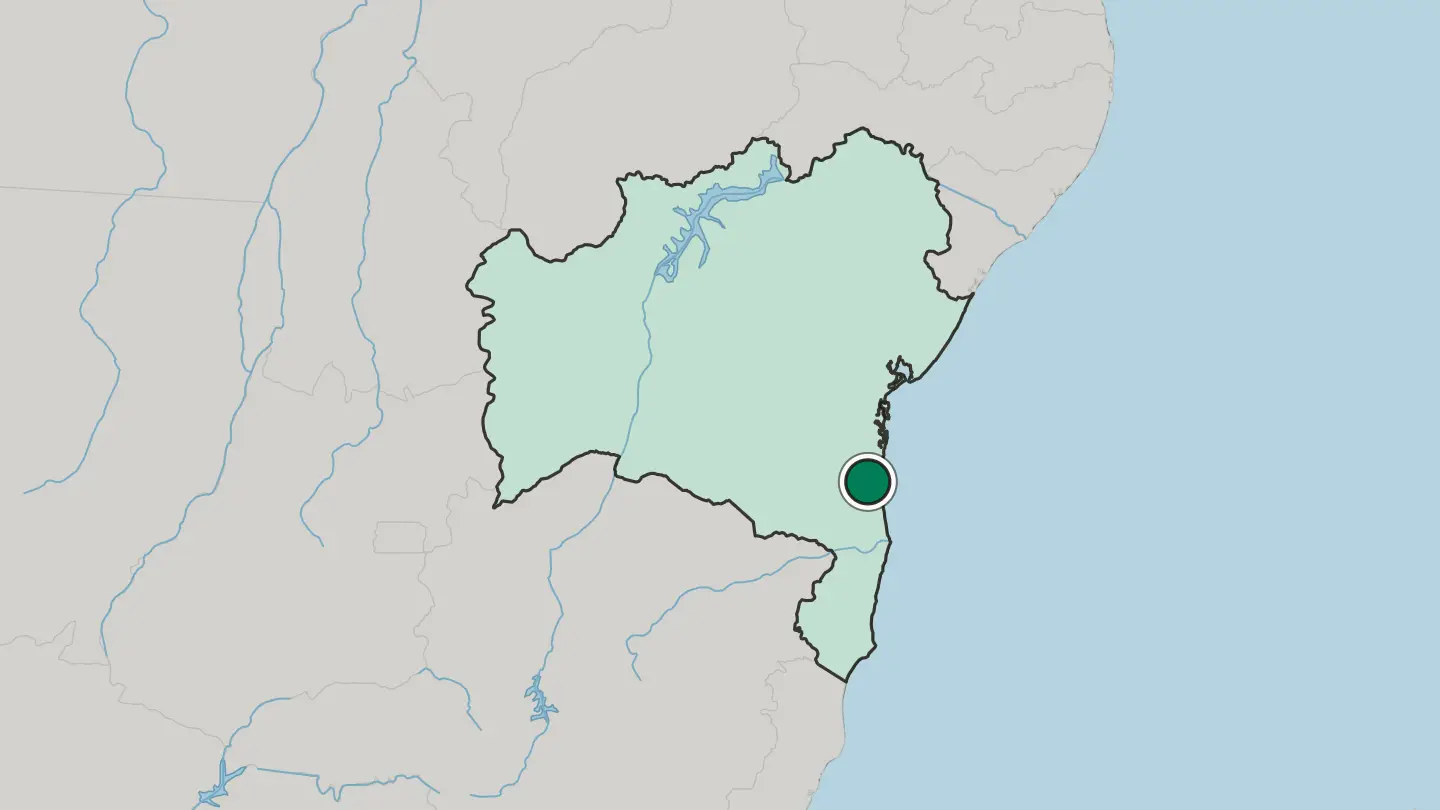
 Brazil
Camaçari
Bahia's industrial city. Camaçari sits inside the Salvador Metropolitan Region, a municipality of three districts with a founding date of 1758.Where to stay →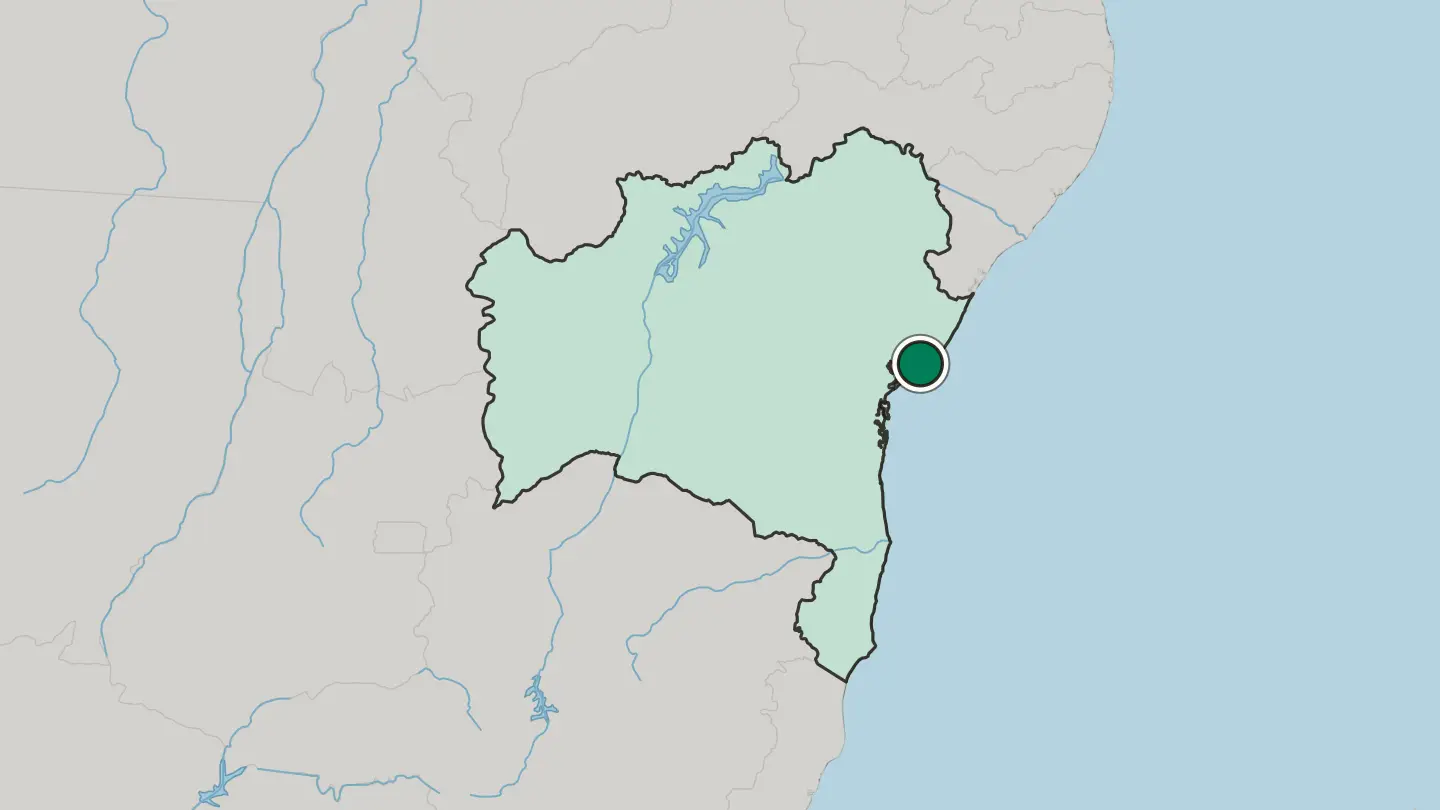
 Brazil
Porto Seguro
Porto Seguro is a coastal city of Bahia, in the area where Portuguese navigators first landed in 1500, backed by preserved Mata Atlântica.Where to stay →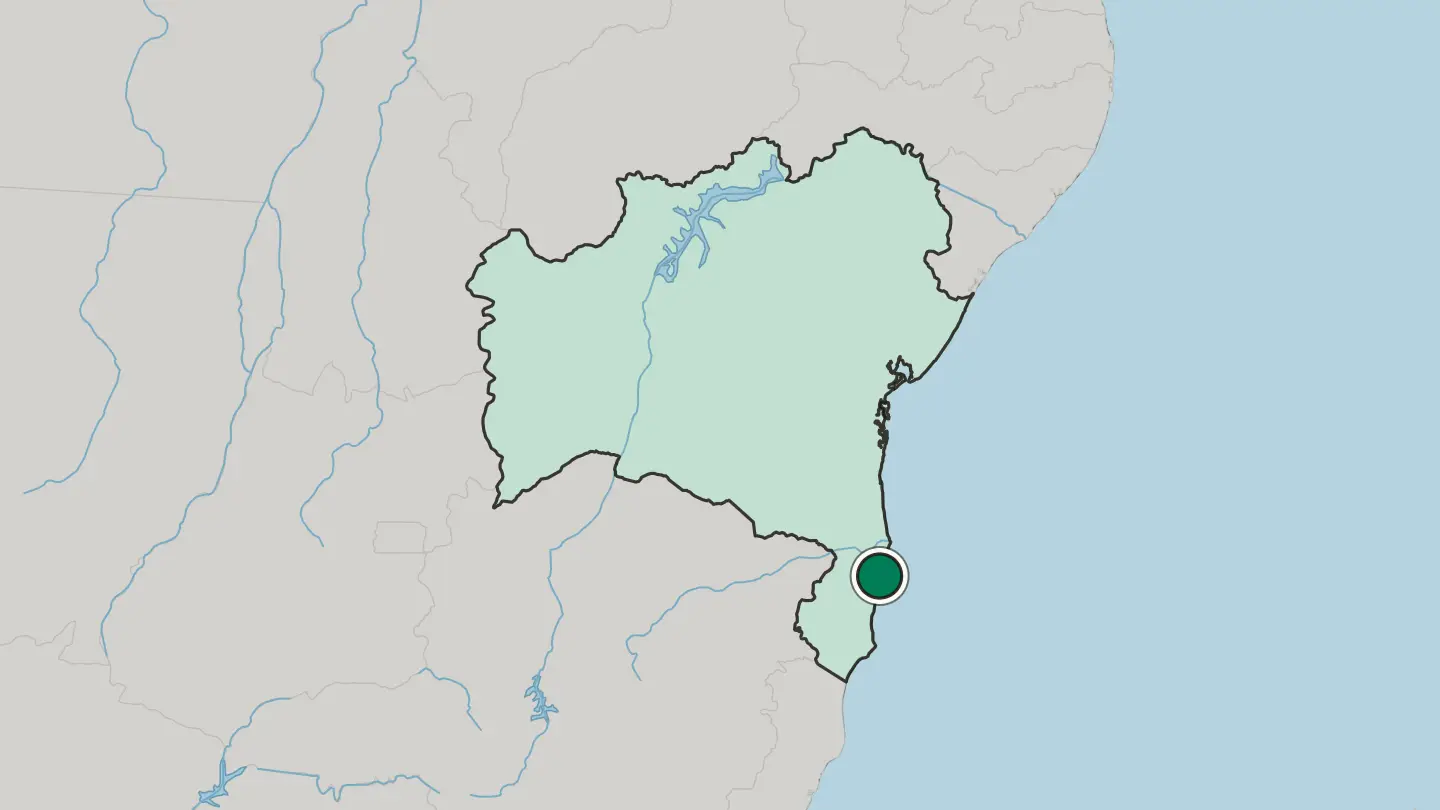
 Brazil
Ilhéus
Ilhéus is a coastal city of Bahia, founded in 1534 as Vila de São Jorge dos Ilhéus and the hometown of the writer Jorge Amado.Where to stay →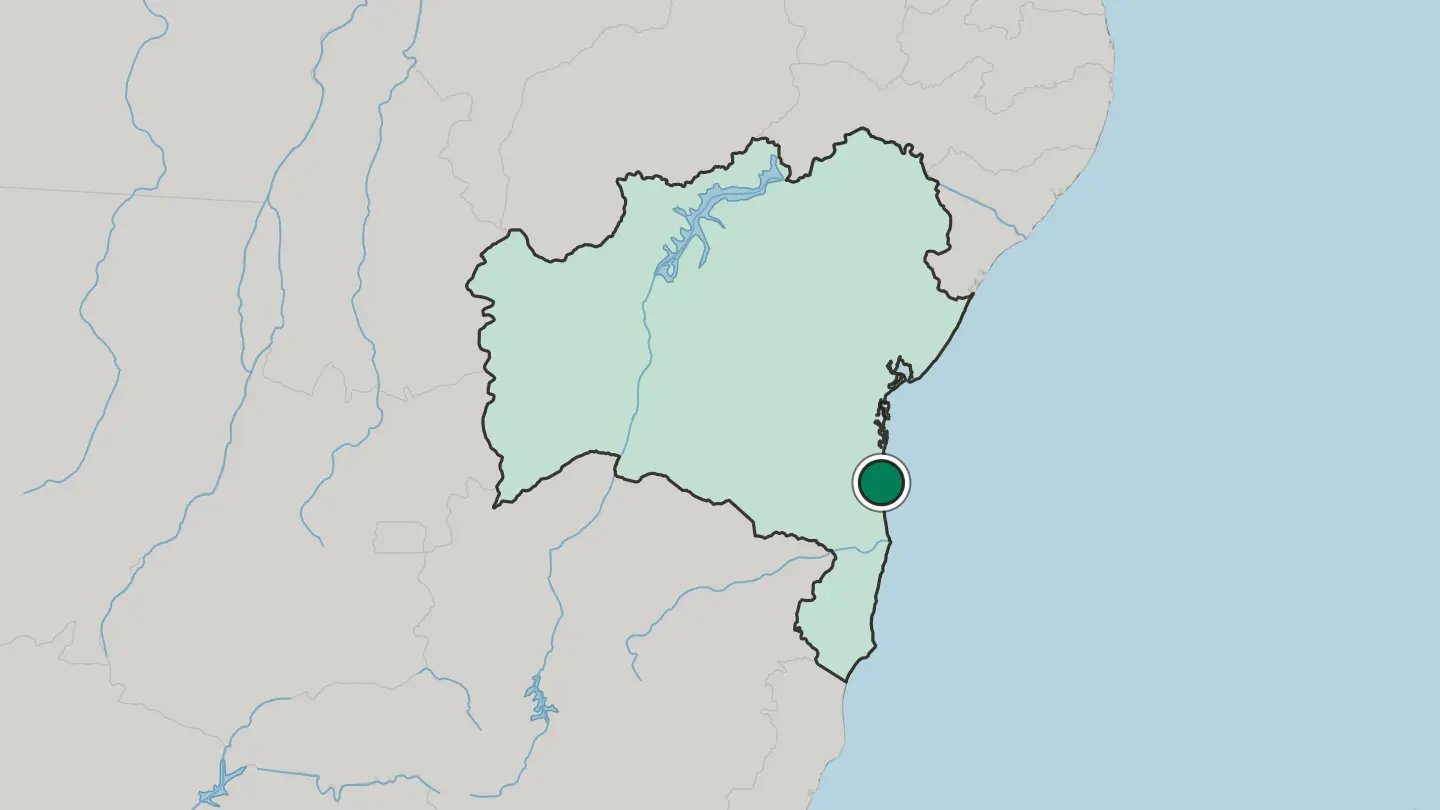
Hotel links are affiliate links: booking through them may earn us a commission, at no extra cost to you. It never affects how places are ranked. How this works
About Bahia
Salvador is the draw for most first-time visitors.
What is Bahia known for?
Brazil's first capital wears its Portuguese colonial past in the painted houses and cobbles of the Pelourinho, high on the bluff above the Bay of All Saints. The state gave the country capoeira, candomblé, and a Carnival that fills Salvador's streets with drum blocks rather than a stadium parade. Inland, the tablelands of Chapada Diamantina break the coast's flatness with canyons, caves, and waterfalls.
Beaches carry the rest of the fame.
Where is Bahia?
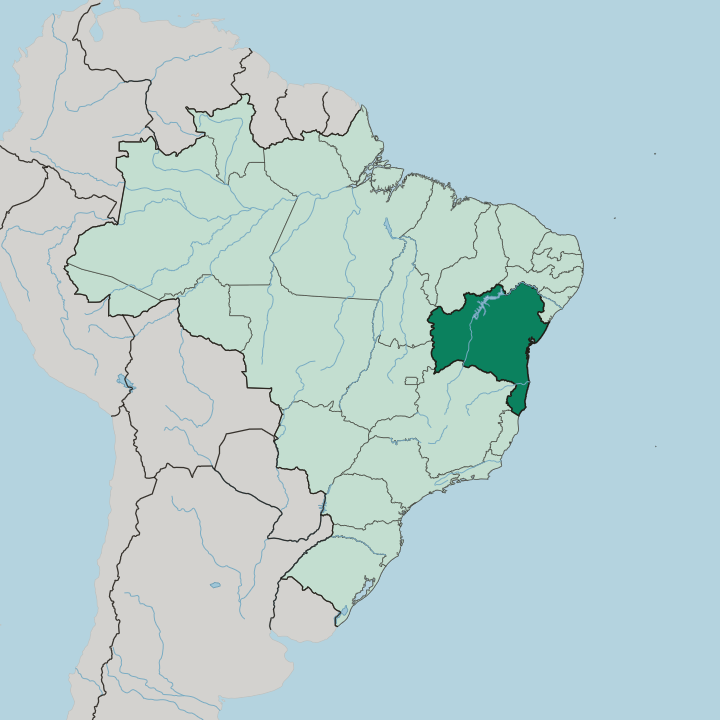
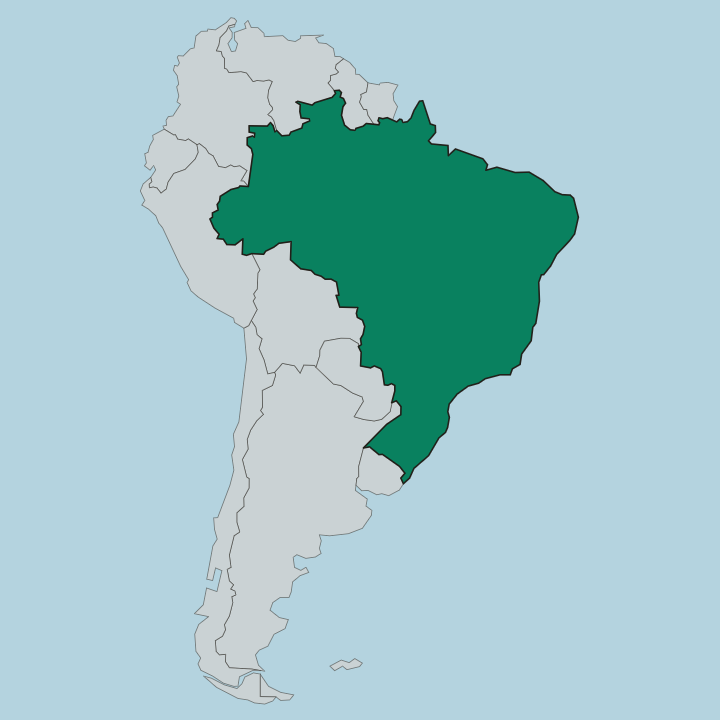
Bahia sits on the Atlantic coast of northeastern Brazil, the largest and southernmost state of the country's Northeast Region. Its shoreline is the longest of any Brazilian state. Salvador stands where a narrow spit divides the Bay of All Saints, the largest bay in Brazil, from the open Atlantic Ocean.
Around that bay spreads the Recôncavo, the belt of old sugar and tobacco land that fed the colonial economy. Names mark the coast as it runs south: the Cocoa Coast around Ilhéus, the Discovery Coast down at Porto Seguro. The land climbs as it runs west, away from the sea.
The Chapada Diamantina, a plateau of quartzite ridges and table mountains, rises through the middle of the state and splits it in two. East of it the soil is fertile and the rain arrives on schedule; west of it the country dries into the sertão, a semi-arid interior of thorny caatinga scrub. One river holds that dry west together.
The São Francisco flows down from Minas Gerais and crosses western Bahia before turning to the sea, carrying water through the months when smaller rivers vanish. Much of the state depends on it.
What is Bahia like?
Bahia is the most African of Brazil's states, and its culture grows from the people brought across the Atlantic in the slave trade. Candomblé took shape here, a religion carrying Yoruba and Fon deities under Catholic saints' names, still centred on Salvador's terreiros. Capoeira grew from the same roots, a fight disguised as a dance, drilled to the twang of the berimbau in rings on the Pelourinho's cobbles.
The kitchen tells the story too. Acarajé, a black-eyed-pea fritter fried in orange dendê palm oil, is sold from the trays of women in white lace, the baianas, on street corners across the capital. Moqueca, a coconut-and-dendê fish stew, comes to the table in a clay pot.
Sound runs through all of it. Salvador's Carnival moves behind trios elétricos, sound trucks that draw dancing crowds through the streets for days, and drumming blocks like Olodum turned samba-reggae into the city's pulse. Faith and festival blur.
Each January the Lavagem do Bonfim sees baianas wash the steps of the Church of Bonfim in scented water, and on New Year's Eve worshippers of Iemanjá float flowers out to the sea. Portuguese is the language, spoken with a Bahian lilt all its own.
What is the history of Bahia?
Brazil's recorded history starts on Bahia's shore. Pedro Álvares Cabral's fleet made landfall near Porto Seguro in 1500, the first Portuguese footfall in the country. In 1549 the crown founded Salvador on the Bay of All Saints and made it the capital of colonial Brazil, a seat it held until the court moved the capital to Rio de Janeiro in 1763.
Sugar mills and enslaved Africans built the wealth of the Recôncavo through those centuries. Independence was won late here: Portuguese troops held Salvador until 1823, and Bahia still marks their expulsion on the second of July.
What is the climate of Bahia?
Two climates share the state. The coast around Salvador is tropical and humid, warm through the year with its heaviest rain rolling in off the Atlantic between April and July. Cross the Chapada Diamantina and the air dries out.
The sertão of the west is semi-arid, its caatinga scrub scorched by long droughts that have driven people off the land for generations. The highland plateau itself stays cooler, and its nights can turn cold.
How do you get to Bahia?
Most travellers fly into Salvador, the state's main airport and the hub for onward hops. Porto Seguro and Ilhéus have their own airports for the southern beaches, which spares the long drive down the BR-101. Getting around Bahia means covering distance.
Salvador and Morro de São Paulo are linked by catamaran across the Bay of All Saints rather than by road, while the Chapada Diamantina lies a full day inland by bus or car from the coast. Water still shapes the shortest routes.
Common questions
What is the best area to stay in Bahia?
Salvador: setting down your first base in Bahia. Morro de São Paulo: car-free island beaches. Itacaré: surf and rainforest beaches. Porto Seguro: the Discovery Coast resorts. Lençóis: the Chapada Diamantina interior.
Good for
More regions in Brazil
Updated September 2026