Brazil · Goiás
Where to Stay in Caldas Novas, Goiás
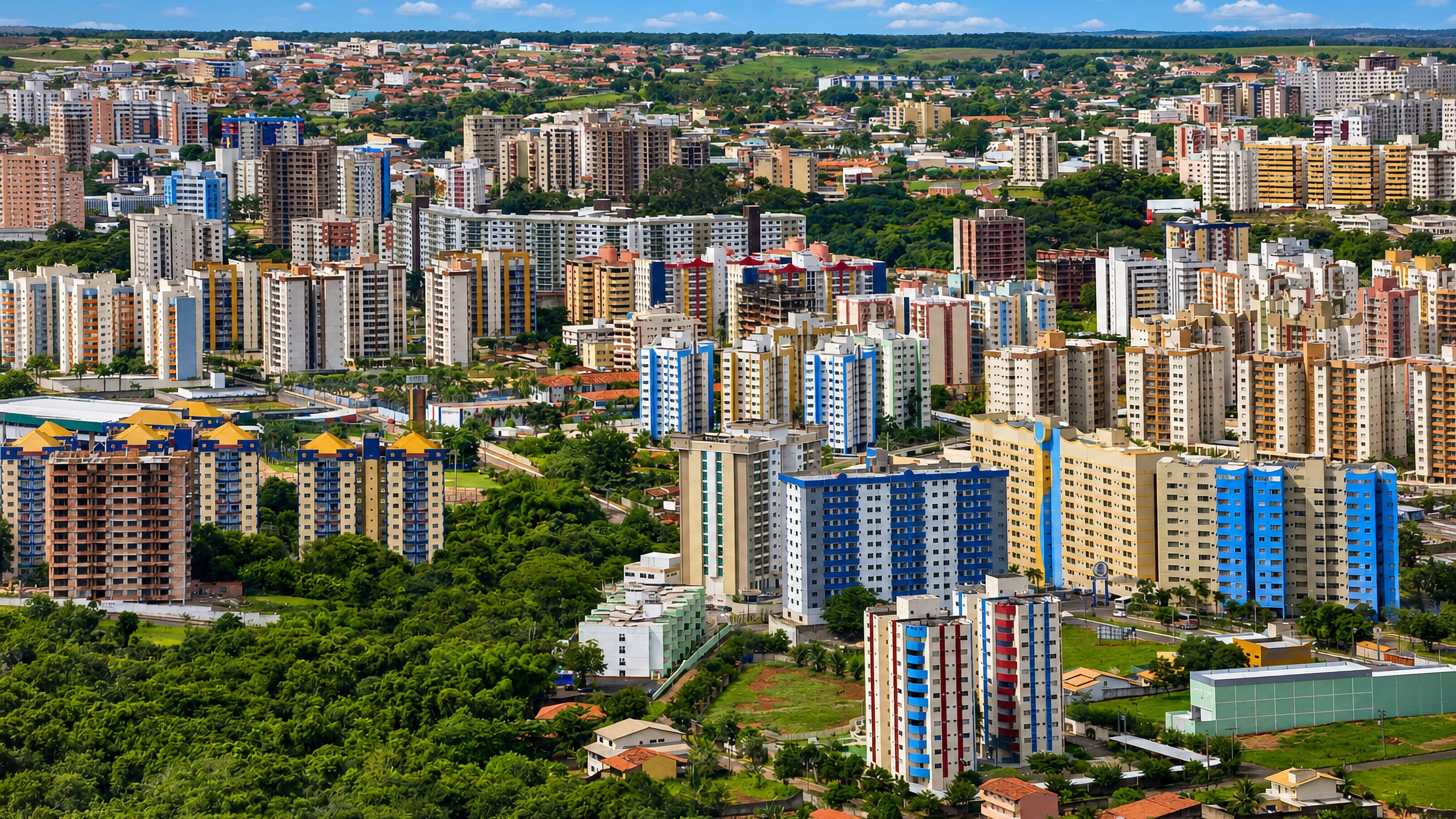
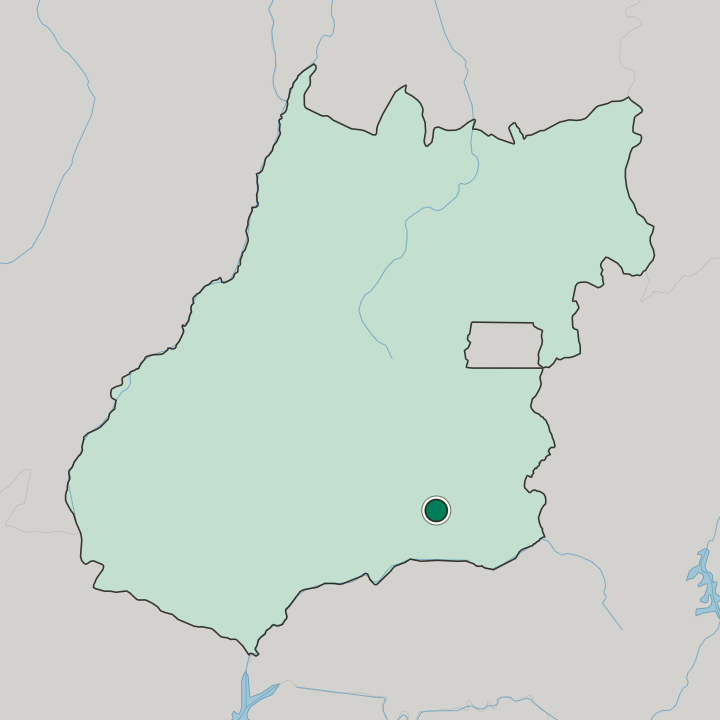
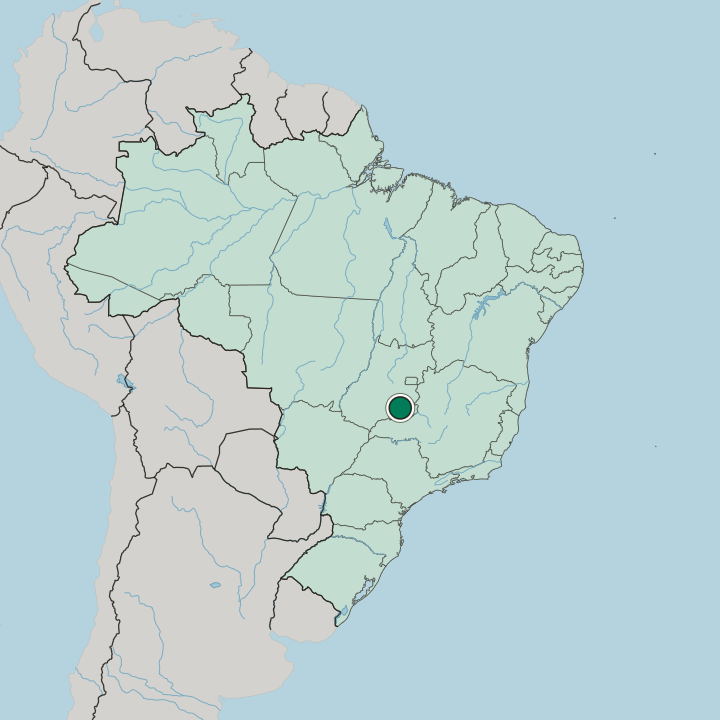
Caldas Novas sits below the Serra de Caldas in Goiás, where rain stored in quartzite returns as thermal water hot enough to fill hundreds of pools.
Hotel links are affiliate links: booking through them may earn us a commission, at no extra cost to you. It never affects how places are ranked. How this works


Where to stay in Caldas Novas
How the choice of base plays out on the ground.
The choice runs between Rua do Balneário and Praça Mestre Orlando. Caldas Novas draws from active wells rather than one public bathing house, so the pools belong to individual properties, and Rua do Balneário in the Bairro do Turista is where the biggest of them stand. Parque das Primaveras and Golden Dolphin Grand Hotel pipe spring water onto their own decks.
SESC Caldas Novas works the same way and books out months ahead. Guests in those blocks rarely need to leave the grounds at all. Praça Mestre Orlando changes the calculation.
The square dates from 1911 and gained lit fountains in a later rebuild, and the calçadão around it carries the bars and restaurants that a pool complex cannot supply. Igreja Matriz de Nossa Senhora das Dores stands on one side of it. Rooms here run plainer.
If you want an evening out of a bathrobe, take a room by the square and buy a day pass into Caldas Termas Clube. Out on the Pires do Rio road the pattern shifts again. Lagoa Pirapitinga has campsites and Lagoa Termas Parque along its shore, and the Egg Cooking Spring there is the local demonstration that the ground, not a boiler, does the work.
Beds thin out past the lagoon. Náutico Praia Clube sits further off on Lago de Corumbá, where the draw is the reservoir instead of the thermal water.
Find hotels in Caldas Novas
Direct booking searches for these neighbourhoods.
Rua do Balneário
Parque das Primaveras and Hotel Privé stand on Rua do Balneário in the Bairro do Turista, where the spring water arrives by pipe and the pool deck is the whole address.Find hotels in Rua do Balneáriothe calçadão bars beside Igreja Matriz de Nossa Senhora das DoresPraça Mestre Orlando
Praça Mestre Orlando keeps its fountain, the calçadão and the oldest church in Caldas Novas within a few steps, so a room here trades a private pool for somewhere to eat.Find hotels in Praça Mestre Orlandocamping ground beside the Egg Cooking SpringLagoa Pirapitinga
Lagoa Pirapitinga lies out along the Pires do Rio road, where Lagoa Termas Parque and the camping grounds take the lagoon shore instead of a hotel block. Few places to stay nearby — book ahead.Find hotels in Lagoa PirapitingaHotel links are affiliate links: booking through them may earn us a commission, at no extra cost to you. It never affects how places are ranked. How this works
About Caldas Novas
Thermal water is the entire industry here.
What is Caldas Novas known for?
Hundreds of heated pools sit inside the hotels and clubs of Caldas Novas, which is what earns the town its billing as the largest hydrothermal resort in the world rather than any single famous spring. DiRoma Thermas, Clube Privé and Lagoa Termas run the biggest of the water parks. Sertanejo music fills the rest of the calendar: Caldas Country puts two nights of shows on, and Verão Sertanejo repeats the format in January.
Museu da Soja covers the crop that fills the farmland outside town.
What are the main landmarks in Caldas Novas?
Igreja Matriz de Nossa Senhora das Dores went up in 1850 and is reckoned the oldest building in Caldas Novas, standing over Praça Mestre Orlando with the calçadão and its fountain in front. Casarão dos Gonzaga dates from 1907, built for a mayor's farm and later handed to a craft centre. Monumento às Águas is a huge stone fountain, much photographed.
Museu da Soja, out at Fazenda Serrinha, is the only museum in Brazil given over to the soybean.
What is the history of Caldas Novas?
Caiapó and Xavante peoples held this ground before the bandeirantes came. In 1722 Bartolomeu Bueno da Silva, son of the bandeirante known as Anhanguera, was hunting gold on the western slope of the Serra de Caldas when he found thermal springs and named the place Caldas Velhas. The gold ran thin.
Portugal wanted metal and stones, so the hot water was forgotten for half a century, until Martinho Coelho de Siqueira came back to it in February 1777 when his hunting dogs cried out at Lagoa de Pirapitinga. He registered a sesmaria, struck gold in the same watercourse and built the house on the Córrego das Lavras that still stands inside SESC Caldas Novas. Contagious disease pushed the first settlement off the stream.
Antônio Coelho de Siqueira inherited Fazenda das Caldas in 1816 and two years later received Fernando Delgado de Castilho, governor of the Capitania de Goiás, who was cured in the water, along with the French naturalist Auguste de Saint-Hilaire, who studied what it carried. Coronel Luiz Gonzaga de Menezes of Fazenda Quilombo arranged with the next owner, Domingos José Ribeiro, to shift the village to better ground. Igreja Matriz de Nossa Senhora do Desterro went up on donated land in 1850.
Around it the people of Quilombo and of the Córrego das Lavras camp settled, and the parish created in 1853 took Cônego José Olinto da Silva as its first vicar. Morrinhos let the district go in 1911. Bento de Godoy, Orcalino Santos, Victor Ozeda Alla, and João Batista da Cunha had campaigned for it since 1908, and Godoy took office as first intendente that October.
The physician Orozimbo Corrêa Neto published Águas Termais de Caldas Novas in 1918, and the book carried the Balneário Municipal to the attention of the big coastal cities. City status followed in 1923. Investors built hotels and clubs through the 1970s, encouraged by what Hot Park was already earning inside Pousada do Rio Quente, and the loss of Rio Quente in 1988 left Caldas Novas to grow upward instead.
Where is Caldas Novas?
Rain on the Serra de Caldas is the whole mechanism. Water sinks into a quartzite layer under the plateau and returns to the surface up a column some six hundred metres tall, which is why the studies commissioned from Furnas Centrais Elétricas found no crater near Caldas Novas. Nothing volcanic heats it.
Parque Estadual da Serra de Caldas Novas fences off the recharge ground, and the Corumbá, dammed into Lago de Corumbá below the town, holds its water far lower than the springs.
What is the climate of Caldas Novas?
Rainfall is the input, not the heat source. Everything that falls on the Serra de Caldas soaks into the quartzite beneath it and returns to the surface at bathing temperature, so the pools of Caldas Novas hold steady while the sky over Goiás changes. Wet months only refill the aquifer.
Travellers come in every month of the year, and the heaviest weeks are Carnaval and the sertanejo festival season rather than any particular kind of weather.
How do you get to Caldas Novas?
Aeroporto Nelson Ribeiro Guimarães opened in 2002 and is the second-largest passenger and cargo terminal in Goiás, behind only Santa Genoveva at Goiânia, with Azul and Gol connecting through Goiânia, Campinas and São Paulo. Road is the usual way in. Drivers off the Rodovia Transbrasiliana leave BR-153 at Morrinhos and follow GO-213 in from the west, while the alternative from Goiânia runs BR-352 through Bela Vista de Goiás and Piracanjuba onto GO-139.
Coaches stop at the convention centre.
Common questions
What is the best area to stay in Caldas Novas?
Rua do Balneário: pools fed by a hotel's own well on Rua do Balneário. Praça Mestre Orlando: the calçadão bars beside Igreja Matriz de Nossa Senhora das Dores. Lagoa Pirapitinga: camping ground beside the Egg Cooking Spring.
More cities in Goiás
Updated September 2026