Democratic Republic of the Congo · East Kasai
Where to Stay in Mbuji-Mayi, East Kasai
Mbuji-Mayi is the capital of Kasai-Oriental Province, a wide inland city reckoned the second largest in the Democratic Republic of the Congo.
Hotel links are affiliate links: booking through them may earn us a commission, at no extra cost to you. It never affects how places are ranked. How this works


Where to stay in Mbuji-Mayi
How the choice of base plays out on the ground.
Beds gather in the middle. Mbuji-Mayi carries no named quarter on the record, so the practical choice falls between the working centre, where the Kasai-Oriental Province administration sits, and the long outer stretches of a city that keeps going in every direction. The centre is the safer bet.
A room near the provincial offices keeps errands short in a place where crossing from one edge to the other takes real time, and it leaves arrivals from Kananga or Kisangani on the same side of town as their business. Outer ground suits nobody with appointments. The far reaches of Mbuji-Mayi run out into the Kasai country with little to anchor a stay, and a traveller booked into meetings in Kasai-Oriental Province gives back the gain of an outlying room in the length of the journey in.
Choose the middle first. If you are moving on rather than staying, Kananga to the west, Kisangani to the north-east and Lubumbashi to the south-east are each a stay in their own right rather than a base for reaching this city, and Kinshasa is further again. Distance rules the decision here.
Find hotels in Mbuji-Mayi
Direct booking search for this neighbourhood.
Hotel links are affiliate links: booking through them may earn us a commission, at no extra cost to you. It never affects how places are ranked. How this works
About Mbuji-Mayi
Scale leads everything said about Mbuji-Mayi.
What is Mbuji-Mayi known for?
Mbuji-Mayi is thought to be the second largest city in the country after Kinshasa, ahead of Lubumbashi, Kisangani and Kananga, though its exact scale has never been settled. The city also serves as provincial capital of Kasai-Oriental Province. It dates from 1914, and the Kasai country around it has carried its growth ever since.
What are the main landmarks in Mbuji-Mayi?
No monument stands for the city. The record for Mbuji-Mayi names no church, tower or square of its own, and what registers instead is the sheer extent of the place, quarter after quarter across the Kasai country with the offices of Kasai-Oriental Province at its working middle. Scale is what visitors describe.
Kinshasa, Lubumbashi and Kisangani carry the country's better-documented sights.
What is the history of Mbuji-Mayi?
Mbuji-Mayi dates from 1914. From that foundation the settlement grew through the following century into one of the principal cities of the Democratic Republic of the Congo, and it did so outward across the Kasai country rather than upward around a single square, leaving the sprawling city described by every account of the place. Growth outran the record.
Its extent has never been established with confidence, and the estimates that exist for it disagree by a wide margin. Official rank came after the growth. Mbuji-Mayi holds the capital seat of Kasai-Oriental Province, the East Kasai country that stretches away on all sides, and that office fixes the city's standing beside Kinshasa, Lubumbashi, Kisangani and Kananga in the wider republic.
Kinshasa stayed the national capital. In the usual ordering of Congolese cities by size Mbuji-Mayi is put second, behind Kinshasa and ahead of Lubumbashi, though the numbers behind that order are estimates rather than counts. Kananga sits closest of the four.
The 1914 date and the provincial seat are the two fixed points in a history that otherwise has to be told through the growth of the Kasai country itself.
Where is Mbuji-Mayi?
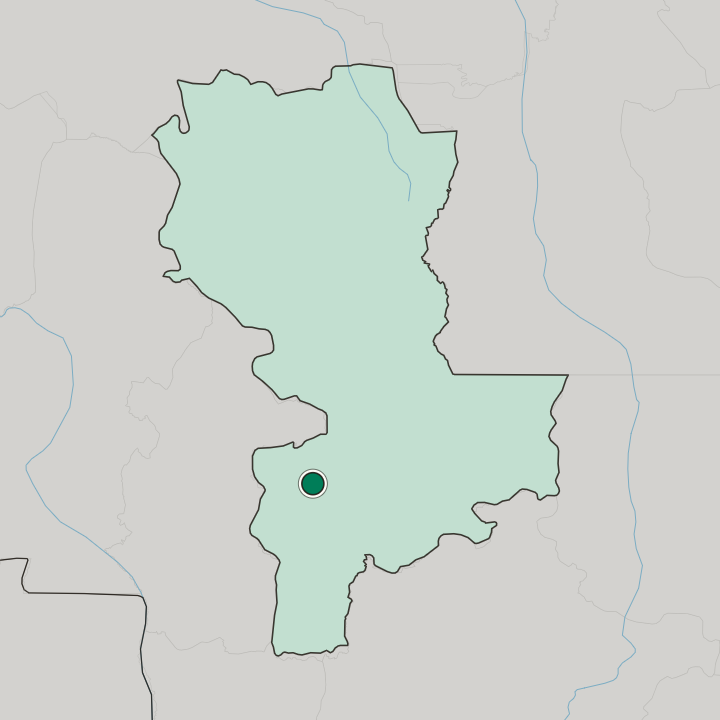
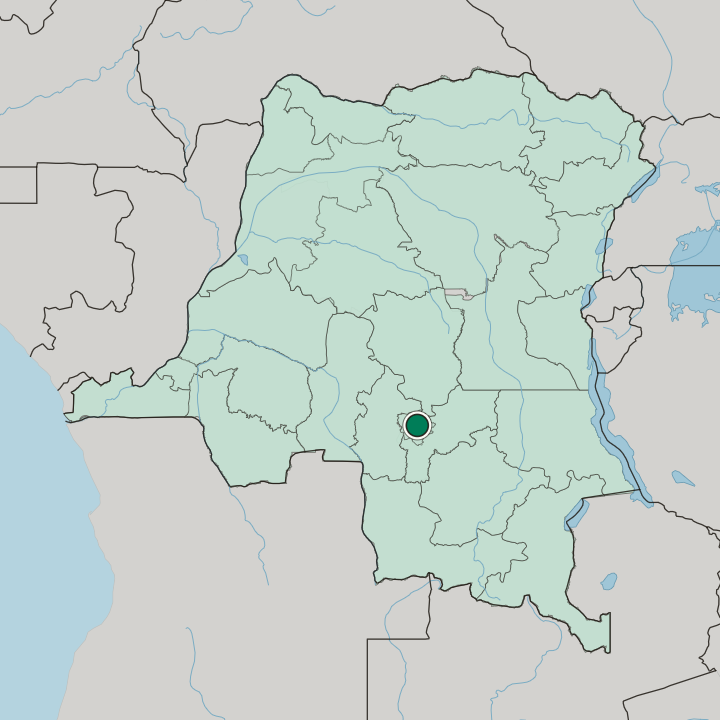
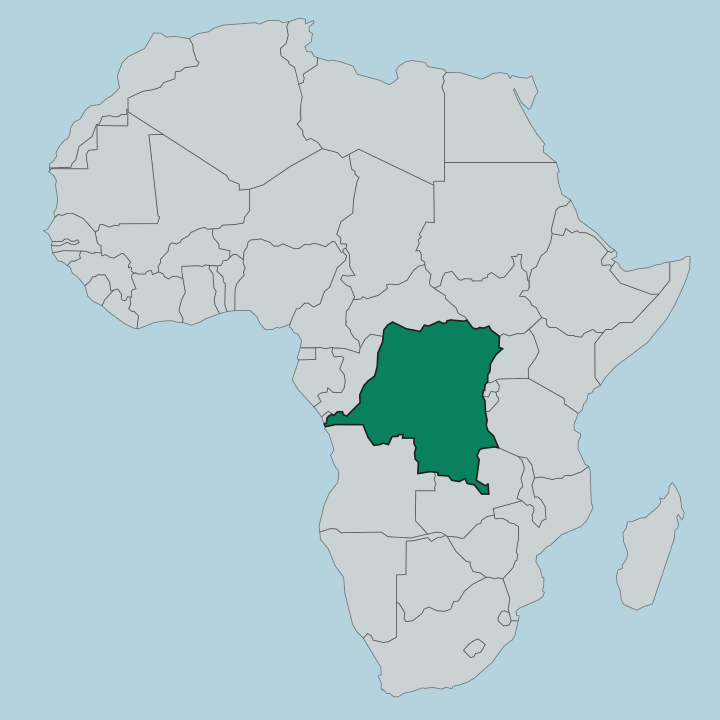
The ground here is inland. Mbuji-Mayi spreads over a wide stretch of the Kasai country, far from any coast within the Democratic Republic of the Congo, and its built-up ground carries on well beyond what a single compact centre would hold. Kananga is the nearest of the country's other large cities, off to the west.
Kinshasa lies much further in that direction, while Lubumbashi keeps to the south-east and Kisangani to the north-east. Matadi and Boma hold the far western end of the republic, beyond Kinshasa.
What is the climate of Mbuji-Mayi?
Rain arrives with the tropics. Mbuji-Mayi lies south of the equator and deep inland in the Kasai country, so the year divides into wet and dry stretches rather than a warm and cold pair, with no sea or lake near enough to soften either. Kananga shares that calendar.
Kasai-Oriental Province, spread all around the city, sits under the same run of tropical weather.
How do you get to Mbuji-Mayi?
Everything else is a long way off. Mbuji-Mayi sits deep in the Kasai country, so an approach means crossing the province overland from Kananga in the west, from Kisangani away to the north-east or from Lubumbashi in the south-east, with Kinshasa further still beyond Kananga. Kananga is the nearest of them.
Nothing about the position of Kasai-Oriental Province makes this a short hop from anywhere.
Common questions
What is the best area to stay in Mbuji-Mayi?
Central Mbuji-Mayi: callers at the Kasai-Oriental Province offices who need the shortest run across a very spread-out city.
Updated September 2026