China · Yunnan
Where to Stay in Jinghong, Yunnan
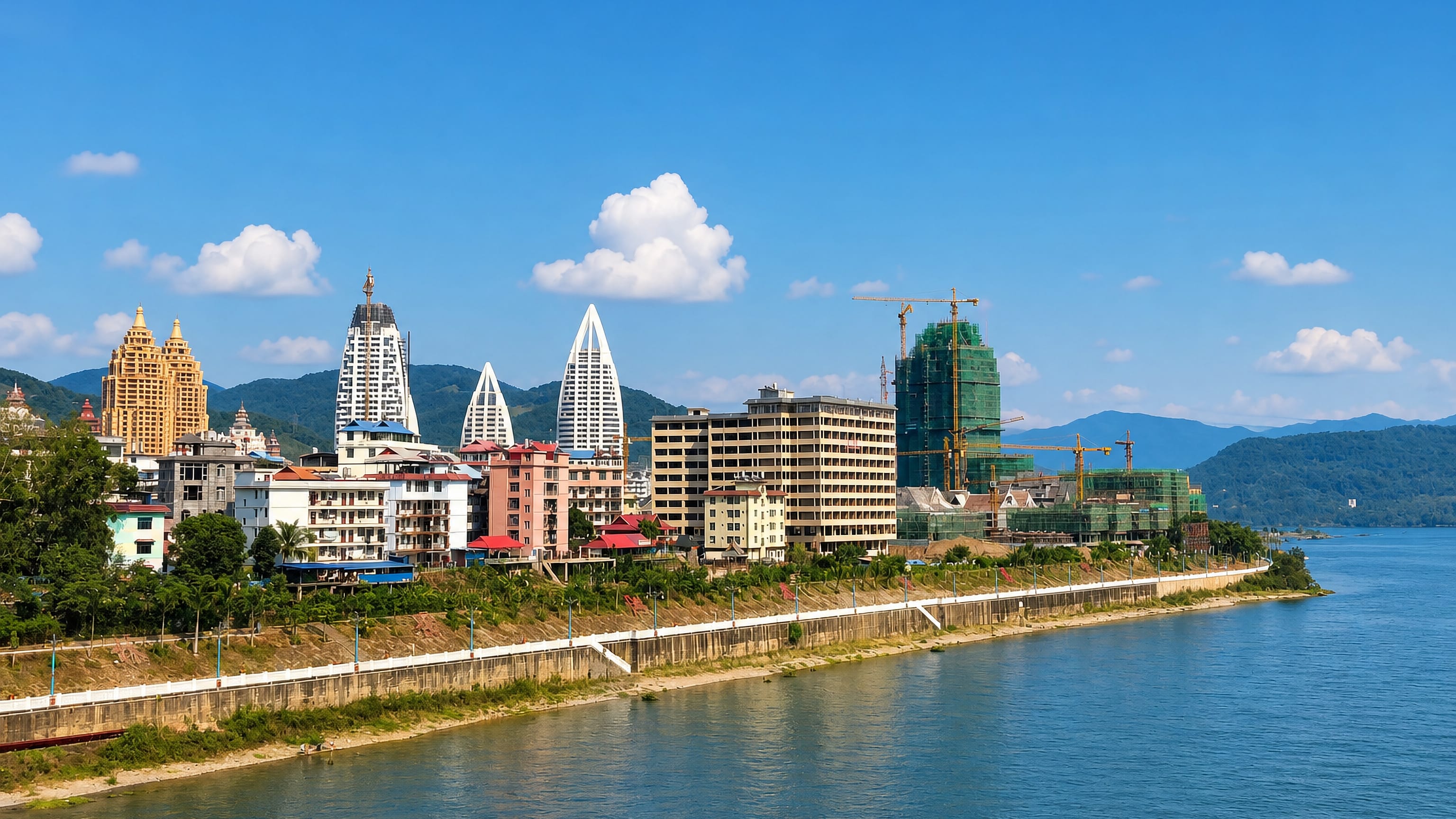
Jinghong is the seat of Xishuangbanna Dai Autonomous Prefecture in Yunnan, historic capital of the Tai kingdom of Sipsongpanna.
Hotel links are affiliate links: booking through them may earn us a commission, at no extra cost to you. It never affects how places are ranked. How this works


Where to stay in Jinghong
The practical side of choosing where to sleep.
Two crowds share the town. Jinghong takes package groups arriving for Xishuangbanna and independent travellers moving overland between China and Laos, and the beds split along roughly the same line. The prefecture seat holds the middle.
Anyone here for the Xishuangbanna Nationalities Museum and the administrative side of the prefecture wants a room in the built-up part, where the museum and the offices sit close together. The temples are further out. Xishuangbanna, not Jinghong alone, is what most people have come to see, and the prefecture's villages and pagodas lie scattered well beyond the built-up part.
Manfeilong Pagoda repays an early start. It stands away from the centre, as do Manchunman Temple and Mange Temple, so a bed chosen for the temples is a bed chosen against the convenience of the through road. The Laos road governs late arrivals.
Anyone crossing overland from Laos lands with the day mostly gone, and a room near that route beats one out among the villages for a single night. Everything here is further than it looks. Jinghong covers close to seven thousand square kilometres, so the Jingha Cave Site and Tazhuangmo are day trips rather than walks, and the choice of base decides how many of them fit.
Find hotels in Jinghong
Direct booking searches for these neighbourhoods.
The prefecture seat
The built-up middle of Jinghong, where the museum and the offices of Xishuangbanna Dai Autonomous Prefecture sit close togetherFind hotels in The prefecture seatEarly visits to the Theravada temples outside the centreThe Manfeilong Pagoda side
The stretch of Jinghong nearest Manfeilong Pagoda, with Manchunman Temple and Mange Temple on the same run. Few places to stay nearby — book ahead.Find hotels in The Manfeilong Pagoda sideOverland arrivals landing late from the Laos crossingThe Laos road
The through route out of Jinghong toward Laos, taken when the next morning's departure matters more than the templesFind hotels in The Laos roadHotel links are affiliate links: booking through them may earn us a commission, at no extra cost to you. It never affects how places are ranked. How this works
About Jinghong
Temples set the tone.
What is Jinghong known for?
Jinghong is the seat of Xishuangbanna Dai Autonomous Prefecture, and the Manfeilong Pagoda, Manchunman Temple and Mange Temple around it belong to a Theravada tradition and to a language related to Thai and Lao rather than to the rest of Yunnan. Travellers cross here. The overland run between China and Laos passes through, which is why the town holds package tourists and independent travellers in the same streets.
What are the main landmarks in Jinghong?
Pagodas come first. Manfeilong Pagoda is the best known, with Manchunman Temple and Mange Temple filling out the Theravada set that gives Xishuangbanna its distinct religious architecture. The museum explains the rest.
Xishuangbanna Nationalities Museum covers the peoples of the prefecture, while the Jingha Cave Site and Tazhuangmo reach back further, and a monument records Zhou Enlai's inspection of the Tropical Crops Research Institute together with the Sino-Myanmar Talks.
What is the history of Jinghong?
A Tai kingdom ruled from here. Jinghong was the capital of Sipsongpanna, and the name of the prefecture that governs the same ground now, Xishuangbanna, carries that older word forward in Chinese form, which is why the two names appear across the same maps. The Jingha Cave Site goes back further.
Occupation of this ground long predates any kingdom, and the cave record is the part of the prefecture's past that no temple or monument can stand in for. Theravada Buddhism came with the Tai. Manfeilong Pagoda, Manchunman Temple and Mange Temple belong to that inheritance, and their architecture is the visible reason Jinghong reads differently from cities elsewhere in Yunnan.
Borders made the modern town. A monument here records Zhou Enlai's inspection of the Tropical Crops Research Institute together with the Sino-Myanmar Talks, which places the prefecture inside the diplomacy of its frontier as much as inside its own past. Laos lies at the end of the road.
Overland movement between the two has shaped what Jinghong does, and the Xishuangbanna Nationalities Museum sets that traffic alongside the peoples the prefecture is named for.
Where is Jinghong?
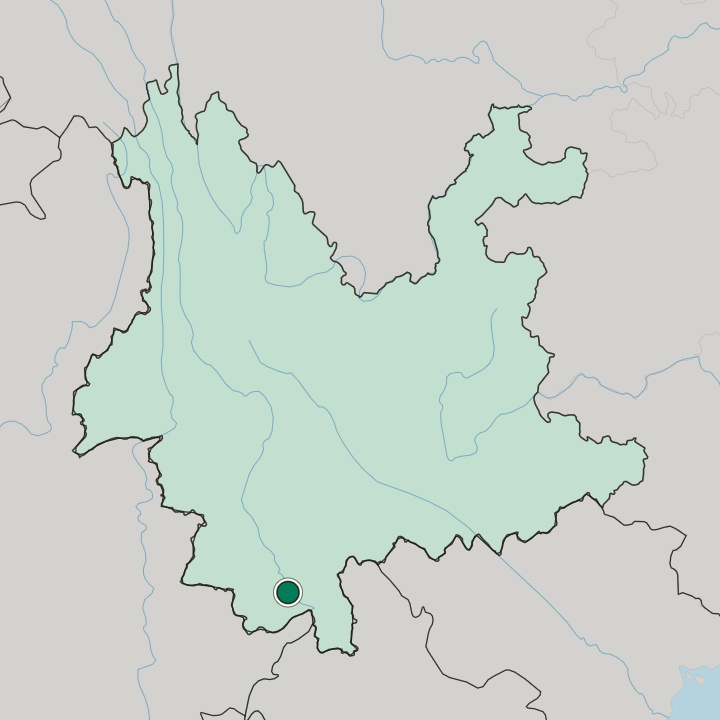
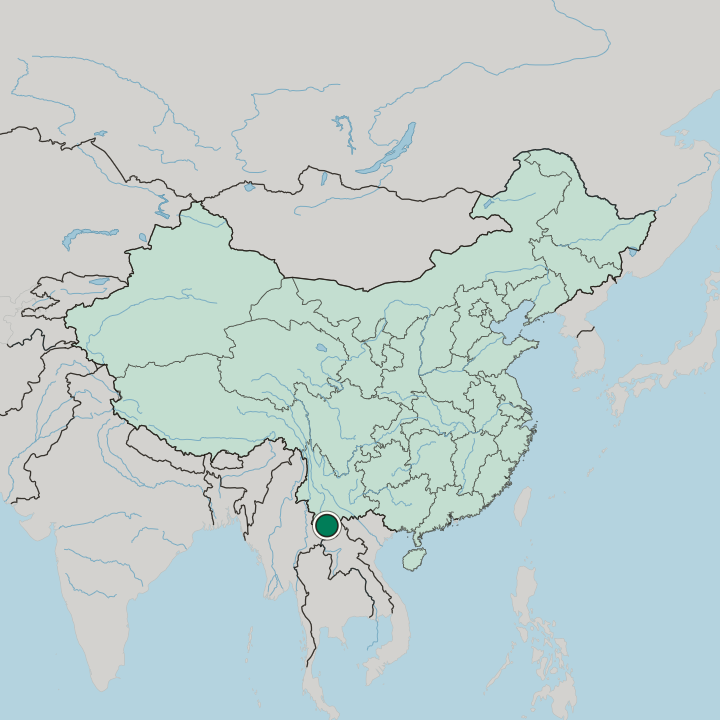
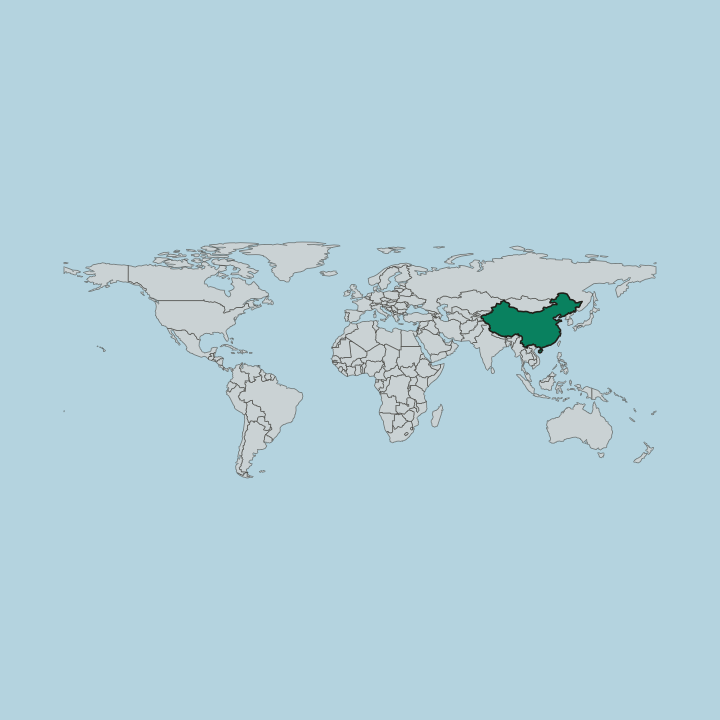
The tropics begin here. Jinghong lies in the tropical band north of the equator, close to seven thousand square kilometres of prefecture seat, with Laos at the far end of the overland road. Xishuangbanna surrounds it.
The Dai autonomous prefecture holds the country around the city, and the temples and village sites that visitors come for are scattered across it rather than gathered in one place.
What is the climate of Jinghong?
A research institute names the climate. The Tropical Crops Research Institute sits here because Jinghong is genuinely tropical, north of the equator but low enough in the band that the growing year barely stops. Heat and rain run together.
Xishuangbanna shares the pattern with the country across the border in Laos, and that is why a tropical crops institute was placed in this prefecture at all.
How do you get to Jinghong?
Laos is the overland door. Jinghong is an easy overland trip from Laos, which is how a large share of independent travellers reach Xishuangbanna rather than by any route from inside Yunnan. Package tourists arrive from within China.
The prefecture seat handles both, and once here the Manfeilong Pagoda, the Xishuangbanna Nationalities Museum and the villages of the prefecture are all onward trips from the same base.
Common questions
What is the best area to stay in Jinghong?
The prefecture seat: Days built around the Xishuangbanna Nationalities Museum. The Manfeilong Pagoda side: Early visits to the Theravada temples outside the centre. The Laos road: Overland arrivals landing late from the Laos crossing.
More cities in Yunnan
Updated September 2026