Colombia · Departamento de Antioquia
Where to Stay in Envigado, Departamento de Antioquia
Envigado, an Antioquia municipality dating from 1775, holds Museo El Castillo and the Casa Museo Fernando González Otraparte.
Hotel links are affiliate links: booking through them may earn us a commission, at no extra cost to you. It never affects how places are ranked. How this works


Where to stay in Envigado
The practical side of choosing where to sleep.
Otraparte anchors the obvious choice. A room within reach of the Casa Museo Fernando González Otraparte puts the best-known address in Envigado at the start of the day and leaves the parish core, with Saint Joseph's Church, Envigado and the Iglesia de Santa Gertrudis, Envigado on it, as a walk afterwards. That core is compact.
Ordinary hotels sit in and around it, which makes the centre the default for a first visit and the only realistic base for a traveller arriving without a car. Museo El Castillo argues for a different night. Its grounds reward an unhurried visit rather than a rushed hour squeezed between other things, and basing on that side of the municipality suits people whose plans lean toward gardens and collections instead of civic streets.
A match night changes the sums. The Estadio Polideportivo Sur and the Coliseo Municipal de Envigado both fill when there is something on, and the Coliseo Cubierto de Itagüí draws from the same crowd, so rooms tighten across the whole area on those weekends rather than in one district alone. Book early for those.
The Casa Museo Débora Arango Pérez and the Escuela Fernando González are the errands that fit around everything else, since neither asks for a full morning, and both sit near enough to the centre to be picked up on the way to the Estación del Ferrocarril Envigado.
Find hotels in Envigado
Direct booking searches for these neighbourhoods.
The parish core
The civic centre holding Saint Joseph's Church, Envigado and the Iglesia de Santa Gertrudis, EnvigadoFind hotels in The parish coreReaders coming for Casa Museo Fernando González OtraparteOtraparte
The quieter streets around Casa Museo Fernando González Otraparte and the Escuela Fernando González. Few places to stay nearby — book ahead.Find hotels in OtraparteUnhurried days in the grounds of Museo El CastilloThe Museo El Castillo side
The greener edge of Envigado nearest Museo El Castillo, well away from the venue crowds. Beds are limited here, so book early.Find hotels in The Museo El Castillo sideFixture nights at the Estadio Polideportivo Sur or the Coliseo Municipal de EnvigadoBy the Estadio Polideportivo Sur
Rooms closest to the Estadio Polideportivo Sur, which tighten whenever the Coliseo Cubierto de Itagüí also has a fixtureFind hotels in By the Estadio Polideportivo SurHotel links are affiliate links: booking through them may earn us a commission, at no extra cost to you. It never affects how places are ranked. How this works
Things to do in Envigado
Ranked by global recognition; descriptions from Wikidata (CC0).
Museums & Galleries
2- Casa Museo Débora Arango Pérez Casablanca Alcaldía de Envigado
- Casa Museo Fernando González Otraparte
Churches & Religious Sites
2- Iglesia de Santa Gertrudis, Envigado
- Saint Joseph's Church, Envigado
Castles & Historic Sites
3- Casa Museo Débora Arango Pérez Heritage
- Escuela Fernando González Heritage
- Estación del Ferrocarril Envigado Heritage
Stadiums & Sports
2- Estadio Polideportivo Sur
- Coliseo Municipal de Envigado
worth knowingacross 4 categories in Envigado
About Envigado
Two house-museums do the heavy lifting.
What is Envigado known for?
Casa Museo Fernando González Otraparte and Casa Museo Débora Arango Pérez keep the memory of the names this town is most associated with, and the Escuela Fernando González puts one of them on a school building as well. Museo El Castillo is the third draw. Sport supplies the remainder, at the Estadio Polideportivo Sur and the Coliseo Municipal de Envigado, with the Coliseo Cubierto de Itagüí near enough to turn up in the same inventory of venues.
What are the main landmarks in Envigado?
Collections come first. Museo El Castillo, the Casa Museo Débora Arango Pérez and the Casa Museo Fernando González Otraparte give the municipality three museum addresses, and the Casa Museo Débora Arango Pérez Casablanca Alcaldía de Envigado records a fourth under a name the town already commemorates. Churches hold the centre.
Saint Joseph's Church, Envigado and the Iglesia de Santa Gertrudis, Envigado stand among the civic buildings, while the Estación del Ferrocarril Envigado, the Coliseo Municipal de Envigado and the Estadio Polideportivo Sur account for transport and for sport.
What is the history of Envigado?
Envigado's record opens in 1775. What survives from the centuries after that is mostly ecclesiastical and civic, with Saint Joseph's Church, Envigado and the Iglesia de Santa Gertrudis, Envigado anchoring parish life while the Estación del Ferrocarril Envigado marks the later moment when a railway reached this part of the Departamento de Antioquia. The station is listed on its own.
That listing counts, because it is the one piece of railway-era fabric the heritage register treats as the equal of the churches around it. Two names dominate everything since. Fernando González is commemorated at the Casa Museo Fernando González Otraparte and again at the Escuela Fernando González, so the municipality has attached him to a house and to a school at once.
Débora Arango Pérez is recorded twice over as well. The Casa Museo Débora Arango Pérez and the Casa Museo Débora Arango Pérez Casablanca Alcaldía de Envigado both carry the same name, an unusual doubling in a heritage list of this size, and a fair measure of how firmly the town claims the association. Museo El Castillo is the outlier.
It belongs to no single figure in the way the house-museums do, and its presence alongside them is why Envigado reads as a place of collections rather than a place of monuments.
Where is Envigado?
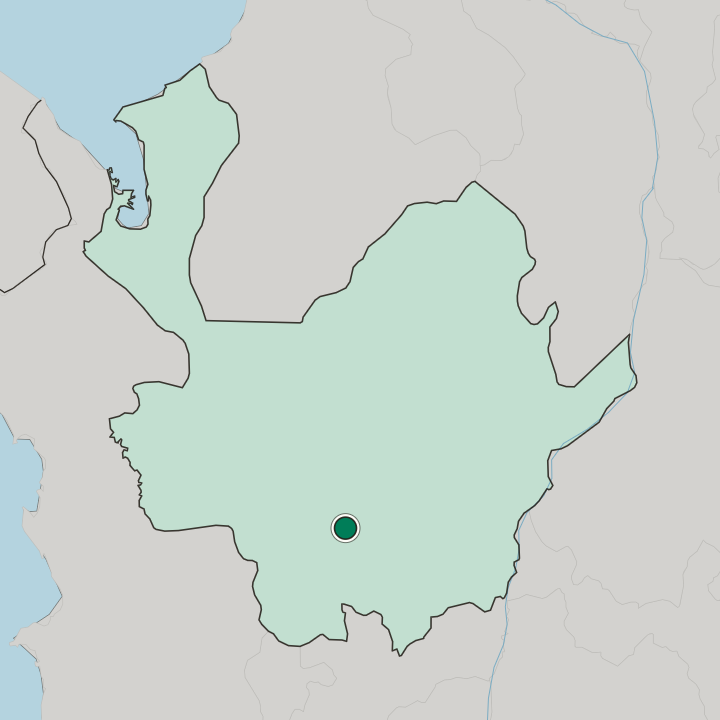
Envigado occupies a small share of the Departamento de Antioquia. Its centre is dense enough that Saint Joseph's Church, Envigado, the Iglesia de Santa Gertrudis, Envigado and the Estación del Ferrocarril Envigado all fall inside one walk, and the municipal boundary is near enough on every side to make the neighbouring towns part of ordinary life. Itagüí is the clearest case. The Estadio Polideportivo Sur and the Coliseo Cubierto de Itagüí turn up in the inventories of both municipalities, which is the plainest evidence of how little separates them.
What is the climate of Envigado?
Cloud builds through many afternoons. Envigado lies in the tropical band, where daylight holds steady across the months and the seasons announce themselves as wetter or drier rather than as warmer or colder, which makes an umbrella the most useful thing in a bag. Shelter beats shade.
The open stands of the Estadio Polideportivo Sur feel that most, while Museo El Castillo and the Casa Museo Fernando González Otraparte give the wet hours somewhere worth spending.
How do you get to Envigado?
Road links do most of the work. Envigado joins the rest of the Departamento de Antioquia by road, and the closeness of Itagüí means arrivals often come through neighbouring streets rather than along one dedicated approach. The old station still stands.
Estación del Ferrocarril Envigado survives as a listed landmark, and it fixes the point where rail once entered the town, which is useful for orientation even to a traveller who arrives by car.
Common questions
What is the best area to stay in Envigado?
The parish core: First visits taking in Saint Joseph's Church, Envigado on foot. Otraparte: Readers coming for Casa Museo Fernando González Otraparte. The Museo El Castillo side: Unhurried days in the grounds of Museo El Castillo. By the Estadio Polideportivo Sur: Fixture nights at the Estadio Polideportivo Sur or the Coliseo Municipal de Envigado.
Good for
More cities in Departamento de Antioquia
Updated October 2026