Cyprus: Regions, Cities & Travel Guide
Cyprus is an island country in the eastern Mediterranean Sea, with the Troodos range at its heart and Nicosia as its capital.
Hotel links are affiliate links: booking through them may earn us a commission, at no extra cost to you. It never affects how places are ranked. How this works


Top destinations in Cyprus
Cities to start from, then drill into areas and hotels.
 Cyprus
Nicosia
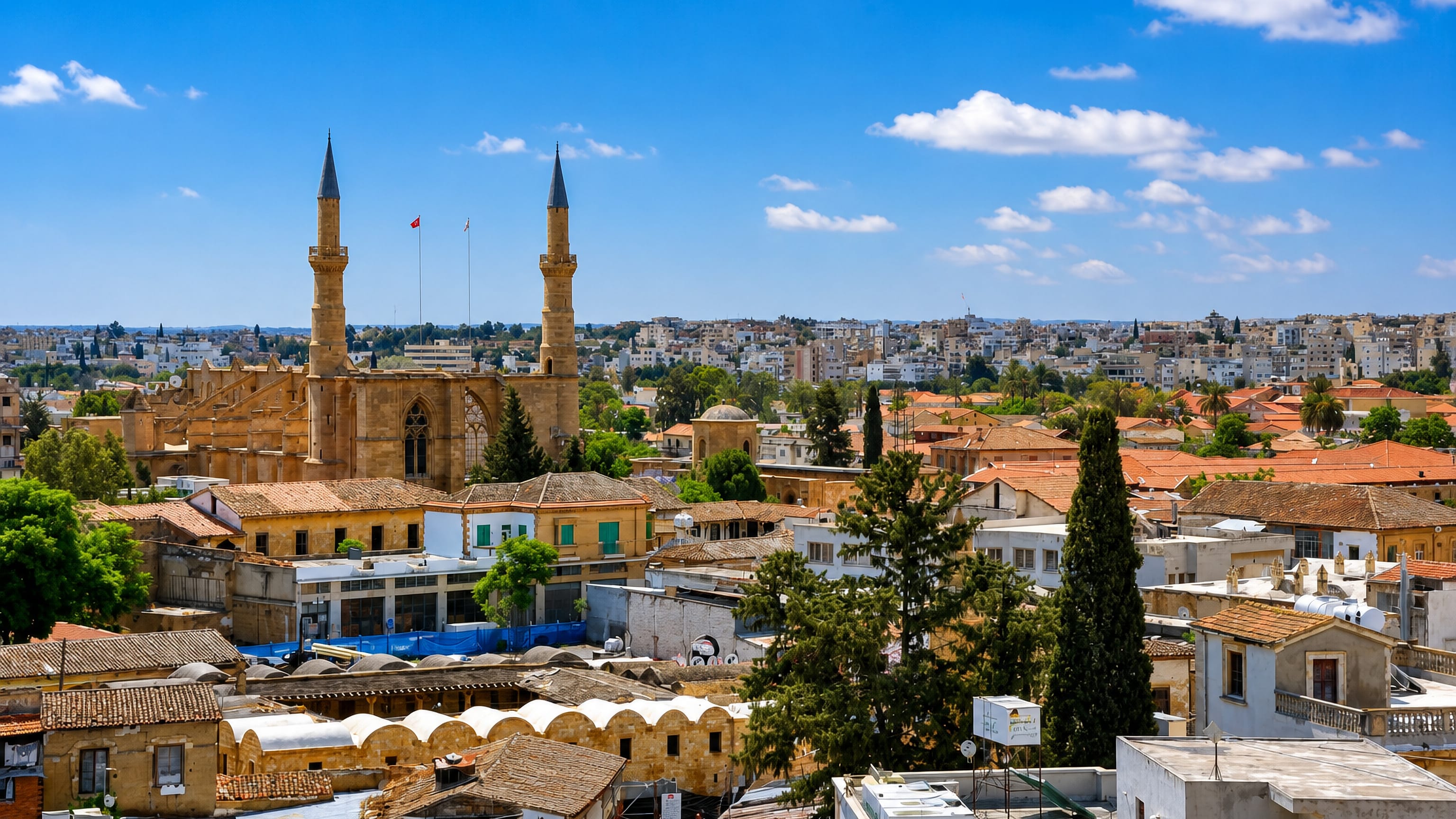
Old walls ring the plain-set streets of Nicosia, the capital and largest city of Cyprus, known for the Cyprus Museum and Saint Sophia Cathedral.Where to stay →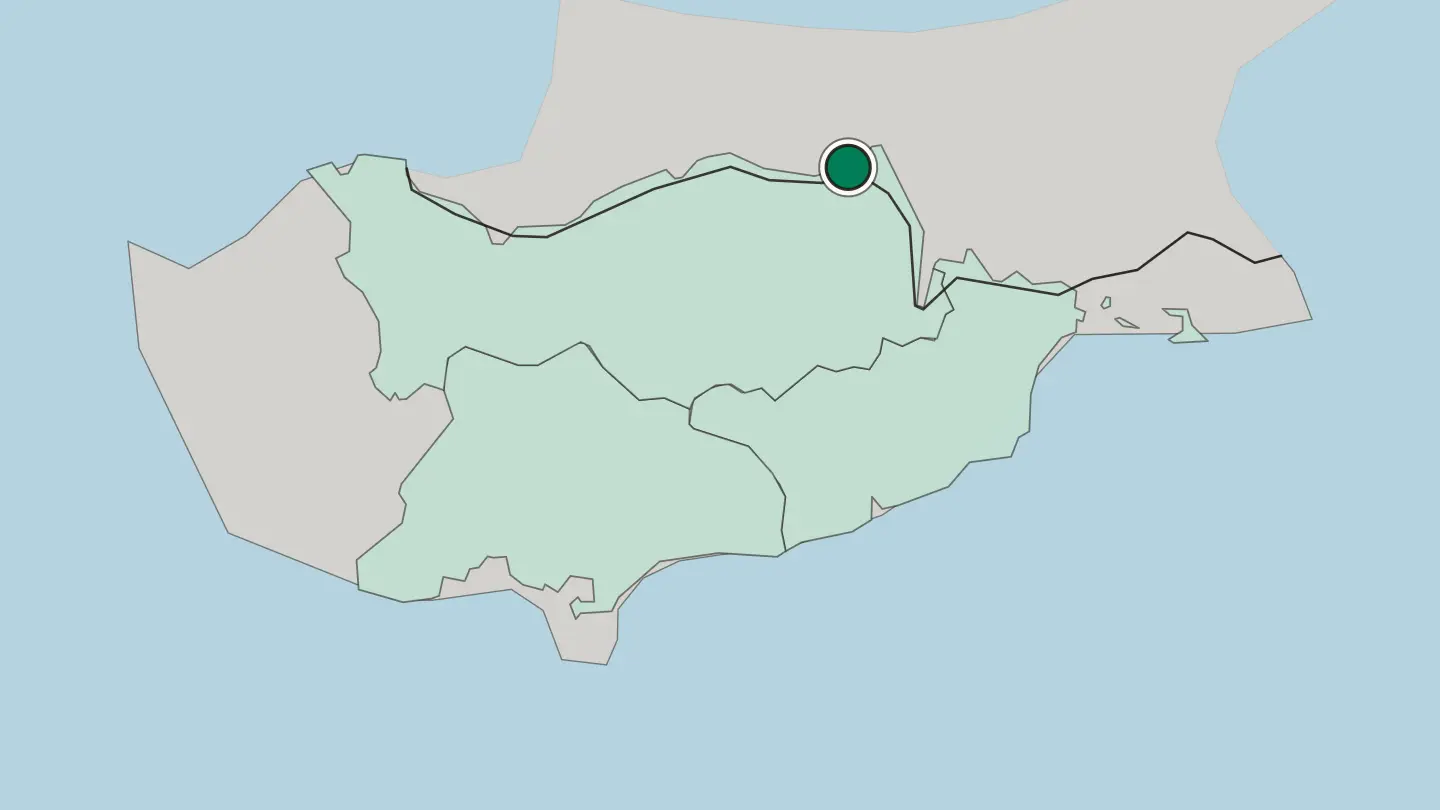
 Cyprus
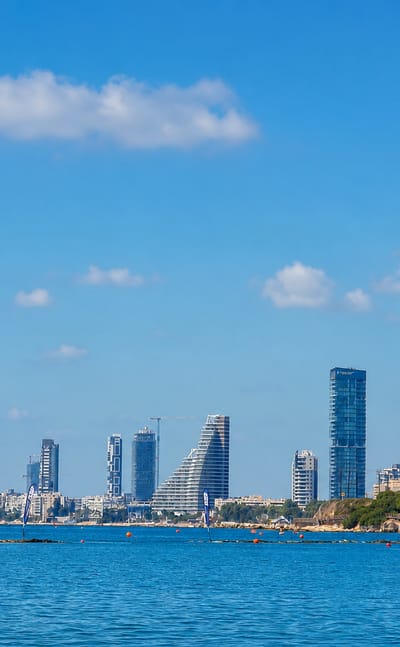
Limassol
Sea light falls on the old quays of Limassol, the second-largest city of Cyprus and its principal sea port, known for the medieval Limassol Castle.Where to stay →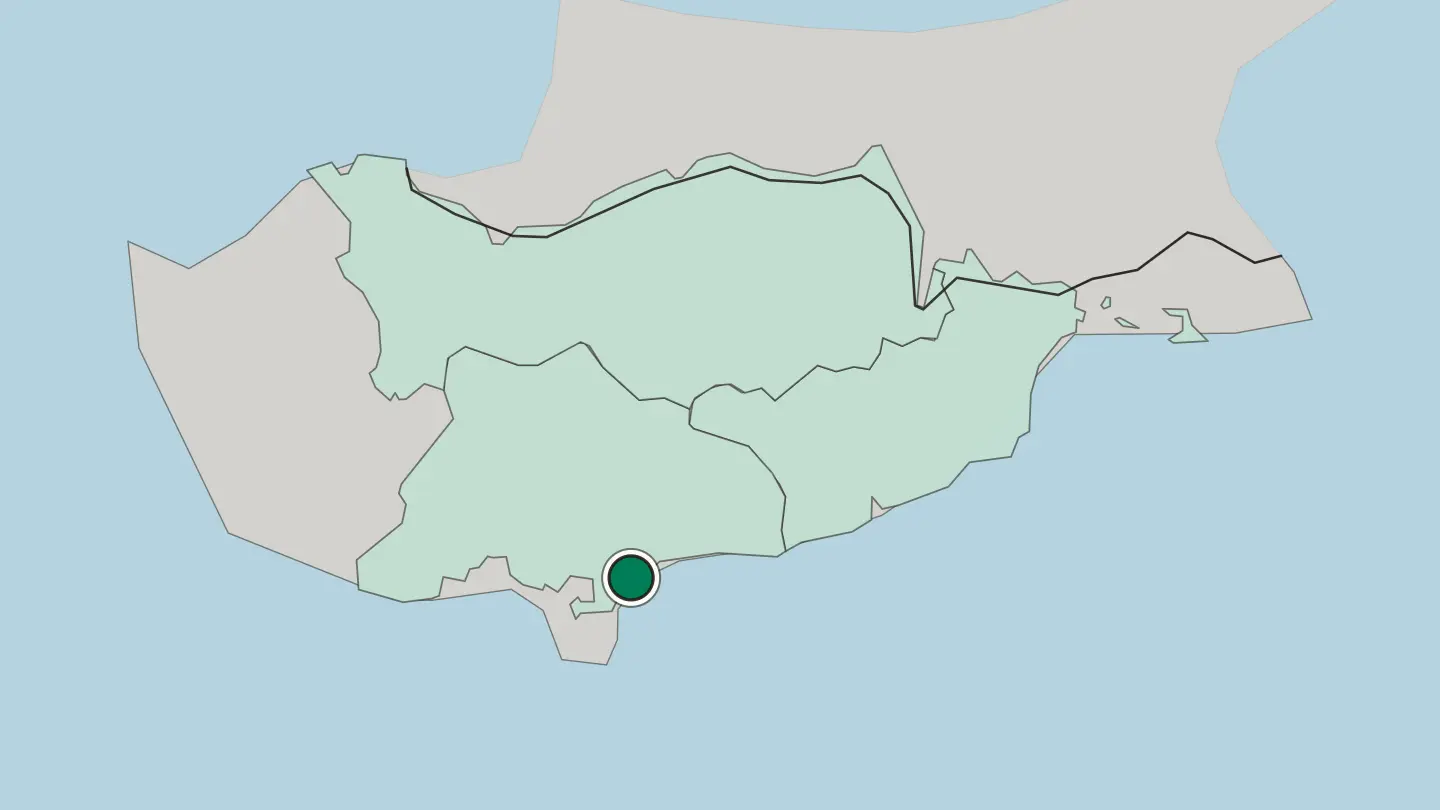
 Cyprus
Larnaca
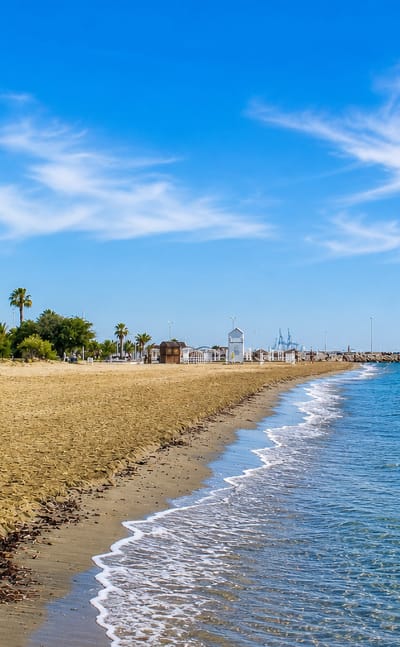
Larnaca sits on the south-east coast of Cyprus, capital of the Larnaca District, known for Larnaca Castle and the Statue of Zeno.Where to stay →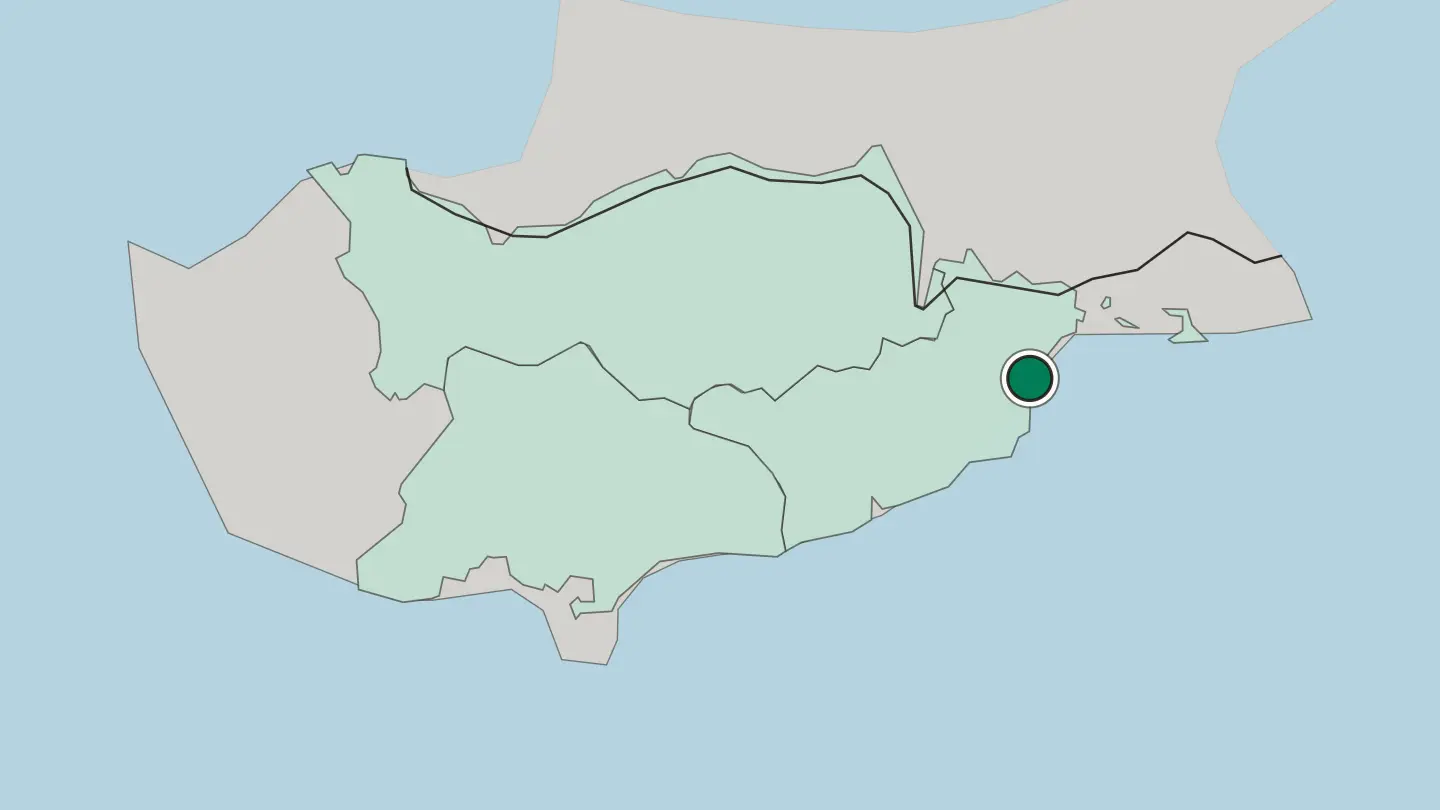 Cyprus
Morphou
Morphou, Güzelyurt in Turkish, is a town in northwestern Cyprus under the de facto control of Northern Cyprus, known for its oranges.Where to stay →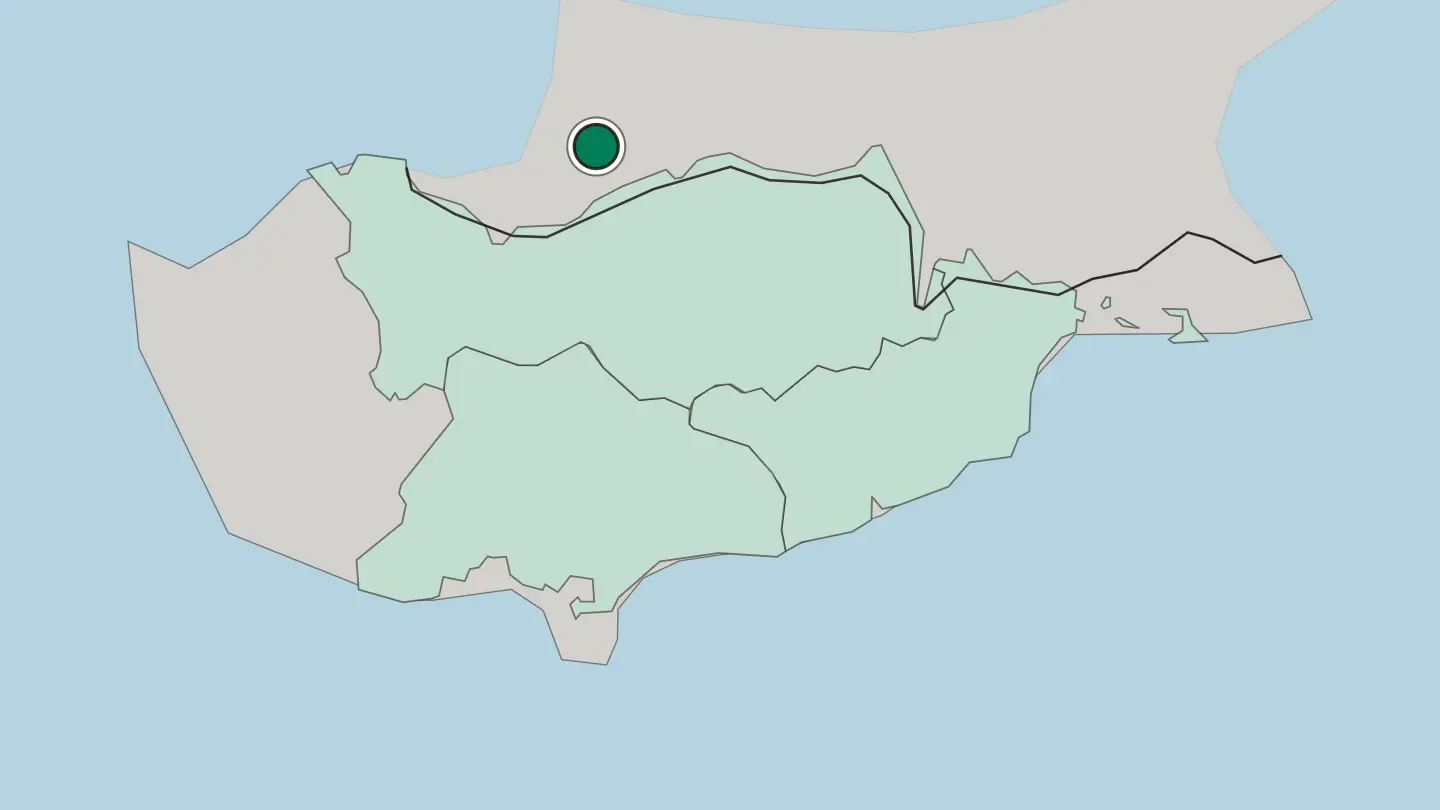
Hotel links are affiliate links: booking through them may earn us a commission, at no extra cost to you. It never affects how places are ranked. How this works
Regions of Cyprus
Cyprus
Eparchía Lárnakas
Eparchía Lárnakas is one of the six districts of Cyprus, reaching inland from its capital Larnaca toward Nicosia District.Towns & cities →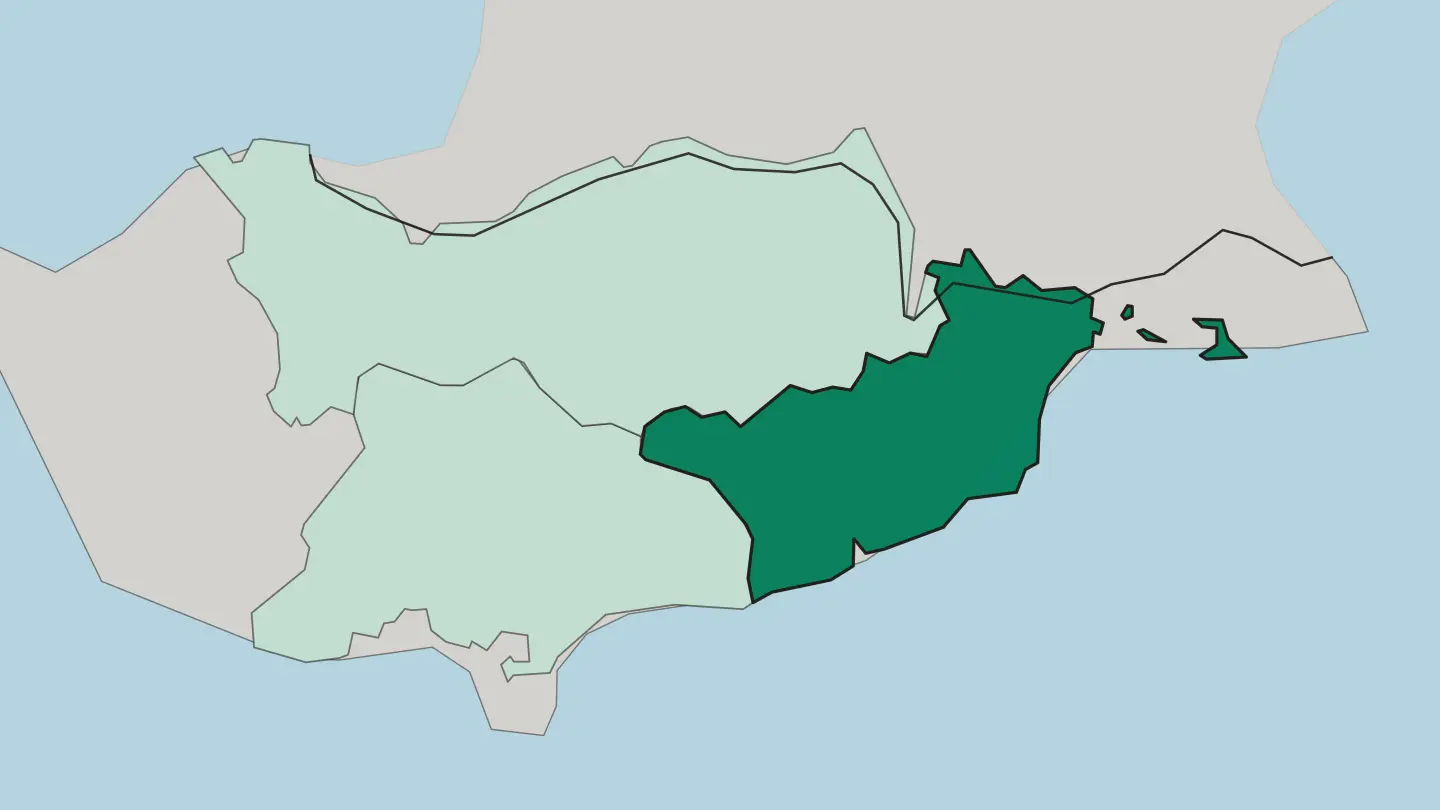 Cyprus
Limassol District
Limassol District runs down to the southern coast of Cyprus, one of the island's six districts, gathered around its capital and hub city of Limassol.Towns & cities →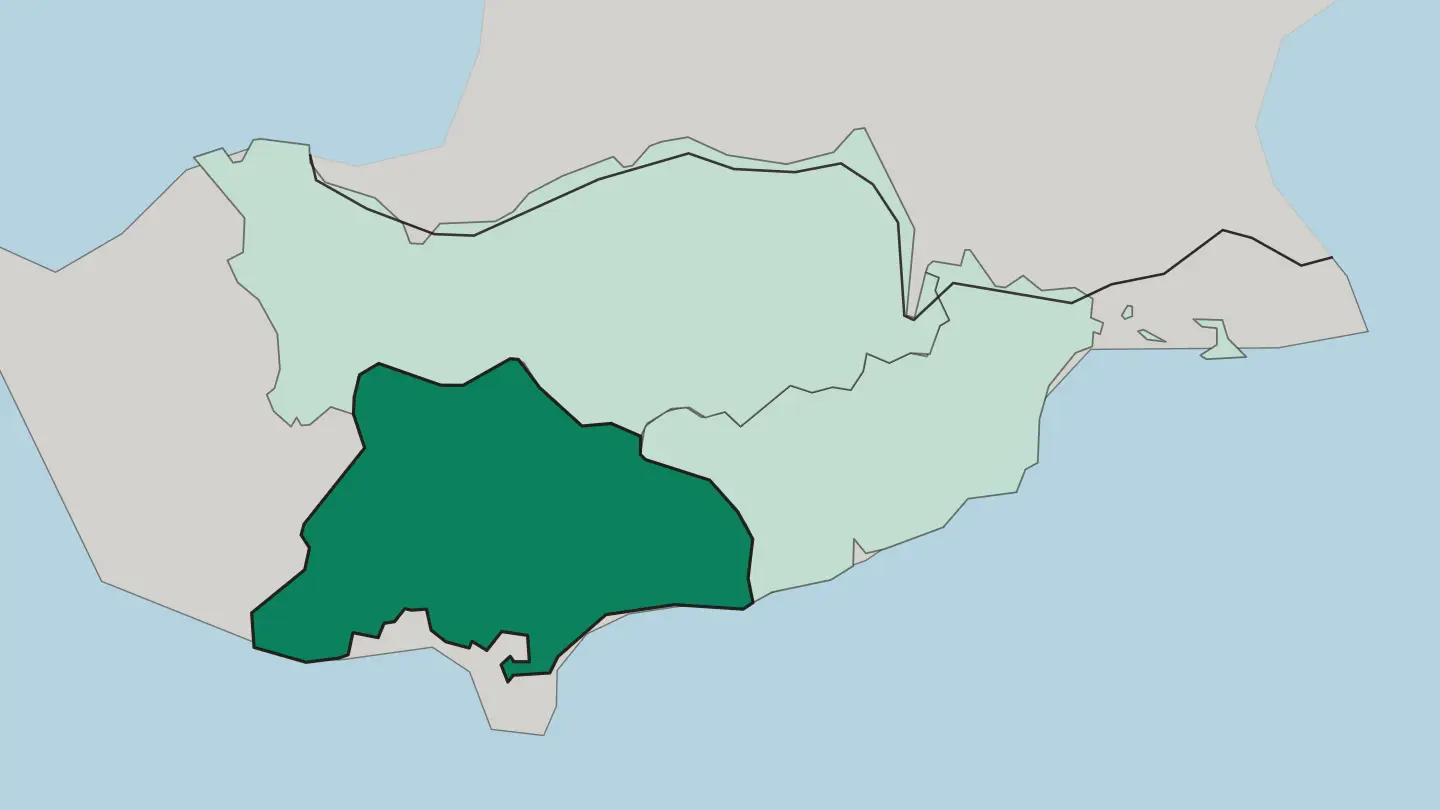 Cyprus
Nicosia District
Nicosia District is one of the six districts of Cyprus, the island's inland heart, gathered around the capital and main town of Nicosia.Towns & cities →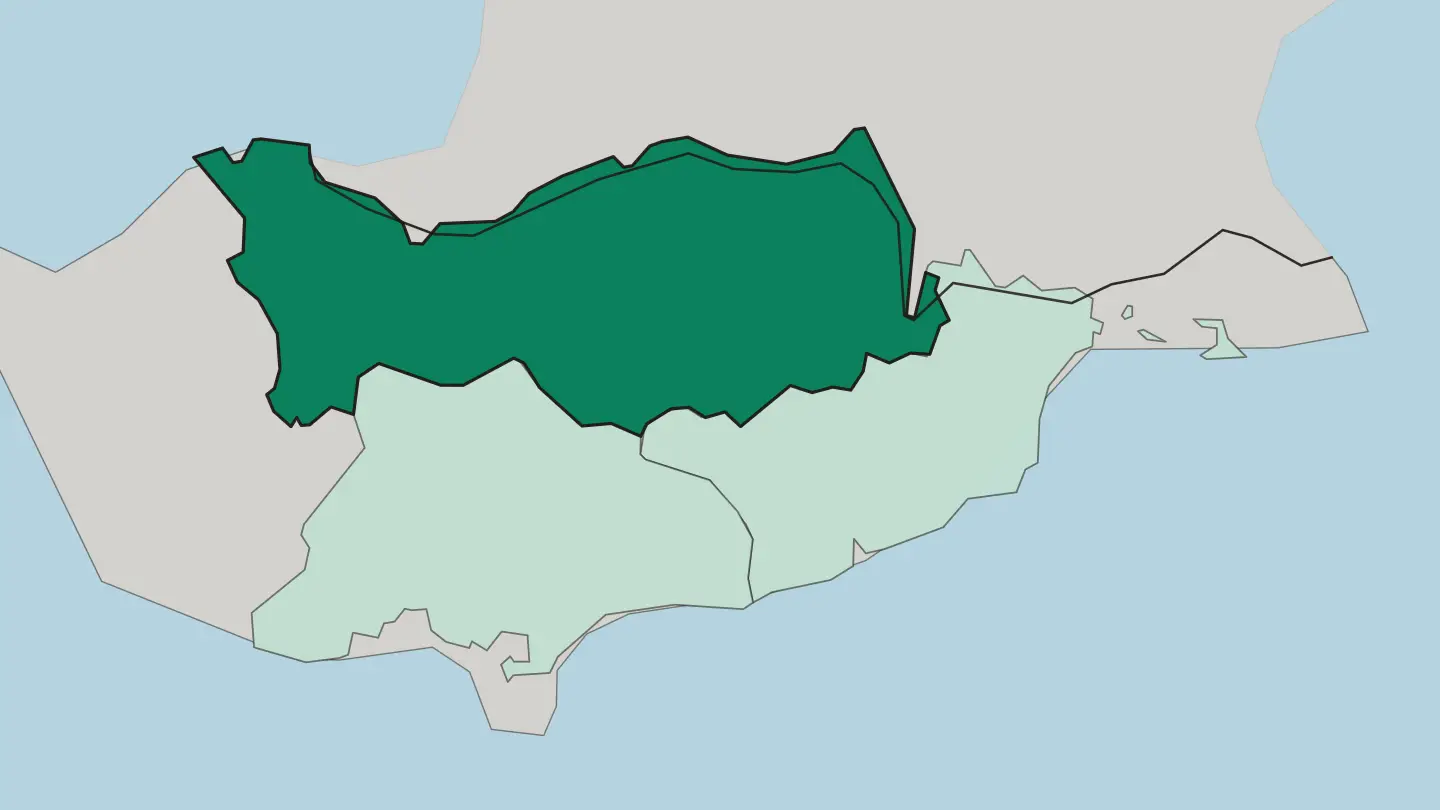
Explore by experience
Not sure which place? Start from how you want to travel.
About Cyprus
What is Cyprus known for?
Aphrodite was said to have risen from the sea near Paphos, and the myth still colours how travellers picture the island. Ancient stone anchors it. The Greco-Roman theatre and mosaics at Kourion look out over the water, while the copper-bearing Troodos mountains climb to pine forest and painted Byzantine churches.
Along the coast run the resort beaches of Ayia Napa and the harbours of Limassol and Larnaca. Halloumi and slow-baked meze fill the tables. This is a small island with a very long memory.
Where is Cyprus?
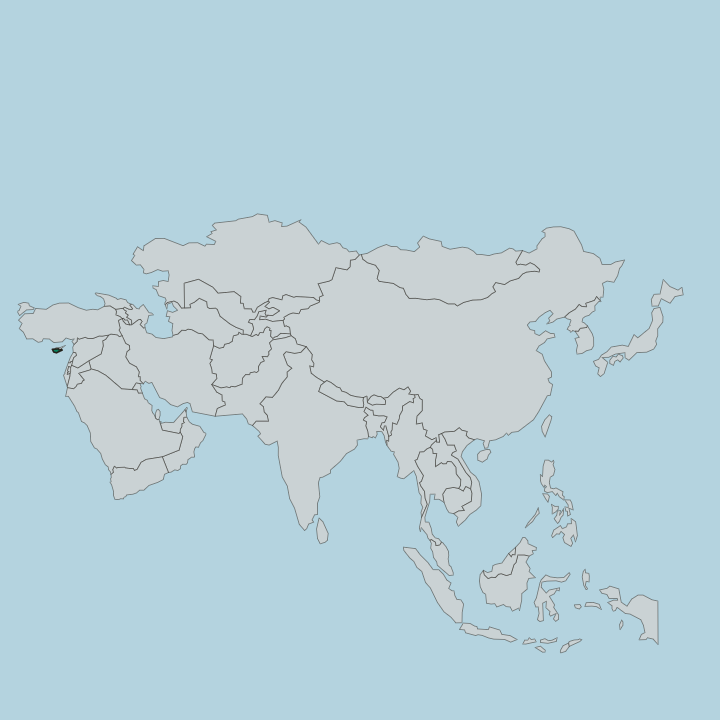
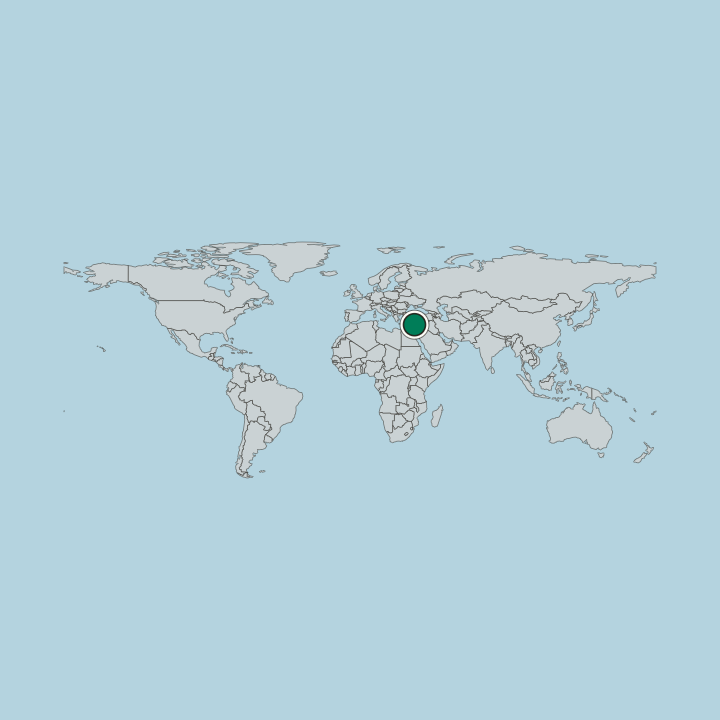
Cyprus is the third-largest island in the Mediterranean Sea, lying off the coast of the Levant south of Turkey. Two mountain systems frame it. The volcanic Troodos range fills the centre and southwest, rising through copper-rich rock and pine forest to the island's high point on Mount Olympus, while the long, narrow Kyrenia range runs along the northern shore.
Between the two ranges spreads the Mesaoria, a flat, low plain whose name means "between the mountains" and which stretches from Morphou Bay in the west to Famagusta Bay in the east. Nicosia sits roughly in the centre of that plain, on the banks of the Pedieos, the island's longest river. The coastline does much of the work here.
Wide sandy bays open near Ayia Napa in the southeast and around Larnaca, while the southwestern shore below Paphos breaks into a run of small coves and rocky headlands. The interior climbs quickly. Within an hour of the beach at Limassol the road reaches cool mountain villages under the Troodos pines.
From salt lake to summit, the island packs a surprising range of ground into a small compass.
What is the history of Cyprus?
Few islands carry a past this dense. Greek settlers arrived by at least the twelfth century BCE and founded a cluster of city-kingdoms, among them Kourion, Paphos, Salamis, and Kition, whose ruins still ring the coast. Copper from the Troodos mountains made the island a prize.
Control passed in turn through Assyrians, Egyptians, and Persians before it fell under Roman and then Byzantine rule. Richard the Lionheart seized Cyprus during the Third Crusade in 1191. He soon sold it on, and the French Lusignan dynasty went on to hold the island for close to three centuries.
Venice fortified Famagusta and Nicosia against the Ottomans, who took the island in 1571 regardless. Ottoman rule lasted more than three centuries, until Britain arrived in 1878 and later governed the island as a crown colony. Independence came in 1960.
Britain kept the sovereign bases at Akrotiri and Dhekelia, and the island's more recent history has been marked above all by division. A United Nations buffer zone still cuts across the Mesaoria and through the middle of Nicosia, the last divided capital in Europe. Layer on layer, the past here is never quite finished.
What is Cyprus like?
Greek is the everyday language of the Republic of Cyprus, and Greek Orthodox tradition runs through the island's festivals, its village churches, and the painted chapels of the Troodos mountains. Food sits close to the centre of it. A Cypriot meze arrives as a long procession of small plates, grilled halloumi and slow-cooked meats among them, and no one hurries the table.
The island is a wine country too. Commandaria, the sweet dessert wine made on the southern slopes of the Troodos, is one of the oldest named wines still in production, its roots reaching back to the medieval Crusader estates. Daily life keeps a coffee-house rhythm, and the afternoon slows in the summer heat.
Crafts run deep. Lefkara is known across the island for its lace and silverwork, and pottery villages carry on old forms. Layered over the Greek Cypriot mainstream are Turkish, Levantine, and British threads, the last a legacy of colonial rule that left the island driving on the left and fond of a certain kind of tea.
It all reads as one culture, weathered and unmistakably Mediterranean.
What is the climate of Cyprus?
Cyprus has a hot-summer Mediterranean climate, dry and bright for much of the year. Summers on the Mesaoria plain and along the coast at Limassol and Larnaca run long, hot, and rainless, while winters stay mild and green. The mountains break the pattern.
High in the Troodos, snow settles on the upper slopes each winter and a small ski area opens on Mount Olympus. Sunshine is the island's calling card. Rain, when it comes, falls mostly between late autumn and early spring.
How do you get to Cyprus?
For most visitors, arriving in Cyprus means landing at one of its airports. Larnaca handles the busiest international airport and sits within easy reach of the capital, Nicosia, and the southeast beaches, while Paphos runs the second airport and serves the southwest coast. Ferries are limited.
As an island with no operating passenger rail, Cyprus is best crossed by road, and a good motorway network links Larnaca, Limassol, and Paphos along the south. Hire a car to reach the Troodos villages. Distances are short and the driving is on the left.
Good for
Updated September 2026