Cyprus · Nicosia District
Where to Stay in Nicosia, Nicosia District
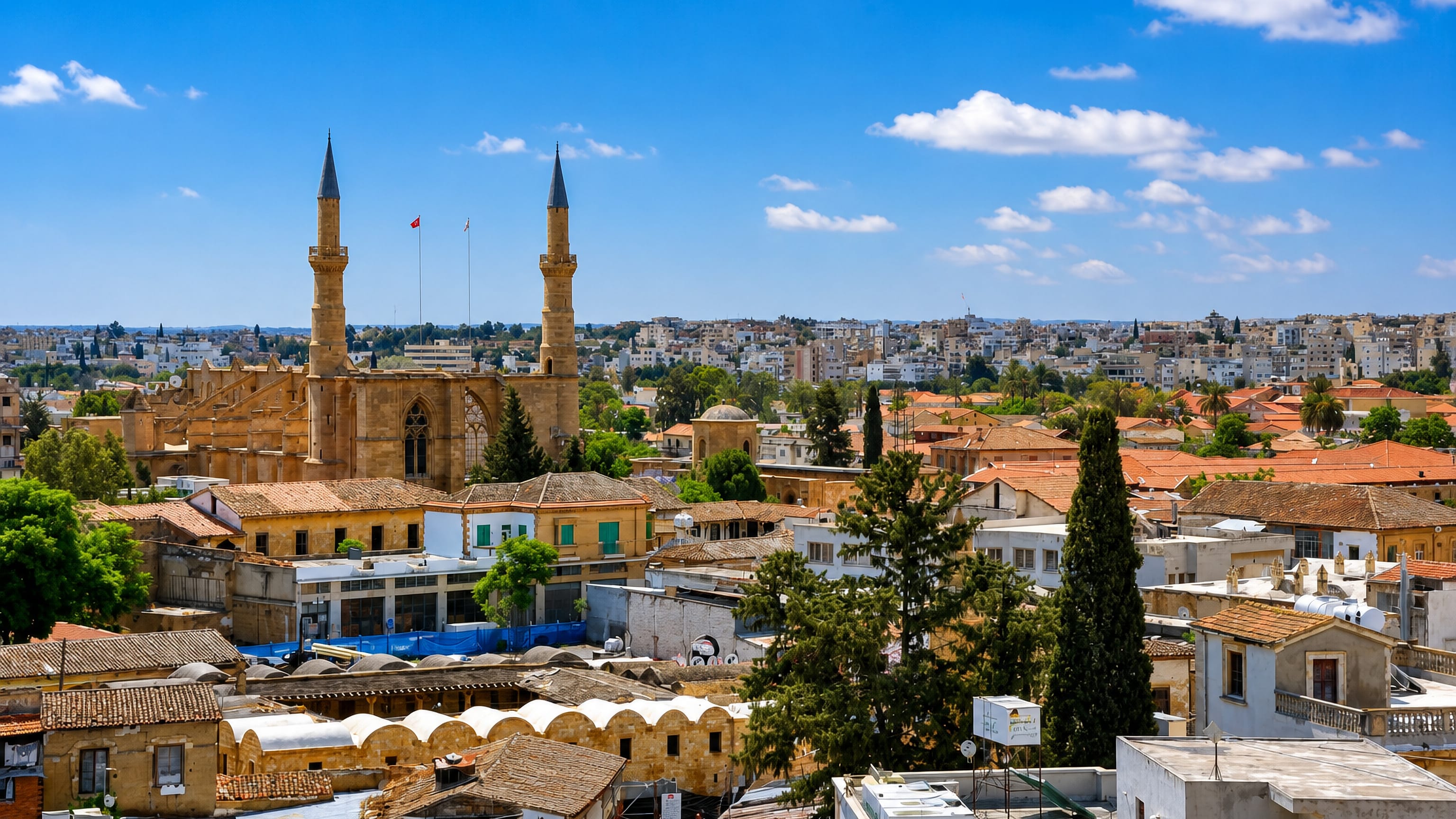
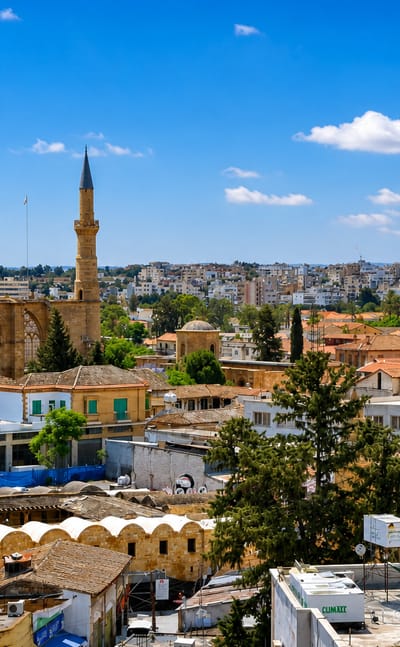
Old walls ring the plain-set streets of Nicosia, the capital and largest city of Cyprus, known for the Cyprus Museum and Saint Sophia Cathedral.
Hotel links are affiliate links: booking through them may earn us a commission, at no extra cost to you. It never affects how places are ranked. How this works


Where to stay in Nicosia
Not every neighbourhood fits every trip — here's what each one is good for.
 NicosiaCyprus
Ayios Savvas
Ayios Savvas is a quarter of 25 streets inside the Venetian walls of Nicosia, built around a two-aisled parish church of 1850 and 1851.Ayios Savvas →NicosiaCyprusTabakhane
Tabakhane is named for the tannery that stood outside Nicosia's walls by the Paphos Gate, a quarter of nine streets west of Ledra Street.Tabakhane →NicosiaCyprusHaydar Pasha
A rose window and a minaret mark the middle of Haydar Pasha, a quarter inside the walls of Nicosia named for an Ottoman general of the 1570 conquest.Haydar Pasha →NicosiaCyprusAyios Kassianos
Ayios Kassianos is one of the twenty-four quarters inside Nicosia's walled city, named for its parish church and known historically as Kafesli.Ayios Kassianos →NicosiaCyprusTaht-el-kale
Taht-el-kale is the quarter of Nicosia at the Famagusta Gate, 28 streets of stone frontages inside and outside the Venetian walls.Taht-el-kale →NicosiaCyprusTrypiotis
Trypiotis is a quarter of Nicosia's old town, named for the Archangel Michael Trypiotis church, a parish rebuilt on Solonos Street in 1695.Trypiotis →NicosiaCyprusAyios Antonios
Ayios Antonios takes its name from a parish church of 1736 that stands below street level in the south-east corner of Nicosia.Ayios Antonios →NicosiaCyprusPallouriotissa
Paving stones edge Plateia Pallouriotissas in Pallouriotissa, a quarter of Nicosia outside the Venetian walls and registered officially as Panagia.Pallouriotissa →NicosiaCyprusAyioi Omoloyites
Agioi Omologites grew from a village around a church of 1674 and lies south of Nicosia's walled city, along the Pedieos.Ayioi Omoloyites →NicosiaCyprusAyios Andreas
Ayios Andreas, the old Tophane quarter, straddles the Venetian walls in south-western Nicosia, holding Paphos Gate and the Cyprus Museum.Ayios Andreas →NicosiaCyprusYenişehir
Coaches fill the bays at Lefkoşa Otobüs Terminali in Yenişehir, a ministry quarter of Nicosia built outside the Venetian walls between 1930 and 1945.Yenişehir →NicosiaCyprusKaimakli
Kaimakli is a northeastern suburb of Nicosia, a masons' and brickmakers' village until 1968, cut at its far end by the Green Line.Kaimakli →All neighbourhoods (16)
NicosiaCyprusArab Ahmet
Yellow stone and inner courtyards line Arab Ahmet, a quarter in the west of walled Nicosia where Ottoman kadis and pashas kept their houses.Arab Ahmet →NicosiaCyprusYeni Jami
A Gothic stair tower still stands beside the Yeni Cami, the mosque that names Yeni Jami, a quarter in the north-east of walled Nicosia.Yeni Jami →NicosiaCyprusOmorfita
Omorfita and Küçük Kaymaklı name one Nicosia quarter, an old village northeast of the Venetian walls, divided between two administrations since 1974.Omorfita →NicosiaCyprusGöçmenköy
Göçmenköy replaced farmland from 1966, a quarter of Nicosia raised on its own brick and named, in Turkish, village of the displaced.Göçmenköy →Hotel links are affiliate links: booking through them may earn us a commission, at no extra cost to you. It never affects how places are ranked. How this works
Things to do in Nicosia
Ranked by global recognition; descriptions from Wikidata (CC0).
Museums & Galleries
3- Cyprus Museum
- Leventio Museum
- Leventis Gallery
Churches & Religious Sites
3- Saint Sophia Cathedral
- Haydar Pasha Mosque
- Notre Dame de Tyre
Castles & Historic Sites
3- Liberty Monument
- Archbishop's Palace
- Milli Egemenlik Anıtı
Stadiums & Sports
1- Platy High School Gymnasium
worth knowingacross 4 categories in Nicosia
About Nicosia
What is Nicosia known for?
Nicosia is known as the capital of Cyprus and, by far, its largest city. It is the southeasternmost capital among European Union member states. The city carries the island's chief museums and heritage, from the Cyprus Museum to the medieval Saint Sophia Cathedral, and a dividing line runs through it, so that its northern part serves as the de facto capital of Northern Cyprus.
Two communities meet along that line.
What are the main landmarks in Nicosia?
Nicosia holds the chief monuments and museums of Cyprus within and around its walls. The Cyprus Museum keeps the island's archaeology. Close by stand the Saint Sophia Cathedral, a great medieval church, and the Archbishop's Palace, while the Leventis Gallery and the State Gallery of Contemporary Art carry its art.
The Liberty Monument marks the walled edge, and the Haydar Pasha Mosque rises in the northern part of the city.
What is the history of Nicosia?
Nicosia has served as the capital of Cyprus across long centuries, its walled core the seat from which the island was governed. The old walls tell that story. Medieval and later builders raised the churches and palaces that still stand within them, among them the Saint Sophia Cathedral, a cathedral church later given other uses, and the Archbishop's Palace beside it.
Around these the walled town grew as the administrative and religious heart of Cyprus, gathering the museums and institutions that make the modern Cyprus Museum and its neighbours. The city's more recent history is marked by division. A line came to run through Nicosia, splitting the capital, and its northern part became the de facto capital of Northern Cyprus, where the Haydar Pasha Mosque stands among the older monuments.
That boundary crosses the walled centre itself. Through settlement, building, and division alike, Nicosia has stayed the capital and the largest city on the island, the fixed point of Cyprus.
Where is Nicosia?
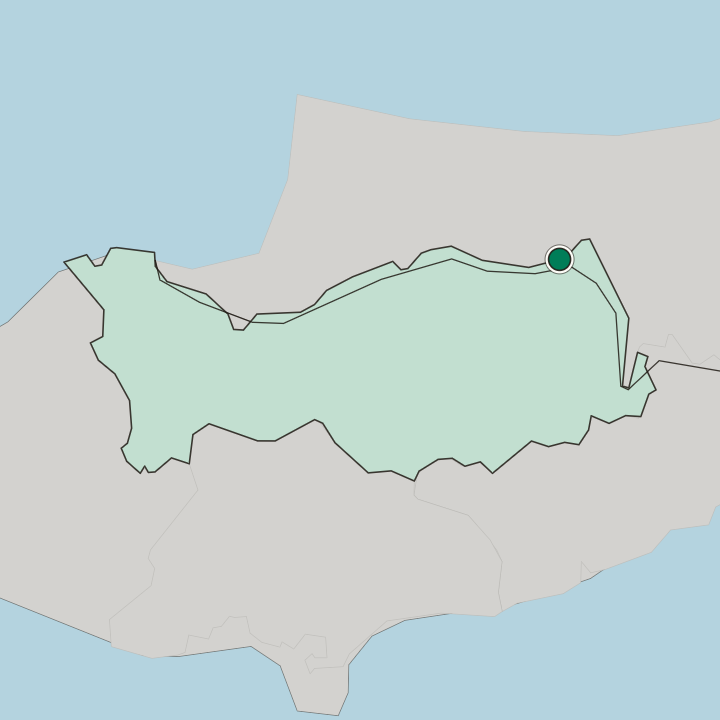
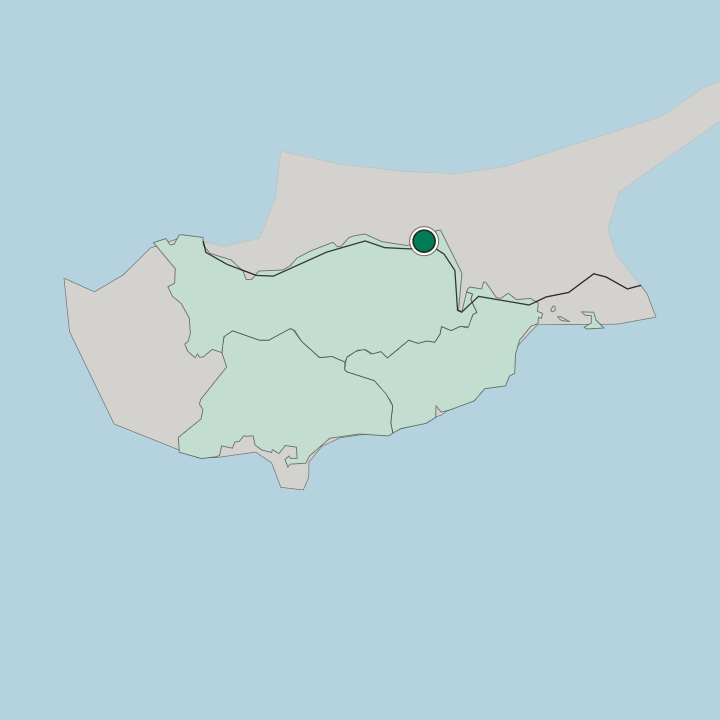
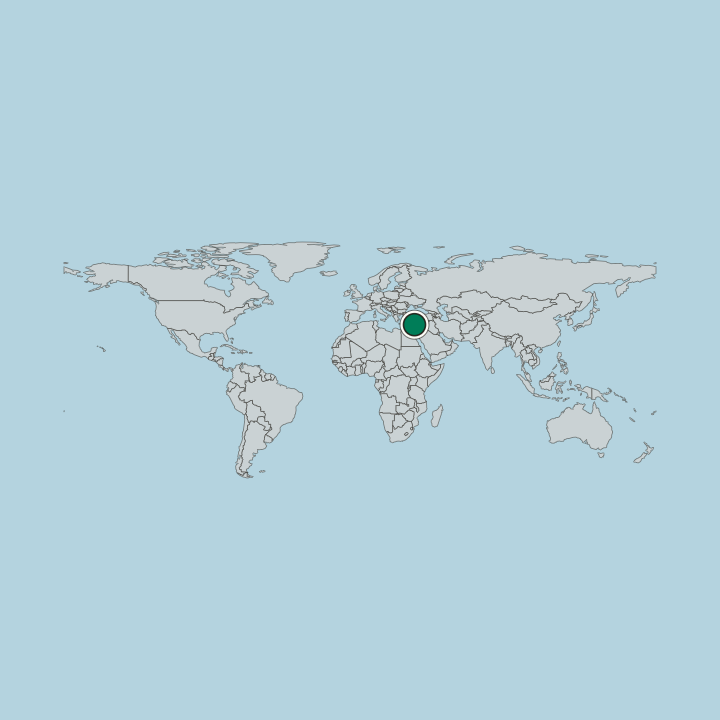
Nicosia sits inland at the centre of Cyprus, on a broad open plain rather than by the sea. It is the island's only landlocked capital-scale city. The plain spreads flat around the walls, and the town holds no coast of its own, reached instead by road from the island's shores.
A dividing line crosses the city. Beyond it, the plain around Nicosia carries the northern part of the town.
What is the climate of Nicosia?
Nicosia has a hot, dry inland climate of long baking summers and short mild winters. The plain around the city holds the summer heat. Lying away from the sea at the centre of Cyprus, the capital runs hotter than the island's coasts, and its winters bring cool, wetter spells rather than snow to the walls and the plain.
Most of the rain falls in the cooler part of the year.
How do you get to Nicosia?
Nicosia is reached overland, since the capital of Cyprus holds no coast or harbour of its own. Roads run in from every side. Travellers arrive from the island's coastal cities and their airports, then follow the highways inland across the plain to the walled centre.
A dividing line crosses Nicosia, and crossing points along it link the southern capital with the northern part of the city.
Good for
Another city in Nicosia District
Updated October 2026