Germany · Mecklenburg-Western Pomerania · Schwerin
Lankow, Schwerin — Area Guide & Where to Stay
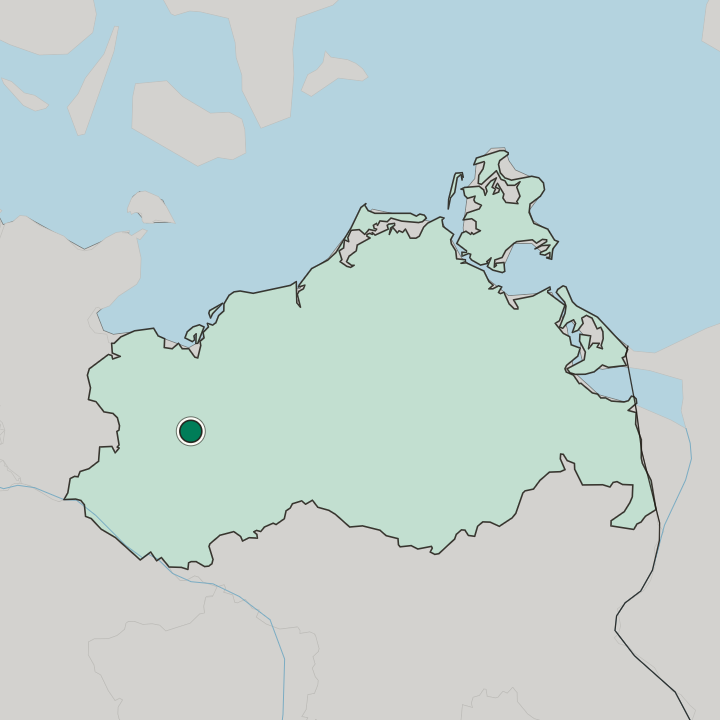
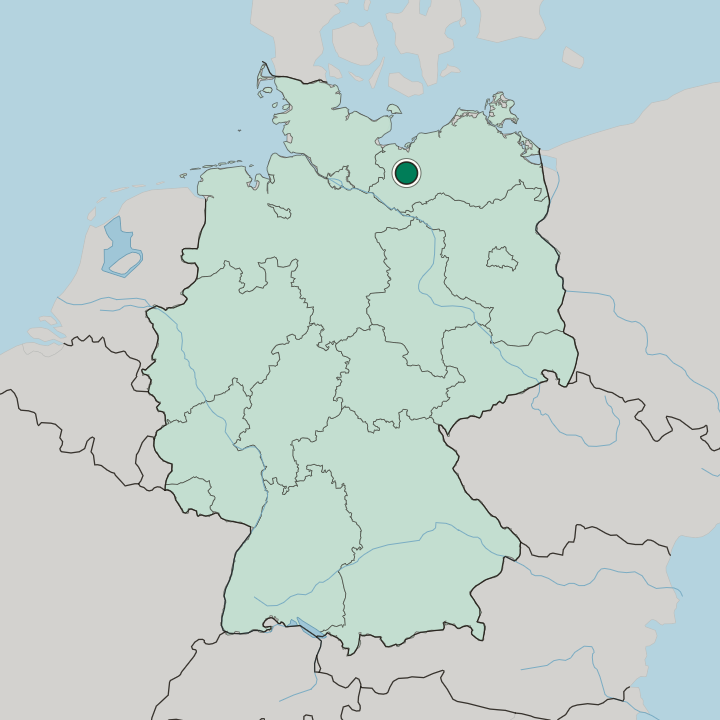
Lankow is a Stadtteil in the northwest of Schwerin between the Lankower and the Medeweger See, first recorded on 22 April 1237.
Hotel links are affiliate links: booking through them may earn us a commission, at no extra cost to you. It never affects how places are ranked. How this works


Where to stay in Lankow
Where visitors usually base themselves, and why.
Water is on three sides. The Friedrichsthaler Wald, the Lankower See and the Neumühler See across a footbridge are what people here use for recreation, while the Medeweger See has had no access, sports ground or excursion inn kept up since the 1950s. The housing is late and industrial.
Until the early 1960s the Stadtteil was a handful of farmsteads, and then came large-scale building in precast panels along with a concrete slab works, a packaging works and a builders' merchant. Rooms are in Schwerin proper.
About Lankow
What are the main landmarks in Lankow?
A Slav ring fort is the oldest thing standing. Dated to 1160 and rectangular at fifty-five by forty-five metres, it lies on a peninsula in the former bishop's garden off the Lankower Straße, and a stony ridge locally called the Furt runs underwater from it toward the old Landwehr ditch on the Neumühl shore, where the lost village of Turow once stood. That shallow is on no official map.
Another fort was timber. The Klotekenburg stood in 1441 on the Klotzwerder peninsula in the Lankower See and belonged to the robber knight Kloteke, to whom the deserted village of Kloteke between Groß Medewege and Wickendorf is also ascribed, and the field name Diebeskeller below the old weather station carries his memory too.
What is the history of Lankow?
A land swap put it in writing. On 22 April 1237 Gunzelin III, count of Schwerin, recorded that Heinrich von Schwerin and his brother had exchanged two hides at Lankow for arable on the Schwerin town field with the cathedral chapter, and the name comes from the Slavic Lanckow for a marshy place. The chapter bought the rest.
It acquired the whole village during the years around 1300, and by about 1350 there were three knightly farms at Lankow, held by the lords von Raven, von Driberg and von Zickhusen. War emptied it twice over. Danish billeting drove off the Lankow farmers' cattle in 1626 and 1627 during the Thirty Years War, and the settlement of territory afterwards made Lankow a Domanialdorf of the sovereign in 1648.
Then it grew slowly. Six farms stood in 1669, a brickworks and an inn are first named in 1757, the first larches went in along the Friedrichsthal road in 1798, and the state almanac of 1845 lists seven hereditary tenants, fourteen cottagers including a smith, two brickworks, a school, an inn and a village headman.
Where is Lankow?
Lankow lies in the northwest of Schwerin between the Lankower See and the Medeweger See, with the Friedrichsthaler Wald and the Neumühler See beyond it, and the Gadebuscher Straße running in toward the city.
More areas in Schwerin
Updated September 2026