Germany · Mecklenburg-Western Pomerania
Where to Stay in Schwerin, Mecklenburg-Western Pomerania
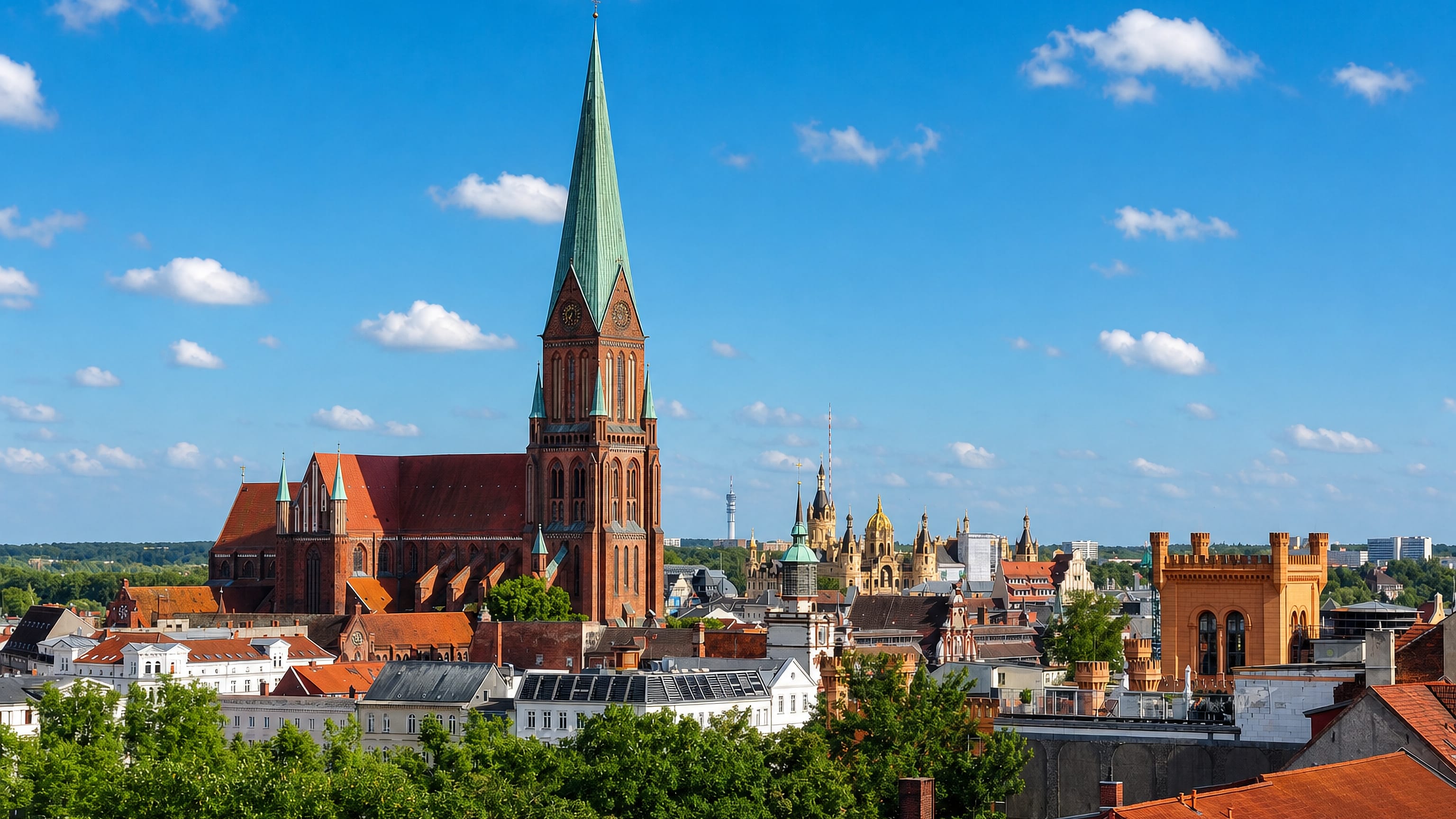
Schwerin is the state capital of Mecklenburg-Western Pomerania, a city of seven lakes built around the island palace of Schwerin Castle.
Hotel links are affiliate links: booking through them may earn us a commission, at no extra cost to you. It never affects how places are ranked. How this works


Where to stay in Schwerin
Each area has its own feel; here's who each one suits.

 SchwerinGermany
Paulsstadt
Paulsstadt is a Stadtteil of Schwerin west of the old town, ninety-six hectares laid out from 1837 and named for grand duke Paul Friedrich.Where to stay → SchwerinGermany
Weststadt
Weststadt is a district of Schwerin, holding the Paulskirche, the Sport- und Kongresshalle and the numbered frontages of Puschkinstraße.Where to stay →SchwerinGermanyLankow
Lankow is a Stadtteil in the northwest of Schwerin between the Lankower and the Medeweger See, first recorded on 22 April 1237.Where to stay → SchwerinGermany
Zippendorf
Zippendorf is a lakeside Stadtteil of Schwerin on the south shore of the Schweriner See, recorded in 1282 as villa Zuppucendorp.Where to stay →SchwerinGermanyWüstmark
Schwerin's southern outskirts hold Wüstmark, a district well clear of the centre and of the inner quarters at Weststadt and Paulsstadt.Where to stay →Hotel links are affiliate links: booking through them may earn us a commission, at no extra cost to you. It never affects how places are ranked. How this works
Find hotels in Schwerin
Direct booking searches for these neighbourhoods.
Schloßstraße and the old town
Schloßstraße links the old town shops to the castle island and the Staatliches Museum SchwerinFind hotels in Schloßstraße and the old townGuests wanting Werderstraße and Puschkinstraße quietAround the Schelf church
The Schelf church quarter keeps its older houses a short walk from the PaulskircheFind hotels in Around the Schelf churchFamilies pairing Zoo Schwerin with a shore walkThe Zoo Schwerin lakeside
Shore paths past Zoo Schwerin look across to Kaninchenwerder and its observation towerFind hotels in The Zoo Schwerin lakesideHotel links are affiliate links: booking through them may earn us a commission, at no extra cost to you. It never affects how places are ranked. How this works
Things to do in Schwerin
Ranked by global recognition; descriptions from Wikidata (CC0).
Museums & Galleries
3- Schwerin Castle UNESCO
- Schleifmühle Schwerin Heritage
- Staatliches Museum Schwerin
Churches & Religious Sites
3- Schelf church Heritage
- Paulskirche Heritage
- Schlosskirche
Castles & Historic Sites
3- Schwerin Victory Column Heritage
- Reiterdenkmal Friedrich Franz II. (Schwerin) Heritage
- Flachgräberfeld von Schwerin-Ostorf
Stadiums & Sports
2- Sport- und Kongresshalle Heritage
- Sportplatz Paulshöhe
Landmarks & Notable Places
3- Puschkinstraße 17 (Schwerin) Heritage
- Puschkinstraße 28 (Schwerin) Heritage
- Werderstraße 141 (Schwerin) Heritage
worth knowingacross 5 categories in Schwerin
About Schwerin
Schwerin Castle carries the city.
What is Schwerin known for?
Raised on an island between the lakes and rebuilt as a romantic palace, it stands at the head of a quarter of museums, churches, and monuments. The Staatliches Museum Schwerin holds the state art collection nearby. Beyond it the old town survives largely intact, and Zoo Schwerin, the Schwerin Victory Column, and the Schleifmühle spread the day out past the castle gates.
The lakes are never out of reach.
What are the main landmarks in Schwerin?
The castle comes first. Schwerin Castle fills its island, and the Schlosskirche stands within the same walls. Across the water the Staatliches Museum Schwerin, the Paulskirche, the Schelf church, and the Schwerin Victory Column mark out the old town, while the Berliner Tor and the Schleifmühle survive from the working edges of it.
Zoo Schwerin and the Technisches Landesmuseum Schwerin take the rest of a wet afternoon. Kaninchenwerder adds a tower over the trees.
What is the history of Schwerin?
The date on the charter is 1161. Older ground lies at Ostorf, where a flat-grave field marks burials that predate the town by a long stretch, and the modern city has simply grown around it. Medieval Schwerin built in stone.
The Franziskanerkloster housed friars inside the walls, the Berliner Tor closed the road out, and the Schelf church served the quarter that still carries its name. Water shaped the early town as much as the walls did, with the castle set on its island and the lakes closing the approaches on more than one side. The Schleifmühle worked at the town's edge.
The palace era followed. Schwerin rebuilt its castle into the romantic palace the city is known for, and set monuments around it: the Schwerin Victory Column, the Reiterdenkmal of Friedrich Franz II, and the Paul Friedrich statue. Schwerin's collections were gathered later.
The Staatliches Museum Schwerin, the Technisches Landesmuseum Schwerin, the Mecklenburgisches Eisenbahn- und Technikmuseum, and the Museum auf dem Sachsenberg divide the city's collections between them. Street names still record the layers: Schloßstraße runs toward the castle, Werderstraße and Puschkinstraße carry the addresses that survived. The Sport- und Kongresshalle and Sportplatz Paulshöhe came with the modern city.
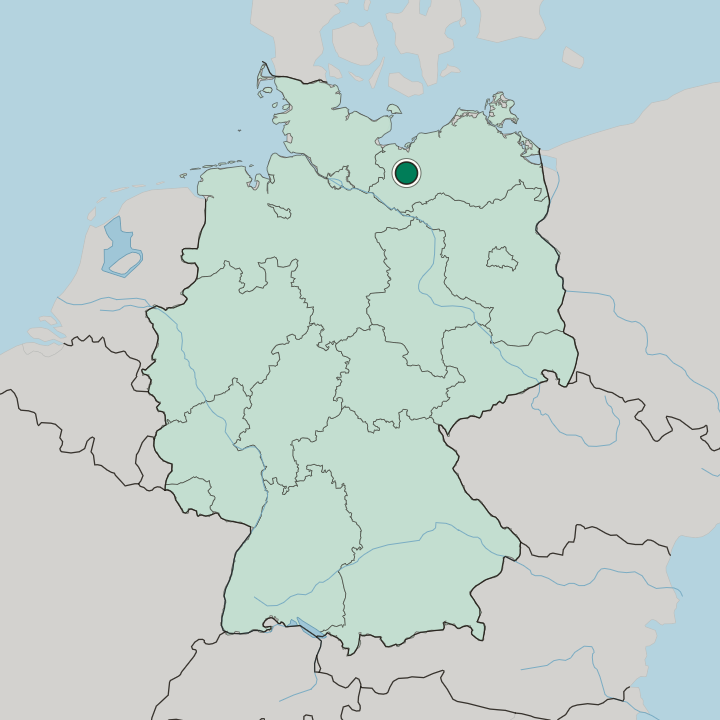
Schwerin ended up the state capital of Mecklenburg-Western Pomerania, second in size to Rostock.
Where is Schwerin?
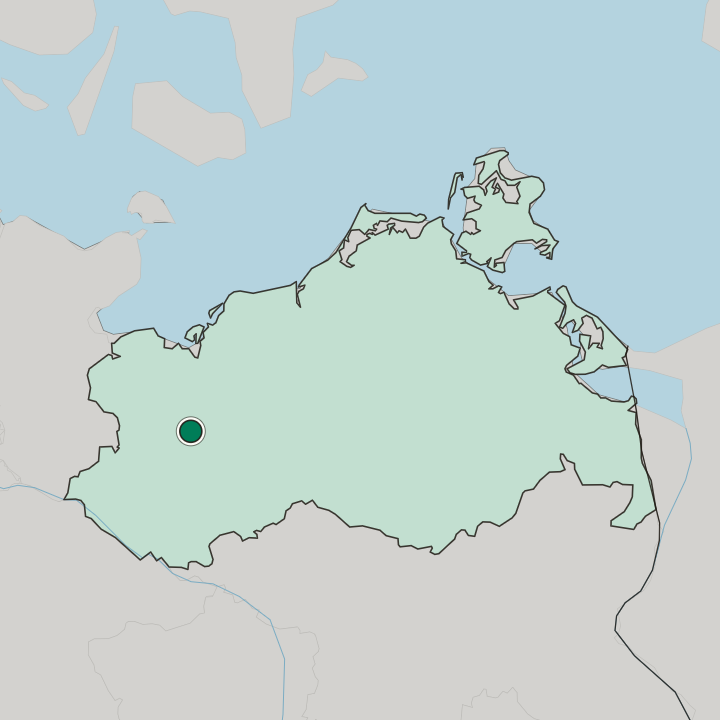
Seven lakes ring Schwerin. The city spreads between them, its old town on one shore and the castle island out in the water, while Kaninchenwerder rises offshore under an observation tower. Schwerin serves as capital both for the Mecklenburg region and for the state.
Rostock is the larger city. Ostorf and the Sachsenberg sit inside the built-up area.
What is the climate of Schwerin?
The lakes set the terms. Schwerin sits in the temperate band, where summers stay moderate and winters run grey rather than severe, and the water around the city holds its warmth well into autumn. Rain arrives in every season.
Fog gathers over the lakes on still mornings, and the shore paths below Schwerin Castle can vanish in it until the sun climbs.
How do you get to Schwerin?
The old gates name the roads. Berliner Tor still marks where traffic once left the walled town, and the rail age that followed is kept in the Mecklenburgisches Eisenbahn- und Technikmuseum. Roads and rails converge on the state capital, with Rostock the larger city of Mecklenburg-Western Pomerania.
Kaninchenwerder sits offshore under its observation tower, out in the lakes rather than on any road.
Common questions
What is the best area to stay in Schwerin?
Schloßstraße and the old town: Short city-break stays walking to Schwerin Castle. Around the Schelf church: Guests wanting Werderstraße and Puschkinstraße quiet. The Zoo Schwerin lakeside: Families pairing Zoo Schwerin with a shore walk.
Good for
More cities in Mecklenburg-Western Pomerania
Updated October 2026