Germany
Mecklenburg-Western Pomerania, Germany — Towns & Travel Guide
Mecklenburg-Western Pomerania is Germany's Baltic corner: seaside resorts, more than a thousand inland lakes, and old Hanseatic ports.
Hotel links are affiliate links: booking through them may earn us a commission, at no extra cost to you. It never affects how places are ranked. How this works


Towns & cities in Mecklenburg-Western Pomerania
Pick a town or city — each links to where to stay.

 Germany
Rostock
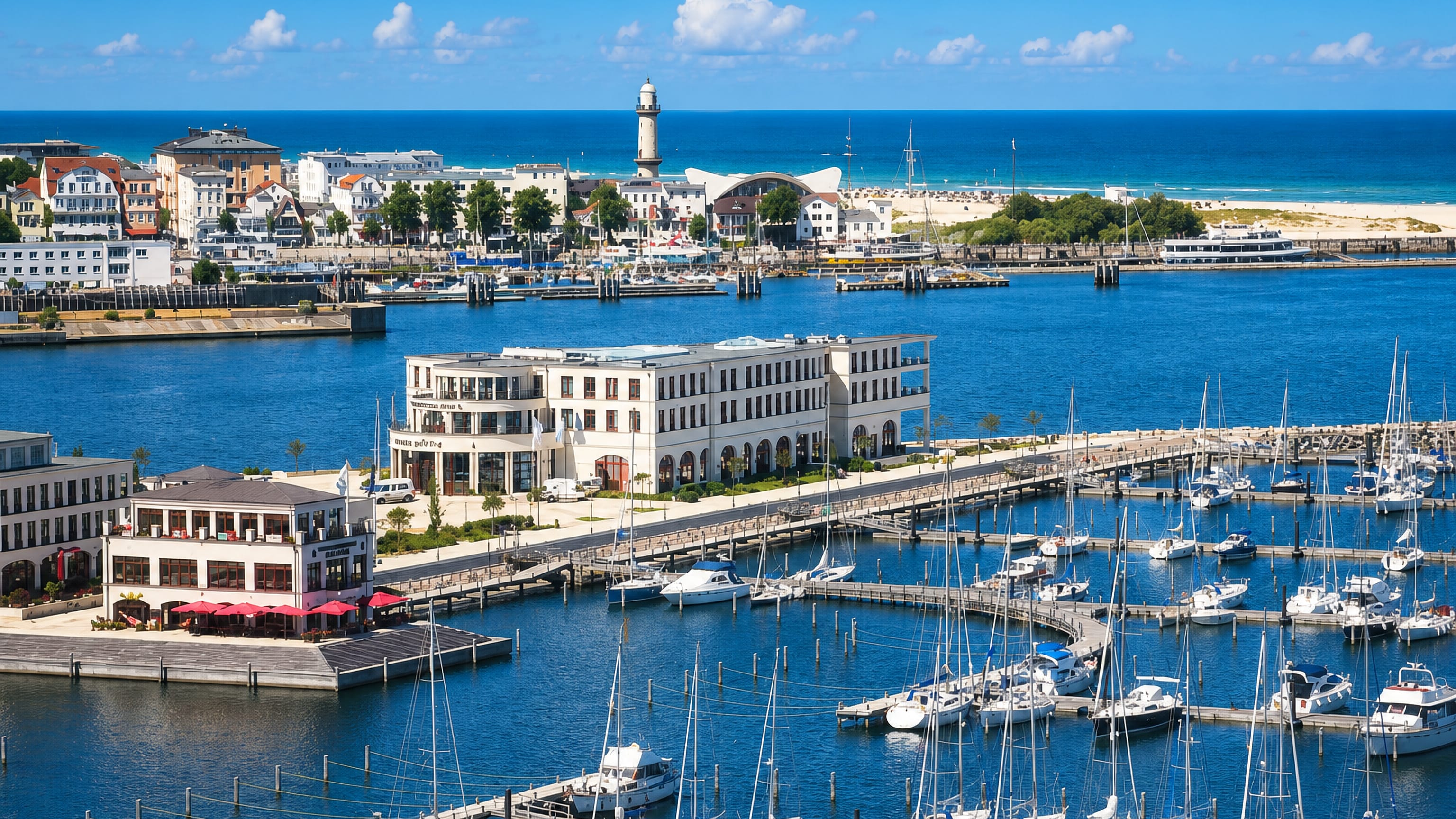
Rostock is the Hanseatic and University City on the German Baltic coast, founded in 1201, with St. Mary's Church over its old streets.Where to stay →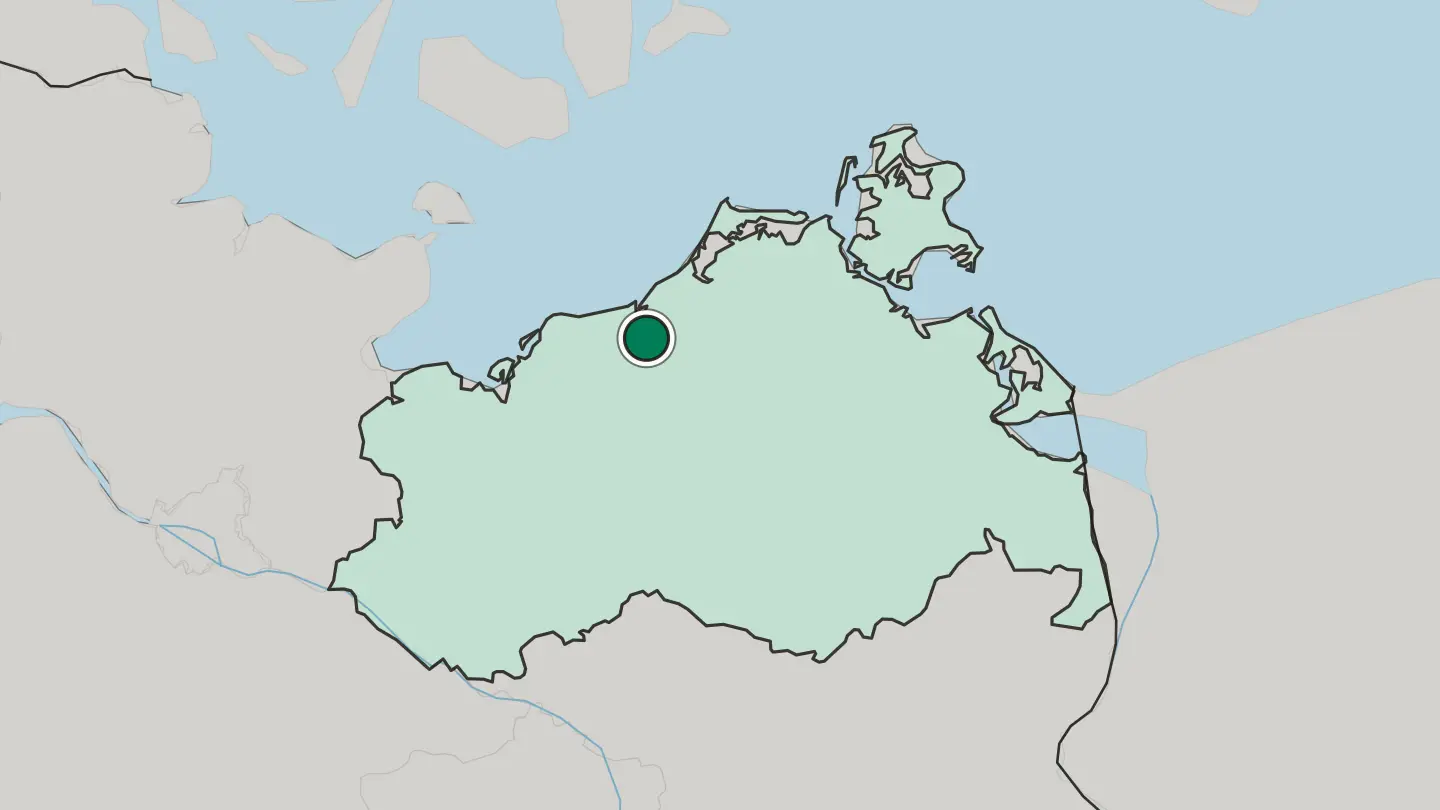
 Germany
Schwerin
Schwerin is the state capital of Mecklenburg-Western Pomerania, a city of seven lakes built around the island palace of Schwerin Castle.Where to stay →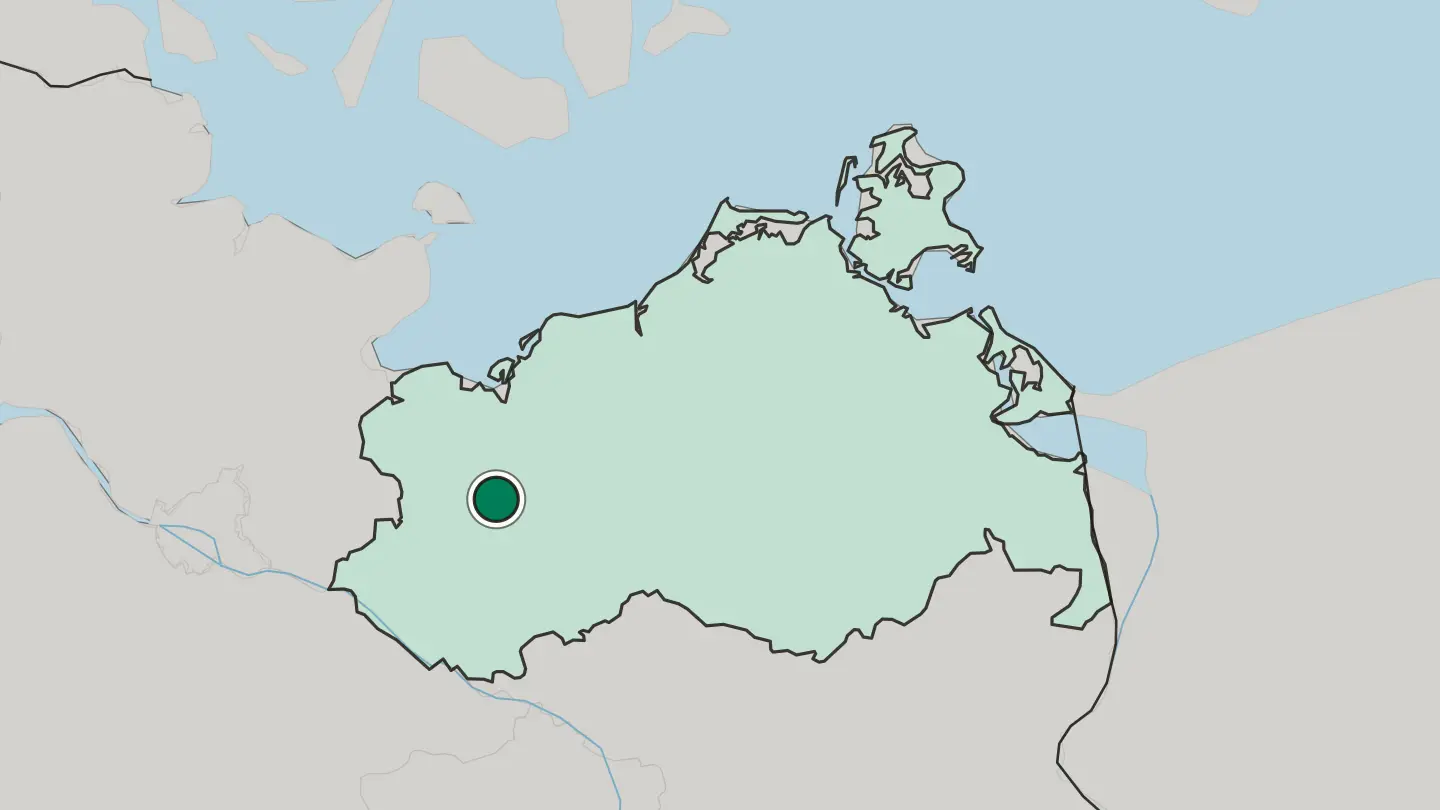 Germany
Neubrandenburg
Neubrandenburg dates from 1248 and stands on the Tollensesee, the urban centre of the Mecklenburg Lakeland, with the Marienkirche over its old core.Where to stay →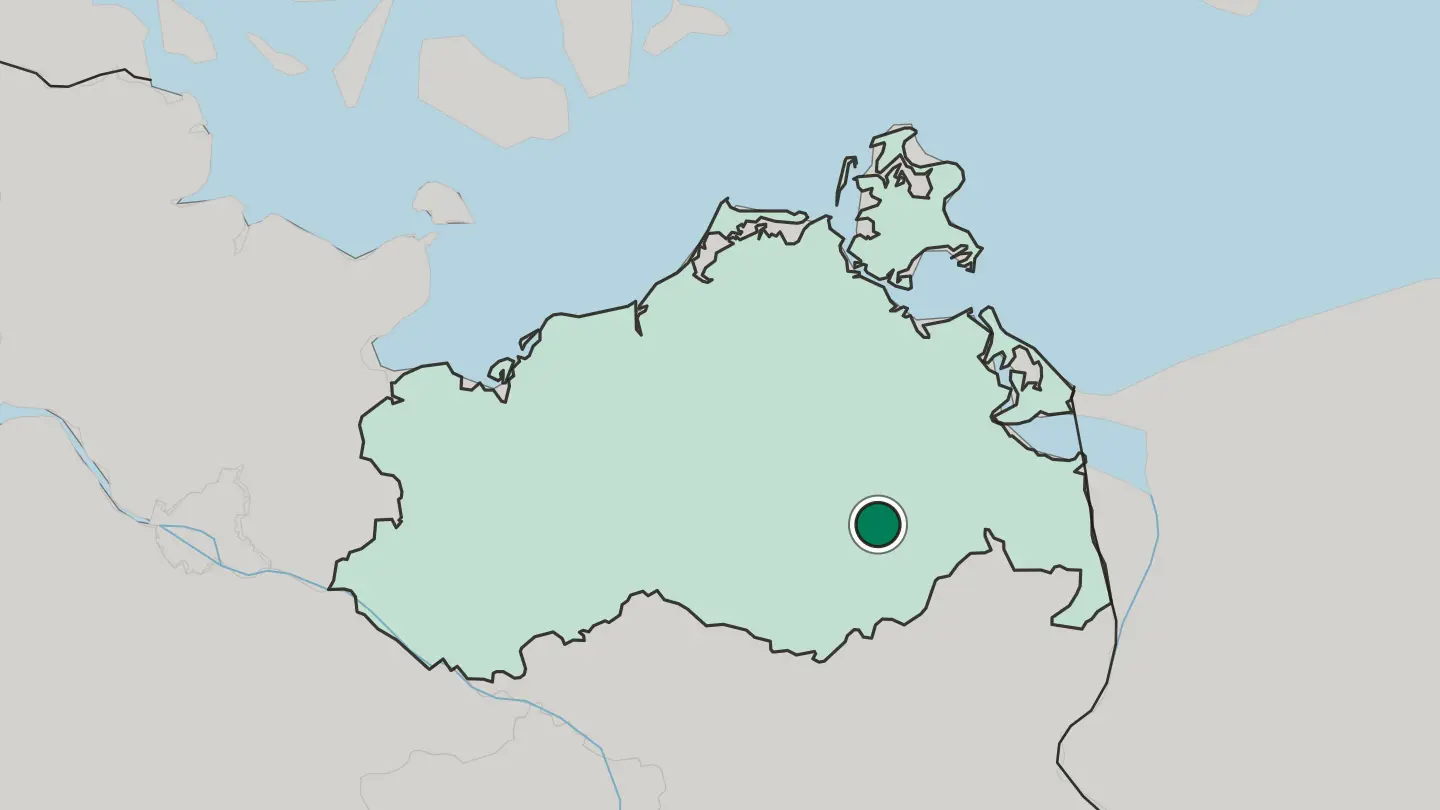
 Germany
Stralsund
Stralsund is a harbour city of Mecklenburg-Western Pomerania, chartered in 1234, where the Ozeaneum and the German Maritime Museum face the water.Where to stay →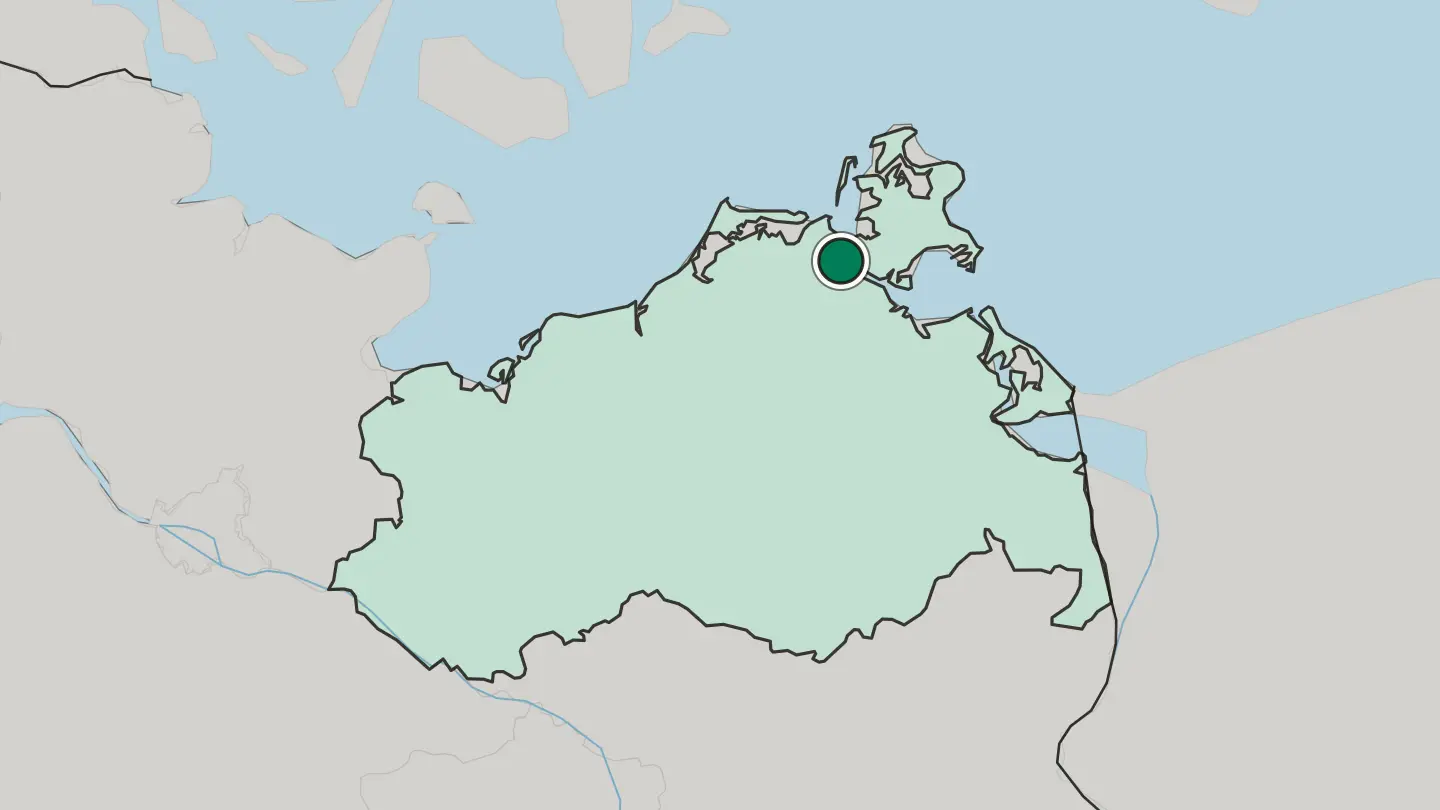
 Germany
Universitäts- und Hansestadt Greifswald
Greifswald is a university and Hanseatic city in Mecklenburg-Western Pomerania, with three medieval brick churches and a museum harbour on the water.Where to stay →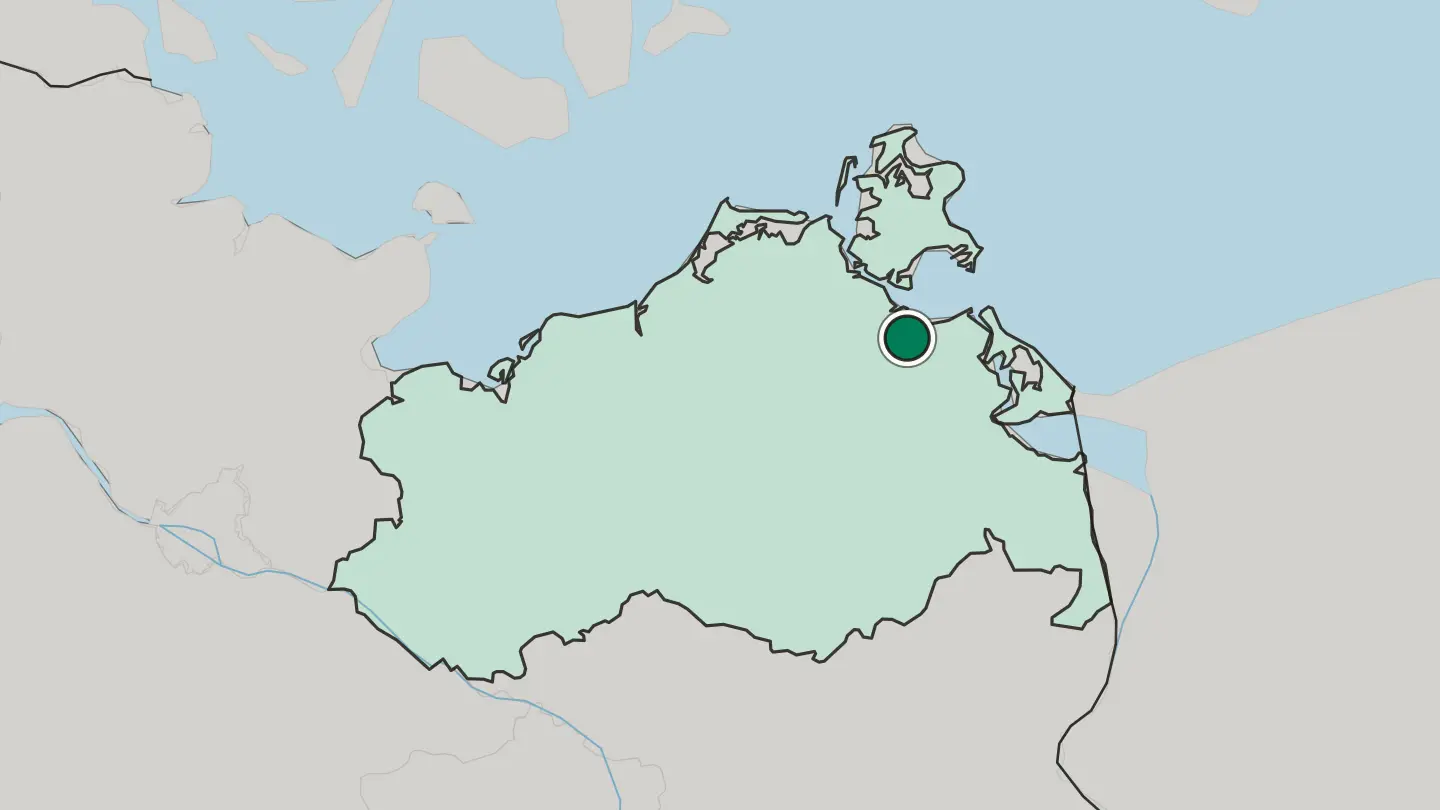
Hotel links are affiliate links: booking through them may earn us a commission, at no extra cost to you. It never affects how places are ranked. How this works
About Mecklenburg-Western Pomerania
What is Mecklenburg-Western Pomerania known for?
This is Germany's seaside. The Baltic Sea runs the whole northern edge, lined with sand beaches, chalk cliffs and the imperial spa resorts that made the coast a holiday habit generations ago. Rügen and Usedom, the country's two largest islands, sit off that shore.
Turn inland and the land fills with water again, this time the freshwater mosaic of the Mecklenburg Lake District around Müritz. Rostock anchors the coast as the largest city, while Schwerin holds the capital inland.
Where is Mecklenburg-Western Pomerania?
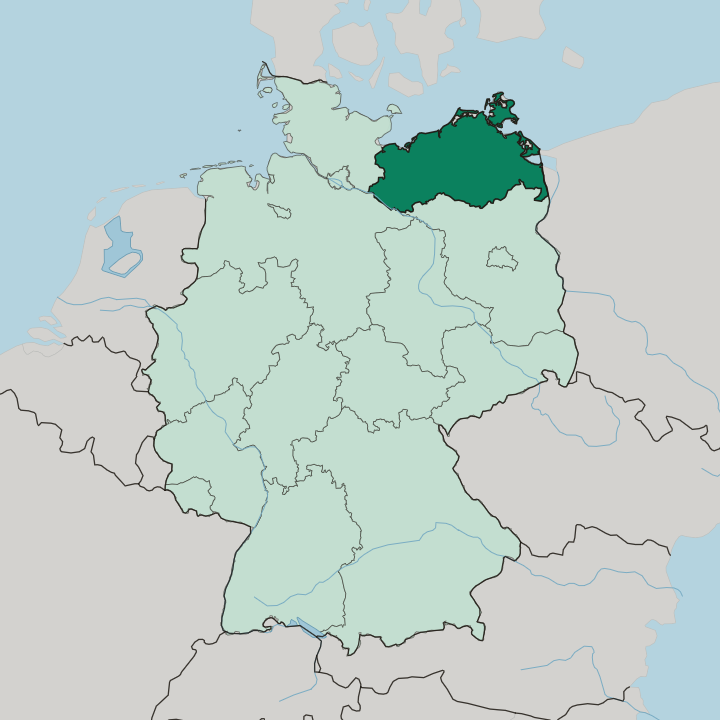
Mecklenburg-Western Pomerania fills the north-eastern corner of Germany, with the Baltic Sea along its entire northern edge and Poland pressing against it in the east. The state took its name from its two historic halves, Mecklenburg in the west and Western Pomerania in the east, and the two still divide it. Three German states border it inland: Brandenburg to the south, and Schleswig-Holstein and Lower Saxony to the west.
The coast is the defining line. It bends for hundreds of miles past sand spits, shallow lagoons the Germans call bodden, and steep chalk headlands, and it carries the country's two largest islands, Rügen and Usedom, both reaching out into the Baltic Sea in the east. Behind the shore the land is low and glacial, scraped and dropped by ice into a soft country of moraine ridges and hollows.
Water pools everywhere in those hollows. The south holds the Mecklenburg Lake District, more than a thousand connected lakes and canals gathered around Müritz, the largest lake lying wholly inside Germany. The Warnow drains north to the Baltic at Rostock, and the Oder marks part of the boundary with Poland in the far east.
Flat, watery country stretches thinly between the towns. Few German regions give the sea and the freshwater lake so much of the map at once.
What is Mecklenburg-Western Pomerania like?
Life here leans on the water and on brick. The old Hanseatic ports built their wealth on Baltic trade, and they built it tall in red brick: the stepped gables, the town halls and the great churches of Stralsund, Wismar, Rostock and Greifswald are all worked in the same Brick Gothic that the north German coast made its own. That trading past is the region's proudest inheritance.
The sea supplies the table too. Herring, eel, pike-perch from the lakes and the local Fischbrötchen, a fish roll eaten standing at the harbour, are as much a marker of the coast as any building. Beyond the ports the mood is rural and unhurried.
This is one of Germany's least crowded states, a countryside of farm villages, brick manor houses, reed-thatched roofs and long empty roads between the lakes. German is the everyday language. The coast keeps a summer culture all its own, of white wicker beach chairs, spa promenades and the grand pale bathing-resort architecture that lines Usedom and Rügen.
Painters knew this light: Caspar David Friedrich, born in Greifswald, took the chalk cliffs of Rügen as a subject. Sea, brick and big skies set the tone.
What is the history of Mecklenburg-Western Pomerania?
Two territories fused here. Mecklenburg in the west grew from a duchy whose rulers became princes of the Holy Roman Empire, while Western Pomerania in the east had its own dukes and its own outlook toward the Baltic and the Slavic lands. Both prospered as their ports joined the Hanseatic League and traded across the sea.
Then war and treaty redrew everything. After the Peace of Westphalia in 1648, Sweden held Western Pomerania and the port of Wismar for over a century before the land passed to Prussia. Mecklenburg and Pomerania were only welded into a single modern state in 1990, on German reunification.
What is the climate of Mecklenburg-Western Pomerania?
The Baltic Sea sets the weather. It gives the coast a mild maritime climate, cooler and breezier than inland Germany, with winters that hover near freezing rather than plunging below it and summers that stay comfortable rather than hot. Sea breezes and long daylight draw the beach crowds to Rügen and Usedom between June and September.
Inland, around the lakes of the Mecklenburg Lake District, winters bite a little harder and summers warm a little more, the maritime edge softening as you move away from the shore. Grey, blowy days come with the territory.
How do you get to Mecklenburg-Western Pomerania?
Most reach this Baltic state by road or rail from Hamburg or Berlin. The state has only a small airport at Rostock, so the practical air gateways are Hamburg and Berlin, each within a couple of hours of the coast by road or by frequent trains that run to Rostock, Schwerin and Stralsund. Ferries matter here too.
Regular Baltic Sea crossings link the ports at Rostock and on Rügen with Denmark and Sweden, a legacy of the region's old sea traffic. Once inside, roads and rail thread out to the islands and down to the lakes, with a causeway carrying traffic across to Rügen.
Common questions
What is the best area to stay in Mecklenburg-Western Pomerania?
Rostock: a first coastal base with city amenities. Rügen: chalk-cliff beaches and grand seaside resorts. Usedom: the historic imperial spa promenade. Stralsund and Wismar: medieval Hanseatic architecture over beaches. The Mecklenburg Lake District: inland lakes and quiet water.
Good for
More regions in Germany
Updated September 2026