Spain · Andalusia · Sevilla
Palmete, Sevilla — Area Guide & Where to Stay
Palmete, also called Padre Pío-Palmete, is the largest barrio of Seville's Cerro-Amate district, built from the 1960s by people from the countryside.
Hotel links are affiliate links: booking through them may earn us a commission, at no extra cost to you. It never affects how places are ranked. How this works


Where to stay in Palmete
The practical side of choosing where to sleep.
This is a rural-feeling edge of the city. Houses across Palmete run to two storeys, and the barrio sits far enough out that its character owes more to the countryside its first settlers came from than to Seville. Trains stop here.
The Padre Pío-Palmete station on the C-4 line links the barrio to the Virgen del Rocío hospital, San Bernardo, Santa Justa and Sevilla Este. Three bus routes cover the rest.
About Palmete
What are the main landmarks in Palmete?
The parish of the Buen Pastor and San Juan de la Cruz is the fixed point. Two brotherhoods process from it, the Divina Pastora de las Almas through the streets of the parish in September and the Hermandad de Padre Pío across to the Cerro del Águila on the Saturday before Palm Sunday. Street names are the other curiosity.
San José de Palmete uses nouns such as Fraternidad, Verdad, Humildad and Confianza, while Padre Pío names towns of the province, among them Castilleja de la Cuesta, Villamanrique and Lora de Estepa. A footbridge crosses the Ranilla canal. It was built in the normalisation of the 1970s and 1980s, when the barrio finally got pavements and, in the 1990s, a medical centre.
What is the history of Palmete?
The Torrás Calvi family owned this ground. They parcelled it and sold it in the 1960s, and the buyers were people arriving in Seville from rural areas. Everything was built by hand.
The first houses were isolated and made by their own owners, with no street plan, no electricity, no pavement, no sewer and no water supply. Padre Pío came at the end of the decade. Its first buildings went up with the same rural character, and in 1973 Renfe expropriated land nearby for the Negrilla container station.
La Negrilla was self-built too. Building began at the end of the 1960s on ground near the Hacienda de la Negrilla, again without water or drainage for years, and single-family houses still predominate there among newer blocks of flats.
Where is Palmete?
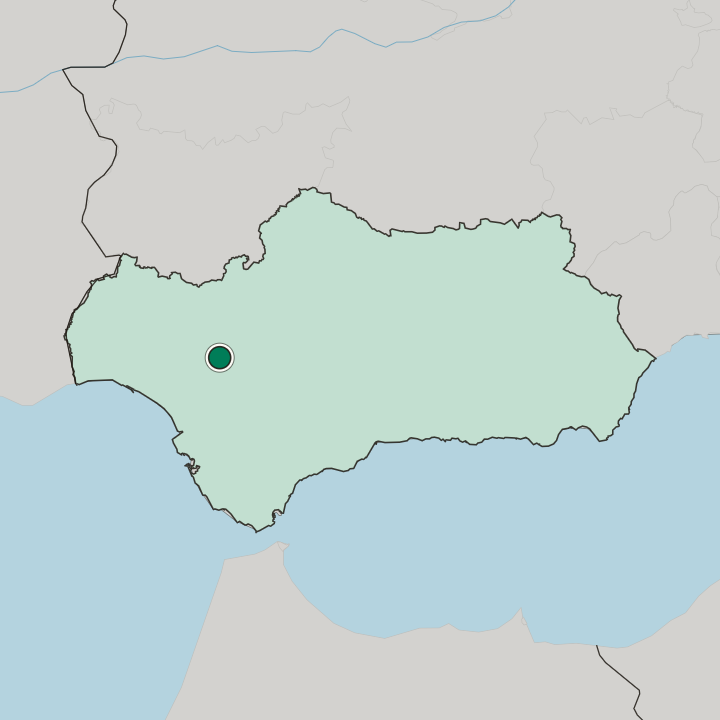
Palmete covers more than four square kilometres on the eastern edge of Seville, bounded by the A-92 to the north, the SE-30 to the west, the SE-8028 to the south and the Alcalá de Guadaíra boundary and Torreblanca to the east.
More areas in Sevilla
Updated September 2026