Spain · Andalusia
Where to Stay in Sevilla, Andalusia
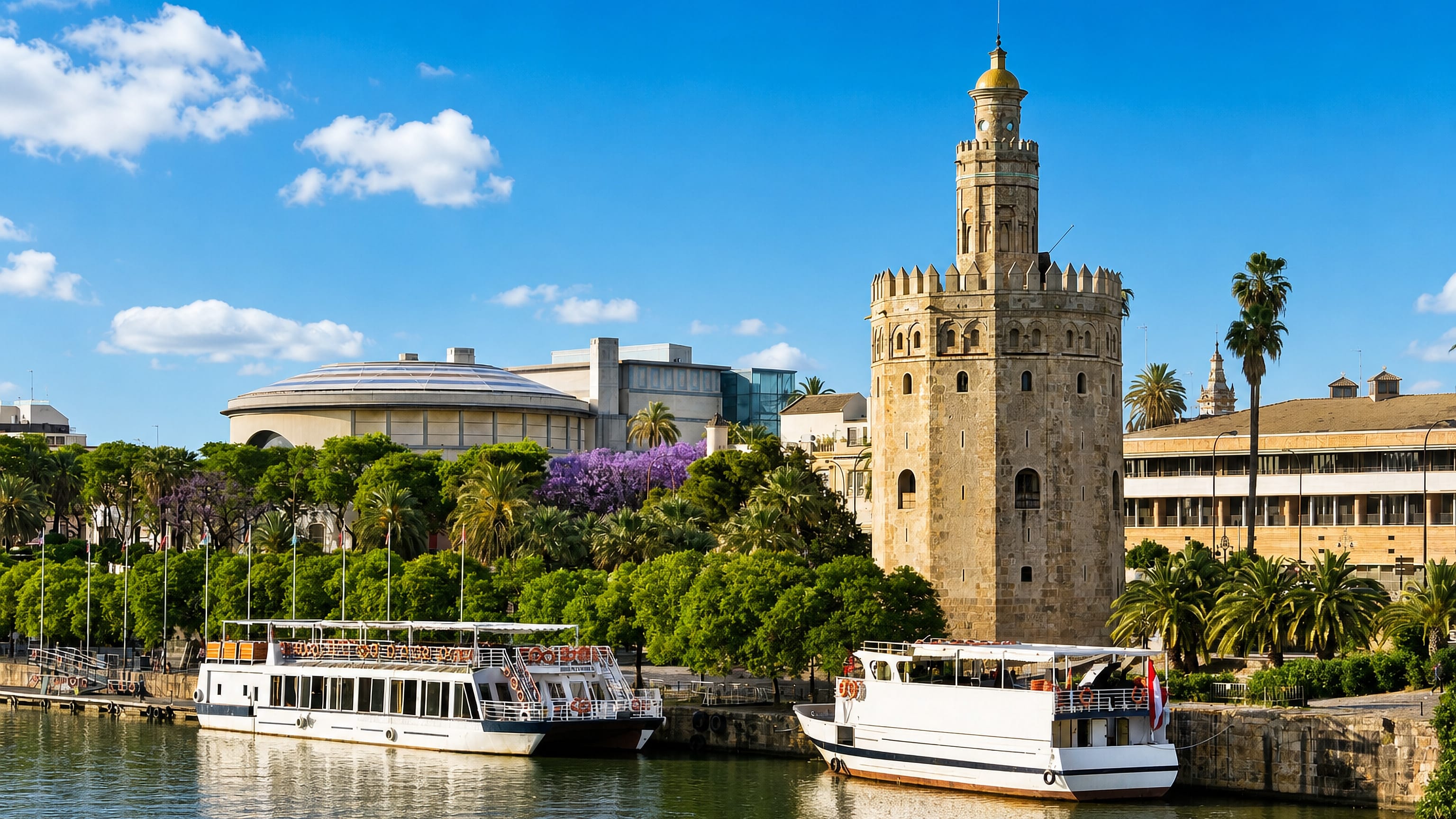
Orange trees and the Giralda over the Barrio de Santa Cruz: Sevilla stands on the Guadalquivir in Andalusia, known for its Gothic cathedral and flamenco.
Hotel links are affiliate links: booking through them may earn us a commission, at no extra cost to you. It never affects how places are ranked. How this works


Where to stay in Sevilla
Where you base yourself shapes the visit — here's the character of each area.

 SevillaSpainFlamenco tablaos and the tile workshops
Triana
The far bank of the Guadalquivir keeps the Castillo de San Jorge, its own market and the kilns of Calle Alfarería.Triana → SevillaSpain
La Buhaira
La Buhaira is a barrio of Seville in the Nervión district, holding a garden beside the remains of an Almohad palace begun in October 1171.Where to stay → SevillaSpain
Nervion
Nervión is the Seville district east of the city centre, boxed in by Cerro-Amate, the Distrito Sur and San Pablo-Santa Justa.Where to stay →SevillaSpainHuerta Del Pilar
Huerta Del Pilar, a barrio of Sevilla, takes in the Palacio y jardines de la Buhaira and the Iglesia de San Bernardo.Where to stay →SevillaSpainLa Calzada
The Iglesia de San Benito and the Iglesia de San Roque are what the record gives La Calzada, a district of Sevilla.Where to stay →SevillaSpainHuerta De Santa Teresa
The Humilladero de la Cruz del Campo stands in Huerta de Santa Teresa, one of the quarters Sevilla counts as its own.Where to stay →SevillaSpainEl Plantinar
El Plantinar is a barrio at the north edge of Sevilla's Distrito Sur, hemmed in by four roads and filled with three- and four-storey blocks of the 1960s.Where to stay →SevillaSpainGiralda Sur
Giralda Sur is a Sevilla district that takes the first half of its name from the Giralda and little else from it.Where to stay →SevillaSpainHuerta De La Salud
Huerta de la Salud is the Sevilla district holding the Archeological Museum of Seville and the Iglesia de San Sebastián.Where to stay →SevillaSpainLos Pajaros
Bird names run through the streets of Los Pájaros in eastern Sevilla, where five brick arches of the Caños de Carmona survive on calle Cigüeña.Where to stay →SevillaSpainSan Jose Obrero
San José Obrero is a barrio of Sevilla in the San Pablo-Santa Justa district, east of Santa Justa station. It was built in 1955.Where to stay →SevillaSpainTiro De Linea-Santa Genoveva
Tiro de Línea-Santa Genoveva is a Sevilla district named twice over, and the Iglesia de Santa Genoveva is the one building listed in it.Where to stay →All neighbourhoods (35)
SevillaSpainEl Fontanal-Maria Auxiliadora-Carretera De Carmona
El Fontanal-María Auxiliadora-Carretera de Carmona is a Sevilla district whose heading strings three separate names together.Where to stay →SevillaSpainTabladilla-La Estrella
Tabladilla-La Estrella is a Sevilla district whose name carries two older quarters, Tabladilla and La Estrella, under one heading.Where to stay → SevillaSpain
Alfalfa
Alfalfa lies at the middle of Seville's Casco Antiguo, and Seville Cathedral stands among the buildings the register lists inside it.Where to stay →SevillaSpainCruz Roja-Capuchinos
Convents and parish churches mark Cruz Roja-Capuchinos, a barrio group of Sevilla holding the Convento de Santa Paula and the Iglesia de San Julián.Where to stay → SevillaSpain
Encarnación-Regina
Encarnación-Regina is the Sevilla district of the Metropol Parasol, the Museo de Bellas Artes de Sevilla, and the Palacio de las Dueñas.Where to stay →SevillaSpainSanta Aurelia-Cantabrico-Atlantico-La Romeria
Four barrio names travel together in Santa Aurelia-Cantábrico-Atlántico-La Romería, a residential quarter on Sevilla's list.Where to stay →SevillaSpainSan Pablo D Y E
San Pablo D y E is a residential barrio group of Sevilla, and its one listed heritage entry marks the execution of Blas Infante.Where to stay →SevillaSpainJuan Xxiii
Juan XXIII reaches Sevilla's register as a barrio group with a name, a stretch of housing and no listed monument.Where to stay → SevillaSpain
Los Remedios
Los Remedios is a district of Sevilla south of Triana, held between two forks of the Guadalquivir and tied to the centre by bridge.Where to stay →SevillaSpainPoligono Sur
Polígono Sur is a district on the Sevilla register whose one listed address is the Club Pineda.Where to stay →SevillaSpainBami
Bami is a block of 1950s flats in Sevilla's Distrito Sur, by the Hospital Universitario Virgen del Rocío, named for a property company named for a bank.Where to stay →SevillaSpainLeon Xiii-Los Naranjos
León XIII-Los Naranjos pairs two Sevilla barrio names around a single listed building, the Hospital de San Lázaro.Where to stay → SevillaSpain
San Gil
San Gil is a quarter of Sevilla holding the Iglesia de San Luis de los Franceses, the Torre Blanca, and the Iglesia de San Gil Abad.Where to stay →SevillaSpainSector Sur-La Palmera-Reina Mercedes
Two specialist museums sit in Sector Sur-La Palmera-Reina Mercedes, a three-name Sevilla district tied by title to the Universidad de Sevilla.Where to stay →SevillaSpainTriana Casco Antiguo
Triana Casco Antiguo is the old-quarter barrio of Sevilla holding the Isabel II Bridge, the Castle of San Jorge, and Iglesia de la Señora Santa Ana.Where to stay →SevillaSpainTriana Este
Triana Este is one of the five barrios of the Triana district of Sevilla, in the centre-south of the district.Where to stay →SevillaSpainDoctor Barraquer-Grupo Renfe-Policlinico
Doctor Barraquer-Grupo Renfe-Policlínico is a Sevilla barrio holding Isla Mágica and the Torre de los perdigones.Where to stay →SevillaSpainHeliopolis
Heliópolis is the district of Seville whose whole register entry is the Ciudad Deportiva Luis Del Sol and one school.Where to stay →SevillaSpainTriana Oeste
Triana Oeste is the Sevilla barrio where the Centro Andaluz de Arte Contemporáneo and the Pabellón de la Navegación stand.Where to stay →SevillaSpainEl Tardon-El Carmen
El Tardón and El Carmen answer to one district heading inside Sevilla, paired on the record without a monument between them.Where to stay →SevillaSpainBarrio Leon
Barrio León is a district of Sevilla, and the Iglesia de San Gonzalo is the one monument the record gives it.Where to stay →SevillaSpainPalmete
Palmete, also called Padre Pío-Palmete, is the largest barrio of Seville's Cerro-Amate district, built from the 1960s by people from the countryside.Where to stay →SevillaSpainLa Bachillera
La Bachillera is a Sevilla district known on the record for the Monastery of San Jerónimo de Buenavista and the Templete de San Jerónimo.Where to stay →Hotel links are affiliate links: booking through them may earn us a commission, at no extra cost to you. It never affects how places are ranked. How this works
Find hotels in Sevilla
Direct booking searches for these neighbourhoods.
Barrio de Santa Cruz
Whitewashed callejones wrap the Casa de Murillo and the Jardines de Murillo, with the cathedral doors two turns away.Find hotels in Barrio de Santa CruzLate tapas near the Iglesia de San Luis de los FrancesesAlameda and Macarena
The Alameda de Hércules anchors a quarter of baroque churches and neighbourhood bars north of the Metropol Parasol.Find hotels in Alameda and MacarenaHotel links are affiliate links: booking through them may earn us a commission, at no extra cost to you. It never affects how places are ranked. How this works
Things to do in Sevilla
Ranked by global recognition; descriptions from Wikidata (CC0).
Museums & Galleries
5- Museo de Bellas Artes de Sevilla Heritage
- Archeological Museum of Seville Heritage
- Casa de Murillo Heritage
- Antiguo Convento de los Remedios Heritage
- Museo de Arte Contemporáneo Heritage
Churches & Religious Sites
8- Seville Cathedral Heritage
- Iglesia del Divino Salvador Heritage
- Hospital de la Santa Caridad Heritage
- Iglesia de San Luis de los Franceses Heritage
- Iglesia de la Señora Santa Ana Heritage
Show 3 more →
- Church of St Mary Magdalene and chapel of Nuestra Señora de Montserrat Heritage
- Antiguo Hospital de Venerables Sacerdotes Heritage
- Iglesia de Santa María la Blanca Heritage
Castles & Historic Sites
8- Palacio de San Telmo Heritage
- Palacio de las Dueñas Heritage
- Isabel II Bridge Heritage
- Hospital de las Cinco Llagas Heritage
- Castle of San Jorge Heritage
Show 3 more →
- Archbishop's Palace Heritage
- Torre de don Fadrique (Sevilla) Heritage
- Humilladero de la Cruz del Campo Heritage
Stadiums & Sports
2- Ciudad Deportiva Luis Del Sol
- Club Pineda
Parks & Gardens
2- Isla Mágica
- El Balcón de Andalucía (Isla Mágica)
Landmarks & Notable Places
3- Casa Duclós Heritage
- Torre de los perdigones
- Torre Blanca
worth knowingacross 6 categories in Sevilla
About Sevilla
What is Sevilla known for?
Sevilla is known for the Giralda, the Real Alcázar, and the flamenco quarters on both banks of the Guadalquivir. The cathedral swallowed a mosque. Catedral de Sevilla went up on the Almohad prayer hall after 1248, kept the minaret as its bell tower, and grew into the largest Gothic church raised anywhere, with Columbus buried inside.
Semana Santa and the Feria de Abril still order the year, and the Museo de Bellas Artes de Sevilla keeps the Murillo and Zurbarán canvases.
What are the main landmarks in Sevilla?
Sevilla ranges its monuments along the Guadalquivir, from the Catedral de Sevilla and the Giralda to the Torre del Oro. The Real Alcázar adjoins them. Mudéjar courtyards, Almohad walls, and the Torre Blanca run behind its gate, while the Archbishop's Palace and the Iglesia del Divino Salvador hold the baroque corners of the old town.
Across the Guadalquivir the Castillo de San Jorge lies under the Triana market, and the Isla Mágica park occupies the old Cartuja island. Painting fills the Hospital de la Santa Caridad and the Museo de Bellas Artes de Sevilla.
What is the history of Sevilla?
Sevilla was Roman Hispalis before it was anything else. Itálica stood a short way up the Guadalquivir and gave Rome the emperors Trajan and Hadrian, whose statues and mosaics now fill the Museo Arqueológico de Sevilla. The Almohads walled the city and raised the minaret that became the Giralda.
Ferdinand III took it in 1248. The Reconquest turned mosque into cathedral, and the Christian city kept the Mudéjar craftsmen who rebuilt the Real Alcázar for Pedro I a century later. The Americas made the rest.
A royal monopoly on the Indies trade ran through the Casa de Contratación from 1503, and silver, cochineal, and cacao came up the Guadalquivir to a city that outgrew every other in Spain. The Hospital de las Cinco Llagas and the Hospital de la Santa Caridad went up on that money, and Murillo, Zurbarán, and Valdés Leal painted for the chapels it built. Silt beat the port.
The river channel shoaled, Cádiz took the fleet in the eighteenth century, and Sevilla shrank back to a provincial capital until the Ibero-American Exposition of 1929 rebuilt its southern edge. Expo 92 came next. The Cartuja island took the fairground that became Isla Mágica, and the Santa Justa line cut the run to Madrid to a morning.
Where is Sevilla?
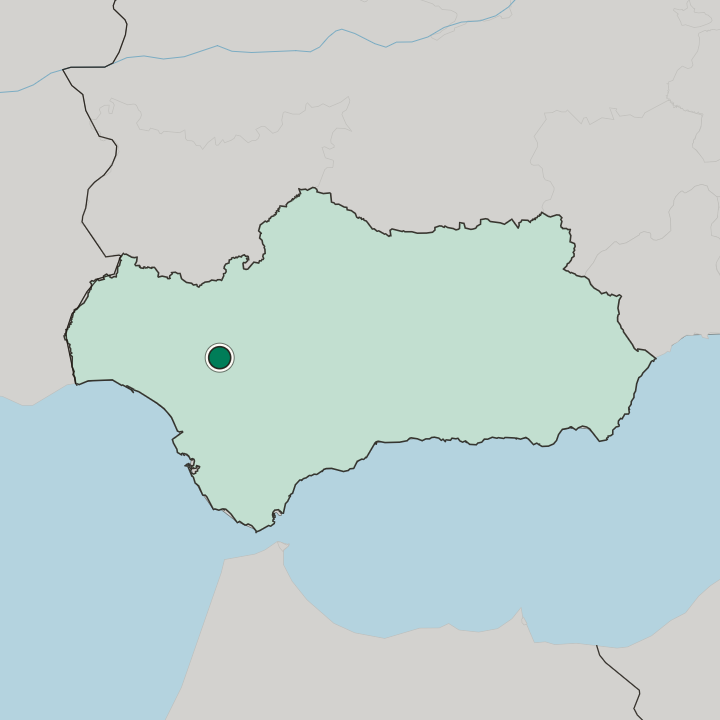
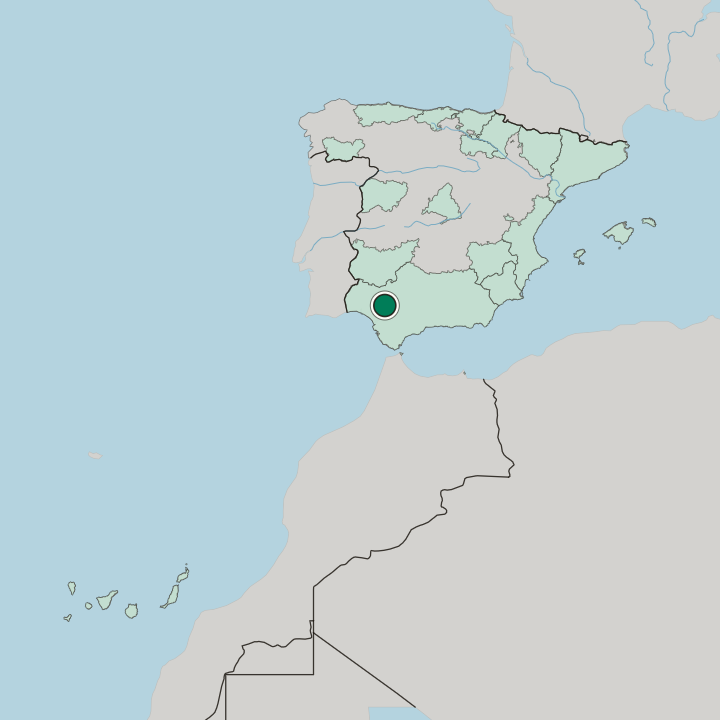
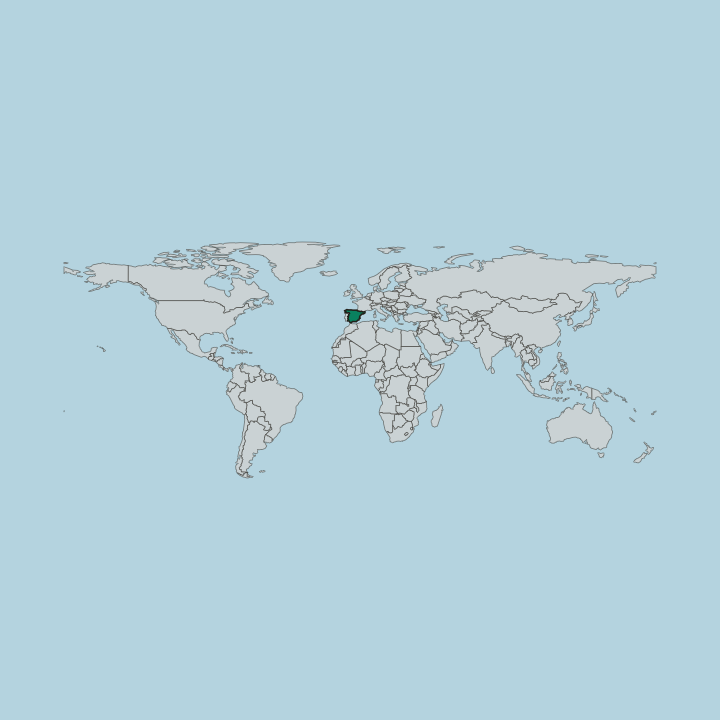
Sevilla lies on the Guadalquivir in the flat heart of Andalusia, far enough inland that seagoing ships must climb the river to reach it. The city has no hills. Its ground is river silt, ringed by the vega farmland and the olive country beyond, with the Sierra Morena a low grey line to the north and the marshes of Doñana downstream toward the Atlantic.
Triana holds the west bank alone.
What is the climate of Sevilla?
The Guadalquivir depression traps summer heat over Sevilla. Hot air pools in the flat valley between the Sierra Morena and the coastal ranges, and July and August settle into a dry glare that empties the streets between two and six. Patios and awnings answer it.
Winter is mild and green, with Atlantic fronts running up the valley from Doñana to bring most of the year's rain between November and March, and frost almost unknown on the vega. Orange blossom marks the turn.
How do you get to Sevilla?
Sevilla is reached most easily by the AVE line into Santa Justa station. That was the first high-speed track in Spain, opened for Expo 92, and it still runs to Madrid faster than any flight door to door. Flights land at San Pablo.
The airport sits northeast of the city on the A-4, the SE-30 rings the whole of it, and Metro Line 1 crosses under the river from Nervión out to the Aljarafe.
Common questions
What is the best area to stay in Sevilla?
Barrio de Santa Cruz: Reaching the Real Alcázar gate before the queues. Triana: Flamenco tablaos and the tile workshops. Alameda and Macarena: Late tapas near the Iglesia de San Luis de los Franceses.
Good for
More cities in Andalusia
Updated October 2026