Spain · Canary Islands
Where to Stay in Las Palmas de Gran Canaria, Canary Islands
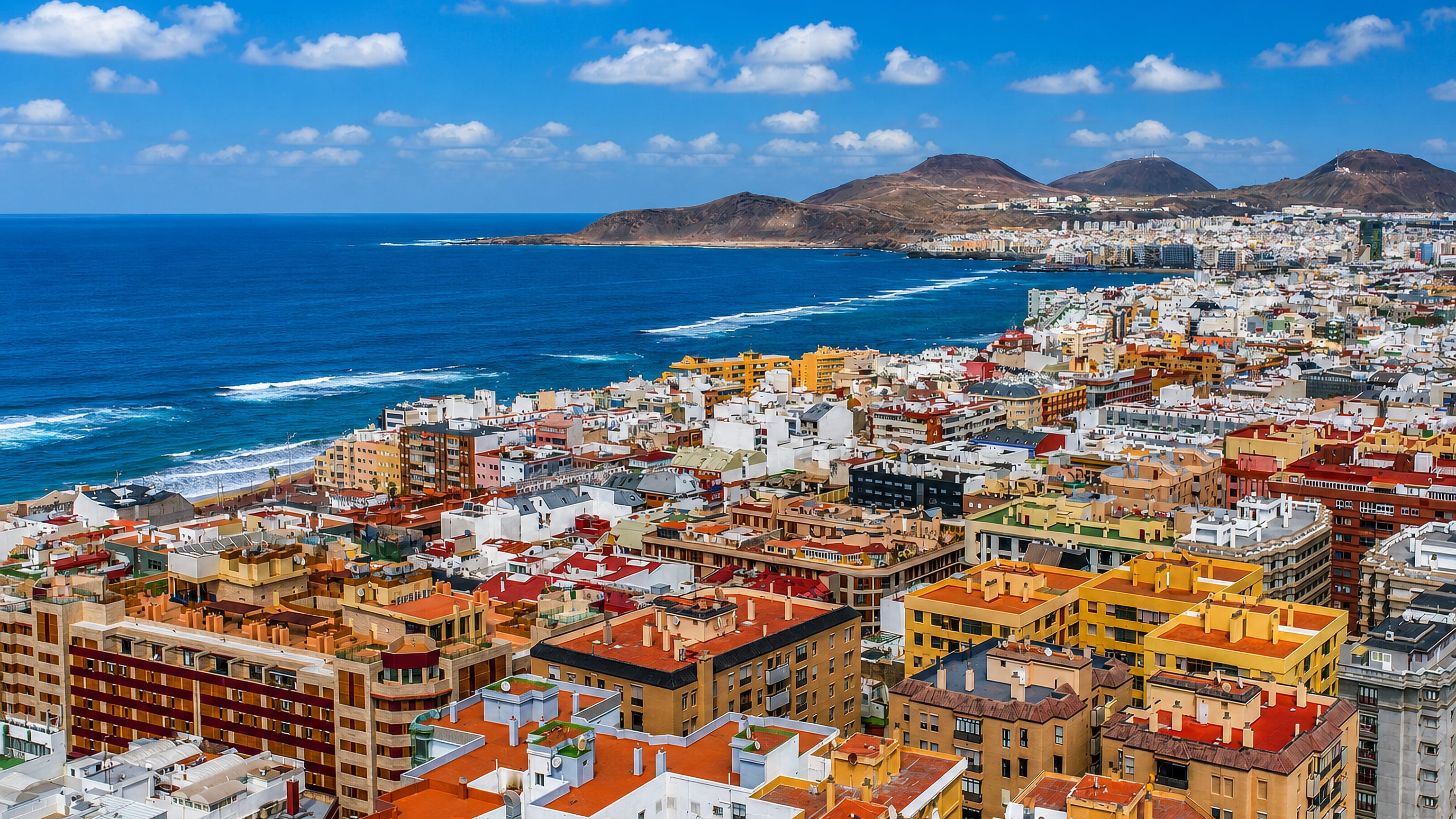
Atlantic surf breaks on five urban beaches at Las Palmas de Gran Canaria, island capital known for Vegueta and the Catedral de Santa Ana.
Hotel links are affiliate links: booking through them may earn us a commission, at no extra cost to you. It never affects how places are ranked. How this works


Where to stay in Las Palmas de Gran Canaria
The right area depends on your trip — here's what each neighbourhood is best for.

 Las Palmas de Gran CanariaSpain
Vegueta
Vegueta is the old quarter of Las Palmas de Gran Canaria, holding the Cathedral Basilica of St. Ann and the Canarian Museum.Where to stay → Las Palmas de Gran CanariaSpain
Triana
Triana, an inner district of Las Palmas de Gran Canaria, keeps the Gabinete Literario, the Casa-Museo Pérez Galdós and the remains of the town walls.Where to stay → Las Palmas de Gran CanariaSpain
Centro
Centro is the district of Las Palmas de Gran Canaria holding the Cathedral Basilica of St. Ann and the Muralla de Las Palmas.Where to stay →Las Palmas de Gran CanariaSpainPuerto-Canteras
Puerto-Canteras is the harbour-side quarter of Las Palmas de Gran Canaria, holding the Castillo de la Luz and Poema del Mar Aquarium.Where to stay →Hotel links are affiliate links: booking through them may earn us a commission, at no extra cost to you. It never affects how places are ranked. How this works
Find hotels in Las Palmas de Gran Canaria
Direct booking searches for these neighbourhoods.
Vegueta and Triana
The Casa de Colón, the Museo Canario and the Gabinete Literario stand inside one grid of balconied stone lanes.Find hotels in Vegueta and TrianaSwimmers who want the reef bar off the doorstepLas Canteras
A natural reef flattens the Atlantic swell along the bay, and the Piscinas Julio Navarro anchor its quieter end.Find hotels in Las CanterasIsland-hopping sailings out of Puerto de la LuzSanta Catalina and the port
The cruise quays, the ferry berths and the island bus lines all converge on this middle stretch of the isthmus.Find hotels in Santa Catalina and the portHotel links are affiliate links: booking through them may earn us a commission, at no extra cost to you. It never affects how places are ranked. How this works
Things to do in Las Palmas de Gran Canaria
Ranked by global recognition; descriptions from Wikidata (CC0).
Museums & Galleries
3- Canarian Museum Heritage
- Museo Néstor Heritage
- Elder Museum of Science and Technology
Churches & Religious Sites
4- Cathedral Basilica of St. Ann Heritage
- Parroquia de San Francisco de Asís Heritage
- Iglesia de Santo Domingo de Guzman Heritage
- Church of San José, Las Palmas de Gran Canaria Heritage
Castles & Historic Sites
6- Castillo de la Luz Heritage
- Gabinete Literario, Las Palmas de Gran Canaria Heritage
- Castle of San Francisco Heritage
- Castillo de Mata Heritage
- Casa-Museo Pérez Galdós Heritage
Show 1 more →
- Muralla de Las Palmas Heritage
Landmarks & Notable Places
1- Torre de Santa Ana
worth knowingacross 4 categories in Las Palmas de Gran Canaria
About Las Palmas de Gran Canaria
What is Las Palmas de Gran Canaria known for?
Las Palmas de Gran Canaria is known for the Vegueta quarter, five urban beaches, and the Catedral de Santa Ana. Trade winds brought the caravels. Casa de Colón, built around the governor's house where Columbus is said to have lodged before crossing, holds charts and Caribbean collections, while the Museo Canario keeps Guanche skulls, mummies, and the painted pintaderas left by the islanders who held Gran Canaria before 1478.
The Gabinete Literario fronts its own shaded plaza.
What are the main landmarks in Las Palmas de Gran Canaria?
Las Palmas de Gran Canaria keeps its main monuments in Vegueta, beginning with the Catedral de Santa Ana and its Torre de Santa Ana. Old fortifications survive too. Castillo de Mata, Castillo de San Cristóbal, and Castillo de San Francisco mark the old defensive ring, while stretches of the Muralla de Las Palmas still show where the wall ran.
Art fills the rest: the Centro Atlántico de Arte Moderno, the Museo de Bellas Artes de Gran Canaria, and the Casa-Museo Pérez Galdós. The Monumento Atis Tirma remembers the Guanche defenders who chose the cliff.
What is the history of Las Palmas de Gran Canaria?
Las Palmas de Gran Canaria began as a Castilian camp in 1478. Juan Rejón pitched it in a palm grove beside the Guiniguada ravine, and the settlement took the formal name Villa Real de las Tres Palmas de Gran Canaria from those trees. The Guanche resistance held out for five more years.
Their last stand at Ansite closed the conquest, and the Monumento Atis Tirma marks the leap that ended it. Columbus came through in 1492. His fleet repaired a rudder in the bay before the crossing, and the Casa de Colón grew around the governor's house that housed him.
Sugar, then wine, then cochineal carried the island economy, and Puerto de la Luz opened in the nineteenth century to make the bay a coaling stop on every South Atlantic run. Benito Pérez Galdós was born in Triana in 1843. The novelist left for Madrid young, and the Casa-Museo Pérez Galdós and the Monument to Benito Pérez Galdós both hold the city's claim on him.
The Muralla de Las Palmas came down as the city spread north along the isthmus toward La Isleta, leaving Vegueta and Triana as the old core. Ships still call.
Where is Las Palmas de Gran Canaria?
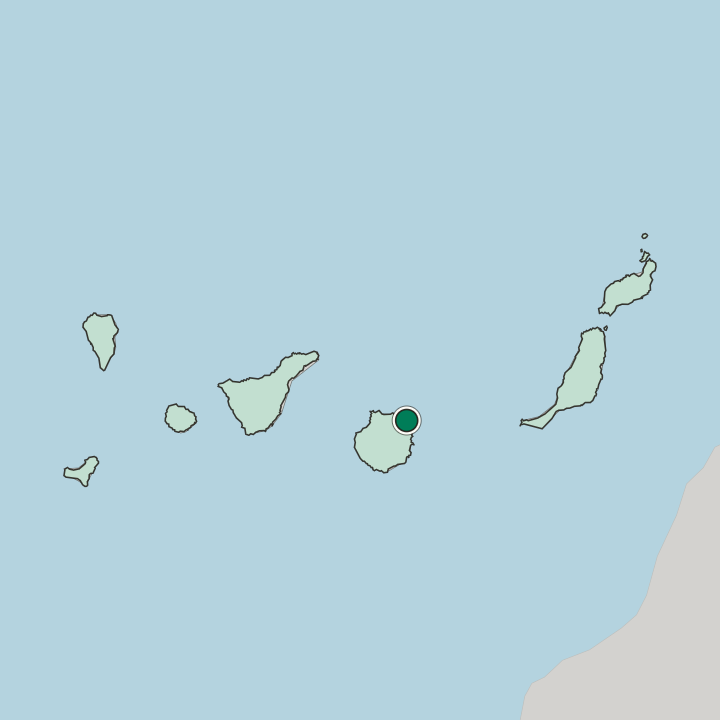
Las Palmas de Gran Canaria occupies the northeast corner of Gran Canaria, on an isthmus between the old volcanic mass of La Isleta and the main island. The Guiniguada ravine cuts through it. That dry barranco split the first town from its farmland, and the ground climbs sharply inland to the hill under the Castillo de San Francisco.
Two shores frame the isthmus: reef-guarded Las Canteras on the ocean side, the sheltered basin of Puerto de la Luz on the other.
What is the climate of Las Palmas de Gran Canaria?
The northeast trade winds set the weather in Las Palmas de Gran Canaria all year. They blow steadily off the Atlantic, and the cool Canary Current under them keeps the sea temperate enough to swim in at Las Canteras through the winter months. Dry months dominate.
What falls comes in short winter bursts, and the panza de burro cloud sheet that greys the north coast in summer sits mostly above the city rather than on it. A calima can drift in from the Sahara.
How do you get to Las Palmas de Gran Canaria?
Las Palmas de Gran Canaria is reached through Gran Canaria Airport, on the east coast road south of the city. The GC-1 motorway runs from that terminal up the coast to the port, and the Global and Guaguas Municipales bus networks work the same corridor into Santa Catalina and San Telmo. Ferries dock at Puerto de la Luz.
Sailings run from there to Tenerife, Fuerteventura, and Lanzarote, which makes the port the practical hinge of any island-hopping trip.
Common questions
What is the best area to stay in Las Palmas de Gran Canaria?
Vegueta and Triana: Museum days around the Catedral de Santa Ana. Las Canteras: Swimmers who want the reef bar off the doorstep. Santa Catalina and the port: Island-hopping sailings out of Puerto de la Luz.
Good for
More cities in Canary Islands
Updated October 2026