France · Normandie
Where to Stay in Caen, Normandie
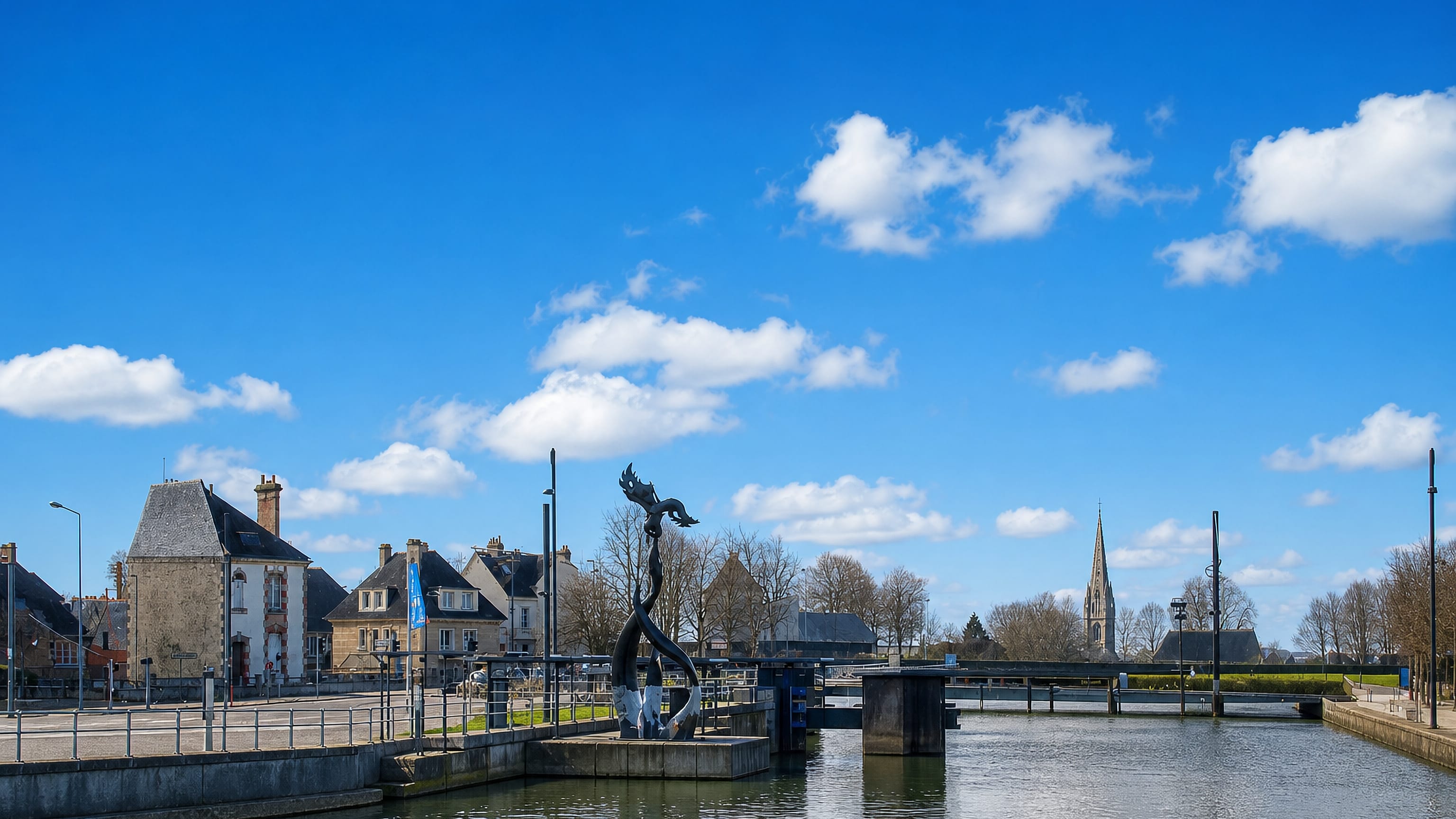
Pale limestone walls rise at Caen, a city in Normandie and the prefecture of Calvados, known for the Castle of Caen and its two great Romanesque abbeys.
Hotel links are affiliate links: booking through them may earn us a commission, at no extra cost to you. It never affects how places are ranked. How this works


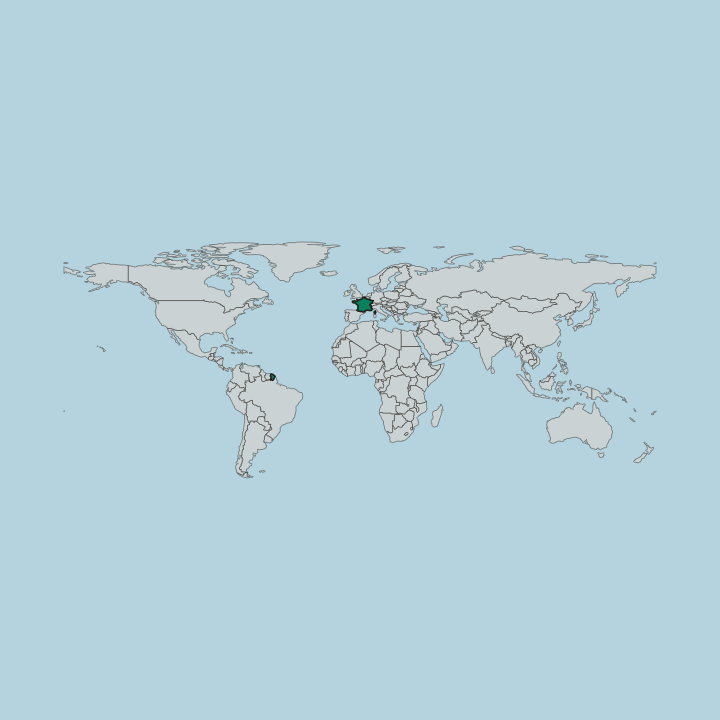
Where to stay in Caen
Where visitors usually base themselves, and why.
Caen gathers around its castle, and where you stay turns on how close you want to be to the old stone core. The centre below the Castle of Caen holds the museums and the shopping streets. That castle-side centre makes the easiest base for a first stay in Caen.
Travellers who want the heritage on the doorstep settle near the Musée des Beaux-Arts de Caen and the Musée de Normandie, both set within the castle walls a short walk from the Église Saint-Jean de Caen. Both museums sit inside the walls. West of the centre stands the abbey quarter around St-Étienne de Caen, the church of the old Abbaye aux Hommes, quieter and lined with religious houses.
If you have come for the Romanesque churches, base yourself here. Others choose the streets by the Église Saint-Nicolas de Caen or the medieval Maison des Quatrans, where the older fabric of Caen survives. Each part of the city reads its own way.
Which quarter of Caen fits you is left to your own taste.
Find hotels in Caen
Direct booking searches for these neighbourhoods.
The castle centre
The streets below the Castle of Caen gather the museums and shops, with the Musée de Normandie and the Musée des Beaux-Arts de Caen inside the ramparts.Find hotels in The castle centreRomanesque churches around St-Étienne de CaenThe abbey quarter
West of the centre the abbey quarter runs around St-Étienne de Caen, the church of the old Abbaye aux Hommes, in quieter streets of religious houses.Find hotels in The abbey quarterHistoric fabric by the Maison des Quatrans in CaenThe old medieval streets
Around the Église Saint-Nicolas de Caen and the timbered Maison des Quatrans the older medieval fabric of Caen survives in narrow lanes.Find hotels in The old medieval streetsHotel links are affiliate links: booking through them may earn us a commission, at no extra cost to you. It never affects how places are ranked. How this works
Things to do in Caen
Ranked by global recognition; descriptions from Wikidata (CC0).
Museums & Galleries
2- Musée des Beaux-Arts de Caen
- Musée de Normandie
Churches & Religious Sites
8- St-Étienne de Caen Heritage
- Church of Saint-Étienne-le-Vieux Heritage
- Church of Saint-Jean de Caen Heritage
- Église Saint-Sauveur de Caen Heritage
- Église Saint-Nicolas de Caen Heritage
Show 3 more →
- Église du Vieux Saint-Sauveur Heritage
- Monastère des Bénédictines de Caen Heritage
- Église Saint-Vigor de Louvigny Heritage
Castles & Historic Sites
2- Castle of Caen Heritage
- Monument à Charles Demolombe
Stadiums & Sports
2- Stade Michel d'Ornano
- Stade de Venoix
Landmarks & Notable Places
8- Maison des Quatrans Heritage
- Maison de Malherbe Heritage
- 26 rue Arcisse de Caumont Heritage
- 64 rue de Bayeux, Caen Heritage
- 8 rue des Croisiers, Caen Heritage
Show 3 more →
- 92 rue Bicoquet, Caen Heritage
- 14 rue des Croisiers, Caen Heritage
- Maison Sainte-Blaise Heritage
worth knowingacross 5 categories in Caen
About Caen
What is Caen known for?
Caen is known for its pale building stone, its castle, and its abbey churches. The stone itself made the city famous. Quarried around Caen and carried down toward the coast of Normandie, the cream-coloured limestone raised the Castle of Caen, the abbey of St-Étienne de Caen, and much of the old town that fills the prefecture of Calvados.
What are the main landmarks in Caen?
Caen holds landmarks that run from its castle to its abbeys and its war memory. The Castle of Caen crowns the centre. Its ramparts enclose the Musée de Normandie and the Musée des Beaux-Arts de Caen, while the abbey church of St-Étienne de Caen, the Église Saint-Jean de Caen, and the Caen Memorial mark the wider city and its wartime past.
What is the history of Caen?
Caen rose in the eleventh century as a seat of the Norman dukes, who raised its castle and its two great abbeys. The dukes made the town. From the fortress on the rise above the crossing, the rulers of Normandie granted Caen its abbeys, building St-Étienne de Caen as the church of the Abbaye aux Hommes and endowing the sister house across the town, and the pale local limestone gave every wall its cream-coloured face.
Through the centuries Caen grew as the chief town of Calvados, its castle and churches surviving as the core of the old city. War returned in the twentieth century. The fighting of 1944 fell hard on Caen, and the Caen Memorial now stands to that history, while the Castle of Caen, the Église Saint-Nicolas de Caen, and the abbey of St-Étienne de Caen carry the older centuries of the prefecture into the present town.
Where is Caen?
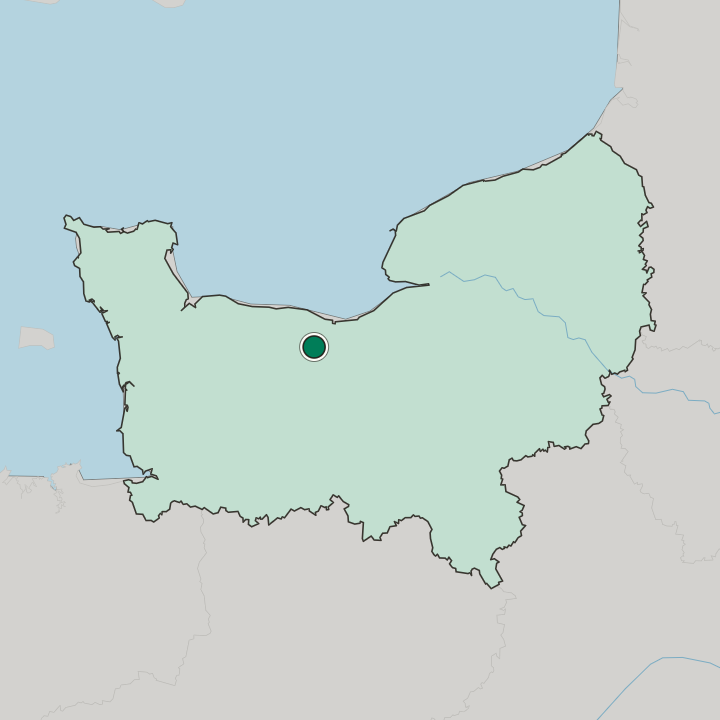
Caen lies a short way inland from the coast of Normandie, the chief town of Calvados. Water and stone shape its setting. The city stands on low ground below its castle rise a few miles back from the sea and the landing beaches, west of the ports of Le Havre and Rouen, at the heart of the plain that Calvados spreads around Caen.
What is the climate of Caen?
Caen has a mild, damp oceanic climate shaped by its nearness to the coast of Normandie. The sea keeps the extremes away. Cool, wet winters and soft, temperate summers pass over the city and its castle, with cloud and rain drifting in off the water that lies a short way north of Caen across the Calvados plain.
How do you get to Caen?
Caen is reached by rail, road, and sea, the transport hub of Calvados. Most visitors come overland from the wider region. Trains and highways link Caen through Normandie toward Le Havre and Rouen, while ferry routes reach the nearby coast a short way north, tying the prefecture into the crossings of the sea.
Common questions
What is the best area to stay in Caen?
The castle centre: First-time visitors below the Castle of Caen. The abbey quarter: Romanesque churches around St-Étienne de Caen. The old medieval streets: Historic fabric by the Maison des Quatrans in Caen.
Good for
More cities in Normandie
Updated September 2026