France · Normandie
Where to Stay in Rouen, Normandie
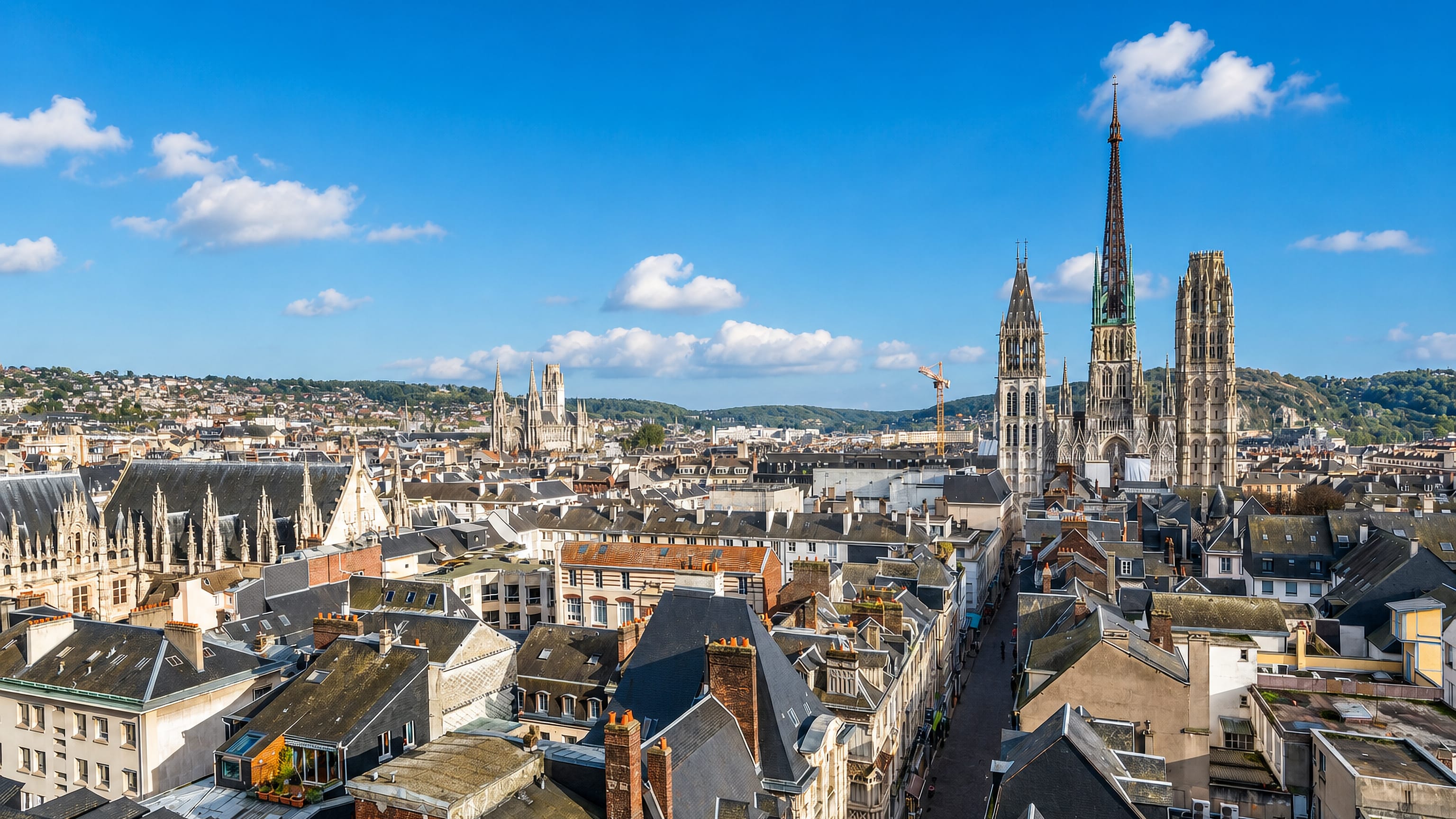
Timbered gables lean over the lanes of Rouen, a city on the River Seine in Normandie, northwestern France, known for the Gros Horloge and Joan of Arc.
Hotel links are affiliate links: booking through them may earn us a commission, at no extra cost to you. It never affects how places are ranked. How this works


Where to stay in Rouen
How the choice of base plays out on the ground.
Where to stay in Rouen turns on the medieval right bank, north of the River Seine. The lanes around the Gros Horloge and the Church of Saint-Maclou form the timbered heart of the old town, close to the Church of St Joan of Arc and the Historial Jeanne d'Arc, where the gabled houses run tight and the streets fill by day. Stay here for the history.
Rooms in the old core are the most sought-after in the city, with the Musée des Beaux-Arts de Rouen and the Gros Horloge within an easy walk. Toward the river, the quarter near the Seine quays and Rouen Castle trades some of the medieval density for calmer streets and easier parking. It suits travellers who want the waterfront and the Musée Flaubert over the tightest lanes of the centre.
The old town rewards a room within walking distance. Evening thins the crowds, and the carved timbers, the arch of the Gros Horloge, and the towers of the Church of Saint-Maclou settle into a quieter light once the day visitors have gone back toward the Seine.
Find hotels in Rouen
Direct booking searches for these neighbourhoods.
Old town by the Gros Horloge
The medieval right-bank core around the Gros Horloge and the Church of Saint-Maclou, close to the Historial Jeanne d'Arc and the city's most sought-after rooms.Find hotels in Old town by the Gros HorlogeWaterfront calm near Rouen CastleSeine quays and castle
The riverside streets by the Seine quays and Rouen Castle, quieter than the old core and near the Musée Flaubert.Find hotels in Seine quays and castleHotel links are affiliate links: booking through them may earn us a commission, at no extra cost to you. It never affects how places are ranked. How this works
Things to do in Rouen
Ranked by global recognition; descriptions from Wikidata (CC0).
Museums & Galleries
3- Musée Flaubert Heritage
- Musée Pierre Corneille de Rouen Heritage
- Musée des Beaux-Arts de Rouen
Churches & Religious Sites
8- Church of St Joan of Arc Heritage
- Church of Saint-Maclou Heritage
- Basilique Notre-Dame de Bonsecours Heritage
- Basilique du Sacré-Coeur de Rouen Heritage
- Église Saint-Vincent de Rouen Heritage
Show 3 more →
- Église Saint-Gervais de Rouen Heritage
- Église Saint-Pierre-du-Châtel Heritage
- chapelle Corneille Heritage
Castles & Historic Sites
2- Rouen Castle Heritage
- Rotomagus
Stadiums & Sports
1- Kindarena Sports Complex
Landmarks & Notable Places
1- Gros Horloge Heritage
worth knowingacross 5 categories in Rouen
About Rouen
What is Rouen known for?
Rouen is known for its medieval old town on the River Seine, the astronomical Gros Horloge arching over its main street, and its ties to Joan of Arc. The Church of St Joan of Arc and the Historial Jeanne d'Arc mark the place of her trial in Normandie. Timber and stone define the centre.
The Church of Saint-Maclou stands among the gabled houses, while the Musée des Beaux-Arts de Rouen and the Musée Flaubert hold its art and letters. Seine-Maritime looks to it as its seat.
What are the main landmarks in Rouen?
The main landmarks in Rouen fill the medieval right bank above the River Seine. The Gros Horloge arches over the main street as an astronomical clock, joined by the Church of Saint-Maclou, Rouen Castle, and the Church of St Joan of Arc. Rouen's galleries gather on the right bank.
The Musée des Beaux-Arts de Rouen, the Musée Flaubert, and the Historial Jeanne d'Arc hold art, letters, and the story of her trial, while the Basilique Notre-Dame de Bonsecours looks down from the heights above the town.
What is the history of Rouen?
Rouen began as the Roman town of Rotomagus on the River Seine, a crossing and trading point on the road north. From that root it rose to become one of the largest and most prosperous cities of medieval Europe, capital of the dukes who ruled Normandie and a river port that grew wealthy on the traffic of the Seine. Stone and timber filled its streets.
The Church of Saint-Maclou and Rouen Castle rose among the merchant houses as the town spread back from the water. The city holds a heavy place in the story of Joan of Arc, tried and put to death here, a memory now kept by the Church of St Joan of Arc and the Historial Jeanne d'Arc. War and time both scarred it.
The old core was battered and rebuilt across the centuries, yet the Gros Horloge still arches over the main street and the gabled lanes still run tight, so that the medieval city on the Seine remains legible at the heart of the far larger prefecture of Seine-Maritime that grew around it.
Where is Rouen?
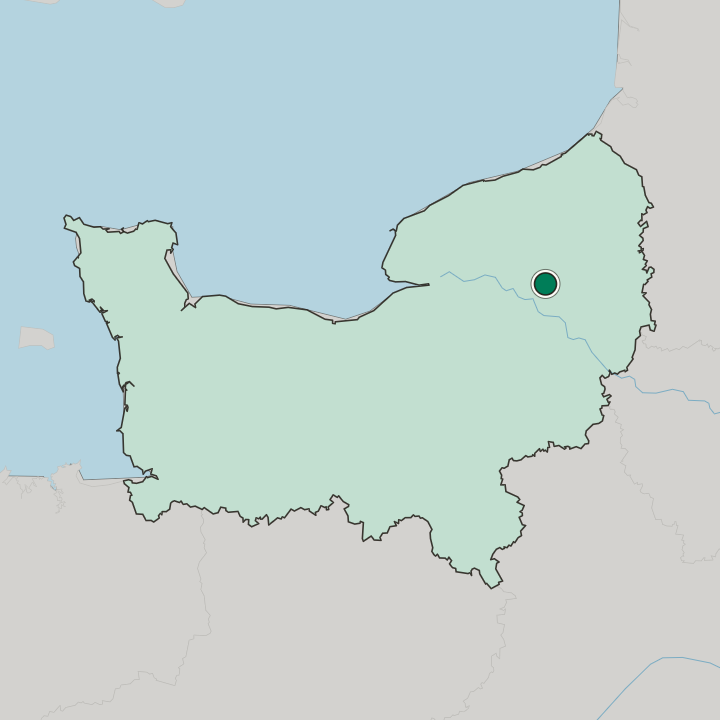
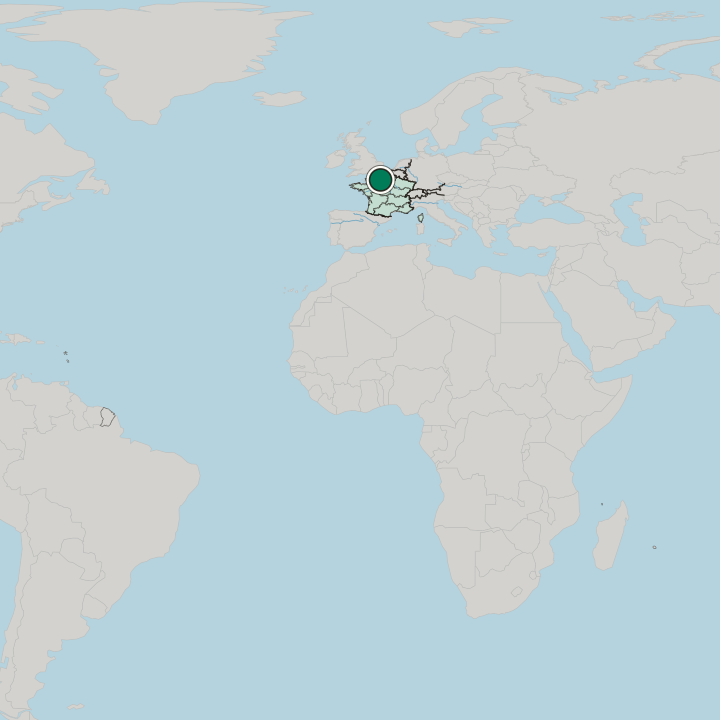
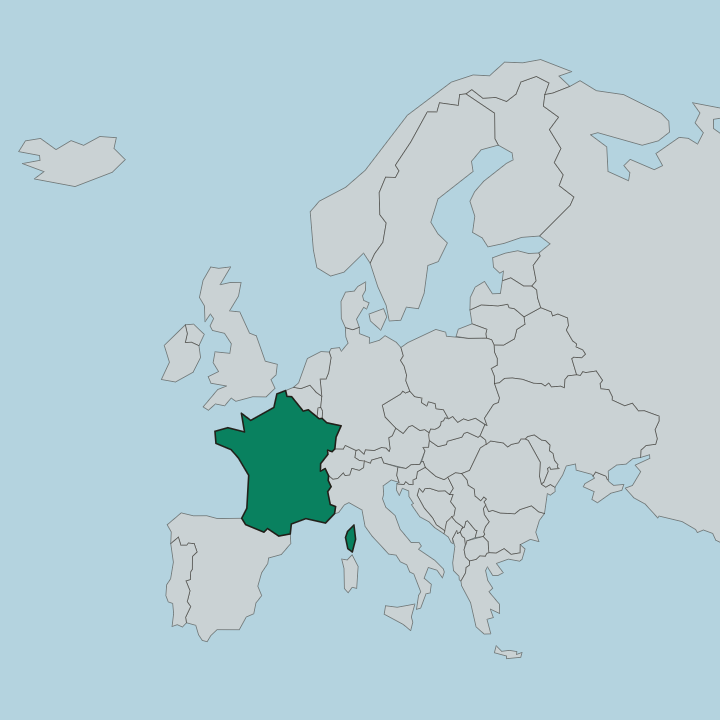
Rouen sits on the River Seine in northwestern France, the seat of Seine-Maritime within Normandie. The old town spreads on the right bank. Where the river makes its wide bends inland from the coast, chalk hills rise on either side of the valley, and the Basilique Notre-Dame de Bonsecours crowns the heights above the town.
The Seine carries river traffic seaward. Suburbs climb the slopes beyond the medieval core.
What is the climate of Rouen?
Rouen has the mild, damp oceanic climate of Normandie, tempered by its inland position up the River Seine. Winters run cool and grey, with frequent rain and mist settling in the river valley and over the old town's roofs through the darker months of the year. Summers stay mild and changeable.
Cloud and sun trade places quickly over the Seine. Rain falls across the seasons, keeping the chalk hills green.
How do you get to Rouen?
Rouen sits on the main routes down the River Seine between Paris and the Normandie coast. Rail lines run southeast toward the capital and north through Seine-Maritime, dropping travellers near the old town, while motorways follow the river valley on both banks. The Seine itself still carries river traffic.
From the station, the Gros Horloge and the Church of Saint-Maclou lie a short walk into the medieval centre.
Common questions
What is the best area to stay in Rouen?
Old town by the Gros Horloge: Timbered lanes around the astronomical clock. Seine quays and castle: Waterfront calm near Rouen Castle.
Good for
More cities in Normandie
Updated October 2026