Ghana
Ashanti Region, Ghana — Towns & Travel Guide
Kumasi is the capital of the Ashanti Region, the third largest of Ghana's sixteen administrative regions and a centre of gold and cocoa production.
Hotel links are affiliate links: booking through them may earn us a commission, at no extra cost to you. It never affects how places are ranked. How this works


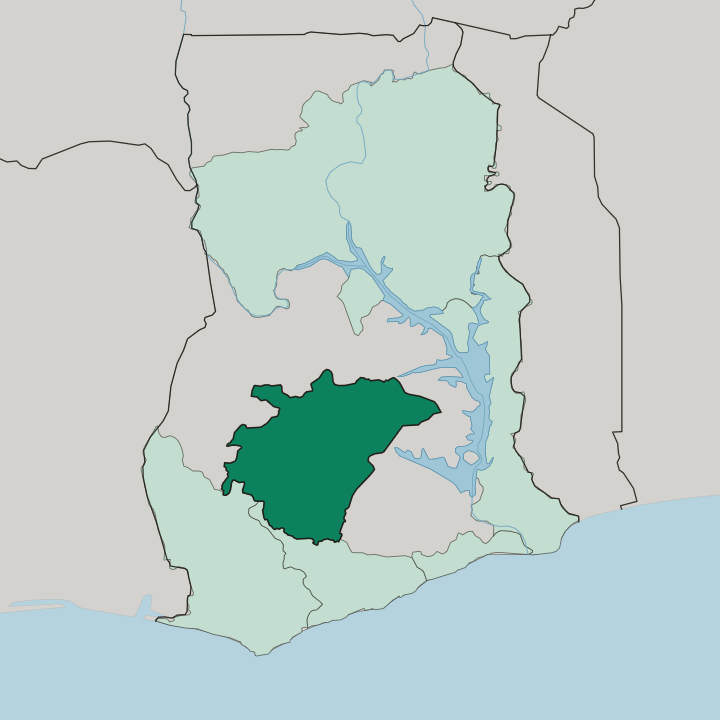
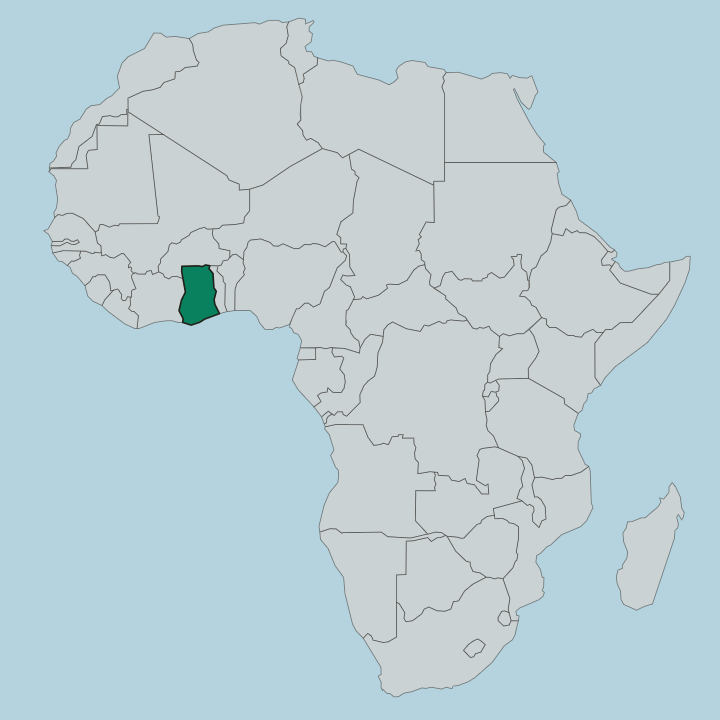
Towns & cities in Ashanti Region
One town here has its own guide — it links to where to stay.
 Ghana
Ghana
Kumasi
Kumasi is the capital of the Ashanti in central Ghana, the old royal city of a great African kingdom, seat of the golden stool and its king.Where to stay →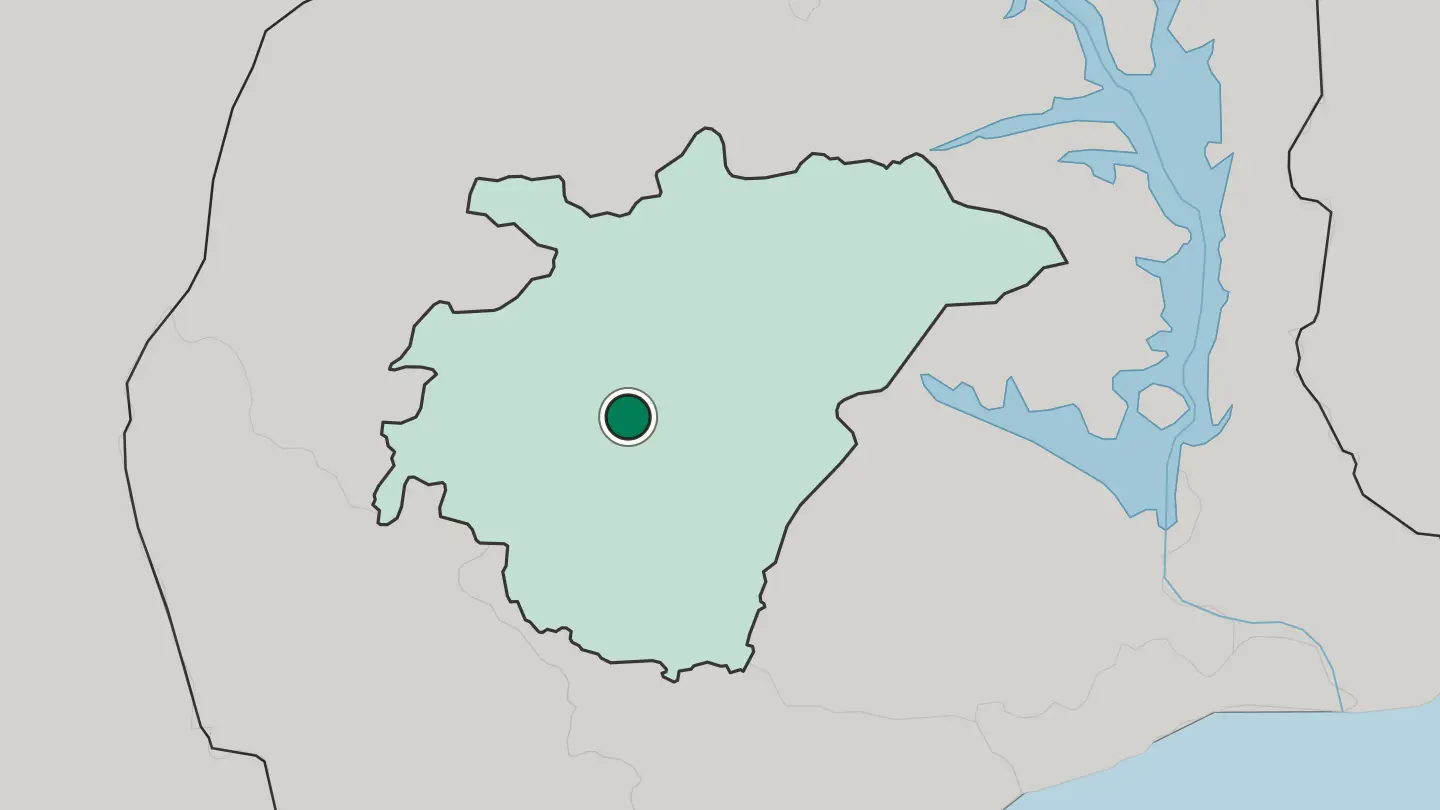
Hotel links are affiliate links: booking through them may earn us a commission, at no extra cost to you. It never affects how places are ranked. How this works
About Ashanti Region
What is Ashanti Region known for?
Gold and cocoa built the region's name. Ashanti supplies both from the southern part of Ghana, and the two commodities together give the region an economic profile that visitors recognise long before they can place it on a map. Kumasi sits at the centre of that.
The largest city and the regional capital, it is where the roads, the markets and the administrative weight of Ashanti all gather. Sixteen regions divide Ghana; this is the third largest.
Where is Ashanti Region?
The Ashanti Region occupies the southern part of Ghana. It is the third largest of the country's sixteen administrative regions, a block of country substantial enough that a journey from one edge to the other fills a day rather than an hour. Land is the region's currency.
Roughly a tenth of Ghana's total land area falls inside its boundary, which is why the region reads on a map as one of the country's larger single units rather than a district-sized administrative slice. Kumasi anchors the whole. The largest city of the Ashanti Region and its capital, it sits as the point toward which the region's roads, trade and administration all run.
Ghana's tropical band sets the terms. The Ashanti Region falls within the tropics of the northern hemisphere, which means the year turns on wet and dry rather than on the four-season pattern familiar further from the equator. Cocoa follows that.
The crop that the region is known for depends on the warmth and the rain the tropics bring, so the agricultural map and the climatic one describe much the same ground. Gold works differently. Gold bar production ties the region to what lies under the ground rather than what grows on it, and it has given Ashanti a standing in Ghana that agriculture alone would not.
What is Ashanti Region like?
English does the public business here. Across the Ashanti Region, as across Ghana, it is the medium of administration, signage and dealings with visitors, which makes the region straightforward to move through for anyone arriving from outside the country. Work here has two faces.
Cocoa belongs to the farms and the villages spread through the southern part of Ghana, while gold belongs to a different kind of labour entirely, and the Ashanti Region is known for both at once. Kumasi gathers what both produce. As the largest city in the region and its capital, Kumasi is where the trade in each finds its market, its offices and its onward routes out to the rest of Ghana.
Size shapes the region's character. Being the third largest of Ghana's sixteen administrative regions means the Ashanti Region contains more than one kind of place, and a visitor's impression depends heavily on which part of it they spend time in. Kumasi reads one way.
The countryside that produces the region's cocoa reads another, quieter and more dispersed, with life organised around the farming year rather than around a city's working week. Both belong to Ashanti. The single name covers the gold, the farms and the capital alike, which is why the region is discussed as one entity across Ghana despite the distances inside it.
What is the history of Ashanti Region?
The Ashanti Region is a modern administrative unit. Its standing as one of the sixteen regions of Ghana comes from how the country divides itself for government, and the boundary that encloses it is an administrative line rather than an inherited frontier. Kumasi holds the central role.
The largest city of the region and its capital, it is the reference point against which the rest of the Ashanti Region is understood. Gold and cocoa remain the region's defining trades.
What is the climate of Ashanti Region?
The tropics govern the year here. The Ashanti Region lies in the tropical band of the northern hemisphere, so the year runs on wet and dry seasons instead of the four-season cycle that shapes travel further north, which makes timing a question of rain rather than temperature. Cocoa is the local barometer.
The crop the Ashanti Region is known for needs the wet months, and the agricultural calendar across the southern part of Ghana tracks them closely.
How do you get to Ashanti Region?
Kumasi is where arrivals converge. As the largest city of the Ashanti Region and its capital, it carries the connections that reach the region from the rest of Ghana, and onward movement into the region's smaller towns starts from there. Distances are the real constraint.
This is the third largest of Ghana's sixteen administrative regions, so crossing it is a matter of hours on the road rather than a short hop between neighbouring towns.
Common questions
What is the best area to stay in Ashanti Region?
Kumasi: Kumasi for the Ashanti Region's gold and cocoa trade.
More regions in Ghana
Updated September 2026