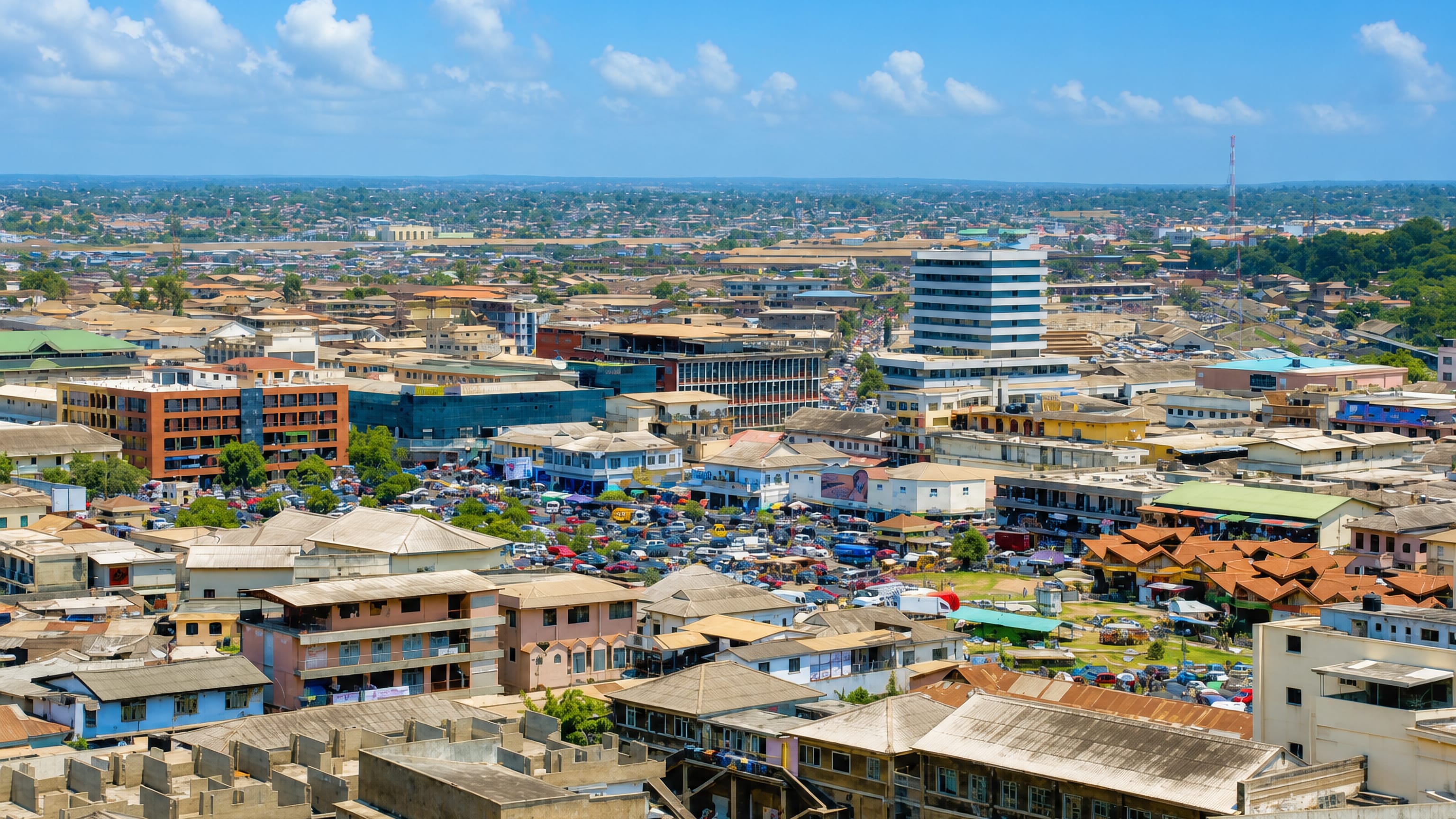
Ghana: Regions, Cities & Travel Guide
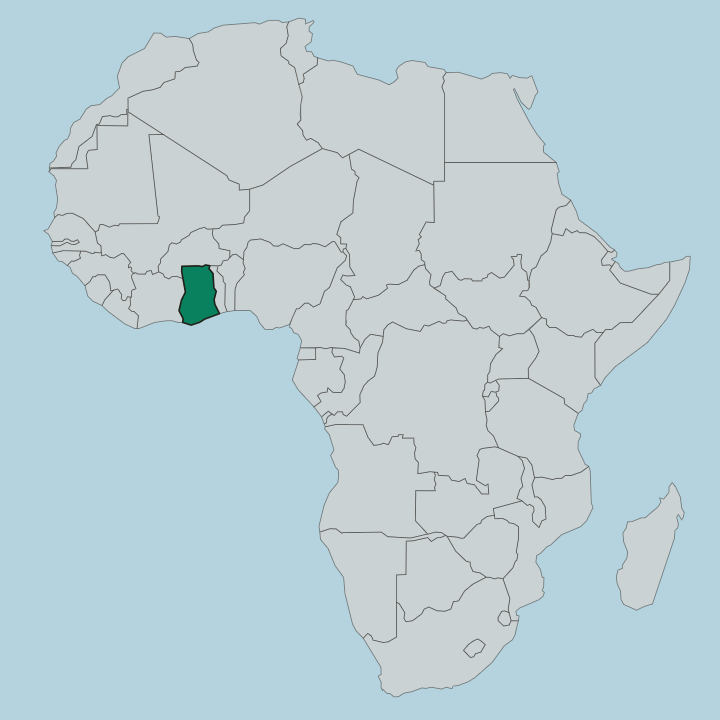
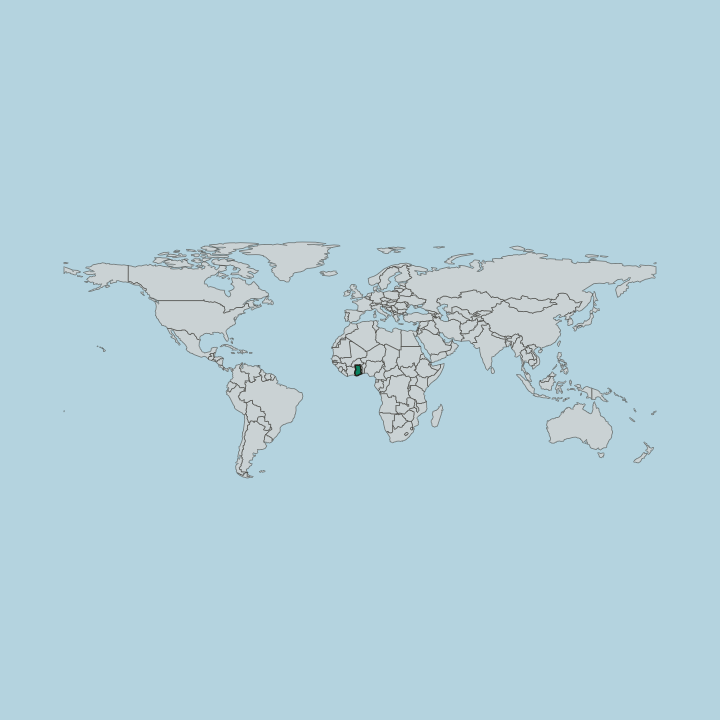
Ghana is a West African country on the Gulf of Guinea, with Accra its coastal capital.
Hotel links are affiliate links: booking through them may earn us a commission, at no extra cost to you. It never affects how places are ranked. How this works


Top destinations in Ghana
Cities to start from, then drill into areas and hotels.
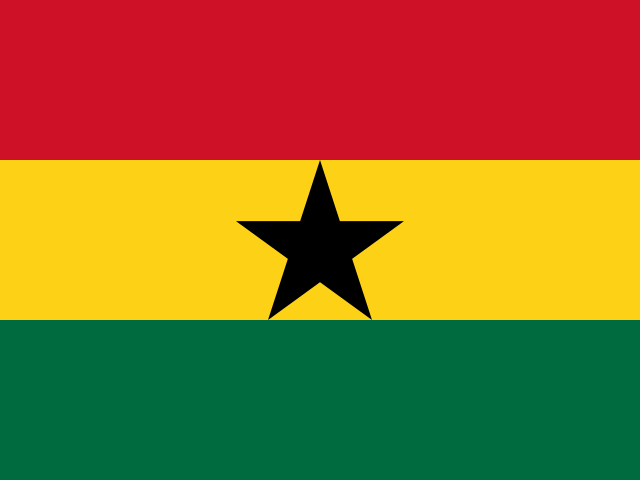 Ghana
Ghana
Accra
Old forts front the surf at Accra, the capital of Ghana on the Gulf of Guinea, known for Osu Castle and the Black Star Gate.Where to stay →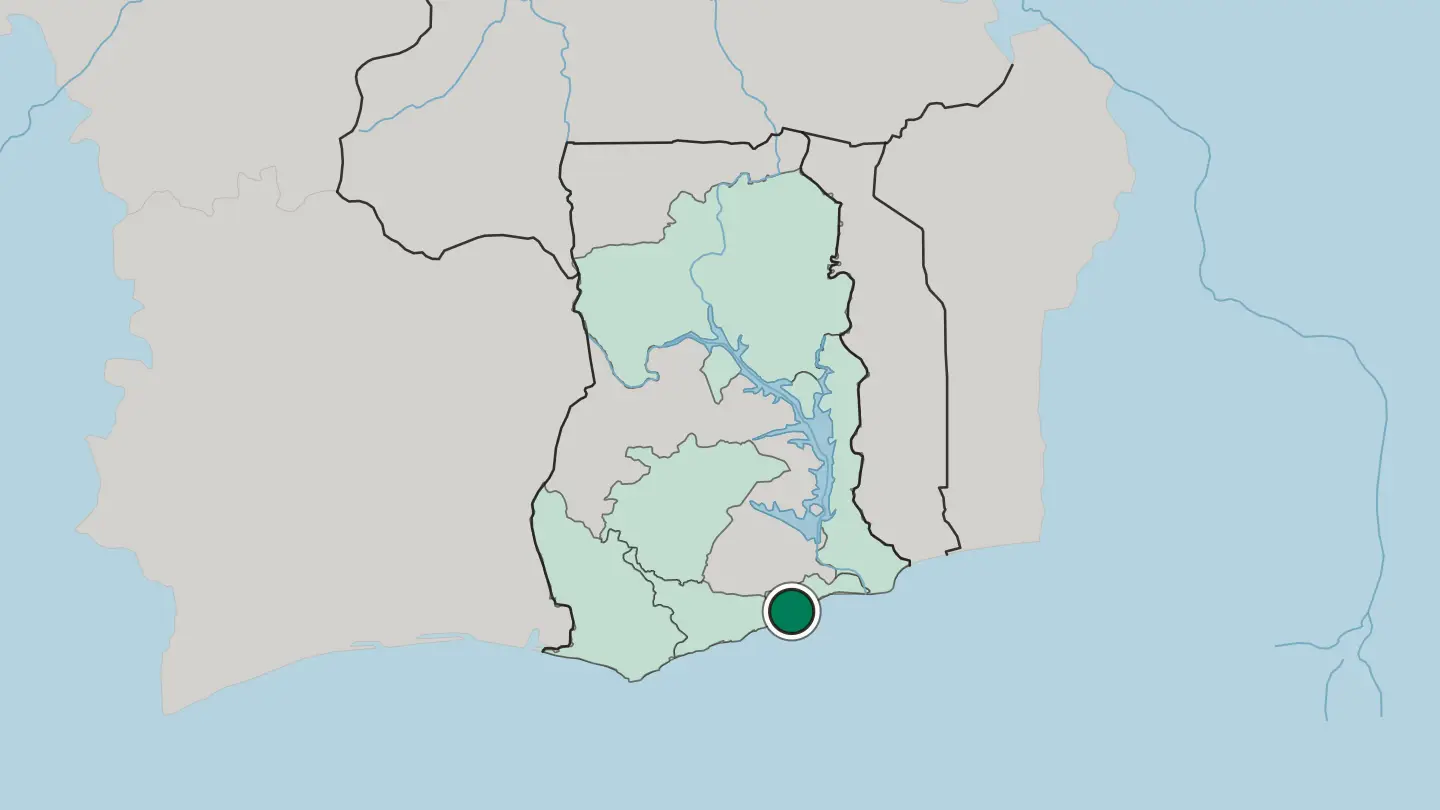 Ghana
Ghana
Kumasi
Kumasi is the capital of the Ashanti in central Ghana, the old royal city of a great African kingdom, seat of the golden stool and its king.Where to stay →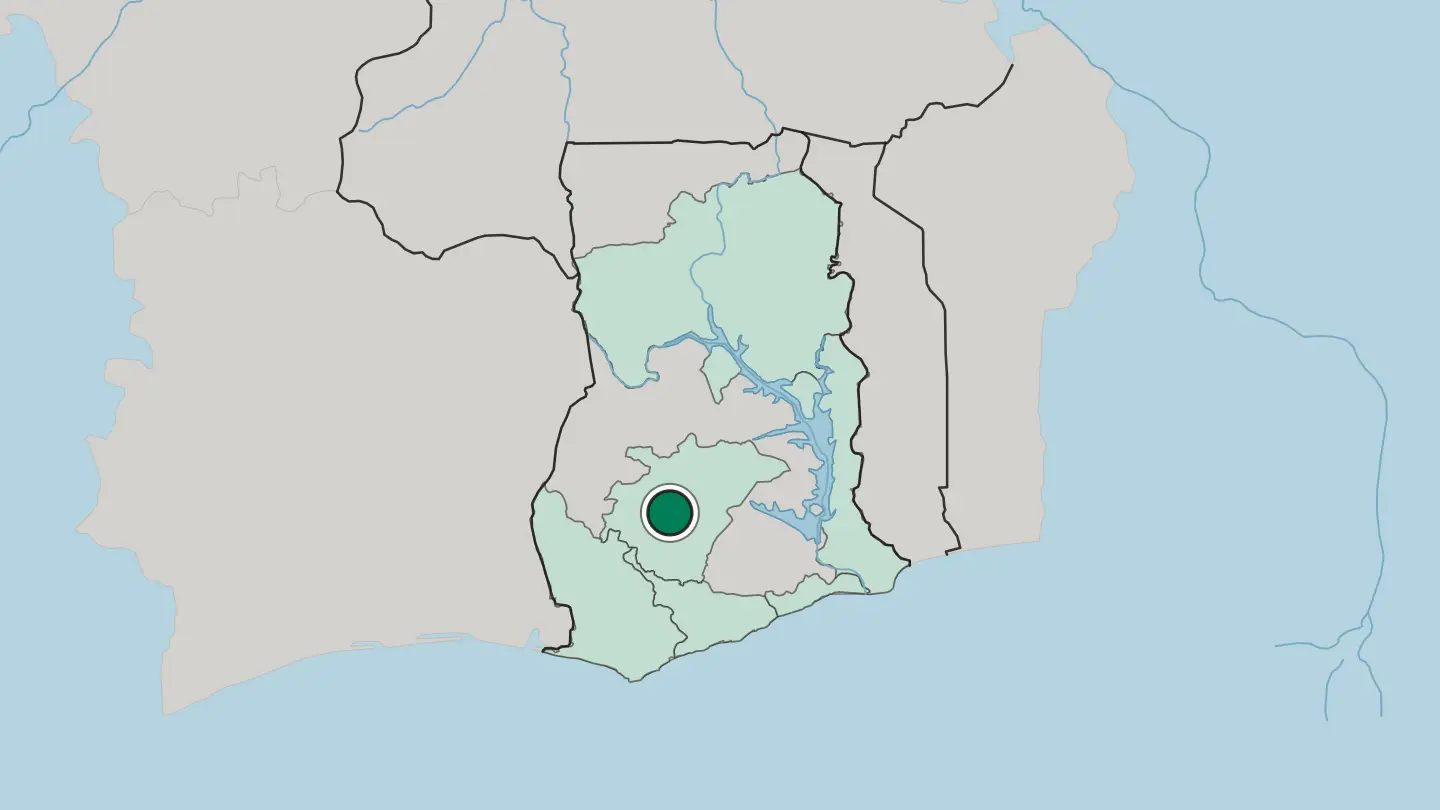 Ghana
Ghana
Tamale
Tamale is a city of northern Ghana, the capital of the Dagbon kingdom, a hot savanna town of mosques and markets and the base for the elephants of Mole.Where to stay →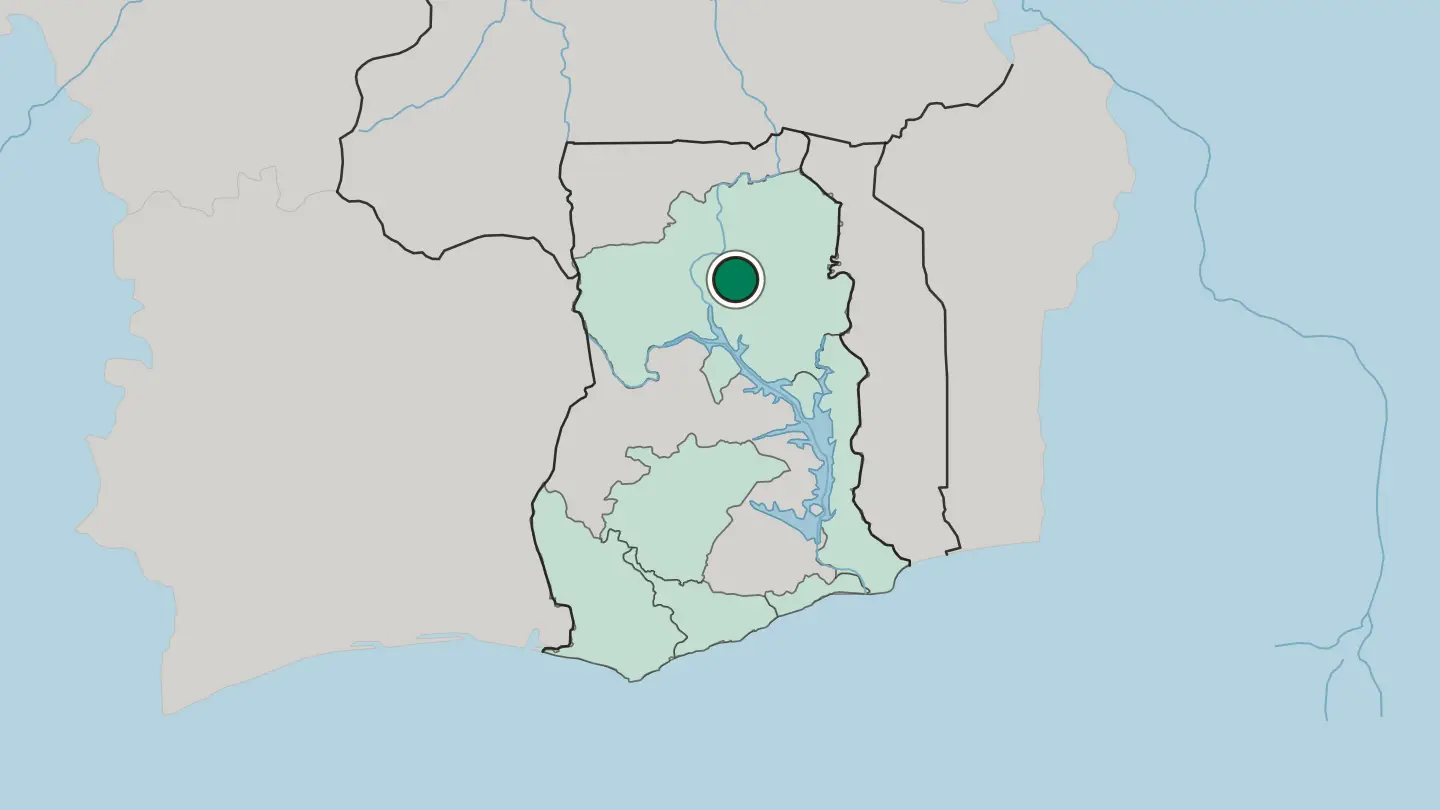
 Ghana
Ghana
Tema
Tema is Ghana's Harbour City, the country's largest seaport and industrial hub, on the Bight of Benin coast east of Accra.Where to stay →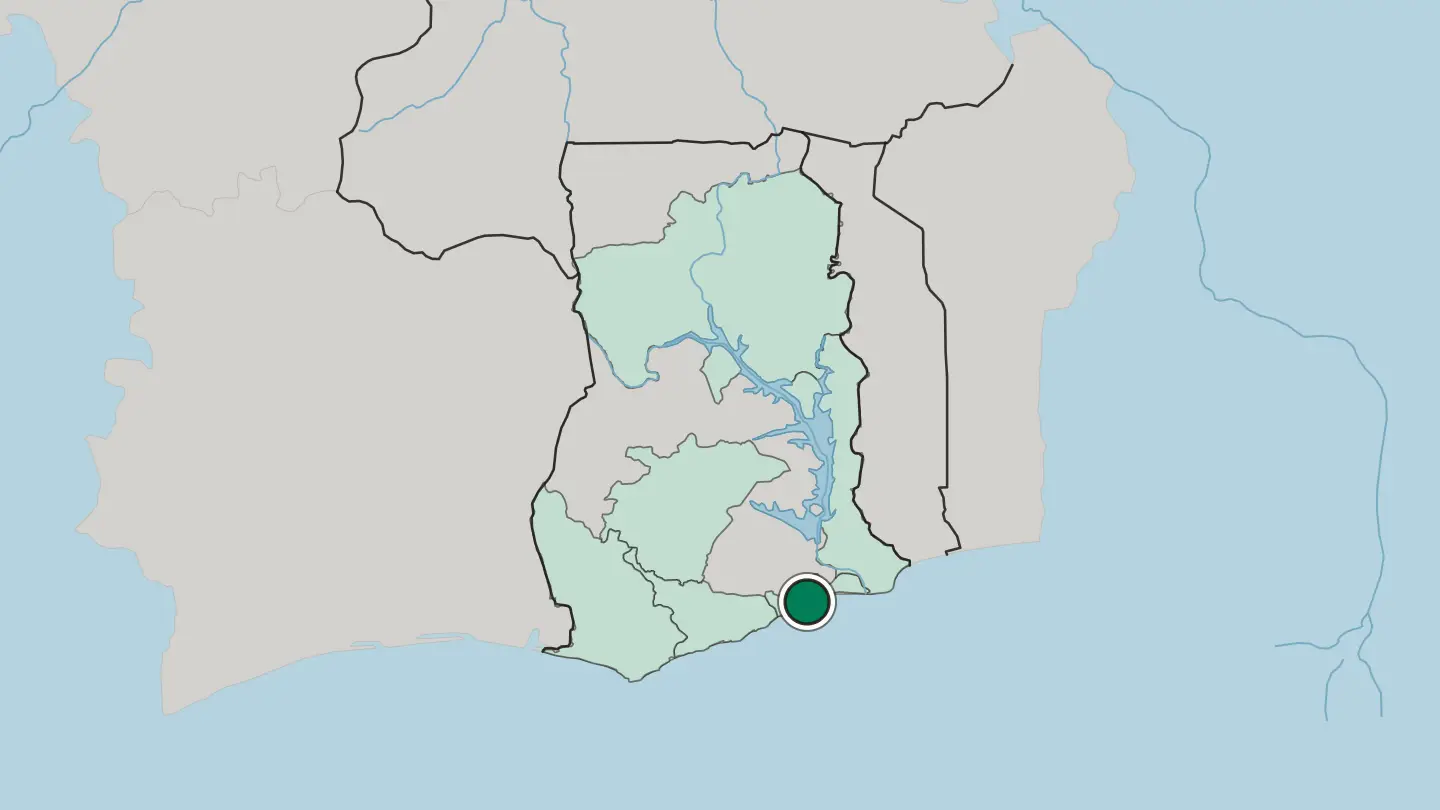
 Ghana
Ghana
Cape Coast
Cape Coast is a coastal town of southern Ghana, an old fishing port and colonial capital, site of a castle standing as a memorial of the slave trade.Where to stay →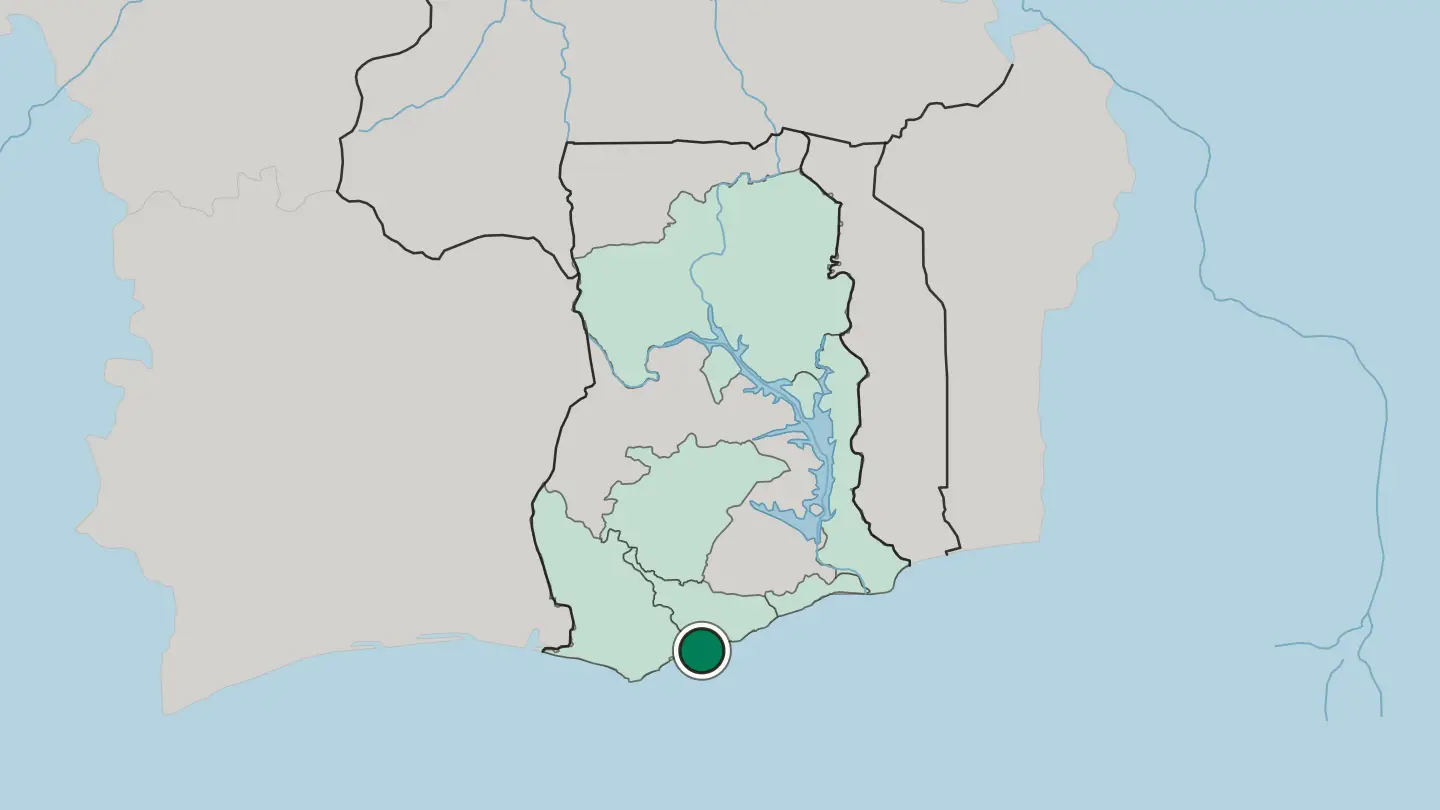
 Ghana
Ghana
Ho
Ho is the capital of Ghana's Volta Region, a town between Mount Adaklu and the Togo Atakora Range, close to the Republic of Togo.Where to stay →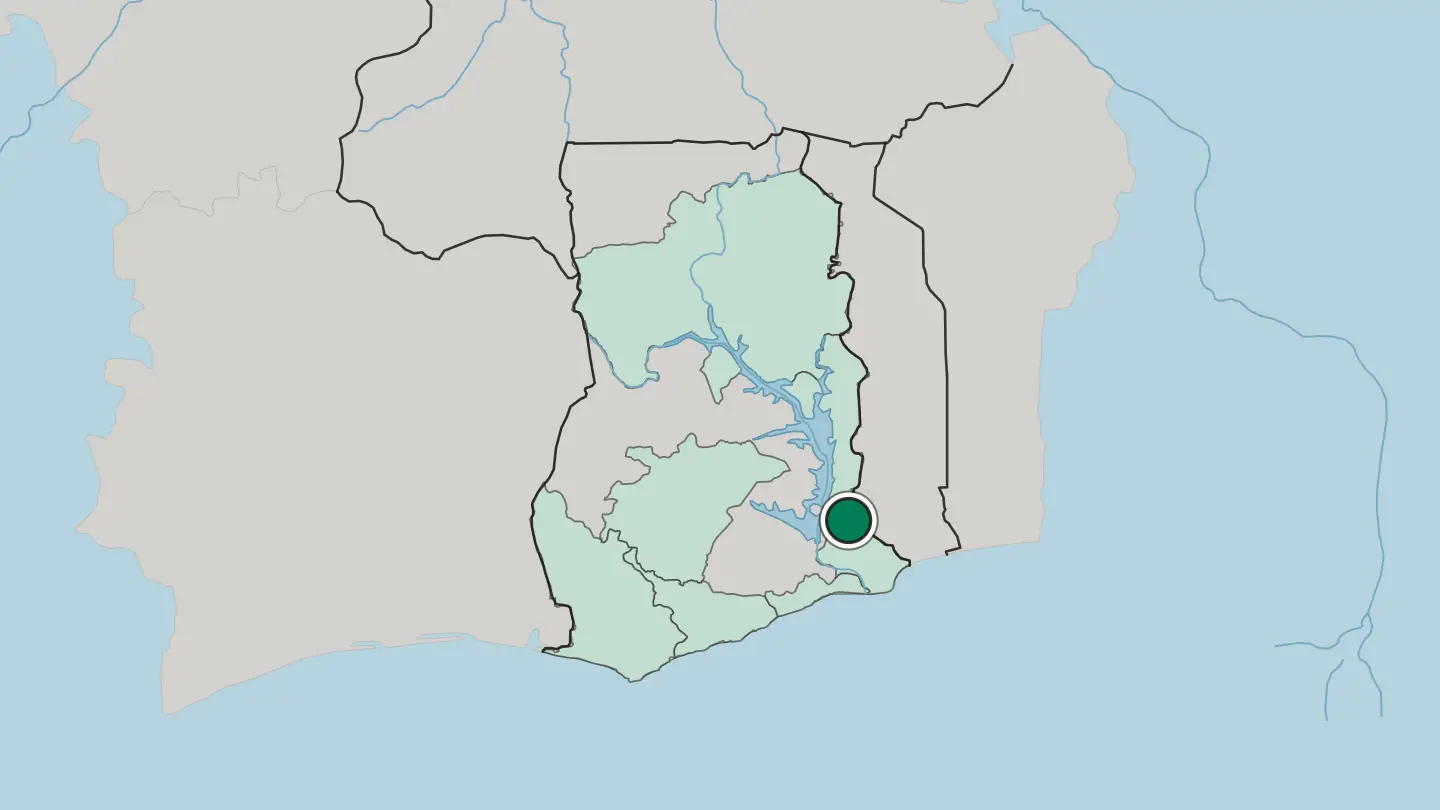 Ghana
Ghana
Sekondi-Takoradi
Sekondi-Takoradi pairs two Ghanaian port cities as one municipality, capital of the Western Region and its largest industrial and commercial centre.Where to stay →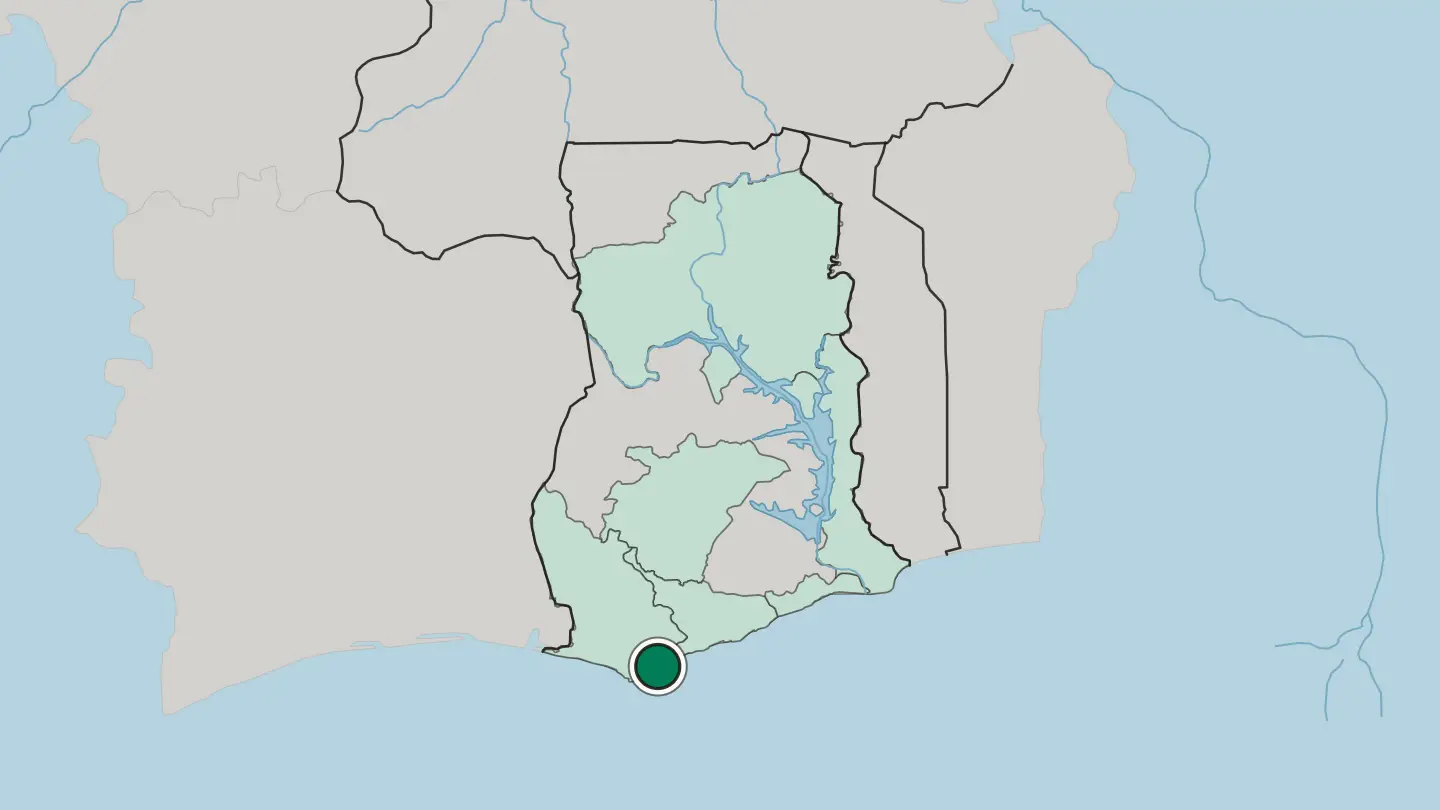
Hotel links are affiliate links: booking through them may earn us a commission, at no extra cost to you. It never affects how places are ranked. How this works
Regions of Ghana
Ghana
Ashanti Region
Kumasi is the capital of the Ashanti Region, the third largest of Ghana's sixteen administrative regions and a centre of gold and cocoa production.Towns & cities →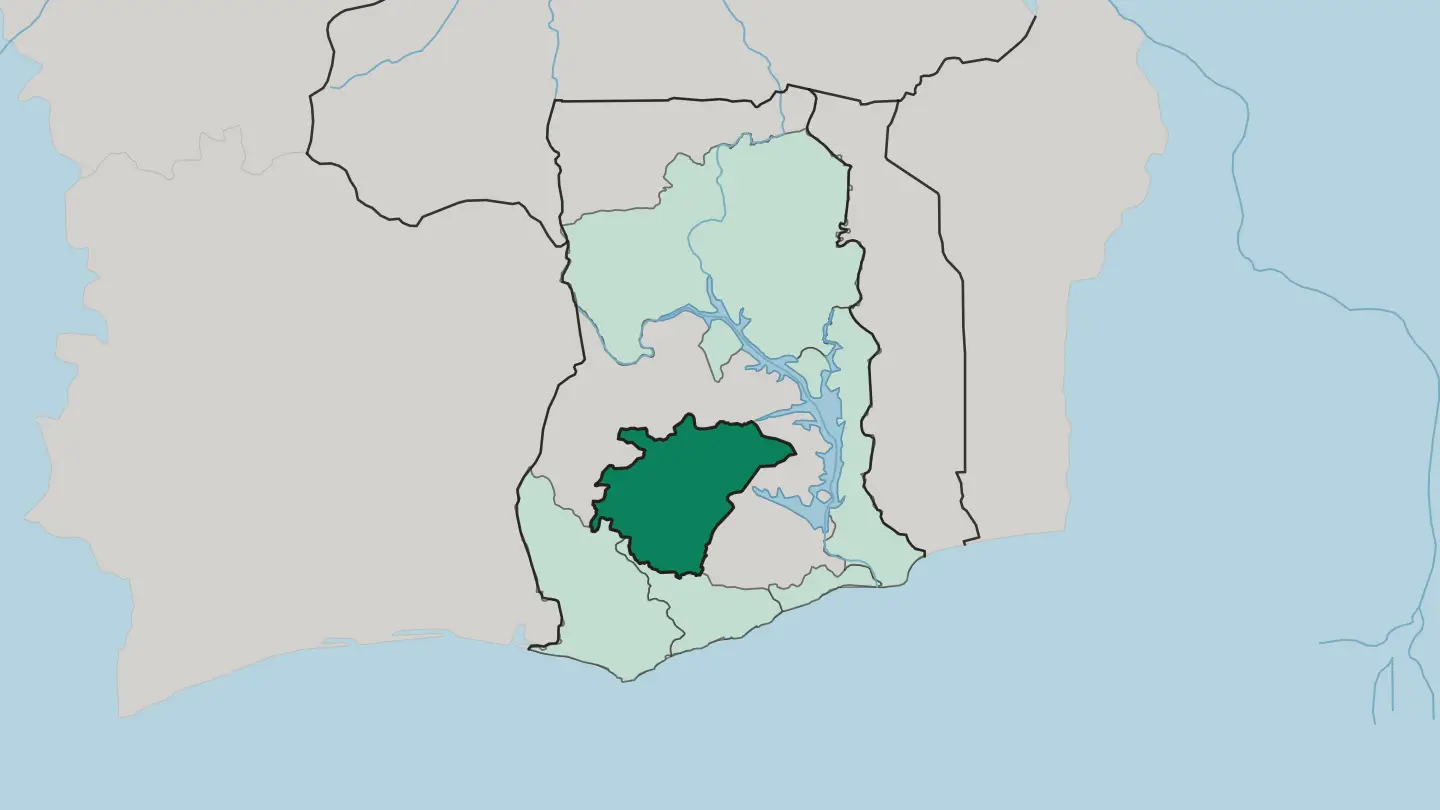 Ghana
Ghana
Central Region
The Central Region runs along Ghana's Gulf of Guinea shore, where castles, forts and beaches line the coast between Western and Greater Accra.Towns & cities →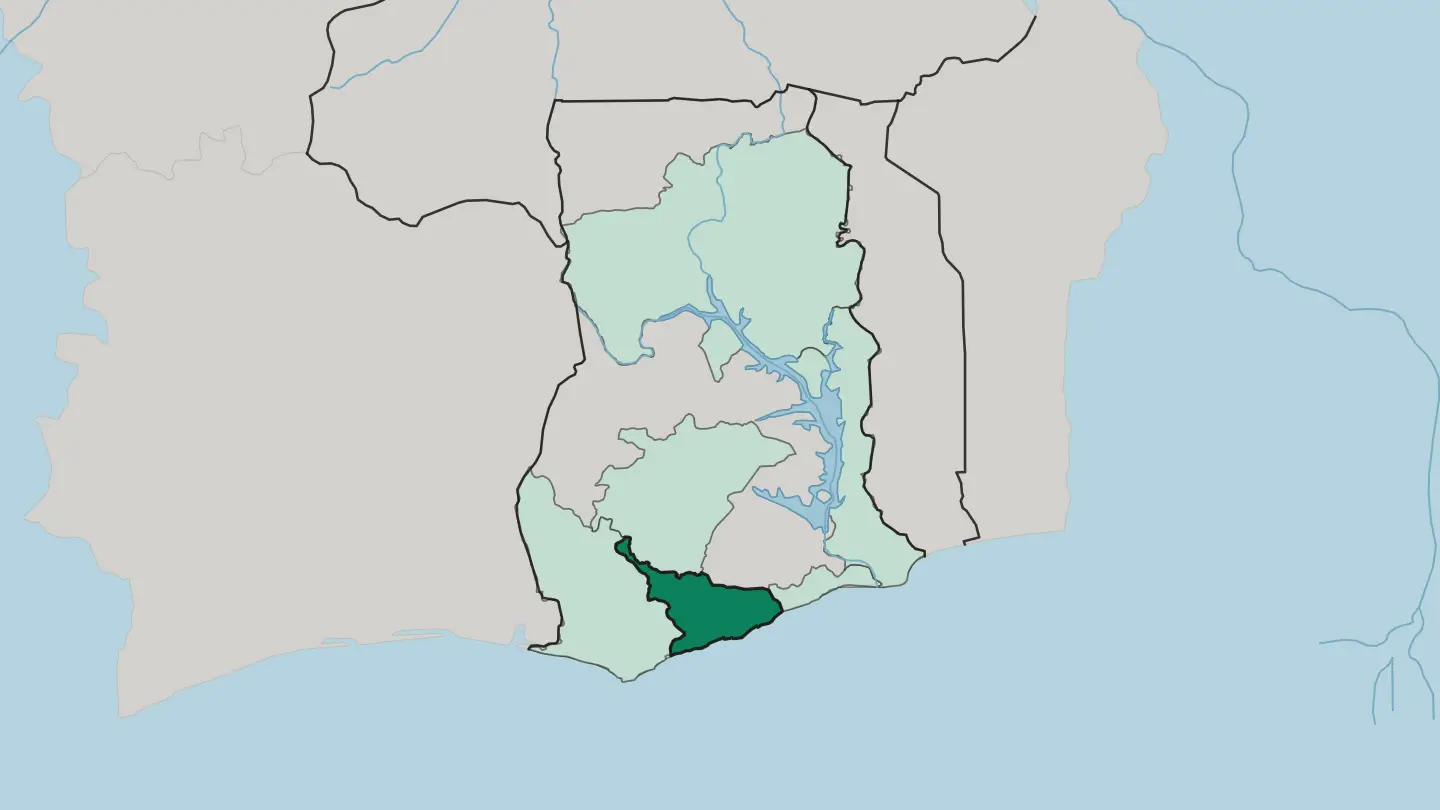 Ghana
Ghana
Greater Accra Region
Greater Accra Region is the smallest and most urbanized of Ghana's administrative regions, wrapped around the coastal capital of Accra.Towns & cities →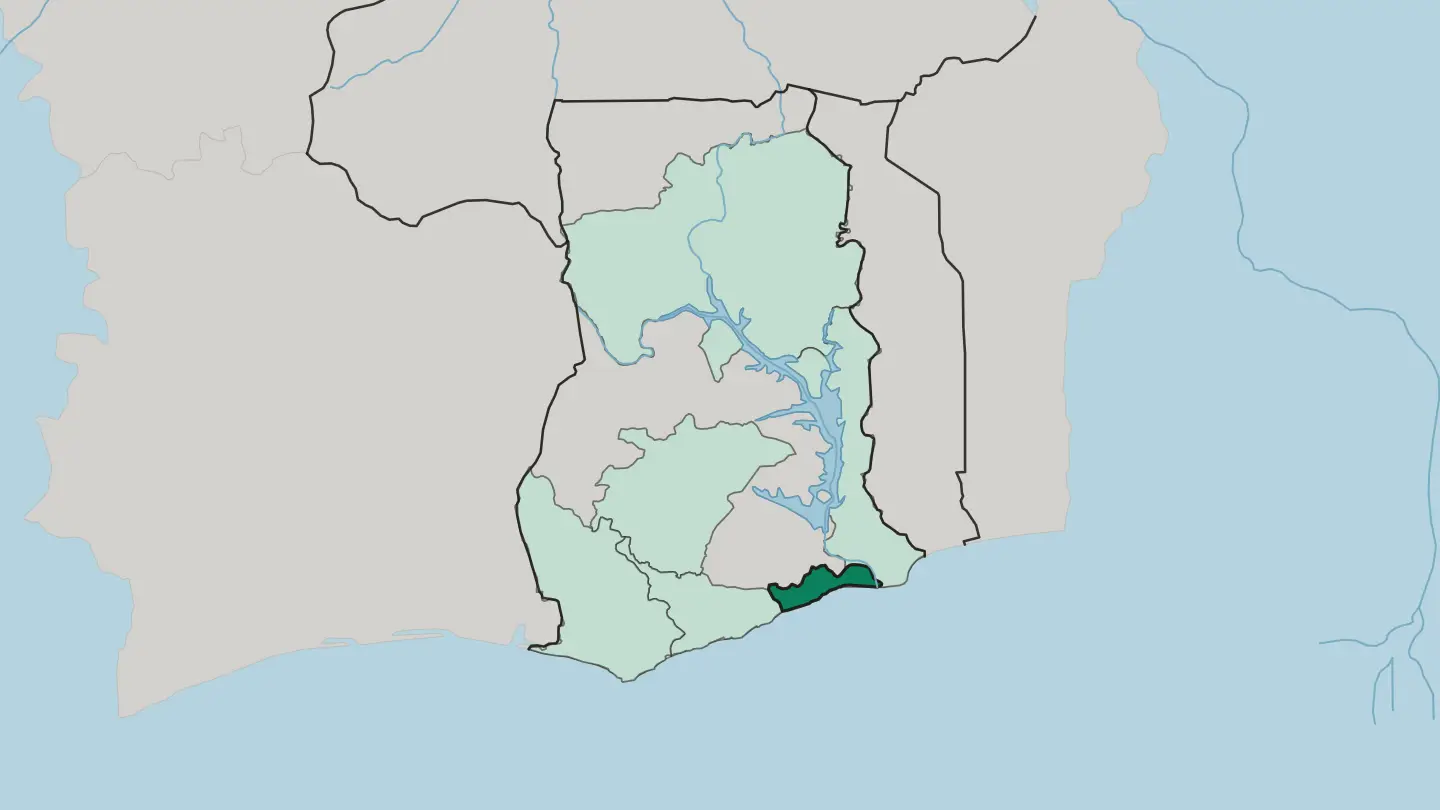 Ghana
Ghana
Northern Region
Tamale is the capital of Ghana's Northern Region, the second largest of the sixteen regions and the source of Savannah and North East in 2018.Towns & cities →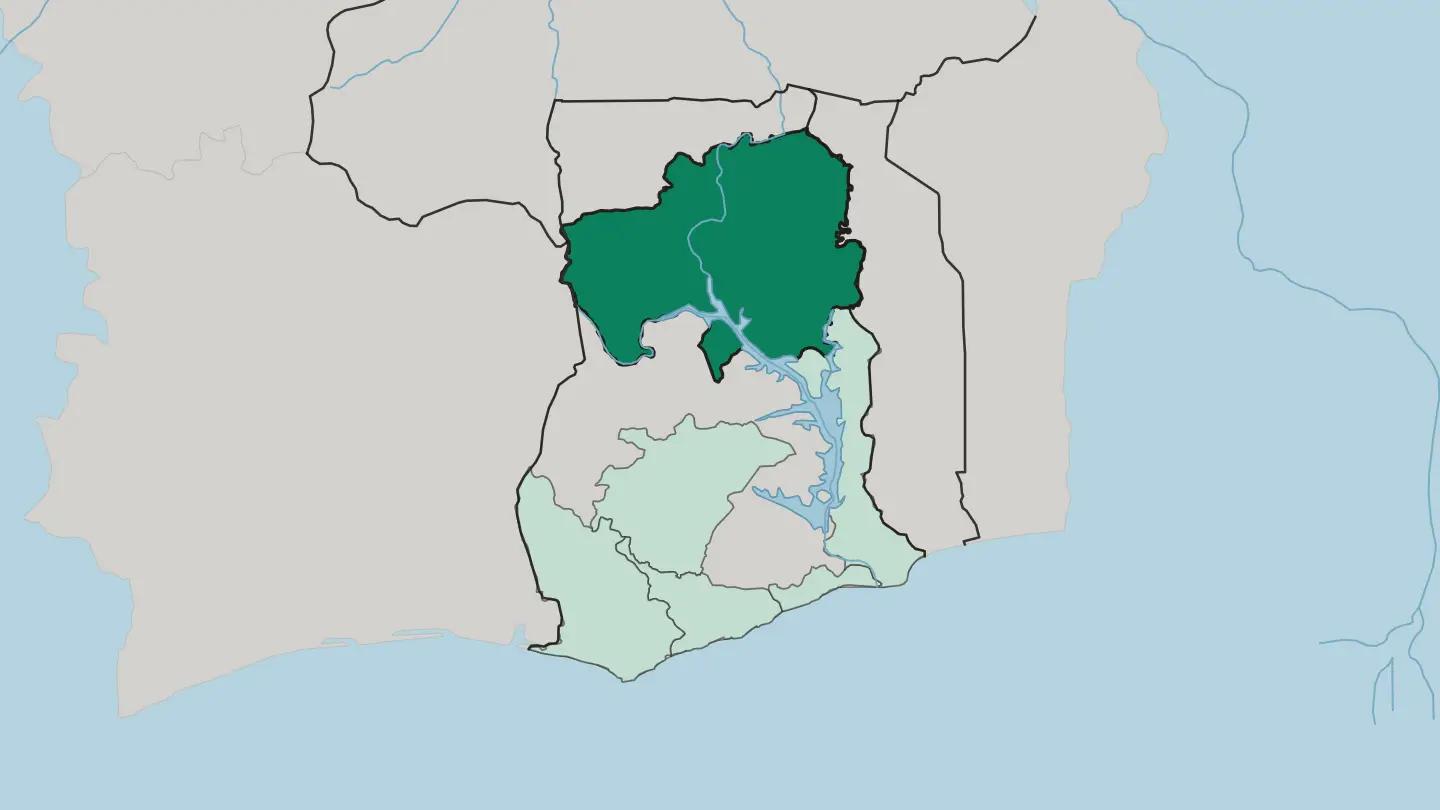 Ghana
Ghana
Volta Region
Ho is the capital of the Volta Region, in the eastern part of Ghana, with Keta, Hohoe and Aflao among its towns.Towns & cities →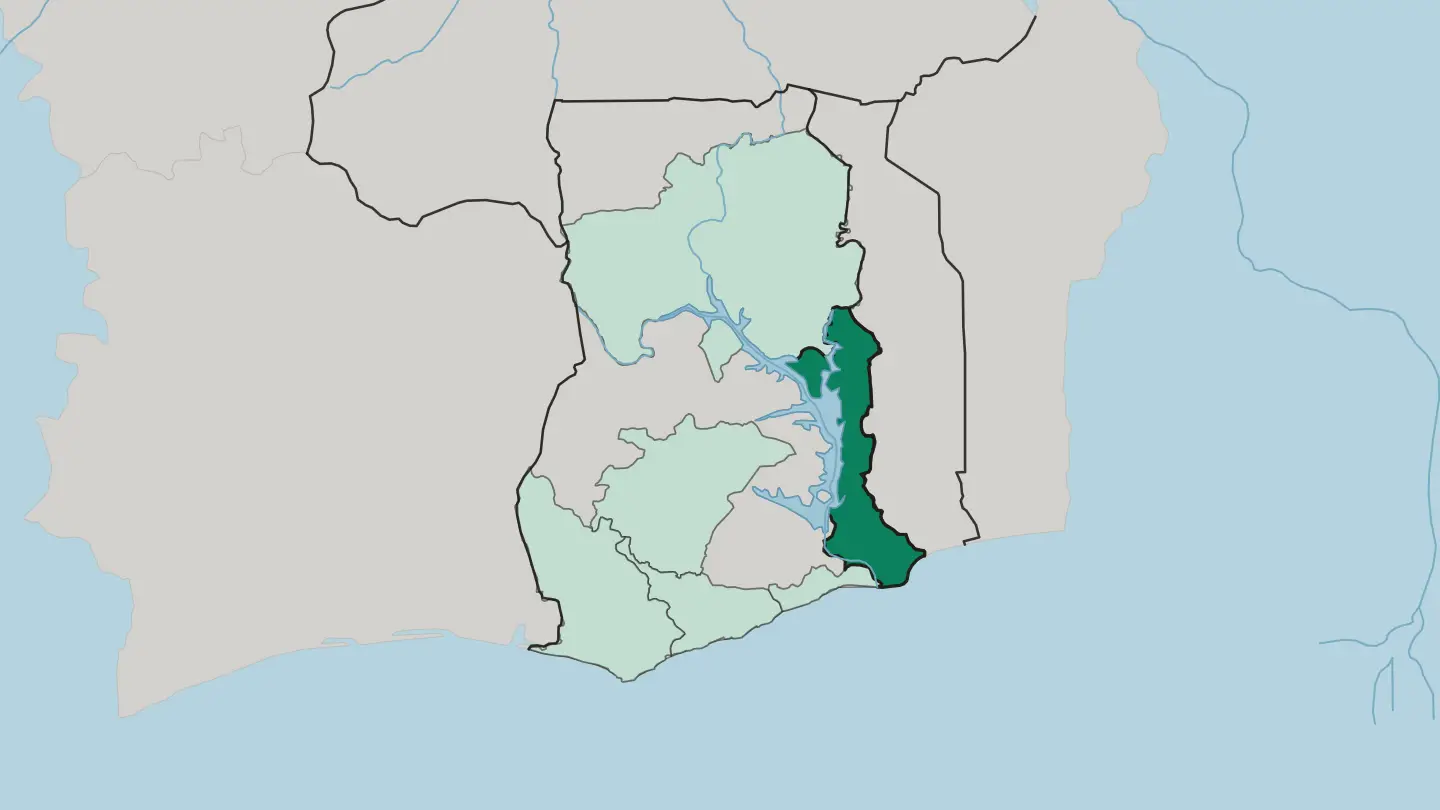 Ghana
Ghana
Western Region
Sekondi-Takoradi is the capital of Ghana's Western Region, whose coastline runs from the Ivory Coast to the Central region past Cape Three Points.Towns & cities →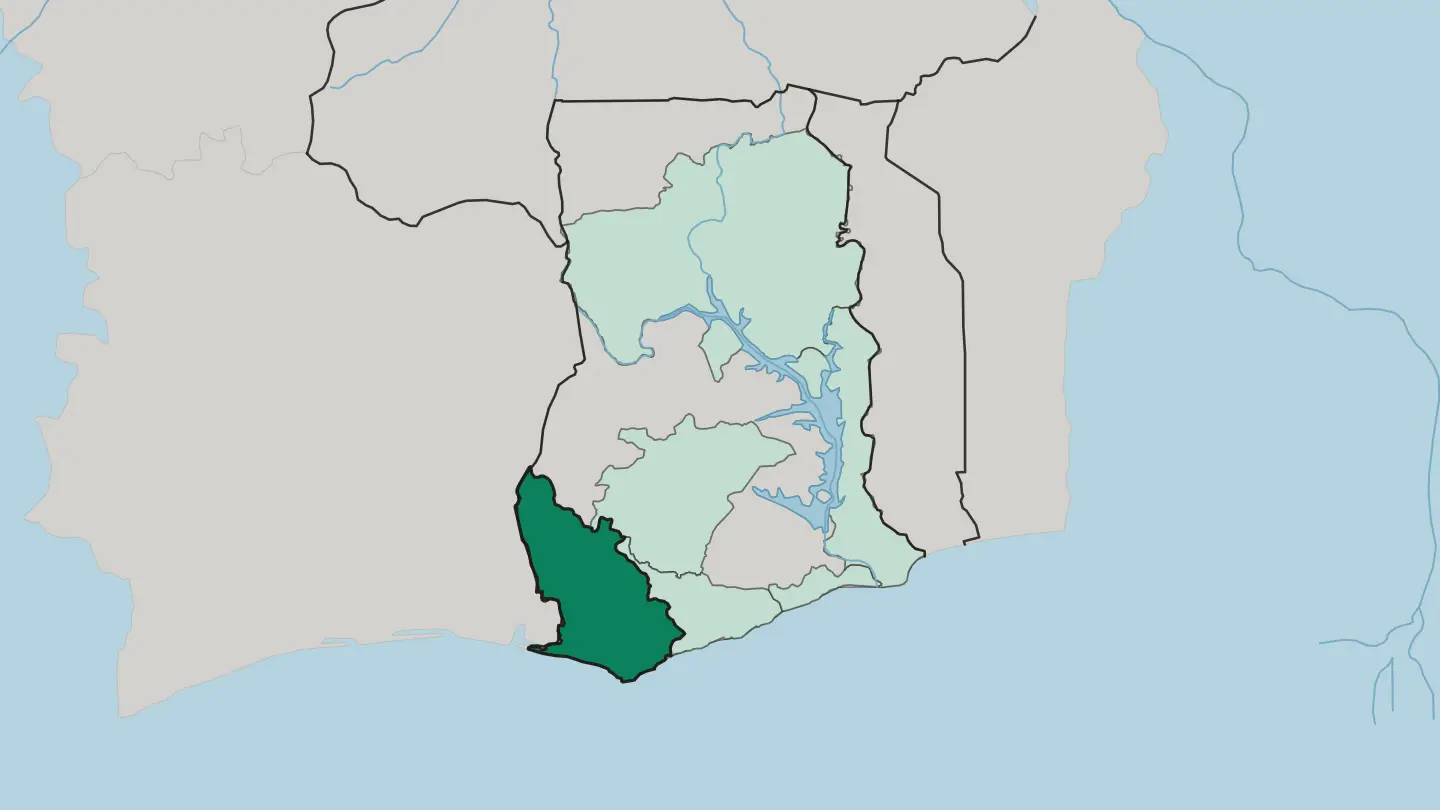
About Ghana
What is Ghana known for?
Ghana is known for gold, kente cloth, and the whitewashed slave forts along its shore. The Ashanti Empire ruled from Kumasi, and its goldsmiths still work the metal that gave the coast its old name. Cape Coast Castle and Elmina Castle stand as memorials on the Atlantic.
Inland spreads Lake Volta, the largest reservoir on earth by surface area, and to the east the Akwapim-Togo hills rise toward Mount Afadja. English is spoken everywhere.
Where is Ghana?
Ghana faces the Gulf of Guinea in the south, its Atlantic shore edged by a narrow band of grassy plain that Ghanaians call the coastal savanna, only a few miles wide in the west before it broadens east across the Accra plains. Behind that coast the land climbs. A tropical rainforest belt, cut by forested hills and countless streams, spreads north from the shore toward the Ivory Coast border, and it is this humid middle band that grows the country's cocoa and hardwood timber.
Its relief is gentle rather than dramatic. The Kwahu Plateau marks the southern rim of the great Volta Basin, its ridges feeding rivers like the Pra, the Ofin, and the Ankobra that run down to the sea. One river system dominates.
Draining three-quarters of the whole country, the Black Volta and White Volta flow south out of Burkina Faso to join in the interior, and the water backs up behind the Akosombo Dam to form Lake Volta, the largest reservoir on the planet by surface area, a flooded fork that reaches deep into the middle of the map. Toward Togo in the east, the Akwapim-Togo ranges throw up the country's high ground, and Mount Afadja, the highest summit, tops out at 885 metres. The far north is different again: flat, open Guinea savanna running toward Burkina Faso.
From surf to savanna, Ghana stays low and green.
What is the history of Ghana?
Ghana carries the memory of gold, empire, and the Atlantic slave trade in almost equal measure. Portuguese navigators reached this coast in 1471 and raised a fortress at Elmina in 1482, the first European building south of the Sahara, and other powers soon followed with their own forts strung along the shore. For centuries those castles fed a brutal trade.
Cape Coast Castle and Elmina Castle held enslaved Africans in their dungeons before the crossing to the Americas, and their names still draw travellers of the diaspora back to walk the cells. Inland, a different power rose. From its capital at Kumasi the Ashanti Empire built one of West Africa's strongest states in the 18th century, its authority bound up in the Golden Stool and its wealth in the goldfields the Europeans coveted.
The British fought the Ashanti through a long series of wars before finally absorbing the interior. They ruled the whole territory as the Gold Coast Colony, joining coast, Ashanti, the northern lands, and part of Togoland under one flag. The end came quickly after 1945.
Kwame Nkrumah returned home in 1947 demanding self-government now, led the campaign that broke colonial rule, and on 6 March 1957 the Gold Coast became Ghana, the first Black African colony to win its independence. From ancient goldfields to the free republic, the thread is unbroken.
What is Ghana like?
Ghanaian culture is woven from many peoples, with the Akan, Ewe, Ga, and Mole-Dagbani among the largest. Cloth carries much of its meaning. Kente, the bright strip-woven silk and cotton of the Akan and Ewe, is worn for weddings, funerals, and festivals, and the Adinkra symbols stamped on funeral cloth turn proverbs into pictures a whole community can read.
Music runs through daily life. Highlife, born on this coast early in the 20th century, married Akan melody to guitars and brass, and it still fills the bars of Accra and the compounds of Kumasi. Food is generous and starchy.
Fufu pounded from cassava and plantain comes with fiery soups, waakye mixes rice and beans stained dark with sorghum leaves, and Ghanaians will argue fiercely that their jollof rice beats every neighbour's. Chieftaincy still matters. The Asantehene in Kumasi remains a figure of real authority, and durbars of chiefs under palanquins and umbrellas mark the great festivals across the south.
Warmth toward strangers is a point of pride. The Ashanti Empire's craft towns near Kumasi keep the old skills of weaving, brass-casting, and woodcarving alive. Many strands, one welcome.
What is the climate of Ghana?
Ghana's climate is tropical, but it shifts sharply from coast to interior. The eastern shore around Accra is warm and surprisingly dry, while the south-west corner near the Ivory Coast border is hot and wet under the rainforest. In the south, two rainy seasons run from around April to June and again from September to November; the north keeps a single long wet spell before the dry months.
From December into March the harmattan, a dusty desert wind, blows down from the Sahara, hazing the air and cooling the northern nights. One country, two climates.
How do you get to Ghana?
Most travellers arrive by air into Accra. Kotoka International Airport, on the edge of the capital, is Ghana's main gateway and handles the long-haul flights from Europe and the wider region. From there the coast road runs west toward Cape Coast, Elmina, and Takoradi, while the main highway climbs north to Kumasi and on to Tamale in the savanna.
Distances are manageable by African standards, though the roads can be slow. Domestic flights link Accra with Kumasi and Tamale for those short on time.
Good for
Updated September 2026