Ghana
Central Region, Ghana — Towns & Travel Guide
The Central Region runs along Ghana's Gulf of Guinea shore, where castles, forts and beaches line the coast between Western and Greater Accra.
Hotel links are affiliate links: booking through them may earn us a commission, at no extra cost to you. It never affects how places are ranked. How this works


Towns & cities in Central Region
One town here has its own guide — it links to where to stay.

 Ghana
Ghana
Cape Coast
Cape Coast is a coastal town of southern Ghana, an old fishing port and colonial capital, site of a castle standing as a memorial of the slave trade.Where to stay →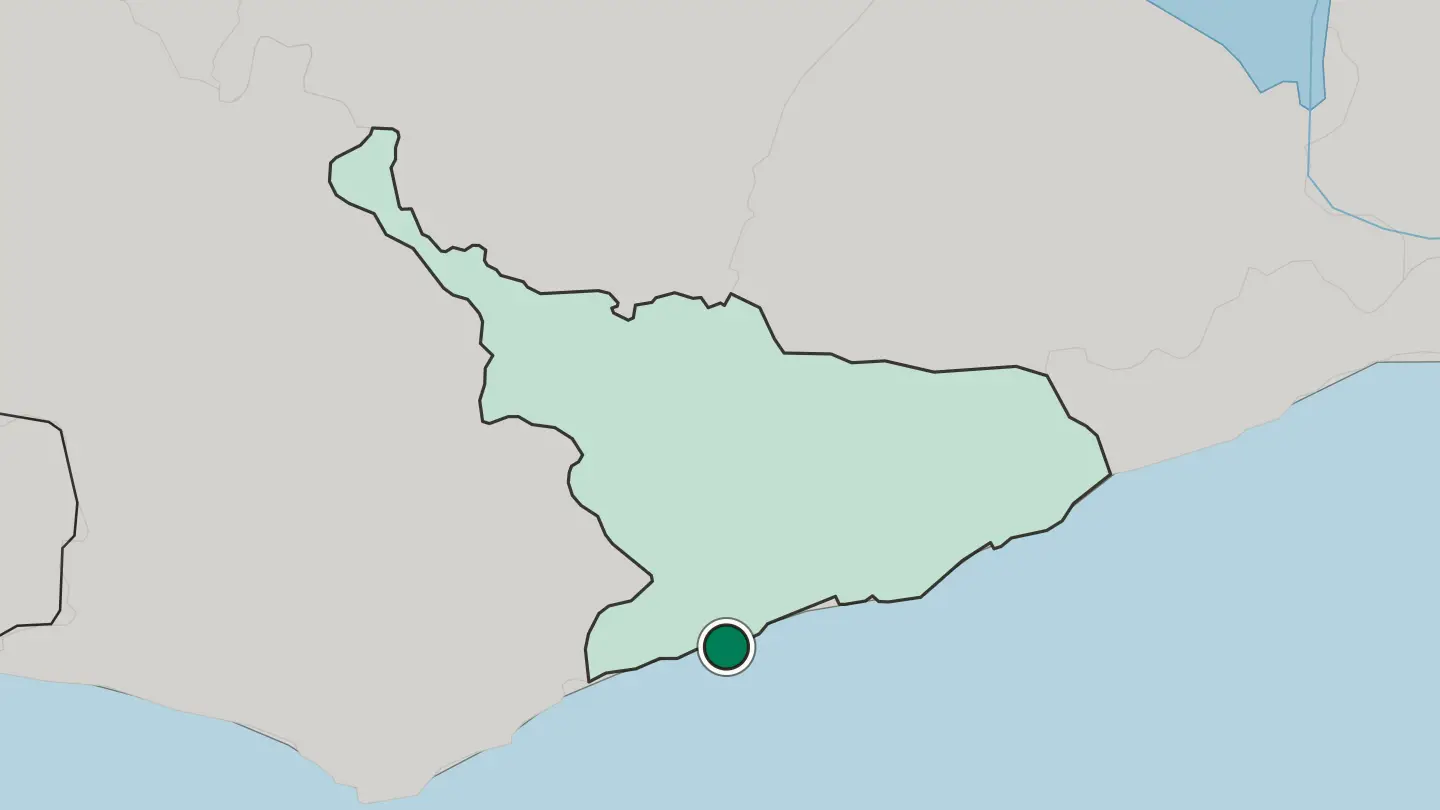
Hotel links are affiliate links: booking through them may earn us a commission, at no extra cost to you. It never affects how places are ranked. How this works
About Central Region
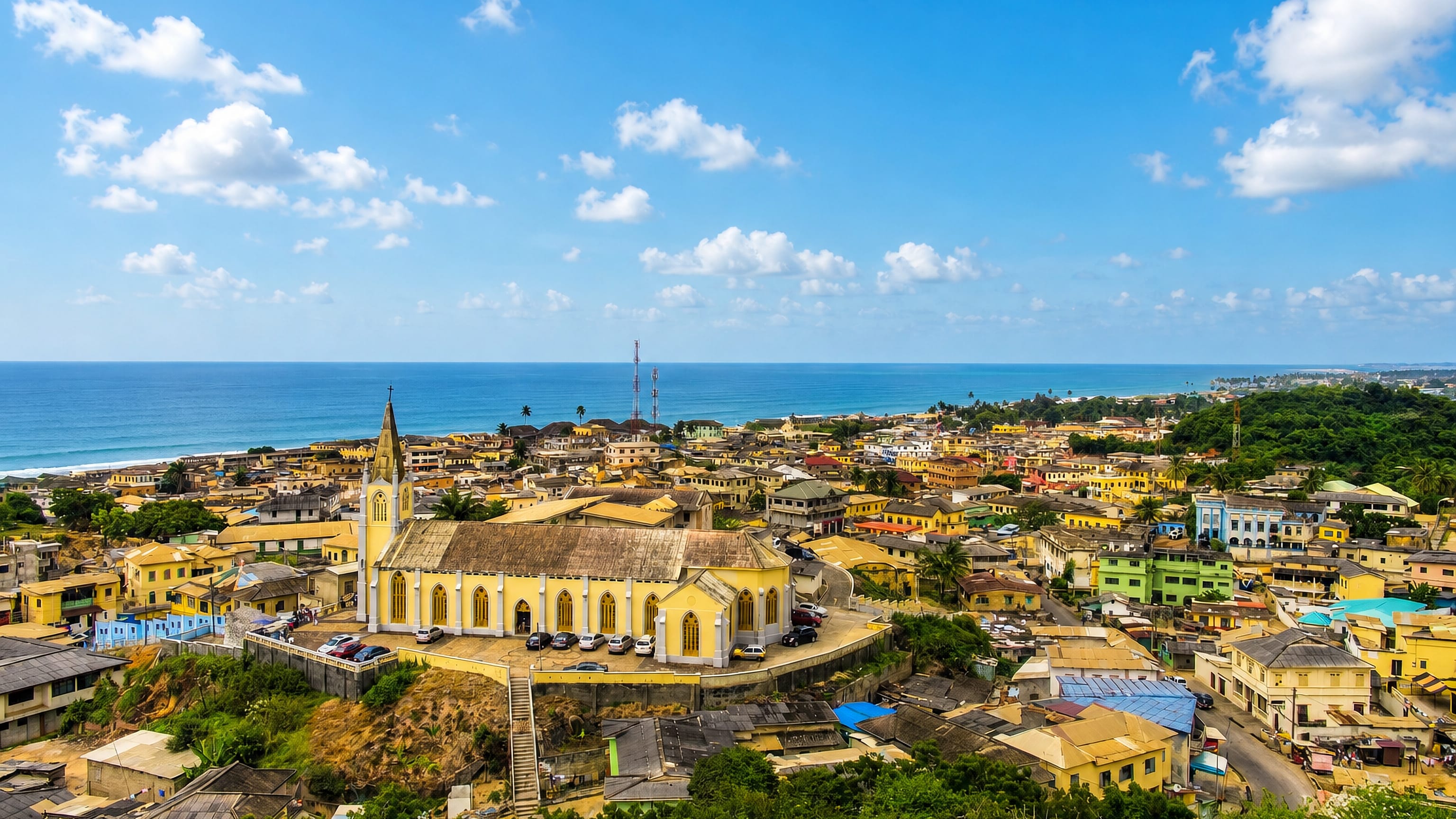
Castles and forts stand on the shoreline.
What is Central Region known for?
The Central Region's tourist attractions gather along its coast on the Gulf of Guinea, where the built heritage of the seafront sits directly alongside the beaches that draw most visitors. Minerals do the rest. Industrial minerals and tourism together carry the regional economy, an unusual pairing that keeps the Central Region from depending on either alone.
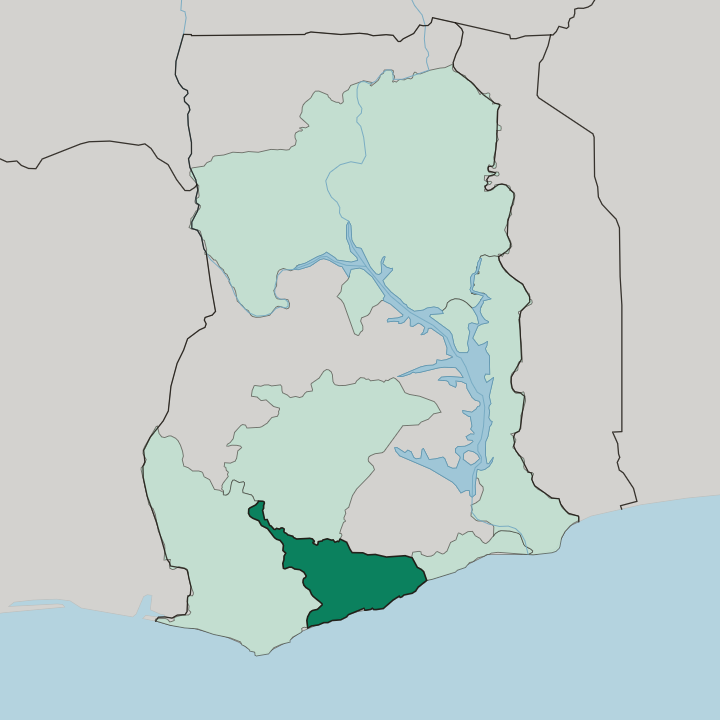
Ashanti and Eastern lie to the north, Western to the west, Greater Accra to the east.
Where is Central Region?
Four regions and one sea enclose the Central Region. Ashanti and Eastern regions border it to the north, Western region lies to the west, Greater Accra region to the east, and the Gulf of Guinea forms the whole of its southern edge. That gives the region its shape.
Land on three sides and open water on the fourth make the Central Region a coastal block rather than an interior one, and the coastline is the feature everything else is arranged around. The shoreline carries the castles. Forts and beaches share the same strip, so the region's attractions are strung along one edge instead of scattered across its interior.
Size is modest by Ghanaian standards. The Central Region is one of the sixteen administrative regions of Ghana, and it takes in a compact stretch of country in which the northern boundary is never far from the water on the southern side. Minerals come from the ground here.
Industrial minerals form one half of the regional economy, which ties the Central Region to its geology as firmly as tourism ties it to its shore. Two surfaces, one region. The Gulf of Guinea supplies the beaches and the setting for the forts, while what lies beneath supplies the minerals, and the Central Region depends on both.
What is Central Region like?
English carries public life here. Signage, administration and the tourism business of the Central Region all run in it, which lowers the barrier for visitors arriving from outside Ghana to move around the coast on their own. The forts are the region's public face.
Castles and forts along the shoreline are what the Central Region is presented by, and the beaches occupy the same coastline, so the built heritage and the sand are met on one journey rather than two. Tourism is a working industry here. It is one of the two pillars named for the Central Region's economy, which means visitor traffic is not incidental to the region but part of how it earns.
The other pillar is quieter. Industrial minerals do not draw crowds, but they shape employment and the daily rhythm of the Central Region away from the shore, giving the region a working character that the coastal picture alone would miss. Neighbours matter to the mix.
Greater Accra region sits on the eastern side and Western region on the other, so the Central Region occupies the stretch of coast between them and takes the movement that passes along the Gulf of Guinea. Ashanti and Eastern close the north. Those two regions form the landward boundary, and the Central Region's dealings with the interior of Ghana run across that line rather than around it.
What is the history of Central Region?
Heritage on the coast predates the administrative map. The Central Region is one of the sixteen administrative regions of Ghana, a modern division of the country, while the castles and forts along its coastline belong to a much older layer of building. Those structures survive as attractions.
They are named among the region's tourist draws alongside its beaches, which means the coastal heritage is both preserved and central to how the Central Region presents itself.
What is the climate of Central Region?
The Gulf of Guinea moderates the coast. Open water along the whole southern edge of the Central Region keeps conditions on the shoreline different from those inland, and the air off the sea is part of what makes the beaches usable through the warmer stretches of the year. The tropics set the pattern.
The Central Region falls in the tropical band of the northern hemisphere, so the year divides into wetter and drier stretches rather than four temperate seasons, and the coast reads warm throughout.
How do you get to Central Region?
Arrivals come overland from either side. Greater Accra region lies on the eastern boundary and Western region on the western one, so the land approaches run along the coast, while the Ashanti and Eastern boundary forms the way in from the interior. The Gulf of Guinea closes the south.
That edge is water, so arrival into the Central Region is made by land, and the coastal strip serves as both the destination and the corridor running through it.
Common questions
What is the best area to stay in Central Region?
The Gulf of Guinea coastline: Castle-and-fort walking within reach of the Central Region's beaches.
Good for
More regions in Ghana
Updated September 2026