Croatia
Istria County, Croatia — Towns & Travel Guide
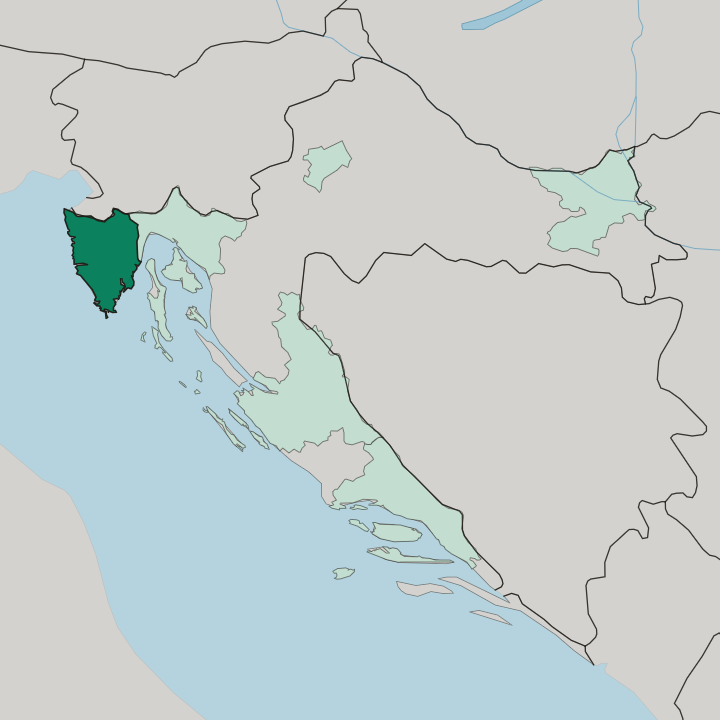
Istria County covers most of the Istrian peninsula, the westernmost county of Croatia, with the Roman harbour city of Pula as its largest centre.
Hotel links are affiliate links: booking through them may earn us a commission, at no extra cost to you. It never affects how places are ranked. How this works


Towns & cities in Istria County
One town here has its own guide — it links to where to stay.
 Croatia
Pula
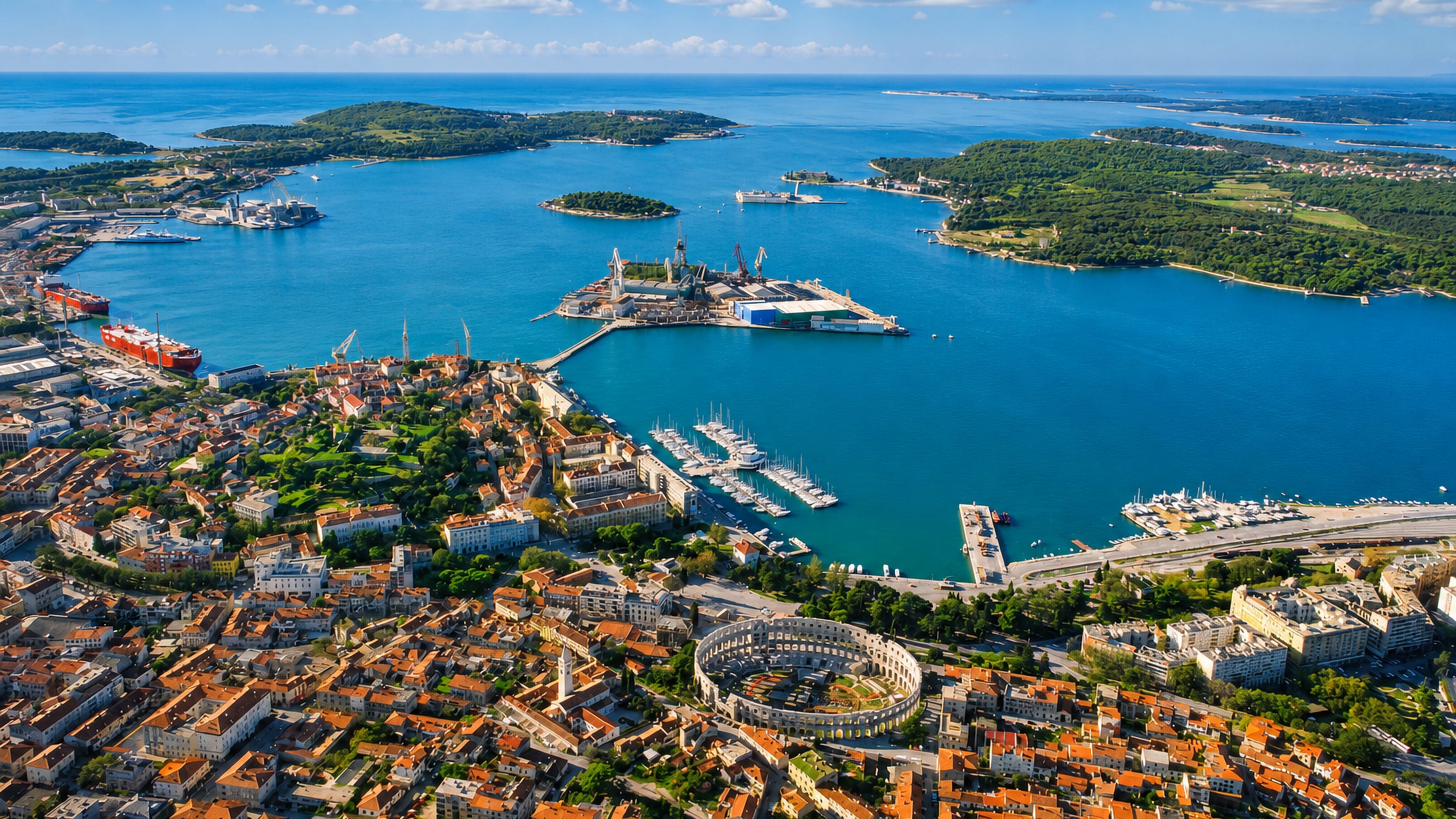
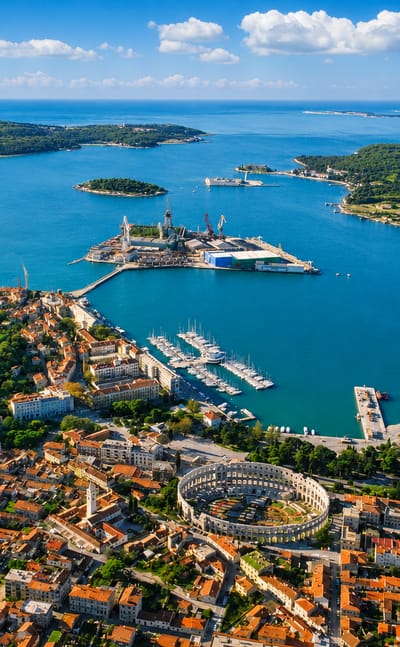
Roman stone rings the harbour at Pula, the largest city of the Istrian peninsula and seat of Istria County, known for the vast Pula Arena.Where to stay →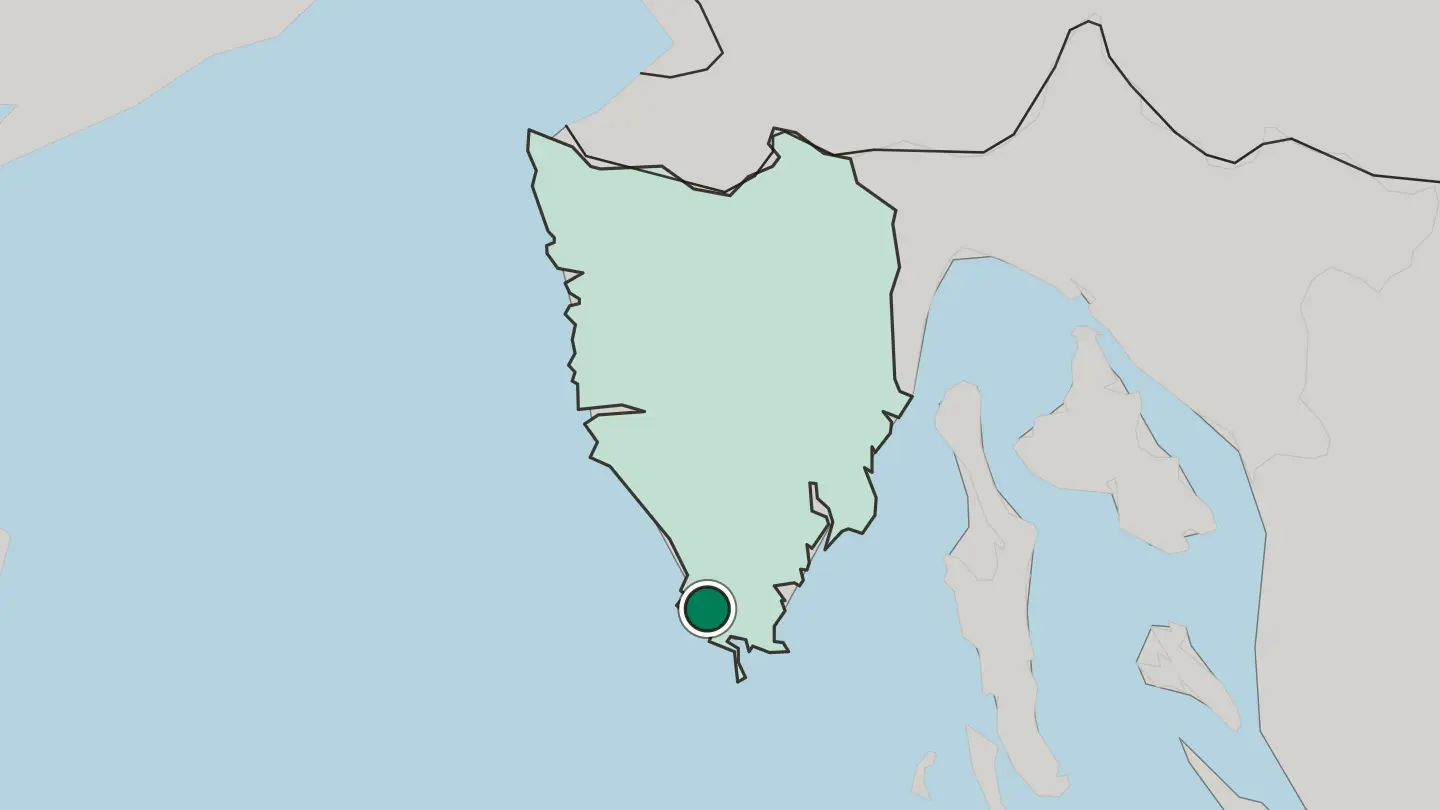
Hotel links are affiliate links: booking through them may earn us a commission, at no extra cost to you. It never affects how places are ranked. How this works
About Istria County
What is Istria County known for?
Istria County is known as the county that takes in most of the Istrian peninsula, the western arm of Croatia reaching into the sea. It is a single administrative unit built almost entirely around one large peninsula, which gives it a coastline on nearly every side and an interior of low hills and fields. The shape defines it.
Everything about Istarska županija turns on that peninsular geography, with Pula holding the southern tip as its principal city.
Where is Istria County?
Istria County is defined almost wholly by the Istrian peninsula, the broad western arm of land it fills as the westernmost county of Croatia. Water surrounds it on three sides, and the coast runs long and indented, breaking into bays, headlands, and small offshore islands the whole way round. Inland the ground lifts gently.
Behind the shore the county rises into a rolling interior of low limestone hills, vineyards, and hilltop towns, so the land grades from a busy seaboard through farmland to a quiet upland core without ever climbing to real mountains. Pula sits at the far southern point where the peninsula ends. The city commands the tip, the natural harbour that made it the chief settlement of the whole Istrian arm, and from there the two coasts of Istria County run north in opposite directions.
Sea and soft hill set the pattern. The settlement of the peninsula follows its edges, clustering on the coast where the harbours are and thinning across the farmed interior that fills the middle of the county.
What is Istria County like?
Istria County carries a distinctly sea-facing culture shaped by its position as the western peninsula of Croatia. Life here has always leaned on the sea and the land in equal measure, a coastal tradition of harbours and fishing braided with an inland one of vineyards and stone hill-towns across the Istrian peninsula. Two worlds sit close together.
The maritime edge and the farmed interior are never far apart on a peninsula this compact, so the county keeps a dual character that a wider region would spread over far greater distances. Pula gives Istria County its urban centre and its deepest historical layer. As the largest city and the old Roman capital of the whole peninsula, it holds the monuments and the civic weight, projecting an ancient, Mediterranean face for the county as a whole.
The interior answers with a rural voice. Hill-towns and vineyard country keep a quieter Istrian identity distinct from the coast, and this coast-and-interior pairing, held on one compact peninsula, is what sets Istarska županija apart among Croatian counties.
What is the history of Istria County?
Istria County is the modern administrative frame drawn around the long-settled Istrian peninsula, the western reach of Croatia. Its shape follows a geography that has organised life here since antiquity, when Pula grew into the Roman capital of the whole arm and set the peninsula's centre of gravity at its southern tip. The peninsula outlasted every ruler.
Control of Istria passed through Roman, Venetian, and later hands over two thousand years, yet the land itself held its identity, and the present county simply gives that enduring peninsula a name and a seat within Croatia.
What is the climate of Istria County?
Istria County has a mild Mediterranean climate across most of the Istrian peninsula. Summers are long, warm, and dry along the coast, with the surrounding sea holding the extremes in check on nearly every side. Winters stay gentle and wet.
The interior hills feel a touch cooler and damper than the shore, but the whole county escapes real cold, so the peninsula around Pula keeps a soft seaboard season while the inland vineyards get just enough winter chill to rest.
How do you get to Istria County?
Istria County is reached most easily through Pula at the tip of the Istrian peninsula. An airport near the city connects the county to the rest of Europe, and the coastal road ties the whole peninsula into the wider Croatia network. Ferries add a sea route.
Boats work the harbours of the coast while roads fan out from Pula along both shores and across the interior, so a single arrival opens the entire Istrian arm of Istria County to a traveller.
More regions in Croatia
Updated September 2026