Israel · Judea and Samaria Area
Where to Stay in Ariel, Judea and Samaria Area
Ariel is an Israeli settlement in the central West Bank, run as a city council and built around the campus of Ariel University.
Find your area →


Where to stay in Ariel
The practical side of choosing where to sleep.
Ariel University decides most of this. Beds in the settlement answer to campus errands, an interview, a term-time visit, a conference, rather than to any tourist season, and a room is chosen for how short the walk to the faculty buildings turns out to be. Term dates count for more than seasons.
A base in Ariel itself puts the campus and the Holocaust and Heroism Memorial House in Ariel within the same short circuit, which is the argument for sleeping here instead of driving up from the coastal plain each morning. The coastal plain holds the rooms. Tel Aviv sits about 40 km away and Petaẖ Tiqva about 30, both on the plain west of the Green Line, so a traveller who wants a real choice of hotels books there and drives up to Ariel for the working day. Rosh Ha'Ayin is nearer still.
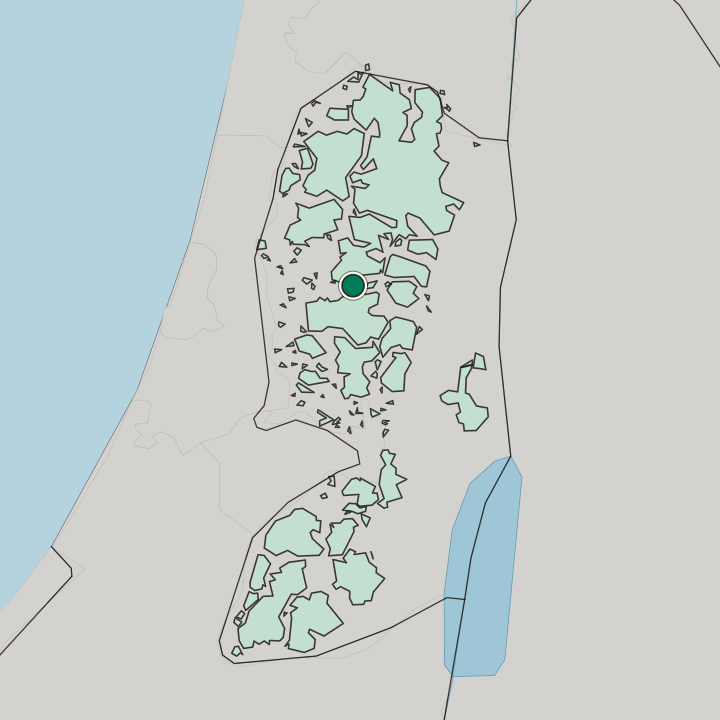
Ariel itself lies inside Area C, with the Palestinian town of Salfit immediately alongside. Anyone spending a week at Ariel University is better served by a bed in the settlement than by a daily run in from the coast, and anyone here for a single meeting is better off the other way round.
Few places to stay in Ariel — most visitors book in Petaẖ Tiqva or Tel Aviv nearby.
Things to do in Ariel
Ranked by global recognition; descriptions from Wikidata (CC0).
Museums & Galleries
3- The Holocaust and Heroism Memorial House in Ariel
- מגדל הרואה
- מוזיאון הווטרנים אריאל
Castles & Historic Sites
3- Shiloh
- Timnath-heres
- חורבת שחאדה
worth knowingacross 2 categories in Ariel
About Ariel
A campus changed this place.
What is Ariel known for?
Ariel University pulls students in from across Israel, and the settlement's makeup, veteran and young Israelis, English-speaking immigrants and arrivals from the former Soviet Union, was already layered before the campus grew. Ariel ranks fifth in size among Israeli settlements in the West Bank, behind Modiin Ilit, Beitar Illit, Ma'ale Adumim and Givat Ze'ev. It runs as a city council.
Area C is the administrative frame around all of it.
What are the main landmarks in Ariel?
The Holocaust and Heroism Memorial House in Ariel is the settlement's civic centrepiece, and it carries the commemorative weight that a much older town would put in a church or a fort. The Jewish Legion in World War I Memorial stands for an earlier chapter. Older ground lies just outside.
Shiloh, Timnath-heres and Mitzpe Shiloh belong to an older layer of the same country, and they are the reason a visitor with a spare afternoon drives out of Ariel rather than walking around it.
What is the history of Ariel?
Ariel was first established in 1978. The settlement went up on open ground in the central West Bank rather than on the site of an older town, and its plan reads that way, laid out at once, in one decision, instead of thickening around a market or a crossroads. The land underneath is far older.
Shiloh and Timnath-heres, both in the same stretch of country, carry names that reach back to the biblical record, so the ground has been argued over for far longer than there has been a settlement standing on it. Mitzpe Shiloh belongs to the same cluster. Who came matters as much as when.
Ariel drew veteran and young Israelis, English-speaking immigrants and a large contingent from the former Soviet Union, so Hebrew is not the only language a visitor will hear. The university came later and changed the arithmetic. Ariel University turned a commuter settlement into a place with a term-time cycle and the institutional weight a campus carries, and the city council that governs Ariel administers both halves of that.
The settlement's standing in law is disputed. Israel administers Ariel as part of Area C, and the settlement sits within what is internationally described as the Israeli-occupied territories.
Where is Ariel?
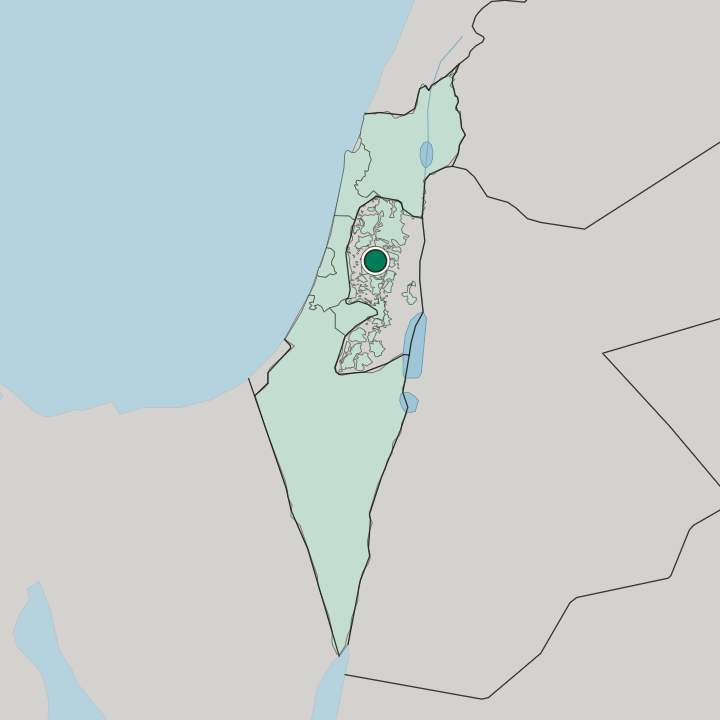
Ariel sits in the central West Bank, a long way inland from any coast. The Green Line lies about 20 km west, with the coastal plain, Petaẖ Tiqva and Tel Aviv beyond it, while the border with Jordan is some 34 km in the other direction. Salfit is the immediate neighbour.
Judea and Samaria Area is the administrative frame under which Israel counts this ground, and Rosh Ha'Ayin is the nearest city of any size to the west.
What is the climate of Ariel?
The Mediterranean does the work, from about 40 km away. Sea air reaching Ariel has to cross the coastal plain and climb into the hill country of the West Bank first, which is why the settlement cools off at night more than Tel Aviv does and why its wet months are the winter ones. Rain stops for the long dry season.
East of Ariel the ground falls away toward the Jordan Valley, and that side of the divide is drier still, since the hills take what the sea sends before the valley gets any share.
How do you get to Ariel?
Ariel was built for the car. The approach that counts runs east out of Petaẖ Tiqva, roughly 30 km of it, crossing the Green Line and climbing off the coastal plain before it reaches the settlement, and drivers from Tel Aviv about 40 km back join the same road. Term traffic sets the rhythm, heavy at the start and end of the Ariel University year and thin between, so a car or a coach seat from the coastal cities is what a visit really depends on.
Common questions
What is the best area to stay in Ariel?
Petaẖ Tiqva: A wider choice of rooms about 30 km west, with the road east running straight up to Ariel. Tel Aviv: Evenings and coastal-plain connections about 40 km west of Area C.
Good for
Updated October 2026