India · State of Mahārāshtra
Where to Stay in Amravati, State of Mahārāshtra
Amravati, or Amraoti, heads both Amravati District and Amravati Division in Maharashtra's Vidarbha region, and tradition ties it to Indra.
Hotel links are affiliate links: booking through them may earn us a commission, at no extra cost to you. It never affects how places are ranked. How this works


Where to stay in Amravati
Where the beds are, and what that means for the visit.
The temples pull the centre one way. Rooms near the shrines of Amba, Shri Krishna, and Shri Venkateshwara put a visitor inside the oldest part of Amravati, where the streets are tight and the day starts with the temple crowds rather than with traffic. That suits pilgrims and short visits.
Anyone whose reason for coming is devotional will want the walk to the shrines measured in minutes, not in a ride across a hundred and eighty square kilometres of municipality. Food and market streets follow the same lanes. The offices pull it the other.
Divisional and district business concentrates in the administrative part of the city, and beds near it suit anyone dealing with Amravati Division rather than with the temples. The university side is quieter. Ground around Sant Gadge Baba Amravati University runs to institutions and open space, which makes for calmer nights and a longer trip in to either the shrines or the offices.
Amravati is large enough that the choice matters. Travellers passing through Vidarbha on the divisional roads tend to take whatever is nearest the way out, and that logic is as good as any in a city built around two different reasons to visit.
Find hotels in Amravati
Direct booking searches for these neighbourhoods.
The temple quarter
Amravati's oldest streets hold the historical temples within a few minutes of one anotherFind hotels in The temple quarterBusiness with Amravati Division and its five districtsThe divisional offices
Beds by the administrative quarter shorten the day for anyone filing in Amravati DistrictFind hotels in The divisional officesQuiet nights on the academic side of AmravatiAround Sant Gadge Baba Amravati University
The university grounds and their Arachnology Museum keep this edge calmer than the temple lanes. Beds are limited here, so book early.Find hotels in Around Sant Gadge Baba Amravati UniversityHotel links are affiliate links: booking through them may earn us a commission, at no extra cost to you. It never affects how places are ranked. How this works
About Amravati
What is Amravati known for?
Three temples carry the city's reputation. Amravati holds historical temples to Amba, Shri Krishna, and Shri Venkateshwara, and tradition identifies the place with Indra, king of the gods in the old accounts. Offices make up the other half.
Amravati Division takes in Amravati District, Akola District, Buldhana District, Washim District, and Yavatmal District, which makes the city the office town for a large slice of Vidarbha. It ranks second in the region by size.
What are the main landmarks in Amravati?
Three temples and one museum. The historical temples to Amba, Shri Krishna, and Shri Venkateshwara are the fixed points of Amravati for most visitors, and they carry the tradition that links the city with Indra. The other is academic.
Sant Gadge Baba Amravati University keeps an Arachnology Museum, a collection of a kind few cities of this size hold, and it sits on the university's own ground rather than in the temple quarters.
What is the history of Amravati?
Tradition puts Indra here. The old accounts identify Amravati with the city of Indra, king of the gods, and that identification is the oldest thing attached to the place, older than any administrative record of it. Temples came with the claim.
Shrines to Amba, Shri Krishna, and Shri Venkateshwara are described as historical rather than modern, which places the religious core of the city well before its offices and colleges. Nothing about the tradition is datable, and the temples are the only physical form the story takes. Amraoti is the older spelling.
English records carried that form, and it still appears beside Amravati in writing that predates the present administrative naming. Division status changed the scale. Once Amravati Division was drawn around Amravati District, Akola District, Buldhana District, Washim District, and Yavatmal District, the city acquired a reach far beyond its own municipal limits.
Education added another layer. Sant Gadge Baba Amravati University anchors the academic side of Amravati, and its Arachnology Museum is an unusual survival within that institutional world. Vidarbha's second city by size answers to that history in an ordinary way, with the temples in one part of the day and the offices in another.
Where is Amravati?
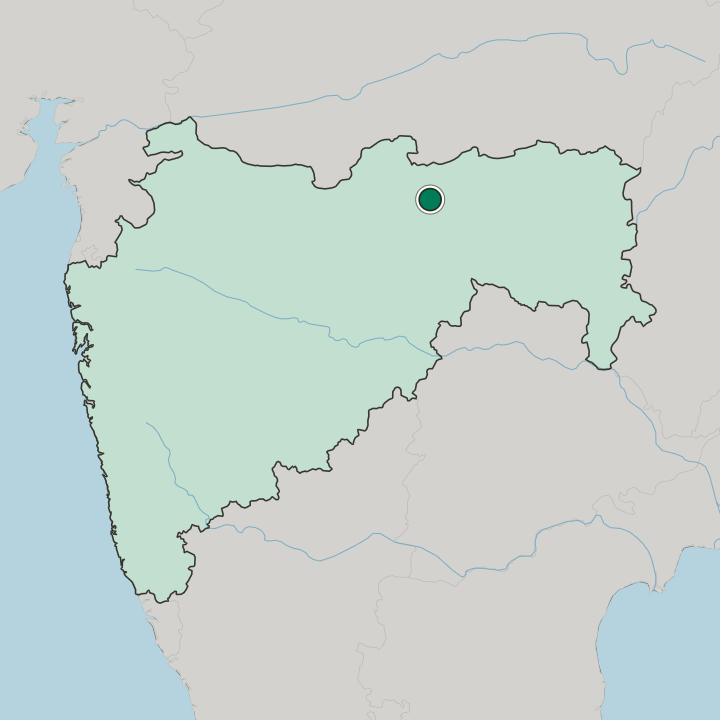
The municipality is broad. Amravati covers about a hundred and eighty square kilometres, which is generous ground for a city of its rank and leaves distance between the temple quarters and the municipal boundary. Vidarbha surrounds it.
Akola District, Buldhana District, Washim District, and Yavatmal District lie around Amravati District within the same division, so the city's neighbours are administrative units as much as they are landscapes.
What is the climate of Amravati?
The tropics fix the pattern. Amravati stands well north of the equator but inside the tropical band, so its year is measured in wet and dry stretches instead of in four seasons. Warmth holds across the calendar.
The practical difference between one month and another is how much rain falls, not how far the temperature drops, and visitors plan around that single variable.
How do you get to Amravati?
Roads from the division do the work. Amravati draws traffic from Akola District, Buldhana District, Washim District, and Yavatmal District, since anyone with divisional business ends up making the journey into the city. Vidarbha's other cities feed it too.
Arrivals are overland and domestic, and the practical question is which district road a traveller comes in on rather than which terminal.
Common questions
What is the best area to stay in Amravati?
The temple quarter: Pilgrims walking to the Amba and Shri Venkateshwara shrines. The divisional offices: Business with Amravati Division and its five districts. Around Sant Gadge Baba Amravati University: Quiet nights on the academic side of Amravati.
More cities in State of Mahārāshtra
Updated October 2026