India · State of Mahārāshtra
Where to Stay in Pune, State of Mahārāshtra
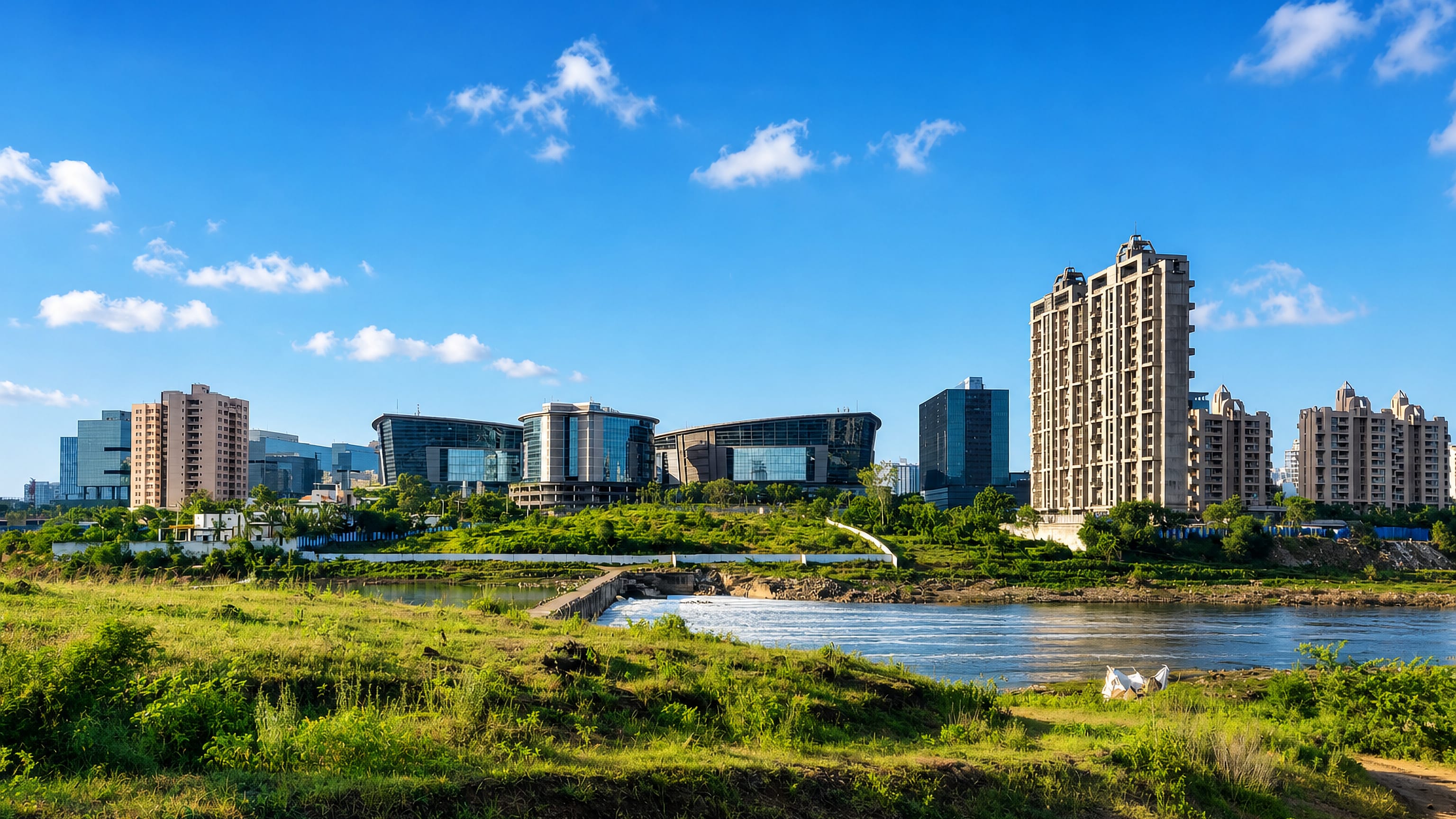
Old wadas and museums fill the Deccan Plateau city of Pune in Maharashtra, founded in 1436 and once spelled Poona, known for the Raja Dinkar Kelkar Museum.
Hotel links are affiliate links: booking through them may earn us a commission, at no extra cost to you. It never affects how places are ranked. How this works


Where to stay in Pune
The right area depends on your trip — here's what each neighbourhood is best for.
 PuneIndia
Shaniwar Peth
Shaniwar Peth is the Pune ward that holds Shaniwar Wada, the Peshwa palace finished in 1730 above the Mutha.Where to stay →PuneIndiaKasba Peth
Kasba Peth is the oldest peth in Pune, called the Heart of Pune City, and it lies beside the historic Shaniwar Wada palace-fort.Where to stay →PuneIndiaBudhwar Peth
Budhwar Peth is a commercial quarter of Pune's old city, known for electronics shops, three major Ganesh mandals, and Appa Balwant Chowk.Where to stay →PuneIndiaTulshibaug
Tulshibaug is an old-city quarter of Pune where a historic temple precinct and a large market share the same few lanes.Where to stay →PuneIndiaNarayan Peth
Saree shopfronts on Laxmi Road give way to the lanes of Narayan Peth, an old Pune quarter named for Narayanrao Peshwa and holding Kesari Wada.Where to stay →PuneIndiaMangalwar Peth
Mangalwar Peth is a wedge of the old city of Pune held between the Nagzari and the Manik, laid out in 1663 on ground Shaista Khan had camped on.Where to stay →PuneIndiaGanesh Peth
Ganesh Peth carries five heritage-listed temples in Pune's old city, laid out in 1755 by the Peshwa-era minister Sakharam Bapu Bokil.Where to stay →PuneIndiaRaviwar Peth
Gold and silver shopfronts crowd Raviwar Peth, a peth in the old city of Pune, with the metal lane of Bohri Ali cutting through it.Where to stay →PuneIndiaRasta Peth
Rasta Peth is a ward of Pune's old city, named for the Raste family who served the Peshwas.Where to stay →PuneIndiaSomwar Peth
Trishund Ganpati Mandir keeps a three-trunked Ganesha carved in stone in Somwar Peth, an old-city peth of Pune named for the Marathi word for Monday.Where to stay →PuneIndiaShukrawar Peth
Shukrawar Peth is a peth of Pune, set out in 1734 and centred on Mahatma Phule Mandai, the grey stone vegetable market of the old city.Where to stay →PuneIndiaShivajinagar
Shivajinagar, once the village of Bhamburde, is an inner suburb of Pune, India, home of Fergusson College and the oldest structure in the city.Where to stay →All neighbourhoods (37)
PuneIndiaNana Peth
Nana Peth is a ward of central Pune named after Nana Phadnavis, known for its motor-parts trade.Where to stay →PuneIndiaGuruwar Peth
Guruwar Peth is one of Pune's weekday peths, an old-city quarter named for Thursday and marked by the bell tower of the Panch Haud Mission.Where to stay →PuneIndiaBhavani Peth
Sawn timber fills the yards along Jawaharlal Nehru Marg in Bhavani Peth, a wholesale quarter of Pune named for its Bhavani Mata temple.Where to stay →PuneIndiaSwargate
Swargate is the Pune junction where the old city ends and the roads for Hadapsar, Dhankawadi and Bibwewadi begin.Where to stay →PuneIndiaMukund Nagar
Bungalow plots and housing complexes fill Mukund Nagar, a residential area of inner Pune by Swargate, laid out on land given after the flood of 1961.Where to stay →PuneIndiaKoregaon Park
Koregaon Park is a green, tree-shaded quarter of Pune, in Maharashtra, known for art galleries, restaurants and live music bars.Where to stay →PuneIndiaBibwewadi
Lecture blocks and a seminary compound mark Bibwewadi, a suburb of southern Pune on the Pune-Satara Road between Market Yard and Katraj.Where to stay →PuneIndiaKothrud
Kothrud is an upmarket residential suburb of Pune whose best-known address is the National Film Archive of India.Where to stay →PuneIndiaKarvenagar
Karvenagar is a suburb of Pune named for Dhondo Keshav Karve, whose Hingne school for girls and widows opened in 1896.Where to stay →PuneIndiaDhankawadi
Dhankawadi holds the southern edge of Pune along old Route 4, a borough that pilgrims reach for Sant Sadguru Shri Shankar Maharaj.Where to stay →PuneIndiaFatimanagar
Bhairoba Nala runs down the west side of Fatimanagar, a Pune neighbourhood within Wanowrie, named for the convent of the Sisters of Our Lady of Fatima.Where to stay →PuneIndiaKalyani Nagar
Indo-Saracenic turrets rise over the Aga Khan Palace gardens in Kalyani Nagar, an eastern quarter of Pune named for the industrialist Neelkanth Kalyani.Where to stay →PuneIndiaVishrantwadi
Vishrantwadi is a commercial and residential suburb north of central Pune, gathering Mohanwadi, Pratik Nagar, Shanti Nagar and Dhanori.Where to stay →PuneIndiaAundh
Aundh is an affluent residential neighbourhood on Pune's north-western side, built out since the mid-1990s beside the University of Pune.Where to stay →PuneIndiaVadgaon Budruk
Vadgaon Budruk names itself for the banyan, the greater of the two Vadgaons on Sinhgad Road, a Pune suburb edged by the Katraj-Dehu Road Bypass.Where to stay →PuneIndiaWarje
Warje is a suburb on Pune's western side, in Maharashtra, a village until 2001, when the city drew it inside its limits.Where to stay →PuneIndiaAmanora Park Town
Amanora Park Town is a planned residential township inside Hadapsar, on the eastern side of Pune, laid out over 400 acres with its own power grid.Where to stay →PuneIndiaBaner
Baner is a suburb of Pune known for the Varkari Parampara, set in the city's Western Metropolitan Corridor.Where to stay →PuneIndiaHadapsar
Hadapsar is an industrial suburb on the eastern side of Pune, a quarter of Maharashtra's second city that took shape after 1990.Where to stay →PuneIndiaKharadi
Kharadi is an office suburb on Pune's eastern corridor, its business parks standing back from the Mula-Mutha.Where to stay →PuneIndiaDhayari
Dhayari is a southern suburb of Pune, in Maharashtra, ten kilometres out from the centre, with Shivsrushti as its one listed landmark.Where to stay →PuneIndiaNanded City
Nanded City is a gated township of seven hundred acres on the south-western edge of Pune, laid out on the farmland of Nanded village.Where to stay →PuneIndiaBalewadi
Balewadi is a residential suburb of Pune, built around the Shree Shiv Chhatrapati Sports Complex on the Western Metropolitan Corridor.Where to stay →PuneIndiaBlue Ridge Town Pune
Twenty-five towers stand on former Hinjawadi farmland at Blue Ridge Town Pune, an integrated township along the Mula, west of Pune.Where to stay →PuneIndiaNanded
Nanded holds the Mutha's southern bank where Sinhagad Road runs out to Khadakwasla, a South Pune locality whose farmland became the Nanded City township.Where to stay →Hotel links are affiliate links: booking through them may earn us a commission, at no extra cost to you. It never affects how places are ranked. How this works
Find hotels in Pune
Direct booking searches for these neighbourhoods.
Old town
The founding-era core around Vishrambaug Wada and the Raja Dinkar Kelkar Museum.Find hotels in Old townLeafy, longer staysDeccan Gymkhana
The tree-lined western district near the National Film Archive of India.Find hotels in Deccan GymkhanaNear the civic heartMahatma Phule Museum quarter
The streets by the Mahatma Phule Museum and the colonial-era institutions of Poona.Find hotels in Mahatma Phule Museum quarterHotel links are affiliate links: booking through them may earn us a commission, at no extra cost to you. It never affects how places are ranked. How this works
Things to do in Pune
Ranked by global recognition; descriptions from Wikidata (CC0).
Museums & Galleries
3- Vishrambaug Wada Heritage
- Bharat Itihas Sanshodhak Mandal Heritage
- Mahatma Phule Wada Heritage
Churches & Religious Sites
8- Panch Haud Mission Complex Heritage
- Our Lady of the Immaculate Conception Church, Pune Heritage
- Jangli Maharaj Samadhi Complex Heritage
- St. Crispin's Home Heritage
- Brother Deshpande Memorial Church Heritage
Show 3 more →
- St. Emmanuel’s Church Heritage
- Church of Holy Angels Heritage
- St. Matthew's Church Heritage
Stadiums & Sports
2- The Poona Club Ltd. Heritage
- Deccan Gymkhana Ground
Landmarks & Notable Places
3- Daulat House Heritage
- Ram Bhuvan Heritage
- Anugraha
worth knowingacross 4 categories in Pune
About Pune
What is Pune known for?
Pune is a major city of Maharashtra on the Deccan Plateau, an educational centre often called the Oxford of the East. Museums and old mansions define its core. The Raja Dinkar Kelkar Museum and the historic Vishrambaug Wada anchor the old town, while the National Film Archive of India and the Mahatma Phule Museum add to a dense cultural map.
Founded in 1436, the city carries the older name of Poona.
What are the main landmarks in Pune?
Pune keeps a rich set of museums, old wadas, and civic sites. The Raja Dinkar Kelkar Museum holds a celebrated collection of everyday artefacts, while the Vishrambaug Wada and the Mahatma Phule Wada preserve grand old mansions of the city. Scholarship has a home too.
The Bharat Itihas Sanshodhak Mandal and the National Film Archive of India sit alongside the Mahatma Phule Museum and the Savarkar Smarak. Deep and varied.
What is the history of Pune?
Pune traces its charter to 1436 and grew into a seat of power on the Deccan Plateau, the Maharashtra city the British later spelled Poona. Its old mansions tell that story. The grand wadas, among them the Vishrambaug Wada and the Mahatma Phule Wada, went up as the town became a centre of Maratha rule, laying out the dense old quarter of courtyards and lanes that still forms the historic core.
Scholarship and reform followed the ruling houses. The Bharat Itihas Sanshodhak Mandal grew into a research institution, memorials such as the Savarkar Smarak and the Umaji Naik Samadhi and Jail fixed political memory in stone, and the Raja Dinkar Kelkar Museum gathered the everyday craft of the region. Colonial institutions layered on top.
Churches such as St. Mary's Church and the National Film Archive of India joined the city's map, and the reputation as the Oxford of the East grew from its many schools. Through Maratha, colonial, and modern eras alike, Pune kept the shape of a plateau city built around its wadas.
Where is Pune?
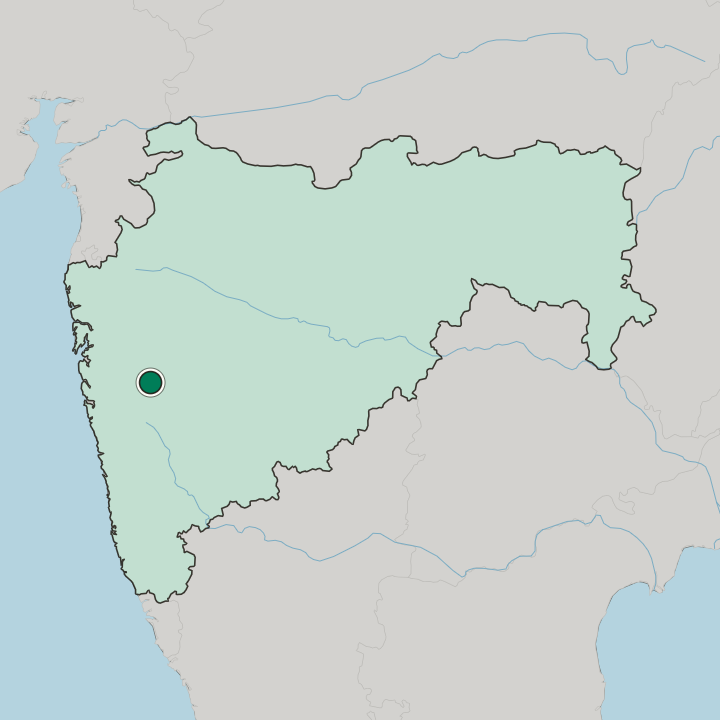
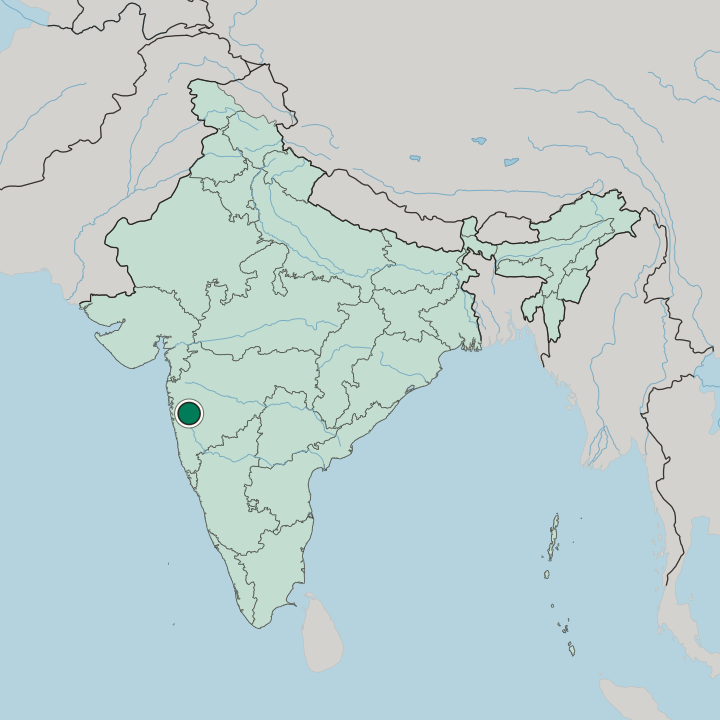
Pune sits on the Deccan Plateau in western Maharashtra, an inland city set above the coastal lowlands. Rivers thread the plateau. The old town spreads over the level upland where watercourses meet, with the historic core on one side and the greener Deccan Gymkhana district across the water.
It is a raised, inland setting.
What is the climate of Pune?
Pune has a mild upland climate, tempered by its height on the Deccan Plateau. Its air runs drier. The monsoon brings the year's rain to Maharashtra, but the plateau setting keeps Pune noticeably cooler and less humid than the coastal lowlands, with pleasant, temperate winters.
Elevation eases the heat.
How do you get to Pune?
Pune is a major road and rail hub of western Maharashtra, linked by highway and express train to the coast and served by its own airport. Routes climb the plateau. Expressways run up onto the Deccan Plateau from the lowland cities, while the railway ties Poona into the national network.
Arriving from the coast means a scenic climb.
Common questions
What is the best area to stay in Pune?
Old town: Heritage streets on foot. Deccan Gymkhana: Leafy, longer stays. Mahatma Phule Museum quarter: Near the civic heart.
Good for
More cities in State of Mahārāshtra
Updated October 2026