India · State of Rājasthān
Where to Stay in Dīdwāna, State of Rājasthān
Dīdwāna stands above the Didwana Salt Lake in Rājasthān, headquarters of the Didwana-Kuchaman district and long called the lion gateway of Marwar.
Hotel links are affiliate links: booking through them may earn us a commission, at no extra cost to you. It never affects how places are ranked. How this works


Where to stay in Dīdwāna
How the choice of base plays out on the ground.
Dīdwāna is small, and the choice comes down to which side of the town suits the day. Rooms toward the Didwana Salt Lake put the flats within an easy walk, which matters mostly at first light and in the last hour before dark, when the crust and the standing water read as something other than glare. The rest of the day argues for shade.
Streets around the Didwana-Kuchaman district offices carry the market, the working traffic and whatever a headquarters town keeps open late, and they sit back from the water. Bed stock is thin either way. Dīdwāna spent a long time as a subdistrict of Nagaur, and its accommodation still reflects a town that served administration rather than visitors, so a fixed date is worth arranging well ahead.
Nagaur itself is the fallback for anyone who needs choice. If you are here for the lake and for the old crossing routes that gave Dīdwāna its names as the lion gateway of Marwar and the archway of Merta, staying in the town is the point, and the shortage of rooms is simply part of the arrangement. Book, then travel.
Find hotels in Dīdwāna
Direct booking searches for these neighbourhoods.
The salt-lake side
The Didwana Salt Lake lies straight below this edge of Dīdwāna, so the crust is walkable before the glare sets in. Lodging is scarce in this area; reserve in advance.Find hotels in The salt-lake sidebusiness at the Didwana-Kuchaman district headquartersAround the district offices
The Didwana-Kuchaman district offices and Dīdwāna's daily market share these streets, set back from the salt flats. Lodging is scarce in this area; reserve in advance.Find hotels in Around the district officesa wider room choice in the old parent subdistrict townNagaur instead
Nagaur administered Dīdwāna before the Didwana-Kuchaman district existed and still carries the larger share of beds.Find hotels in Nagaur insteadHotel links are affiliate links: booking through them may earn us a commission, at no extra cost to you. It never affects how places are ranked. How this works
About Dīdwāna
Salt and titles.
What is Dīdwāna known for?
Dīdwāna sits on the northern side of the Didwana Salt Lake, and the town carries two old descriptions that say where it stood in the regional order: the lion gateway of Marwar, and the archway of Merta. Puranic texts name it as well, under Abhanagri and Upakashi. Administration is the newer layer, since Dīdwāna became the headquarters of the Didwana-Kuchaman district in 2023 after long service as a subdistrict of Nagaur.
What are the main landmarks in Dīdwāna?
Didwana Salt Lake lies immediately below the town on its northern side, a flat sheet of standing water and salt crust that changes size with the season and gives Dīdwāna a horizon most Rājasthān towns do not have. Nothing else here is monumental. What the record offers instead is nomenclature: the lion gateway of Marwar, the archway of Merta, and the Puranic names Abhanagri and Upakashi, each of which places the town in a story older than any surviving building.
Nagaur held the district before 2023.
What is the history of Dīdwāna?
Dīdwāna's oldest mentions are textual. Puranic literature carries the place under two names, Abhanagri and Upakashi, which puts a settlement here in a body of writing far older than any wall now standing in the town. Names outlast fabric.
The later titles work the same way: Dīdwāna was called the lion gateway of Marwar and the archway of Merta, and both phrases describe a threshold rather than a destination, a point where one region's traffic entered another's. A town gets called a gateway when the country either side of it is worth crossing between, and Marwar and Merta were. Administrative history is shorter and better dated.
Dīdwāna was run as a subdistrict of Nagaur, an arrangement that made it a secondary centre inside a larger unit, and that lasted until 4 August 2023, when the Didwana-Kuchaman district was created and Dīdwāna took its headquarters. Promotion changed the paperwork. Courts, revenue offices and the machinery of a district seat now belong to a town that had spent a long stretch reporting to Nagaur instead.
The salt lake sat through all of it. Whatever the town was called and whoever it answered to, the Didwana Salt Lake stayed on the same side of the settlement, and India's administrative maps have never had much bearing on where brine collects.
Where is Dīdwāna?
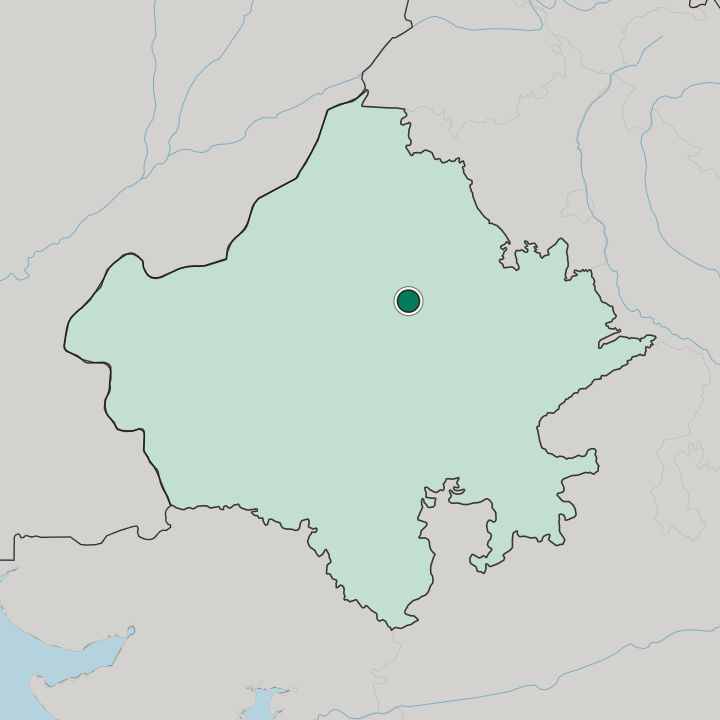
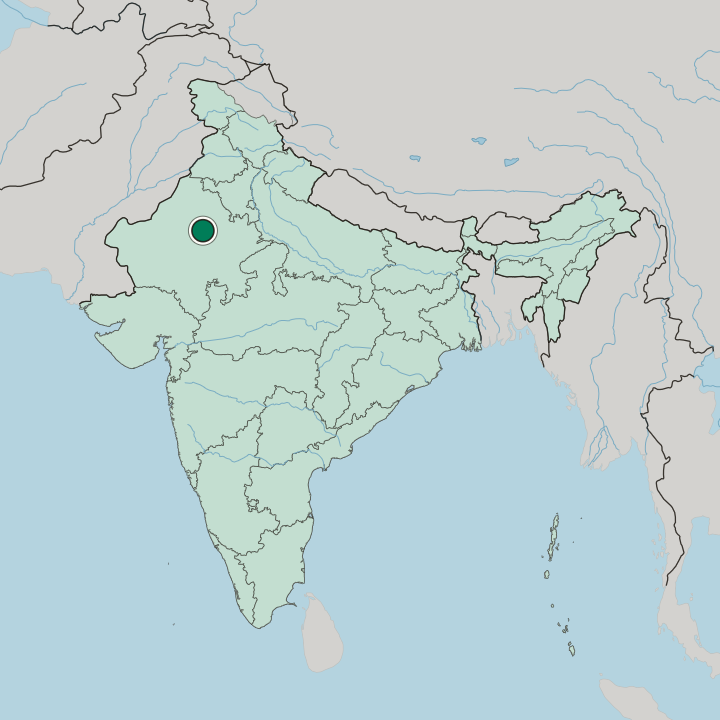
Brine sets the ground here. Dīdwāna occupies the northern side of the Didwana Salt Lake, a body of standing brine in the dry interior of Rājasthān, and the town's whole relationship with its surroundings runs through that water rather than around it. Marwar country lies beyond.
Merta and Nagaur sit within the same broad stretch of India, close enough that Dīdwāna's old titles as the lion gateway of Marwar and the archway of Merta describe real distances rather than flattery.
What is the climate of Dīdwāna?
The Didwana Salt Lake is the climate's signature here: standing water that concentrates rather than drains, which happens where evaporation beats rainfall over the long run. Dry is the default. Heat builds through the long months before the rains, the lake shrinks back toward its crust, and Dīdwāna's calendar has run alongside that cycle for as long as the lake has been named for its salt.
Winter nights turn cold inland.
How do you get to Dīdwāna?
Dīdwāna's approaches come overland. Nagaur is the obvious reference point, since Dīdwāna was administered as one of its subdistricts until the Didwana-Kuchaman district was created and the town took the headquarters role. Merta lies the other way.
The old descriptions of the town as the archway of Merta and the lion gateway of Marwar were route language before they were compliments, and they still say which way the country opens from here. The Didwana Salt Lake marks the last stretch in.
Common questions
What is the best area to stay in Dīdwāna?
The salt-lake side: reaching the Didwana Salt Lake flats at first light. Around the district offices: business at the Didwana-Kuchaman district headquarters. Nagaur instead: a wider room choice in the old parent subdistrict town.
Good for
More cities in State of Rājasthān
Updated September 2026