India · State of Rājasthān
Where to Stay in Sūjāngarh, State of Rājasthān
Sūjāngarh is a temple town in the Shekhawati region of Churu District, Rajasthan, holding a second Tirupati Balaji Temple after the one at Tirumala.
Hotel links are affiliate links: booking through them may earn us a commission, at no extra cost to you. It never affects how places are ranked. How this works


Where to stay in Sūjāngarh
Where visitors usually base themselves, and why.
Faith sets the geography of a stay. A room near the Tirupati Balaji Temple puts a pilgrim inside walking distance of the reason most visitors come to Sūjāngarh, and that matters more here than any question of view or quarter. Jain travellers weigh it differently.
Sri Devsagar Singhee Jain Mandir sits within the town as well, so a bed chosen for the Tirth is a different choice from one chosen for Balaji, even in a place covering only about 64 square kilometres. The highways change the calculation again. Sūjāngarh lies on the Churu city-Pali Highway and on the Hanumangarh-Kishangarh Mega Highway, which means a share of the beds serve people breaking a long drive rather than making a pilgrimage, and those beds sit where the traffic does.
Outlying shrines pull the other way. Lord Shiva Temple at Thardaa and Dungar Balaji at Gopalpura are reached by road out of town, so anyone building a day around all four temples gains from being near the highway rather than deep in the centre. Churu District supplies the wider context.
Sūjāngarh functions as a Sub District within it, which keeps a working town behind the temples and a supply of ordinary rooms that a purely religious site would not have.
Find hotels in Sūjāngarh
Direct booking searches for these neighbourhoods.
Around the Balaji temple
The quarter around the South Indian style temple that answers to TirumalaFind hotels in Around the Balaji templeJain visitors to Sri Devsagar Singhee Jain MandirBy the Jain Tirth
The part of Sūjāngarh holding the century-old Jain Tirth inside the built-up area. Lodging is scarce in this area; reserve in advance.Find hotels in By the Jain TirthDrivers breaking a run on the Hanumangarh-Kishangarh Mega HighwayThe Mega Highway side
Where the Churu city-Pali Highway carries traffic past Sūjāngarh, nearest the road out to Thardaa and Gopalpura. Lodging is scarce in this area; reserve in advance.Find hotels in The Mega Highway sideHotel links are affiliate links: booking through them may earn us a commission, at no extra cost to you. It never affects how places are ranked. How this works
About Sūjāngarh
Pilgrims come for a duplicate.
What is Sūjāngarh known for?
The Tirupati Balaji Temple here answers to the Tirupati Balaji Venkateshwar Mandir at Tirumala, and it was the first temple of its kind raised in South Indian style anywhere in Rajasthan, which is why the town draws worshippers from well beyond Churu District. Jain devotion runs alongside it. Sri Devsagar Singhee Jain Mandir stands inside Sujangarh as a century-old Tirth, giving the place two religious reputations instead of one.
What are the main landmarks in Sūjāngarh?
Four temples carry the town. The Tirupati Balaji Temple is the headline, built in South Indian style and counted as the first of its kind in Rajasthan, while Sri Devsagar Singhee Jain Mandir holds the Jain side within Sujangarh itself. Two more sit outside.
Lord Shiva Temple stands at Thardaa on Sujangarh Road, and Dungar Balaji at Gopalpura on the road named for it, both close enough to fold into one day.
What is the history of Sūjāngarh?
Religion dates this town more clearly than any charter. Sri Devsagar Singhee Jain Mandir is described as a century-old Jain Tirth standing inside Sūjāngarh, which fixes an established Jain community here well before the newer temple that made the town's name. The town's founding date went unrecorded.
What the record carries instead is a sequence of buildings, each one telling something about who lived here and what they built. The Balaji temple changed the reach. Raising a second Tirupati Balaji Temple, answering to the Tirupati Balaji Venkateshwar Mandir at Tirumala, brought a devotion of the far south into the Shekhawati region, and doing it as the first temple of its kind in South Indian style in Rajasthan gave Sūjāngarh a claim no neighbouring town could match.
Highways finished the job. The Churu city-Pali Highway and the Hanumangarh-Kishangarh Mega Highway both run through, which is why pilgrims from outside Churu District can reach the temples without difficulty. Administration stayed modest throughout.
Sūjāngarh is a Sub District of Churu District rather than its headquarters, a town of roughly 64 square kilometres whose importance is measured in shrines rather than offices, with Lord Shiva Temple at Thardaa and Dungar Balaji at Gopalpura adding to the count nearby.
Where is Sūjāngarh?
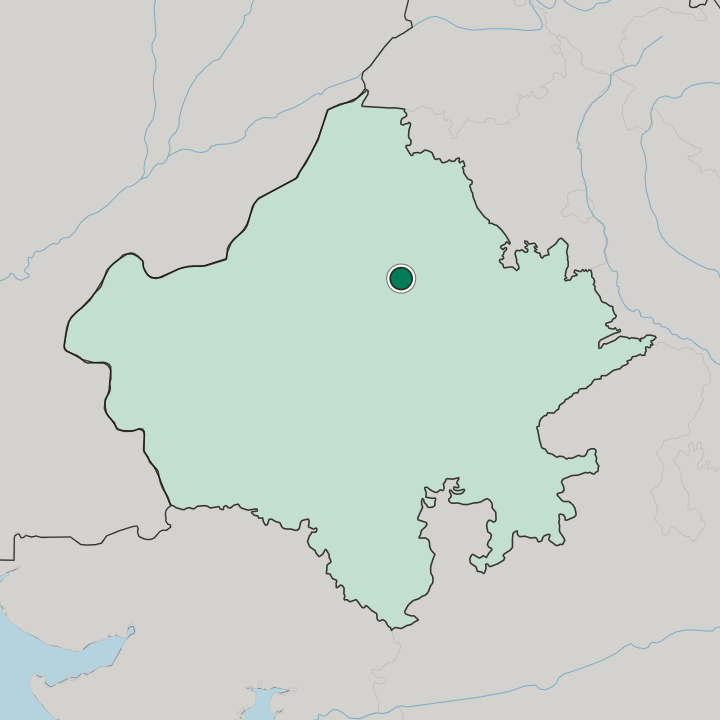
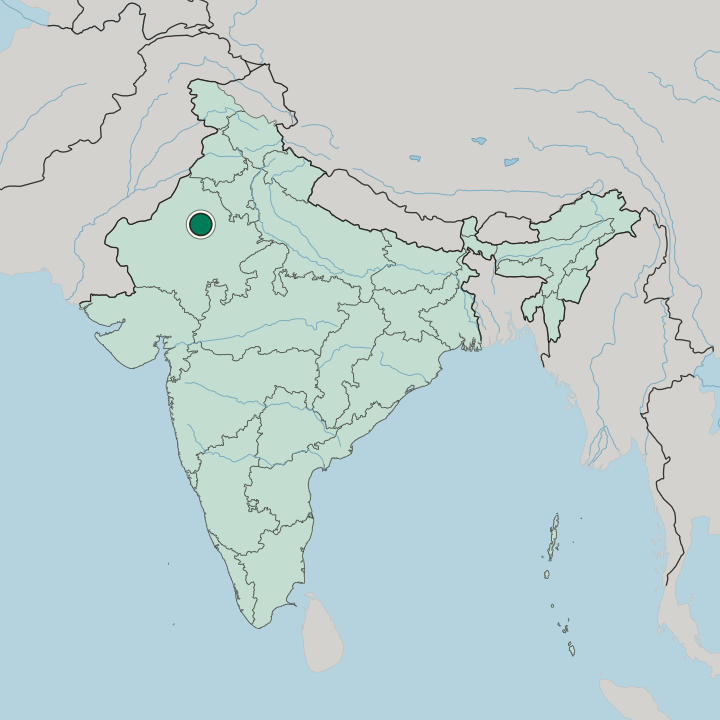
Shekhawati holds the town. Sūjāngarh belongs to Churu District within that region of Rajasthan, spread over roughly 64 square kilometres of subtropical ground north of the equator, with Thardaa and Gopalpura close by on their own temple roads. Highways cross here.
The Churu city-Pali Highway and the Hanumangarh-Kishangarh Mega Highway meet the town, which is what keeps a place this size connected to the rest of India.
What is the climate of Sūjāngarh?
Shekhawati lies well inland. Sūjāngarh takes the subtropical pattern of that interior country north of the equator, with no sea near enough to blunt either end of it, so the hot stretch is long and the cool one brief. Pilgrimage plans around that.
Walking between the Tirupati Balaji Temple and Sri Devsagar Singhee Jain Mandir is a different proposition in the cool months.
How do you get to Sūjāngarh?
Two named highways serve it. The Churu city-Pali Highway runs through Sūjāngarh, and the Hanumangarh-Kishangarh Mega Highway does the same, which puts the town on road links reaching well past Churu District in both directions. Local roads carry the rest.
Sujangarh Road leads out to Lord Shiva Temple at Thardaa, and the Sujangarh - Dungar Balaji Road to Gopalpura, so the outlying shrines need no separate planning.
Common questions
What is the best area to stay in Sūjāngarh?
Around the Balaji temple: Pilgrims at the second Tirupati Balaji Temple in Sūjāngarh. By the Jain Tirth: Jain visitors to Sri Devsagar Singhee Jain Mandir. The Mega Highway side: Drivers breaking a run on the Hanumangarh-Kishangarh Mega Highway.
Good for
More cities in State of Rājasthān
Updated September 2026