India · State of Rājasthān
Where to Stay in Suratgarh, State of Rājasthān
Suratgarh, a cotton and grain town founded by Maharaja Surat Singh, is the largest of the seven tehsils in Sri Ganganagar district, Rajasthan.
Hotel links are affiliate links: booking through them may earn us a commission, at no extra cost to you. It never affects how places are ranked. How this works


Where to stay in Suratgarh
Where the beds are, and what that means for the visit.
Trade decides the address. Suratgarh is a municipality built around cotton and wheat, so the useful distinction is between a bed near the market end of town, where the business of "Cotton city" is actually done, and one out on the roads that carry the crop away. Neither end is scenic.
What the town offers a traveller is function, and the function is agricultural before it is anything else. Sri Ganganagar is the alternative. The district headquarters lies 77 km to the north, and anyone who needs the range of a larger place can work from there and come down for the day, since Suratgarh sits within easy reach of it. Language marks the difference between visitors.
Hindi, Bagri and Rajasthani are what get spoken here, and a stay in the municipal centre puts a guest closer to that ordinary trading life than a room on the outskirts does. Fields begin quickly. The edge of the built-up area gives straight onto the wheat and cotton ground that earned the "Bowl of grain" name, which suits anyone here for the farming country rather than the town, and leaves the choice a simple one between the two.
Find hotels in Suratgarh
Direct booking searches for these neighbourhoods.
The market end
The commercial middle of the municipality, where the crop of the biggest tehsil in Sri Ganganagar district changes handsFind hotels in The market endDrivers covering the 77 km up to the Sri Ganganagar district headquartersThe Sri Ganganagar road
The northern approach out of Suratgarh, the side facing Sri Ganganagar. Rooms are few around here — worth securing early.Find hotels in The Sri Ganganagar roadVisitors here for the farming country behind the "Bowl of grain" nameThe field edge
Where the built-up part of Suratgarh gives out onto the wheat and cotton ground of the tehsil. Few places to stay nearby — book ahead.Find hotels in The field edgeHotel links are affiliate links: booking through them may earn us a commission, at no extra cost to you. It never affects how places are ranked. How this works
About Suratgarh
Two nicknames do the work.
What is Suratgarh known for?
Suratgarh answers to "Cotton city" and to "Bowl of grain" within Rajasthan, both of them earned from the weight of cotton and wheat the surrounding fields send out rather than from anything a visitor photographs. Size backs the reputation. Sri Ganganagar district holds 7 tehsils, and this is the biggest of them, with the municipality at its centre handling the trade that follows the harvest.
What are the main landmarks in Suratgarh?
No monument is recorded. The name is the memorial instead, since Maharaja Surat Singh founded the place and it has carried his name ever since, written सूरतगढ़ in the official form. Fields stand in for sights.
What a visitor sees around Suratgarh is the cotton and wheat country of Sri Ganganagar district, worked at a scale that gave the town both of its nicknames.
What is the history of Suratgarh?
A ruler put his name on it. Maharaja Surat Singh founded Suratgarh, and the town has carried that name since, in a form still written सूरतगढ़ in Hindi even as the transliterated version travels further. No year survives in the record.
What the founding leaves behind is a name rather than a dated charter, which is the ordinary situation for towns of this size across Rajasthan. Agriculture wrote the rest. The cotton and wheat grown around Suratgarh made it "Cotton city" and the "Bowl of grain", two working titles that describe an economy rather than a heritage, and the volume behind them is what turned a founded settlement into the biggest of the 7 tehsils in Sri Ganganagar district.
Municipal status came with that weight. The town governs itself as a municipality while the district is run 77 km to the north from Sri Ganganagar, an arrangement that leaves Suratgarh large but not senior. Speech records the layers.
Hindi, Bagri and Rajasthani are all widely spoken here, three tongues in one small city, which says more about who settled and traded in this corner of India than any surviving building does. The fields decided everything. Nothing in the town's history detaches from what grows around it.
Where is Suratgarh?
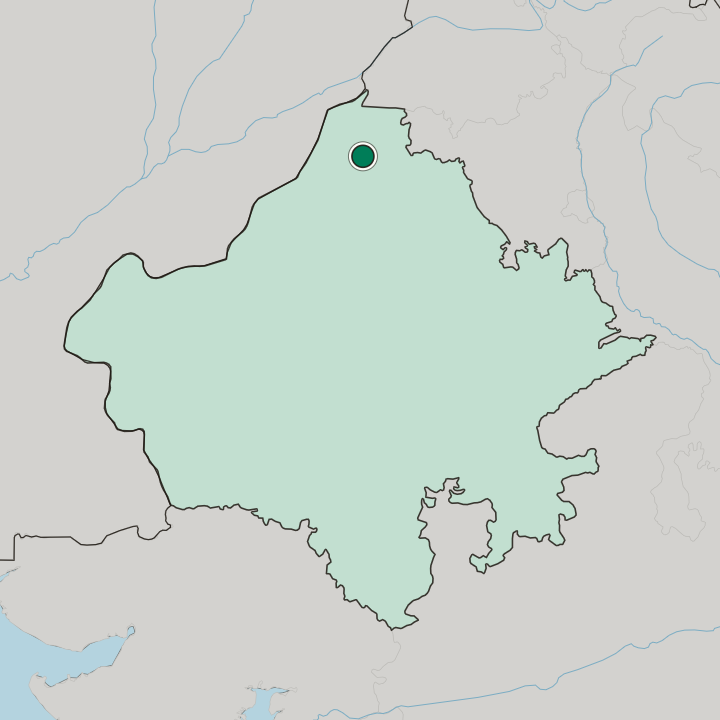
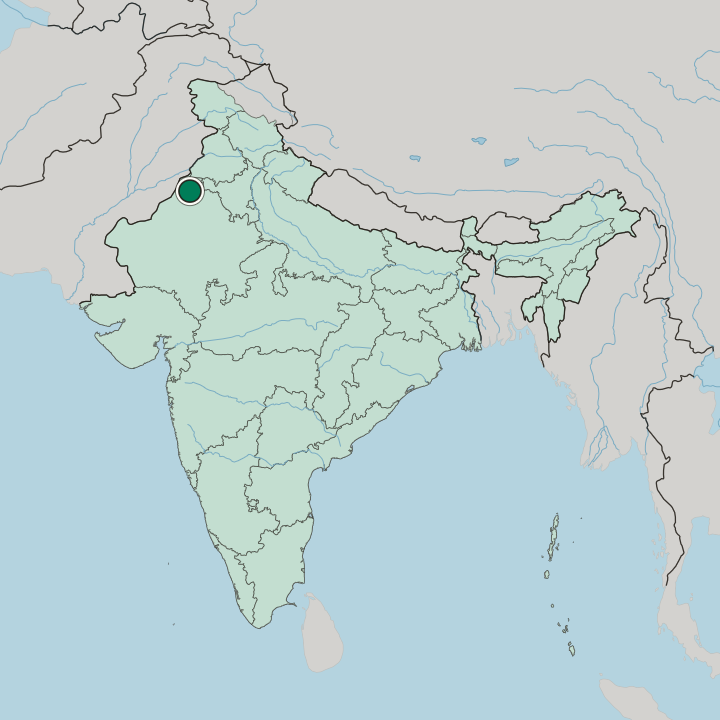
Flat cropland surrounds the town. Suratgarh sits 77 km south of Sri Ganganagar, the headquarters of the district it belongs to, on subtropical ground north of the equator that carries heavy cotton and wheat production. Fields do the organising.
They run out from the municipality across this corner of Rajasthan, and the built-up part ends where they begin.
What is the climate of Suratgarh?
The harvest reads the calendar. Suratgarh lies well inland in the subtropical band north of the equator, and the cotton and wheat that gave the city both its nicknames each want a different part of a year that swings hard between hot and cool. Sri Ganganagar district shares the pattern.
Nothing maritime reaches this far in.
How do you get to Suratgarh?
Sri Ganganagar is the way in. The district headquarters stands 77 km to the north, and the road down from it is the approach most arrivals use, since the rest of Sri Ganganagar district feeds through that city first. Crop traffic keeps the roads busy.
Suratgarh moves cotton and wheat out in quantity, and a visitor shares the route with everything the biggest tehsil in the district produces.
Common questions
What is the best area to stay in Suratgarh?
The market end: Traders in the cotton and wheat that made Suratgarh the "Cotton city". The Sri Ganganagar road: Drivers covering the 77 km up to the Sri Ganganagar district headquarters. The field edge: Visitors here for the farming country behind the "Bowl of grain" name.
More cities in State of Rājasthān
Updated September 2026