India · State of Rājasthān
Where to Stay in Tonk, State of Rājasthān
Tonk, the City of Nawabs, sits near the right bank of the Banas River and heads Tonk District in Rajasthan, its founding recorded in 1818.
Hotel links are affiliate links: booking through them may earn us a commission, at no extra cost to you. It never affects how places are ranked. How this works


Where to stay in Tonk
The practical side of choosing where to sleep.
Sunhari Kothi anchors the old side. A room within reach of it also puts the Shahi Jama Masjid and the Arabic Persian Research Institute in range, which covers most of what brings anyone to Tonk in the first place. That quarter is compact.
Walking it beats driving it, and the nawabi buildings sit close enough together to fill a morning without a vehicle. The newer middle works differently. Ghantaghar, Kamdhenu Circle, Kidwai Park and Nehru Garden mark out the everyday town, where the ordinary business of a district headquarters happens and where beds tend to be plainer and easier to find.
Water pulls visitors outward. Bisalpur Dam and Chaturbhuj Talab Lake lie away from the centre, and so does the right bank of the Banas River, so anyone planning around those is better placed on the edge of Tonk than in its heart. Smaller sights are scattered.
Hathi Bhata, Haadi Rani ka Kund, Rasiya Ki Tekri and the Annapurna Dungri Ganesh Temple do not cluster in one quarter, which means a stay near Ghantaghar is the most flexible base for reaching several of them in a day. Jaipur remains an option. It stands 95 km to the north by road, close enough that some travellers see Tonk on a day trip rather than sleeping here at all.
Find hotels in Tonk
Direct booking searches for these neighbourhoods.
The Sunhari Kothi quarter
The nawabi core of Tonk, where the gilded mansion, the great mosque and the Arabic Persian Research Institute stand close togetherFind hotels in The Sunhari Kothi quarterTravellers who want Tonk's clock tower and everyday market streets at the doorGhantaghar and Kamdhenu Circle
The working middle of the district headquarters, with Kidwai Park and Nehru Garden a short way offFind hotels in Ghantaghar and Kamdhenu CircleVisitors heading out to Bisalpur Dam and Chaturbhuj Talab LakeThe Banas River side
The edge of Tonk facing the right bank of the Banas River, nearest the water the district is known for. Beds are limited here, so book early.Find hotels in The Banas River sideHotel links are affiliate links: booking through them may earn us a commission, at no extra cost to you. It never affects how places are ranked. How this works
About Tonk
Nawabi building is the draw.
What is Tonk known for?
Sunhari Kothi and the Shahi Jama Masjid survive from the court that Nawab Muhammad Amir Khan established, and the Arabic Persian Research Institute keeps the scholarly side of that inheritance in the same town. The name stuck accordingly. Tonk answers to the City of Nawabs, a title that describes the whole run of its past rather than any single building in it.
What are the main landmarks in Tonk?
The list is unusually long. Shahi Jama Masjid, Sunhari Kothi, the Arabic Persian Research Institute, Hathi Bhata, Haadi Rani ka Kund, Rasiya Ki Tekri and the Annapurna Dungri Ganesh Temple all belong to Tonk, alongside Ghantaghar, Kamdhenu Circle, Kidwai Park and Nehru Garden in the newer streets. Water counts too.
Bisalpur Dam and Chaturbhuj Talab Lake take visitors out of the town proper, and the Banas River runs past on the same side.
What is the history of Tonk?
A single ruler started it. Nawab Muhammad Amir Khan founded the state and became its first ruler, and the city's own founding is recorded in 1818, a date that sits alongside the princely state of British India that ran from 1817 to 1947. Tonk was its capital throughout.
That is 130 years of a court sitting in one small city, which explains why the buildings here are grander than the town's size would suggest. Learning came with the court. The Arabic Persian Research Institute carries the scholarly half of that inheritance, and the Shahi Jama Masjid the devotional half, while Sunhari Kothi survives as the decorated interior the nawabs are remembered for.
The title outlived the state. Tonk is still called the City of Nawabs, long after 1947 ended the arrangement that produced the name. One later chapter is cinematic.
Kamal Amrohi shot the film Razia Sultan in Tonk in 1981 and 1982, using a city whose nawabi fabric could stand in for an older India without much dressing. Administration continued regardless. Tonk became and remains the headquarters of Tonk District, and the everyday work of that role goes on around Ghantaghar and Kamdhenu Circle rather than in the old palaces.
Where is Tonk?
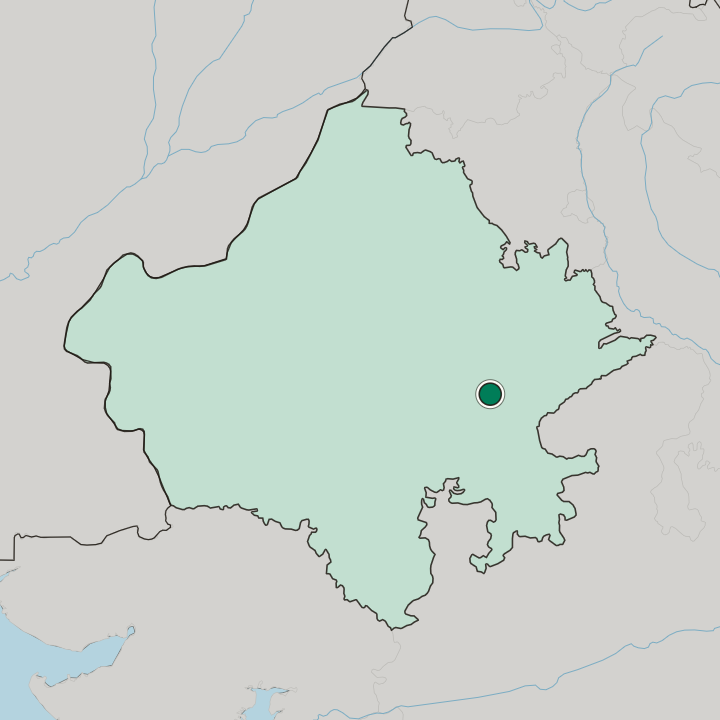
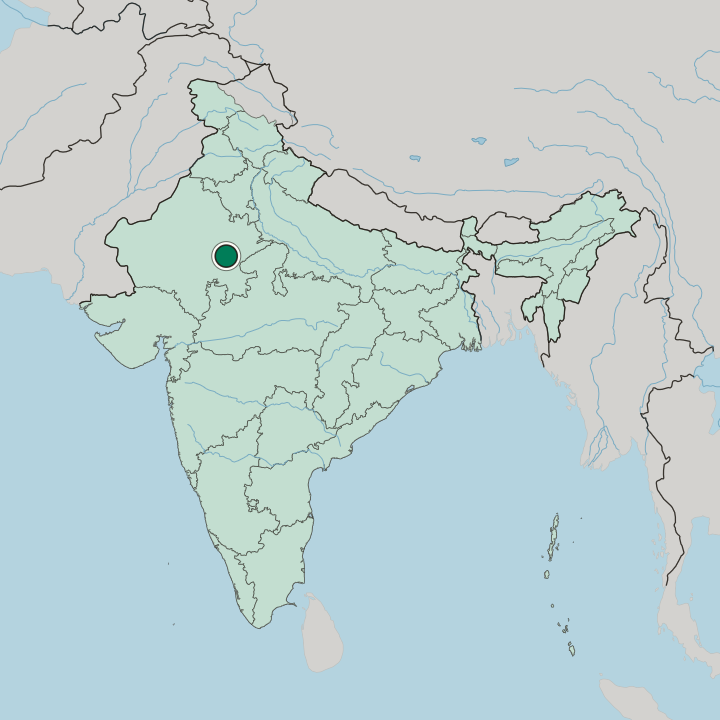
The Banas River fixes the site. Tonk stands near its right bank on subtropical ground north of the equator, 95 km by road south of Jaipur, at the administrative centre of a Tonk District whose water includes Bisalpur Dam and Chaturbhuj Talab Lake. Rajasthan spreads out beyond.
Nothing coastal comes near, and the river is the one large natural feature the city can claim.
What is the climate of Tonk?
The Banas River rises and drops. That cycle governs the look of the year around Tonk more than anything else does, since the city lies inland in the subtropical band north of the equator with no sea to steady it. Stored water softens the swing.
Bisalpur Dam and Chaturbhuj Talab Lake hold what the dry stretch would otherwise take away.
How do you get to Tonk?
Jaipur is the obvious approach. The road south covers 95 km to Tonk, which makes the city an easy run for anyone already in that part of Rajasthan and a common day trip from it. Arrivals land in the middle.
Ghantaghar and Kamdhenu Circle are where the through traffic of Tonk District converges, and the nawabi quarter around Sunhari Kothi begins a short way off from there.
Common questions
What is the best area to stay in Tonk?
The Sunhari Kothi quarter: Guests wanting Sunhari Kothi and the Shahi Jama Masjid on foot. Ghantaghar and Kamdhenu Circle: Travellers who want Tonk's clock tower and everyday market streets at the door. The Banas River side: Visitors heading out to Bisalpur Dam and Chaturbhuj Talab Lake.
Good for
More cities in State of Rājasthān
Updated September 2026