Italy · Piemonte
Where to Stay in Asti, Piemonte
Asti is the wine capital of Piedmont's Tanaro plain, a town of medieval towers, palazzi and the name behind Moscato d'Asti.
Hotel links are affiliate links: booking through them may earn us a commission, at no extra cost to you. It never affects how places are ranked. How this works



Where to stay in Asti
Where the beds are, and what that means for the visit.
Asti works well as a base. The old streets put Asti Cathedral, Palazzo Mazzetti and Torre Troyana within a short walk of one another, and the wine country around the town is close enough that a day out comes back by evening. Central rooms go first.
Hotels and guesthouses concentrate near the cathedral and the towers, which is also where the shops and restaurants sit, so the walk back at night is a short one. Two things decide the choice: whether the towers are the point, or the vineyards are. A car changes the range.
The Castello di Valmanera, Rabezzana Castle and the vineyards of the province of Asti open up with one, and an outlying room trades evening walks for parking and an early start. Without wheels, stay central. The Museo Paleontologico Astigiano e Monferrato, the Asti museum of Italian unification and the Cripta e museo di Sant'Anastasio all fall inside the walkable core, along with San Martino, San Paolo and San Silvestro among the churches.
Torre Guttuari and Palazzo Gazzelli stand in the same few streets, which keeps the centre the simplest answer for a short stay. Turin is close enough for a day.
Find hotels in Asti
Direct booking searches for these neighbourhoods.
Around Asti Cathedral
The cathedral end of the old town, with the Diocesan Museum of San Giovanni and the Cripta e museo di Sant'Anastasio nearby.Find hotels in Around Asti Cathedrala room under Torre Troyana and the medieval towersTower streets
The blocks where Torre Troyana, Torre Comentina and Palazzo Mazzetti stand within a few minutes of each other. Few places to stay nearby — book ahead.Find hotels in Tower streetsdriving days out towards the Castello di Valmanera and the vineyardsValmanera side
Outlying ground by the Castello di Valmanera, taken for the road into the wine country rather than for the old streets. Beds are limited here, so book early.Find hotels in Valmanera sideHotel links are affiliate links: booking through them may earn us a commission, at no extra cost to you. It never affects how places are ranked. How this works
Things to do in Asti
Ranked by global recognition; descriptions from Wikidata (CC0).
Museums & Galleries
2- Cripta e museo di Sant'Anastasio Heritage
- Diocesan Museum of San Giovanni Heritage
Churches & Religious Sites
8- Nostra Signora Porta Paradisi (Asti) Heritage
- San Martino (Asti) Heritage
- San Silvestro Heritage
- San Rocco (Asti) Heritage
- Confraternita della Santissima Trinità e Sant'Evasio Heritage
Show 3 more →
- San Teobaldo (Asti) Heritage
- Sant'Anna Heritage
- Santuario di San Giuseppe Heritage
Castles & Historic Sites
3- Palazzo Mazzetti Heritage
- Rabezzana Castle Heritage
- Castello di Valmanera
Stadiums & Sports
1- Pala San Quirico
Landmarks & Notable Places
4- Torre Troyana Heritage
- Palazzo Gazzelli Heritage
- Torre De Regibus Heritage
- Torre Roero di Monteu Heritage
worth knowingacross 5 categories in Asti
About Asti
Wine carries the name furthest.
What is Asti known for?
Moscato d'Asti borrows the town's name, and Asti works as the commercial centre of the wine country spread across this part of Piedmont. Towers are the other signature. Torre Troyana, Torre Comentina, Torre De Regibus and Torre Quartero survive from the centuries when the town's families built in stone and in height.
Asti Cathedral holds the centre.
What are the main landmarks in Asti?
The towers come first. Torre Troyana, Torre Comentina, Torre De Regibus and Torre Quartero are what most visitors photograph, and Palazzo Mazzetti and Palazzo Gazzelli carry the domestic architecture beside them. Asti Cathedral leads the churches, with San Martino, San Paolo, San Rocco and San Teobaldo behind it.
Two castles sit outside the core, the Castello di Valmanera and Rabezzana Castle. Museums stay compact. The Diocesan Museum of San Giovanni, the Cripta e museo di Sant'Anastasio and the Museo Paleontologico Astigiano e Monferrato divide the record.
What is the history of Asti?
The crypt is the deepest layer. Cripta e museo di Sant'Anastasio preserves an early church site beneath the later town, and the Museo Paleontologico Astigiano e Monferrato reaches back further still, to what the ground around the Tanaro held long before any of it. Medieval Asti built upward.
Torre Troyana, Torre Comentina, Torre Guttuari, Torre De Regibus, Torre Quartero and Torre Roero di Monteu survive from the centuries when the town's families raised stone towers, and Asti Cathedral answered them with a building of similar ambition. Palazzo Gazzelli and Palazzo Mazzetti came out of the same wealth. Montferrat gives the town a second identity, and Asti is described as the modern capital of that historic territory.
Wine did the rest. The trade that produced Moscato d'Asti made this the commercial centre for a wine country spread across the surrounding province, and it remains the reason most people come. Unification left a museum of its own.
The Asti museum of Italian unification records the nineteenth-century politics that drew the peninsula together, while the Diocesan Museum of San Giovanni keeps the older church material. San Teobaldo, San Rocco and the Confraternita della Santissima Trinità e Sant'Evasio fill in the parish and confraternity life around them. The province takes the town's name.
Where is Asti?
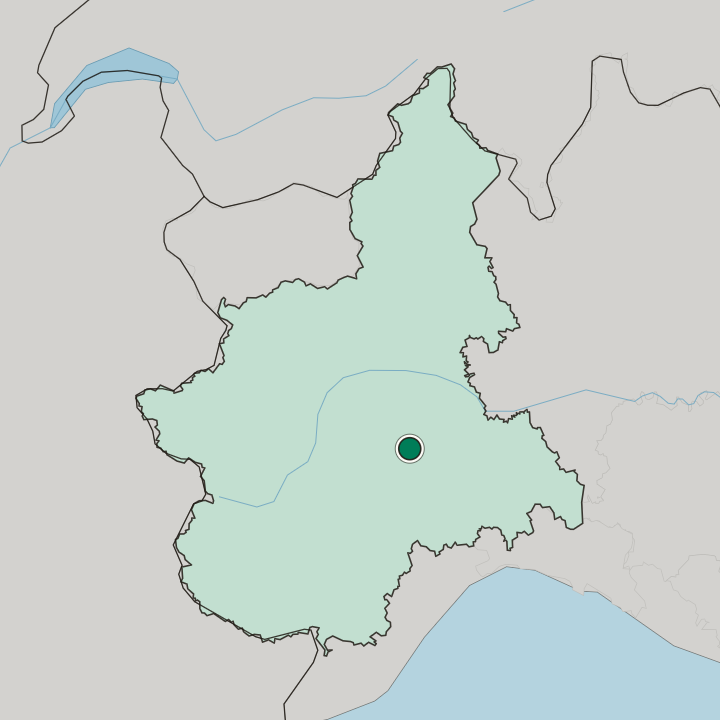
Asti lies in the plain of the Tanaro River. Its municipal ground runs to about a hundred and fifty square kilometres, much of it the farm and vine country that supplies the town's trade, and the built-up centre takes only a small part of that. Turin is roughly fifty-five kilometres off.
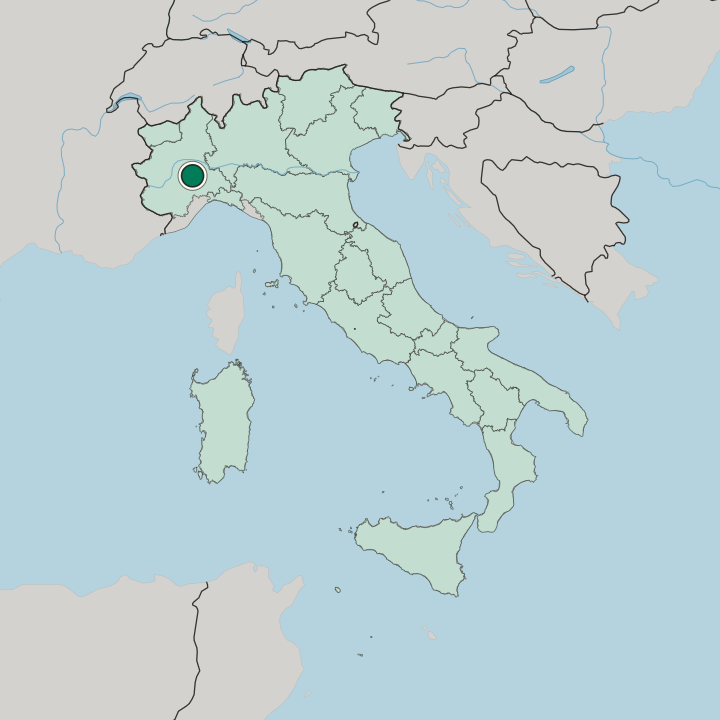
Piedmont surrounds the town, with Montferrat as the historic name for the country around it.
What is the climate of Asti?
The Tanaro plain sets the pattern. Heat builds over the flat ground in summer and stays there, which is part of what the vineyards of the province work with each year. Winter bites inland.
Frost and cold mornings belong to the season here, and the temperate band Asti falls within says less about the town than the plain and the river running through it do.
How do you get to Asti?
The centre walks in twenty minutes. Asti Cathedral, Torre Troyana and Palazzo Mazzetti sit close enough together that a room anywhere central puts the whole old town on foot. Turin lies about fifty-five kilometres away.
The wine country, the Castello di Valmanera and Rabezzana Castle are all beyond walking, and a car is what turns the town into a base for the province around it.
Common questions
What is the best area to stay in Asti?
Around Asti Cathedral: mornings between Asti Cathedral and the Diocesan Museum of San Giovanni. Tower streets: a room under Torre Troyana and the medieval towers. Valmanera side: driving days out towards the Castello di Valmanera and the vineyards.
Good for
More cities in Piemonte
Updated October 2026