Italy · Piemonte
Where to Stay in Turin, Piemonte
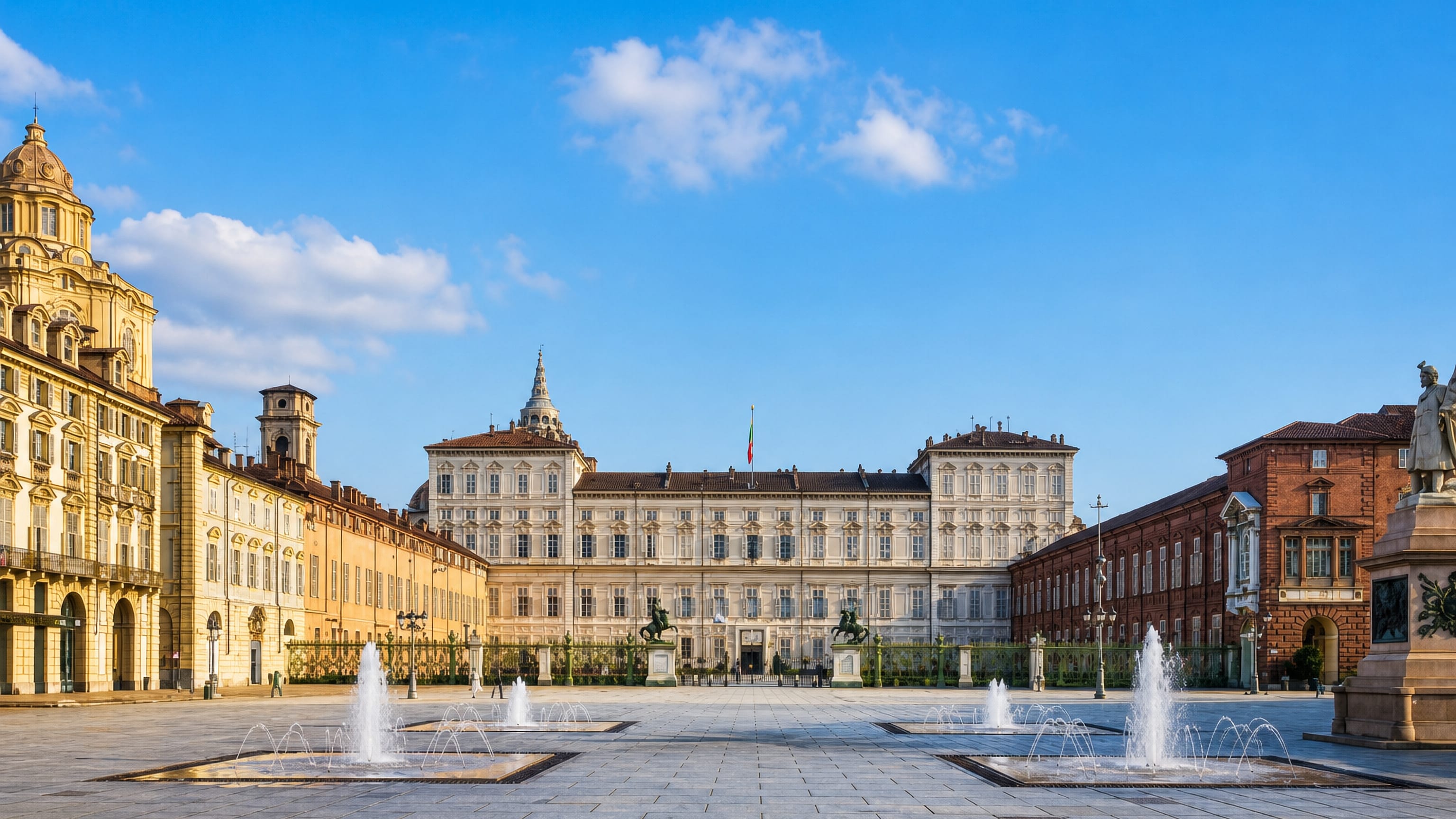
Baroque arcades and the Alps frame Turin, the Piemonte capital on the Po, known for the Mole Antonelliana and the Museo Egizio.
Hotel links are affiliate links: booking through them may earn us a commission, at no extra cost to you. It never affects how places are ranked. How this works


Where to stay in Turin
Where you base yourself shapes the visit — here's the character of each area.

 TurinItalyA first stay with Piazza Castello and the Museo Egizio on foot
Centro
The arcaded core between the Royal Palace of Turin and Via Roma, with the Quadrilatero bar streets directly behind itCentro and the Quadrilatero Romano → TurinItalyCheap beds beside Porta Nuova and the Parco del Valentino gates
San Salvario
The blocks immediately south of the station, loud after dark and minutes from the Egyptian collectionsSan Salvario → TurinItalyA hill room with the Mole Antonelliana in the window
Borgo Po
Across the river under Gran Madre di Dio, where the stairs climb toward Superga and one bridge leads back to CentroBorgo Po and the Gran Madre slope → TurinItalyTrade-fair nights and anyone drawn to the Fiat rooftop track
Lingotto
The southern factory quarter around the old Fiat plant, on the metro line that runs up Via NizzaLingotto → TurinItaly
Porta Palazzo
Market stalls cover Piazza della Repubblica. Porta Palazzo is a district of Turin around Europe's largest open-air market, one of the five parts of Aurora.Where to stay →TurinItalyQuadrilatero
Quadrilatero is a district of Turin, one of the named quarters of a city set in the Italian region of Piemonte.Where to stay →TurinItalyAurora
Aurora is a historical district of Turin built from three distinct wards: Porta Palazzo, Borgo Dora and Valdocco.Where to stay →TurinItalyVanchiglia
The Turin district of Vanchiglia gathers Santa Giulia, the Museo Lavazza and a run of former works around the Ex Lanificio Colongo.Where to stay → TurinItaly
San Donato
San Donato is a quarter of Turin's Circoscrizione 4, west of the centre, named for a chapel to Donato d'Arezzo that the French siege of 1536 destroyed.Where to stay → TurinItaly
Crocetta
Crocetta is a quarter of Turin's Circoscrizione 1, south of the historic centre, grown around the church of the Beata Vergine delle Grazie that named it.Where to stay →TurinItalyCit Turin
Cit Turin is the smallest quarter of Turin and the only one whose name is Piedmontese, meaning little Turin, west of the centre in Circoscrizione 3.Where to stay →TurinItalyVanchiglietta
Vanchiglietta is a Turin quarter in Piemonte whose name is the diminutive of Vanchiglia, another district on the same city list.Where to stay →All neighbourhoods (30)
TurinItalyBarriera di Milano
Barriera di Milano is a quarter of Turin's Circoscrizione 6, 1.5 km north of the centre, named for the piazza Crispi customs gate on the road to Milan.Where to stay → TurinItaly
Cenisia
Cenisia is a quarter in western Turin, part of Circoscrizione 3 along with San Paolo, Pozzo Strada, Lesna and Cit Turin.Where to stay →TurinItalyRegio Parco
Regio Parco is a quarter of Turin's Circoscrizione 6, northeast of the city near where the Stura di Lanzo joins the Po, named for a ducal hunting park.Where to stay →TurinItalyBorgo San Paolo
Borgo San Paolo is a quarter in the west of Turin, born outside the walls early in the 17th century, named for the Compagnia delle opere pie di San Paolo.Where to stay → TurinItaly
Borgo Vittoria
Borgo Vittoria is a quarter of Turin's Circoscrizione 5, named after the 1706 battle that ended the siege of Turin.Where to stay →TurinItalyMadonna di Campagna
Madonna di Campagna is a quarter of Turin in Piedmont, where the Museo A come Ambiente and the TIM Historical Archive sit among its churches.Where to stay →TurinItalyVilla La Tesoriera
Turin lists Villa La Tesoriera among its districts, one quarter of a city that sits within the Italian region of Piemonte.Where to stay → TurinItaly
Santa Rita
Santa Rita is a quarter in southwest Turin, named for the sanctuary of Santa Rita da Cascia standing in it. With Mirafiori Nord it forms Circoscrizione 2.Where to stay → TurinItaly
Lucento
Lucento is a district of Turin sharing its name with the Castello di Lucento, with three churches making up the rest of its landmarks.Where to stay → TurinItaly
Pozzo Strada
Pozzo Strada names one of Turin's municipal quarters, in Piemonte, a division of the city rather than a settlement with a record of its own.Where to stay → TurinItaly
Parella
Parella is a quartiere of Circoscrizione 4 in the western periphery of Turin, running up to the boundary with Collegno. Parela is its Piedmontese name.Where to stay →TurinItalyNizza Millefonti
Nizza Millefonti runs Corso Bramante to Moncalieri in Circoscrizione 8, between Po and the Turin-Genoa railway. Piazza Carducci and Piazza Bengasi end it.Where to stay →TurinItalyBarriera di Lanzo
Barriera di Lanzo is a zone of Circoscrizione 5 on Turin's northwestern edge, a suburb of Madonna di Campagna. Bariera 'd Lans is its Piedmontese name.Where to stay → TurinItaly
Borgata Lesna
Borgata Lesna is a borgo of the Pozzo Strada quarter in western Turin, running up to the boundary with Grugliasco. Borgià Lesna is its Piedmontese name.Where to stay → TurinItaly
Mirafiori Nord
Mirafiori Nord is a district of Turin where the chiesa dell'Ascensione del Signore and the Pentecoste Church name two feasts of one season.Where to stay →TurinItalyFiladelfia
Filadelfia, also written Borgo Filadelfia, is a Turin quarter six kilometres from the centre, with Lingotto barely a kilometre away.Where to stay → TurinItaly
Falchera
Falchera is a district of Turin some six kilometres from the centre, and its named buildings are three churches rather than a monument.Where to stay → TurinItaly
Mirafiori Sud
Three saints and a castle account for Mirafiori Sud in Turin: San Barnaba, San Giovanni Maria Vianney, San Luca Evangelista, Castello di Mirafiori.Where to stay →Hotel links are affiliate links: booking through them may earn us a commission, at no extra cost to you. It never affects how places are ranked. How this works
Things to do in Turin
Ranked by global recognition; descriptions from Wikidata (CC0).
Museums & Galleries
8- Mole Antonelliana Heritage
- Museo Egizio Heritage
- Villa della Regina Heritage
- Borgo medievale (Turin) Heritage
- Galleria Sabauda Heritage
Show 3 more →
- National Museum of the italian Risorgimento Heritage
- Pinacoteca Giovanni e Marella Agnelli Heritage
- Turin Civic Gallery of Modern and Contemporary Art Heritage
Churches & Religious Sites
6- Turin Cathedral Heritage
- Gran Madre di Dio Heritage
- Church of San Lorenzo, Turin Heritage
- San Filippo Neri Heritage
- Oratorio del Santo Sudario Heritage
Show 1 more →
- Church of St. Francis of Paola Heritage
Castles & Historic Sites
4- Royal Palace of Turin Heritage
- Castello del Valentino Heritage
- Palazzo Barolo Heritage
- Castello di Lucento Heritage
Stadiums & Sports
2- Circolo della Stampa
- Palazzo del ghiaccio
worth knowingacross 4 categories in Turin
About Turin
What is Turin known for?
Turin was the first capital of united Italy and the seat of the House of Savoy. The Museo Egizio holds the largest collection of Egyptian antiquities outside Cairo, the Mole Antonelliana carries a lift up its spire to the roof of the city, and Turin Cathedral keeps the linen that made the place a pilgrimage. Fiat built its factories here.
Vermouth, gianduiotto chocolate and the coffee counters under the arcades came out of the same court city.
What are the main landmarks in Turin?
Turin is measured by the Mole Antonelliana. The brick spire Alessandro Antonelli raised for a synagogue holds The National Cinema Museum, and a glass lift runs up the middle of it to a terrace over the Alps. Museo Egizio fills a Baroque palace nearby.
Piazza Castello holds the Royal Palace of Turin, the Royal Armoury of Turin and Palazzo Madama, while the Palatine Towers still mark the Roman gate a short way north. Turin Cathedral, beside them, guards the shroud.
What is the history of Turin?
Turin was laid out by Rome as Augusta Taurinorum, and the right-angled streets of the centre still follow that camp plan. The Palatine Towers are its gate. Emanuele Filiberto moved the Savoy capital here from Chambéry in 1563, and the dukes spent the next two centuries rebuilding a garrison town into a court, with Guarini and Juvarra given the churches, the palaces and the hunting lodges outside the walls.
A French army besieged the place in 1706, and Pietro Micca blew the tunnel and himself with it. The Risorgimento was drafted here. Cavour ran his ministry from Piemonte, the parliament sat in Palazzo Carignano, and Turin became the first capital of the Italian kingdom in 1861, holding it for four years before the government left for Florence.
The loss cost the city its reason to exist, so it built another one: Fiat opened in 1899, Lingotto rose with a test track on the roof, and half of southern Italy moved north to work the lines. The lines thinned in the end. Museums, design and the Olympic ice took over the sheds, and the Centro Storico Fiat keeps the memory of the works that paid for it.
Where is Turin?
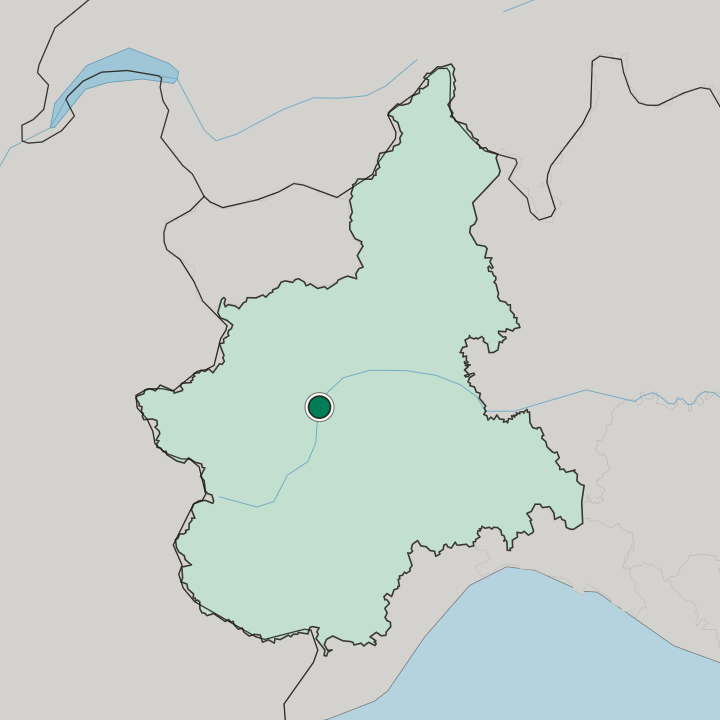
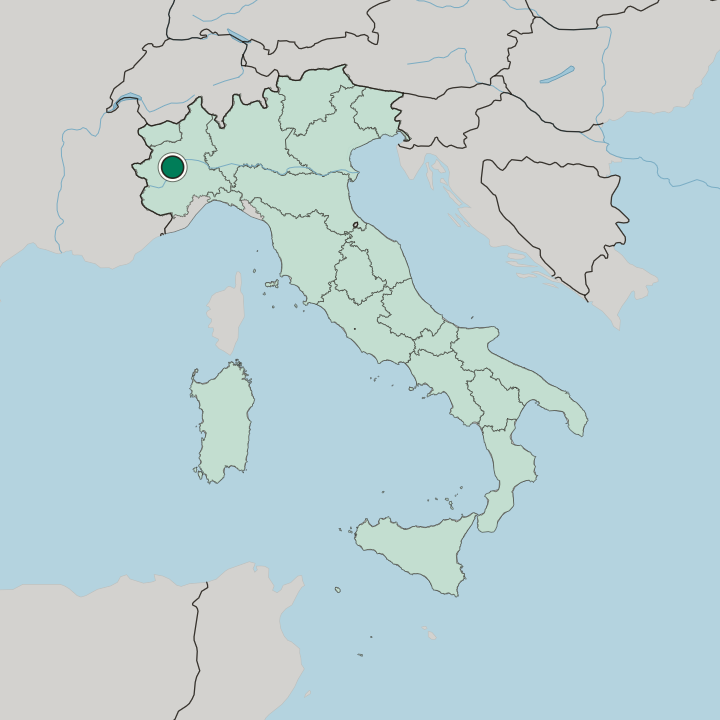
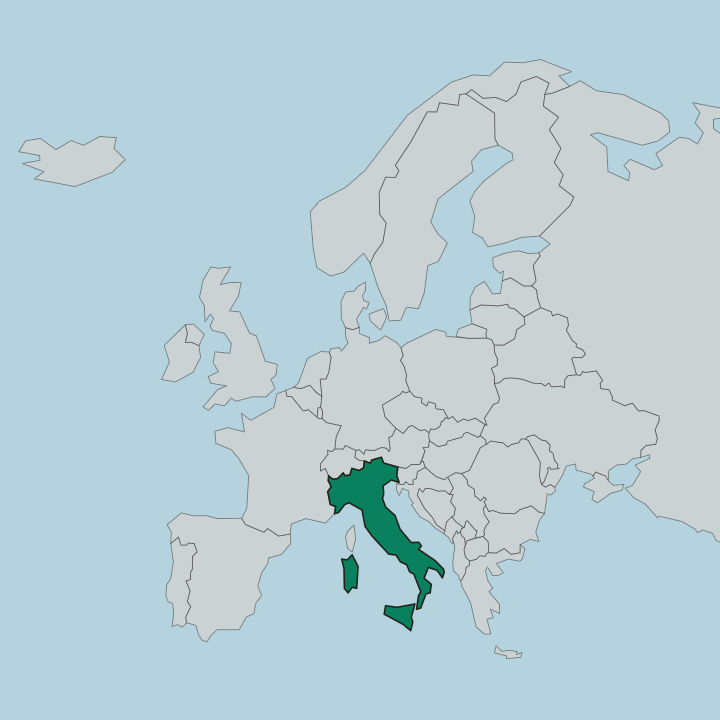
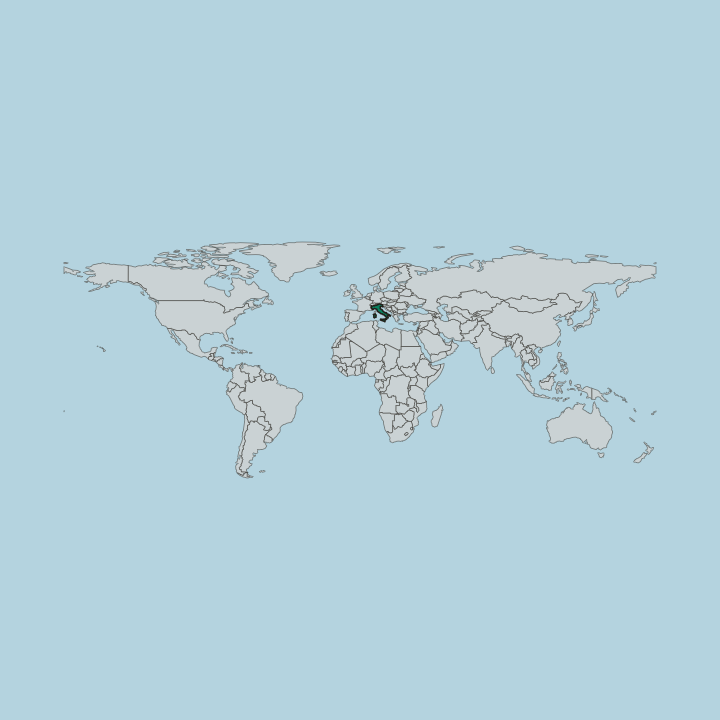
Turin stands on the west bank of the Po in north-western Italy, where the plain runs into the Alps. Four rivers meet inside the city. The Dora Riparia comes down from the Susa Valley, the Stura di Lanzo and the Sangone join from the north and south, and all of them go into the Po below the Gran Madre di Dio.
The hills begin on the far bank and climb to Superga; westward the Alpine wall closes the horizon behind Rivoli. Beyond, the plain runs flat to Milan.
What is the climate of Turin?
Turin sits in a corner of the Po plain that the Alps close on three sides. Air stagnates there. Winter brings still, grey days and fog off the fields, cold enough for frost in the courtyards, until the föhn drops off the mountains and turns the sky glass-clear with every summit in view from Piazza Vittorio Veneto.
Summer is hot and heavy, thunder building over the hills in the late afternoon. Autumn is the clear season.
How do you get to Turin?
Turin has two main stations and a mountain behind them. Porta Nuova faces Via Roma at the end of the arcades and takes the trains to Milan and Rome, while Porta Susa handles the high-speed services and the line through the Fréjus tunnel into France. Caselle airport lies north of the city.
A metro line runs under Via Nizza from Lingotto through both stations, and the A4 and A6 autostrade leave for Milan and the Ligurian coast. The ski buses go up the Susa Valley.
Common questions
What is the best area to stay in Turin?
Centro and the Quadrilatero Romano: A first stay with Piazza Castello and the Museo Egizio on foot. San Salvario: Cheap beds beside Porta Nuova and the Parco del Valentino gates. Borgo Po and the Gran Madre slope: A hill room with the Mole Antonelliana in the window. Lingotto: Trade-fair nights and anyone drawn to the Fiat rooftop track.
Good for
More cities in Piemonte
Updated October 2026