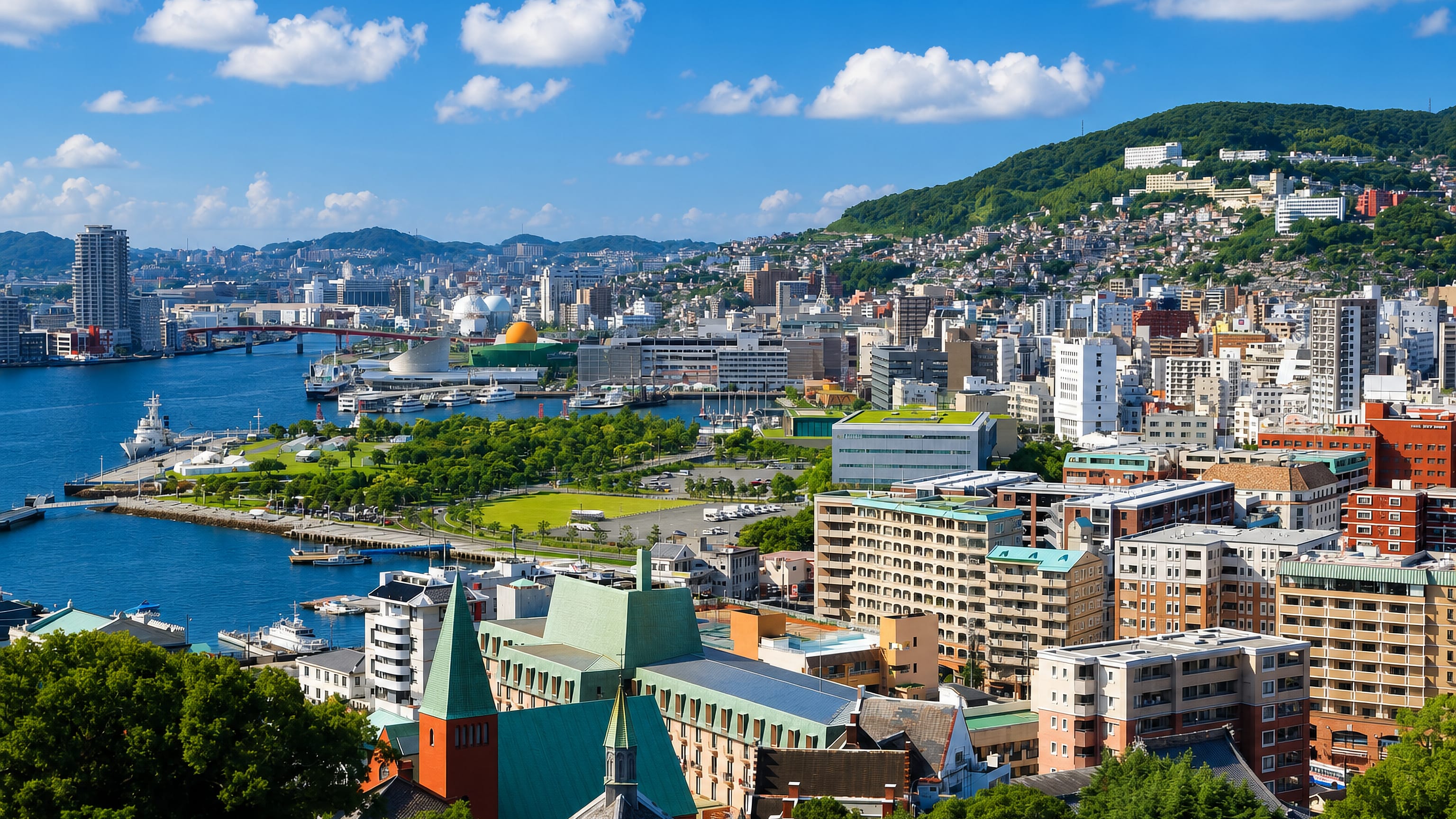
Japan · Nagasaki Prefecture
Where to Stay in Nagasaki, Nagasaki Prefecture
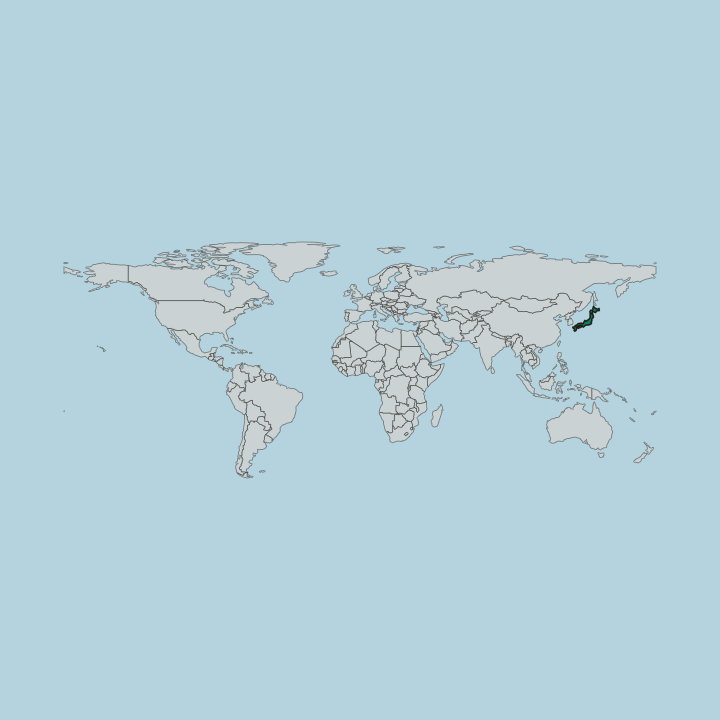
Nagasaki is the capital of Nagasaki Prefecture on the island of Kyushu, the port through which Europeans first entered Japan.
Hotel links are affiliate links: booking through them may earn us a commission, at no extra cost to you. It never affects how places are ranked. How this works


Where to stay in Nagasaki
Each area has its own feel; here's who each one suits.

 NagasakiJapan
Nagasaki Shinchi Chinatown
Nagasaki Shinchi Chinatown is a compact grid of chanpon kitchens and food shops, closed by four Chinese gates, on reclaimed land beside Dejima.Where to stay →NagasakiJapanTōjin Yashiki
Tōjin Yashiki is a quarter of Nagasaki, Japan, founded in 1689 and listed alongside museums from Glover Garden to the Dejima Museum.Where to stay →NagasakiJapanHigashiyamate
Higashiyamate is a neighbourhood of Nagasaki, the quarter whose name is carried by the Higashi-Yamate No. 12 Building.Where to stay →NagasakiJapanMinami-Yamate
Minami-Yamate is the hillside foreign quarter of Nagasaki, the slope that carries Glover Garden above the harbour.Where to stay →NagasakiJapanUrakami
Urakami is the northern quarter of Nagasaki, Japan, holding the Nagasaki Peace Park and the museums that keep the atomic bombing on record.Where to stay →NagasakiJapanMaruyama
Maruyama is Nagasaki's old licensed quarter, the Maruyama-machi and Yoriai-machi lanes that begin past the Shianbashi crossing.Where to stay →Hotel links are affiliate links: booking through them may earn us a commission, at no extra cost to you. It never affects how places are ranked. How this works
Find hotels in Nagasaki
Direct booking searches for these neighbourhoods.
Around Glover Garden
The merchants' hillside, with Glover Garden and the Former Hongkong and Shanghai Bank Nagasaki Branch on one walkFind hotels in Around Glover GardenMornings given to the Nagasaki Atomic Bomb Museum without a cross-city startThe Nagasaki Peace Park end
The memorial ground, where the Peace Memorial Hall for the Atomic Bomb Victims stands beside the parkFind hotels in The Nagasaki Peace Park endVisitors splitting time between the memorials and the Siebold Memorial MuseumThe centre between the two
Ground held by the Nagasaki Museum of History and Culture and the Nagasaki Prefectural Art Museum, equidistant from both endsFind hotels in The centre between the twoHotel links are affiliate links: booking through them may earn us a commission, at no extra cost to you. It never affects how places are ranked. How this works
Things to do in Nagasaki
Ranked by global recognition; descriptions from Wikidata (CC0).
Museums & Galleries
3- Glover Garden Heritage
- Former Hongkong and Shanghai Bank Nagasaki Branch Heritage
- Nagasaki Atomic Bomb Museum
Churches & Religious Sites
1- 中町教会
Castles & Historic Sites
1- The Cloak of Peace – Te Korowai Rangimarie
worth knowingacross 3 categories in Nagasaki
About Nagasaki
Two histories share one city.
What is Nagasaki known for?
The Nagasaki Atomic Bomb Museum and the Nagasaki Peace Park account for most visits, with the Nagasaki National Peace Memorial Hall for the Atomic Bomb Victims standing alongside them. Glover Garden holds the other. That earlier record runs on through the Twenty-Six Martyrs Museum and Monument, the Siebold Memorial Museum and a reconstructed sixteenth-century Portuguese and Dutch trading post, each of them tied to the years when Europeans were entering Japan through this one port.
What are the main landmarks in Nagasaki?
The museum count runs high. Nagasaki Museum of History and Culture and the Nagasaki Prefectural Art Museum head the general collections, while the Siebold Memorial Museum, the Kameyama Shachū Memorial Museum and the Nagasaki City Nagai Takashi Memorial Museum each attach themselves to one figure or one episode rather than to the city at large. Several are very small.
The Chanpon Museum, the Inori-no-Oka Picture Book Museum and the Nagasaki Traditional Performing Arts Museum keep to a single subject apiece, and the Canonball of Ohato is one object carrying a name of its own.
What is the history of Nagasaki?
Europeans came in through here. Nagasaki was the entry point into Japan for them, and the trade that followed left a reconstructed sixteenth-century Portuguese and Dutch trading post, the Siebold Memorial Museum and the Former Hongkong and Shanghai Bank Nagasaki Branch as its standing record. Christianity arrived by the same route.
The Twenty-Six Martyrs Museum and Monument marks what became of that faith in the country, while Glover Garden keeps the houses of the foreign merchants who followed in later generations. Nagasaki was constituted in 1889. The atomic bombing is what the city is most widely associated with now, and four institutions address it directly: the Nagasaki Atomic Bomb Museum, the Nagasaki National Peace Memorial Hall for the Atomic Bomb Victims, the Nagasaki Peace Museum and the Nagasaki Museum for Human Rights and Peace.
The Nagasaki Peace Park is the ground set aside for it. One further collection, the Nagasaki City Nagai Takashi Memorial Museum, holds a single witness account. Industry shaped the water as well, and coal and shipbuilding left their own record behind them, an abandoned mining town out on a nearby island, and the Mitsubishi Heavy Industries Nagasaki Shipyard with a museum of its own.
Where is Nagasaki?
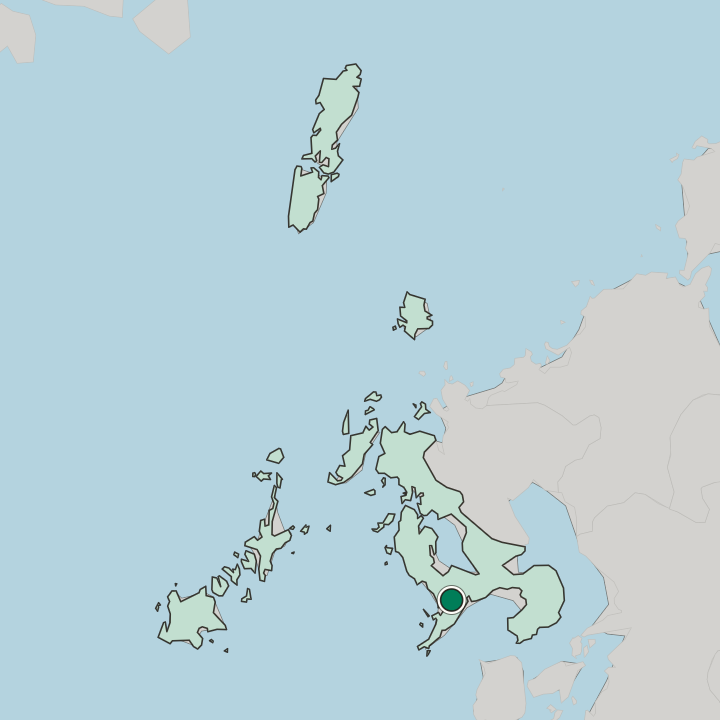
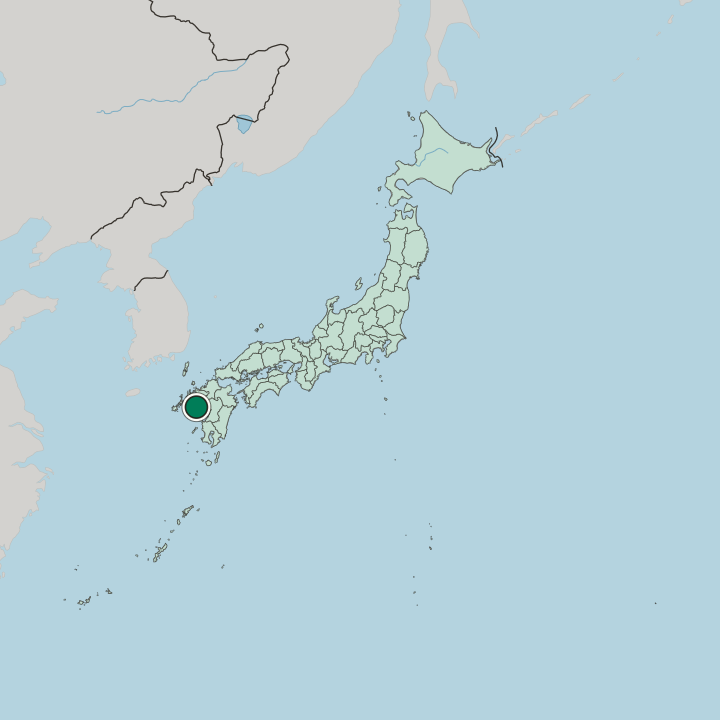
Kyushu is the ground under it. Nagasaki is the capital of Nagasaki Prefecture and stands on that island, with the sea working into the city's own approaches and out again past a scatter of smaller islands offshore. One of them lies abandoned.
The town on it was built for coal mining and then left empty, and getting there means going out on the water, which describes a good deal of how this prefecture is arranged.
What is the climate of Nagasaki?
The sea does the work here. Nagasaki lies in the subtropical band, and standing on Kyushu with water on so many sides takes the edges off a year that an inland capital would feel more sharply. Humidity is the real burden.
When the air turns heavy, the Nagasaki Atomic Bomb Museum, the Nagasaki Museum of History and Culture and the Nagasaki Prefectural Art Museum absorb the afternoon, while Glover Garden and the Nagasaki Peace Park both want a dry day.
How do you get to Nagasaki?
Everything converges on the prefectural capital. Nagasaki stands on Kyushu, so approaches cross the island rather than run up a mainland corridor, and the city is the point from which the rest of Nagasaki Prefecture is measured. The islands need a crossing.
Reaching the abandoned coal-mining town offshore means leaving the land behind entirely, and the same holds for a fair share of what the prefecture keeps beyond the city limits.
Common questions
What is the best area to stay in Nagasaki?
Around Glover Garden: Guests here for the foreign quarter and the Nagasaki Minamiyamate Museum. The Nagasaki Peace Park end: Mornings given to the Nagasaki Atomic Bomb Museum without a cross-city start. The centre between the two: Visitors splitting time between the memorials and the Siebold Memorial Museum.
Good for
More cities in Nagasaki Prefecture
Updated October 2026