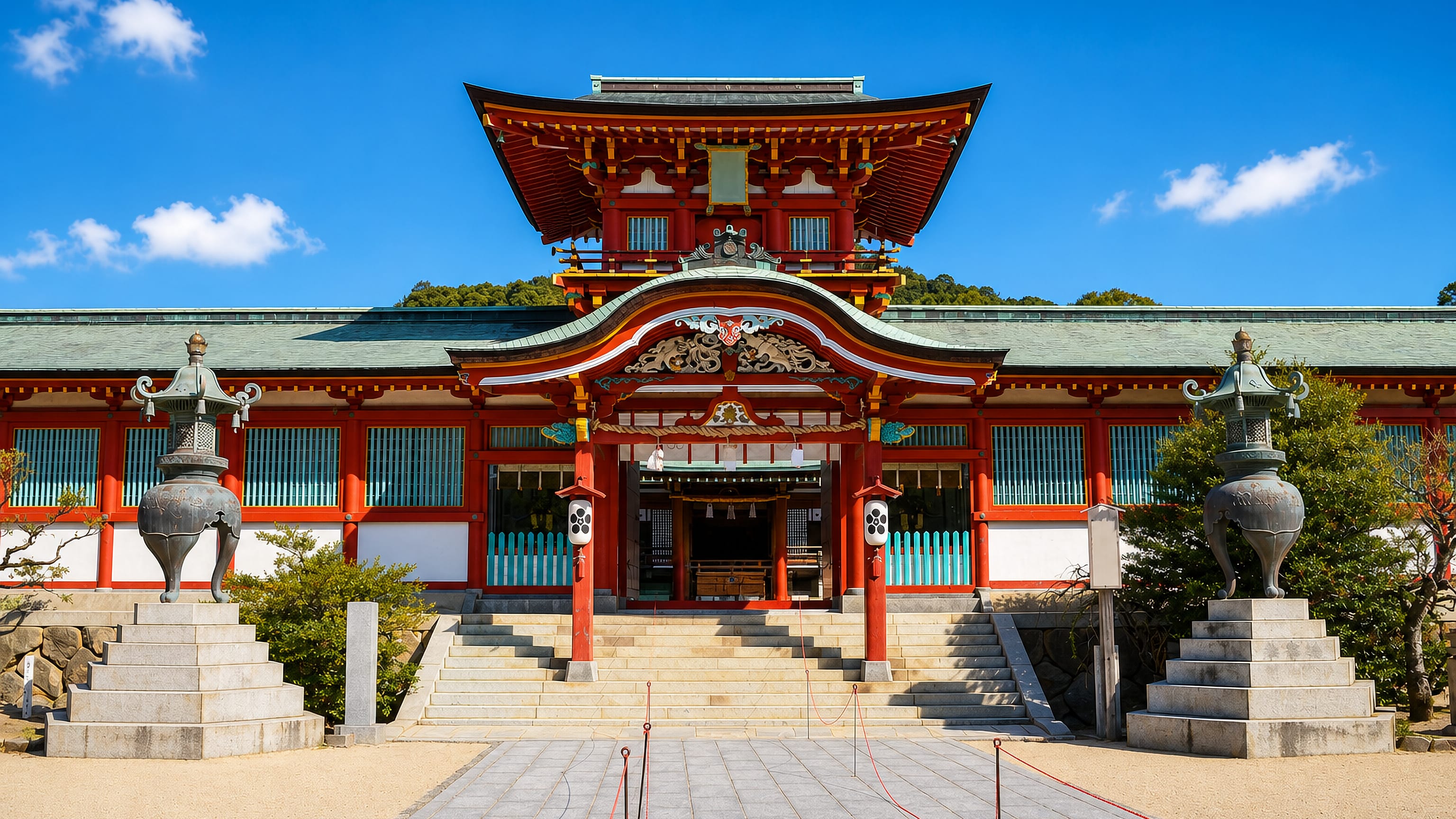
Japan · Yamaguchi
Where to Stay in Hōfu, Yamaguchi
A Yamaguchi Prefecture city named for its old role as the capital of Suō Province, with the Mōri Museum and Hōfu Tenmangū at its centre.
Hotel links are affiliate links: booking through them may earn us a commission, at no extra cost to you. It never affects how places are ranked. How this works


Where to stay in Hōfu
How the choice of base plays out on the ground.
Hōfu Tenmangū sets the first option. The shrine and its museum sit at the historic core, and a bed near them puts Hofu City Cultural Properties and Local History Museum and the Santōka Furusato Museum inside the same walk. Old government ground is the second.
The Remains of Suō Kokuga mark where Suō Province ran its administration, and rooms on that side suit a visit built around what survives of the provincial capital rather than around the shrine. Both lie within one city. The Mōri Museum is the heavyweight, and a stay chosen for it will also serve Hōfu Science Museum "Solar" without much extra travel.
The Santōka Furusato Museum and Hofu City Cultural Properties and Local History Museum are small enough to fold into a single morning, which argues for a central bed and an unhurried start. Families lean toward the science museum. Hōfu is not large, so the practical difference between one base and another comes down to a few minutes rather than a change of character, and every collection stays reachable. Yamaguchi Prefecture surrounds the city with alternatives, but sleeping inside Hōfu is what makes an early start at the shrine possible.
If you want the provincial history, take a room near the Kokuga ground. Nights are quiet either way.
Find hotels in Hōfu
Direct booking searches for these neighbourhoods.
Around Hōfu Tenmangū
The historic core, walkable to Hofu City Cultural Properties and Local History Museum and the Santōka Furusato MuseumFind hotels in Around Hōfu TenmangūVisits tracing the provincial capital at the Remains of Suō KokugaThe Suō Kokuga side
Old government ground, set apart from the shrine traffic of Hōfu. Rooms are few around here — worth securing early.Find hotels in The Suō Kokuga sideCollection days pairing the Mōri Museum with Hōfu Science Museum "Solar"Near the Mōri Museum
The museum end of the city, easiest for a family with a full dayFind hotels in Near the Mōri MuseumHotel links are affiliate links: booking through them may earn us a commission, at no extra cost to you. It never affects how places are ranked. How this works
About Hōfu
What is Hōfu known for?
Hōfu carries the name of an old provincial capital, since Suō Province governed from here and the Remains of Suō Kokuga still mark where that administration stood. The shrine is the other pull. Hōfu Tenmangū keeps a museum of its own, while the Mōri Museum, the Santōka Furusato Museum and Hofu City Cultural Properties and Local History Museum divide the rest of the city's collections.
Science gets a building too. Hōfu Science Museum "Solar" is the newest entry on that list.
What are the main landmarks in Hōfu?
The Mōri Museum leads. Its collection is the city's largest draw, and the Hōfu Tenmangū Shrine Museum sits close behind, tied to the shrine that brings the city much of its traffic. History has a second address.
The Remains of Suō Kokuga preserve the administrative ground of Suō Province and Hofu City Cultural Properties and Local History Museum holds the local record, while the Santōka Furusato Museum and Hōfu Science Museum "Solar" round out a small but varied set.
What is the history of Hōfu?
The name records an office. Hōfu is called what it is because the provincial capital of Suō Province stood here, and the Remains of Suō Kokuga are the physical trace of that administration. Suo Province is the province in question.
Its government seat gave the surrounding country a centre long before any modern municipality existed, and the memory of that role is the city's oldest continuous claim. The old office name stuck. The shrine follows the same long line.
Hōfu Tenmangū keeps a museum of its own, which sets its records alongside the civic ones held at Hofu City Cultural Properties and Local History Museum. Later families left their own archive. The Mōri Museum carries a collection under that name, and it remains the largest single body of material the city holds.
Modern Hōfu is dated to 1936. That is when the city took municipal form, centuries after the provincial capital and the shrine had already fixed the shape of the place, and the two eras still divide its landmarks between them. The Santōka Furusato Museum belongs to the newer layer.
Hōfu Science Museum "Solar" is newer still, a late addition to a city whose other institutions look backwards.
Where is Hōfu?
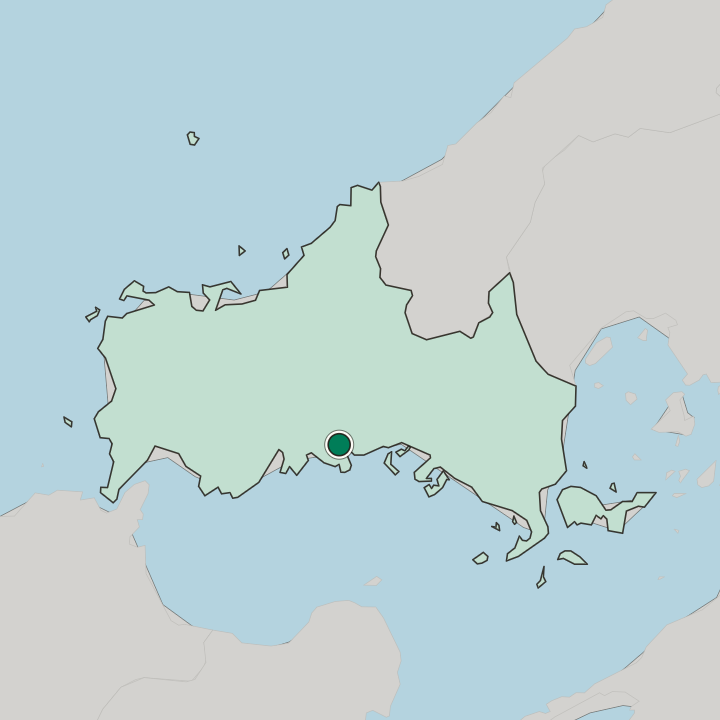
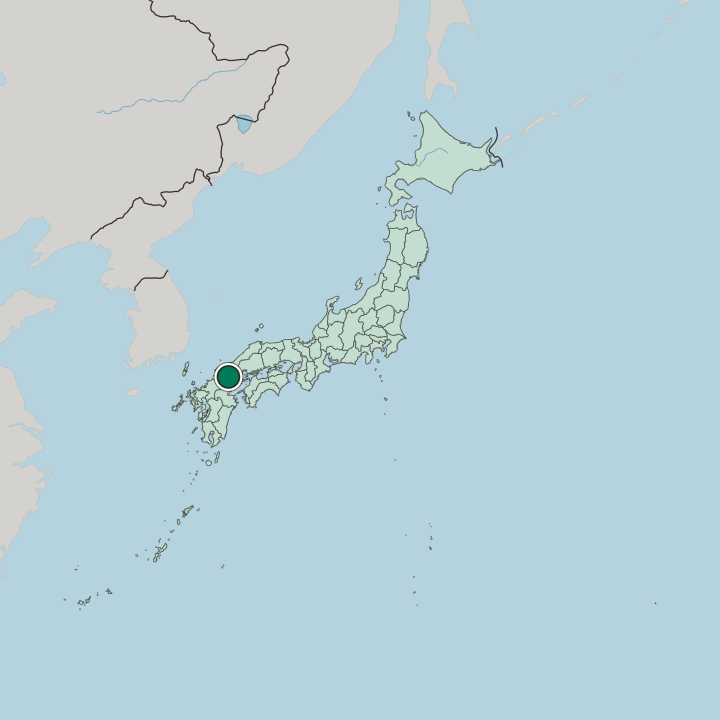
Hōfu occupies a stretch of Yamaguchi Prefecture that once answered to Suō Province, and its landmarks cluster tightly rather than spreading across the whole municipal area. Walking covers the central sights. Hōfu Tenmangū, Hofu City Cultural Properties and Local History Museum and the Santōka Furusato Museum lie close together, with the Remains of Suō Kokuga marking a separate patch of ground.
Yamaguchi Prefecture takes over past the boundary.
What is the climate of Hōfu?
The subtropical band gives Hōfu a long warm season. Warmth holds through the middle of the year, which is when the shaded ground at Hōfu Tenmangū and the indoor rooms of the Mōri Museum earn their keep. Winter is the shorter half.
Hōfu Science Museum "Solar", Hofu City Cultural Properties and Local History Museum and the Santōka Furusato Museum absorb whatever the colder months bring.
How do you get to Hōfu?
Hōfu Tenmangū is the orientation point. Most of what a visitor wants, from the shrine museum to Hofu City Cultural Properties and Local History Museum and the Santōka Furusato Museum, lies within the same compact quarter, so moving on foot from the centre is the normal pattern. Two sites sit further out.
The Remains of Suō Kokuga and Hōfu Science Museum "Solar" need a short ride, and the other cities of Yamaguchi Prefecture are close enough to make Hōfu a day trip.
Common questions
What is the best area to stay in Hōfu?
Around Hōfu Tenmangū: Early mornings at Hōfu Tenmangū and its shrine museum. The Suō Kokuga side: Visits tracing the provincial capital at the Remains of Suō Kokuga. Near the Mōri Museum: Collection days pairing the Mōri Museum with Hōfu Science Museum "Solar".
Good for
More cities in Yamaguchi
Updated September 2026