Japan
Yamaguchi, Japan — Towns & Travel Guide
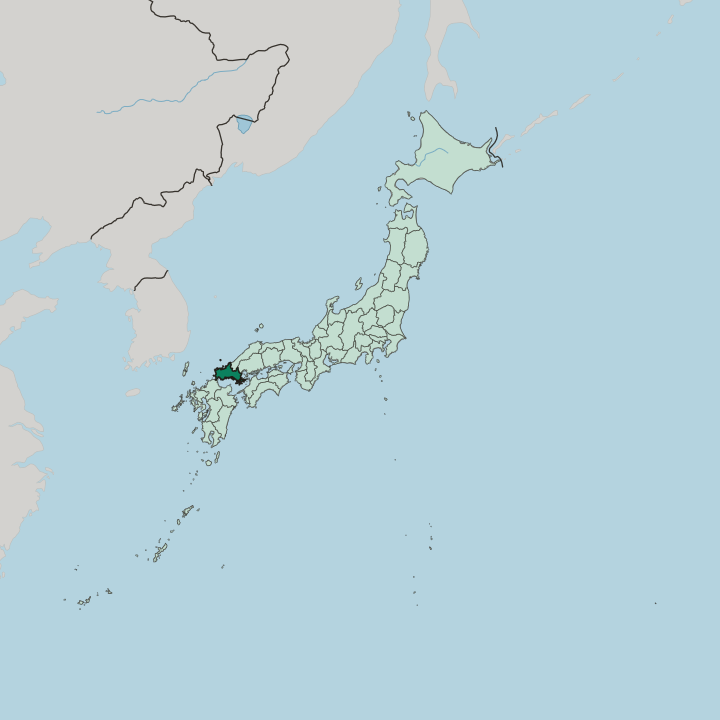
Yamaguchi Prefecture caps the western tip of Honshu, framed by the Seto Inland Sea, the Sea of Japan, and the narrow strait to Kyushu.
Hotel links are affiliate links: booking through them may earn us a commission, at no extra cost to you. It never affects how places are ranked. How this works


Towns & cities in Yamaguchi
Pick a town or city — each links to where to stay.

 Japan
Japan
Shimonoseki
Shimonoseki is the westernmost city on Honshu, the largest in Yamaguchi Prefecture, nicknamed the home of fugu for its pufferfish catch.Where to stay →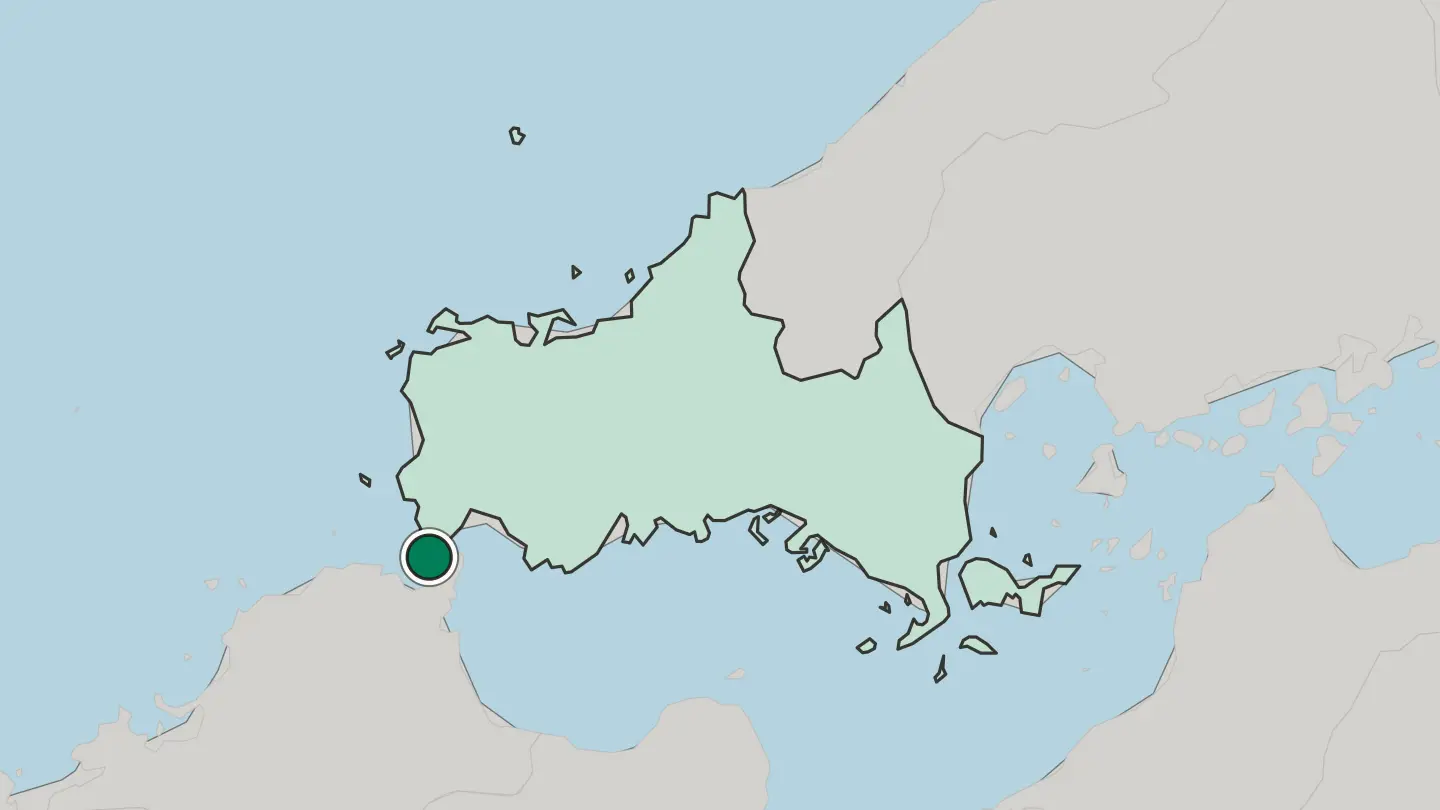
 Japan
Japan
Yamaguchi
Yamaguchi is the capital of Yamaguchi Prefecture in Japan, a medieval town on Honshu once called Kyoto in the West and dense with museums.Where to stay →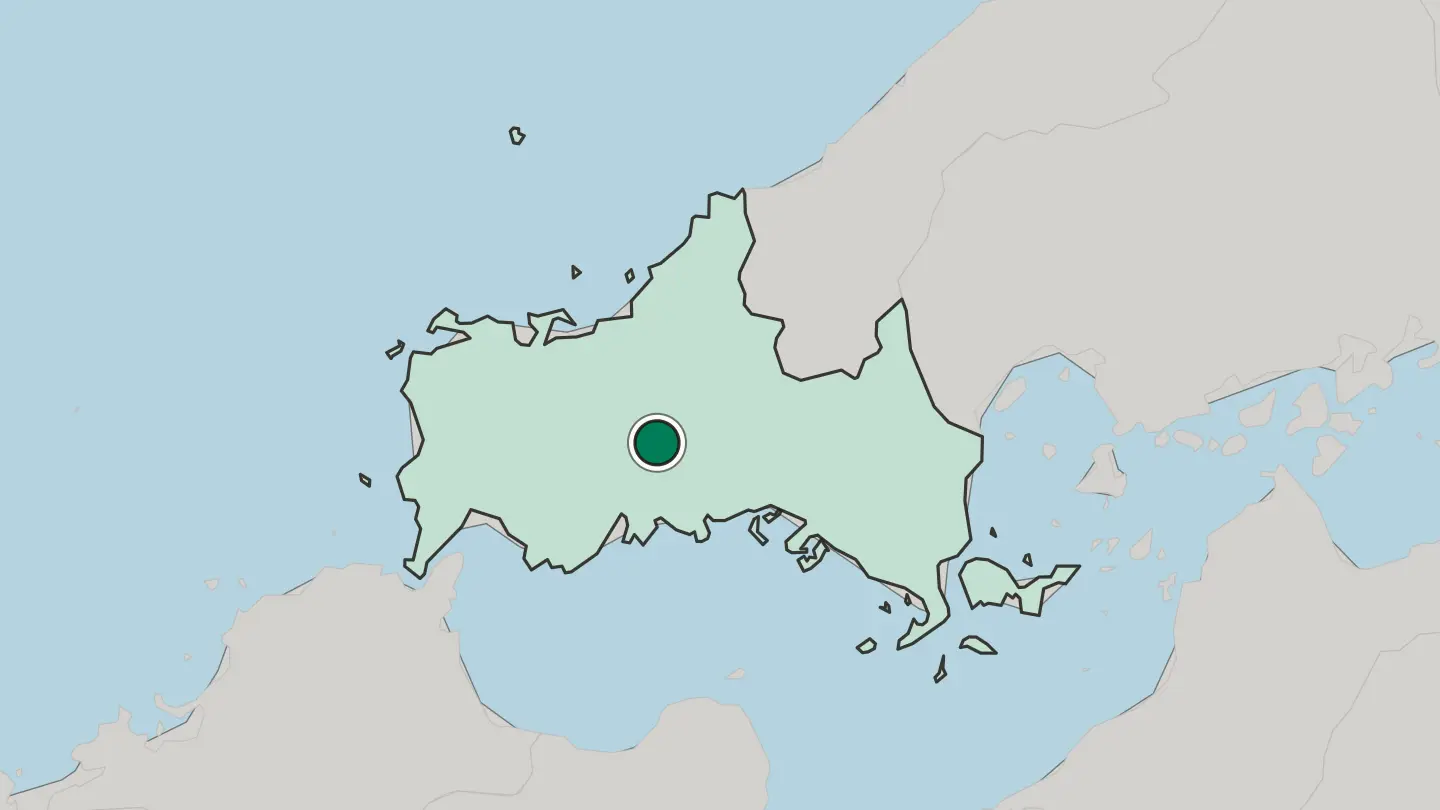 Japan
Japan
Ube
Ube is a city of Yamaguchi Prefecture in Japan, gathered around Lake Tokiwa and the park and museum that carry the Tokiwa name.Where to stay →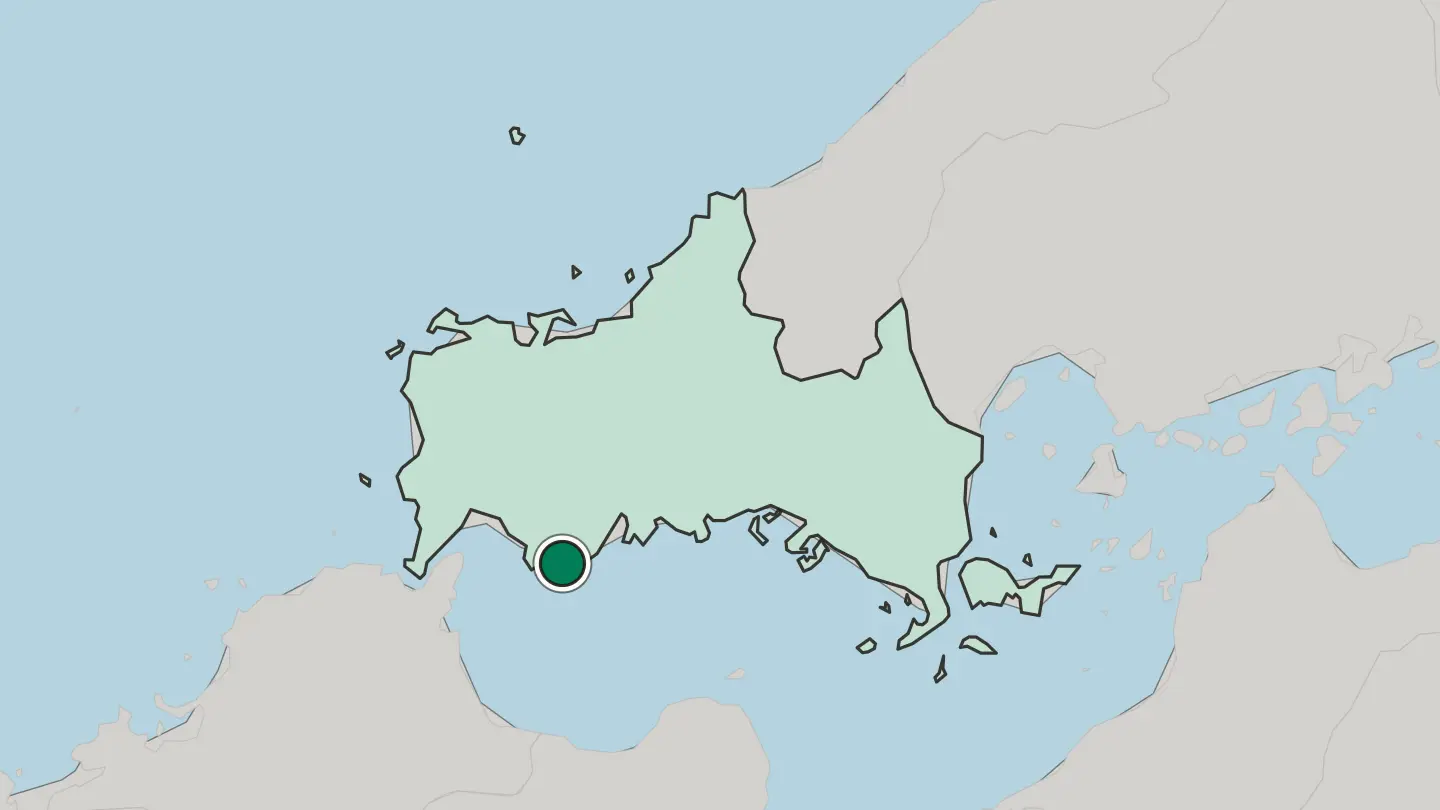 Japan
Japan
Shūnan
Shūnan is a city of Yamaguchi Prefecture in Japan, holding Tokuyama Zoo, the Kaiten Memorial Museum and a museum of art and history.Where to stay →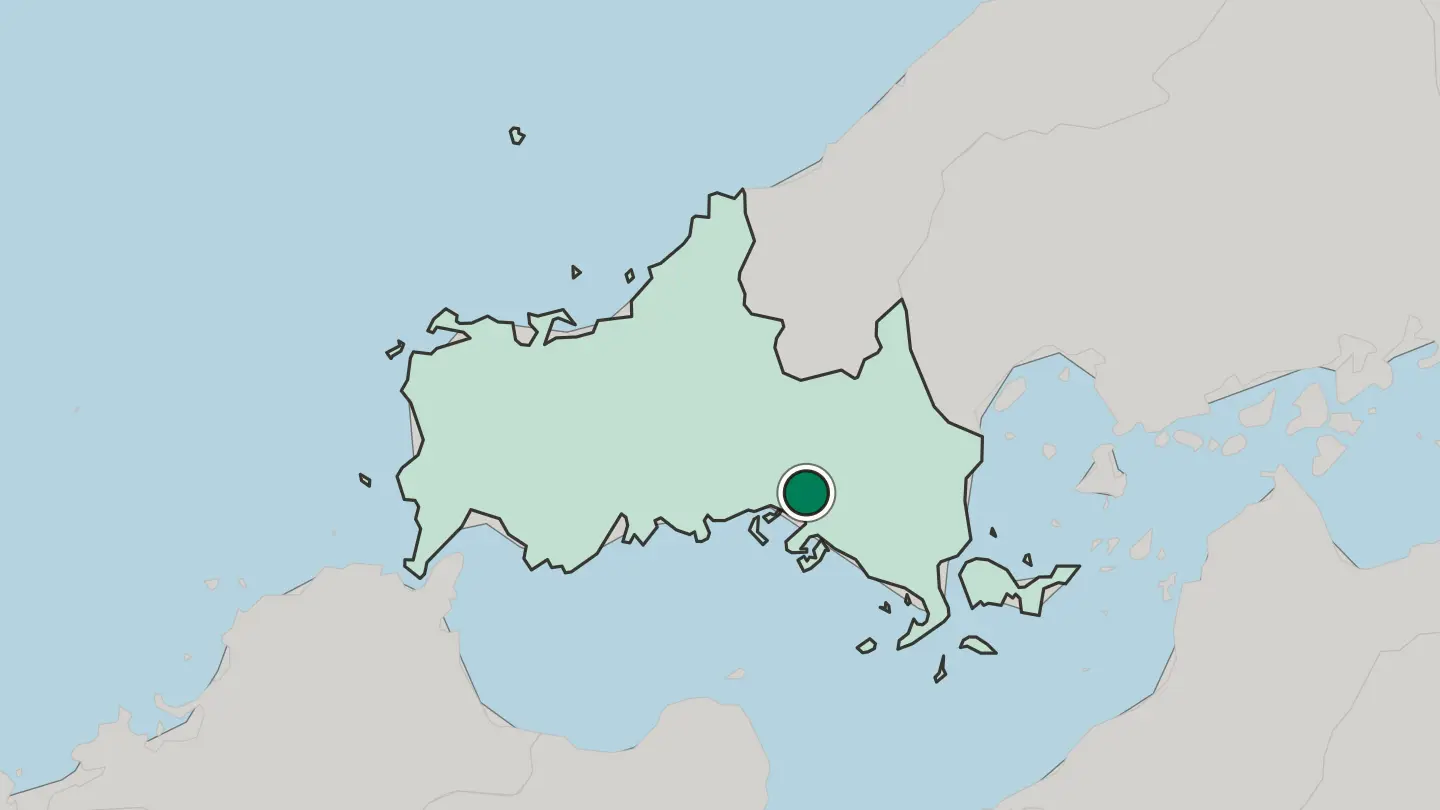
 Japan
Japan
Iwakuni
Iwakuni is a castle town in Yamaguchi Prefecture marked by two military eras, and known above all for the Kintai Bridge.Where to stay →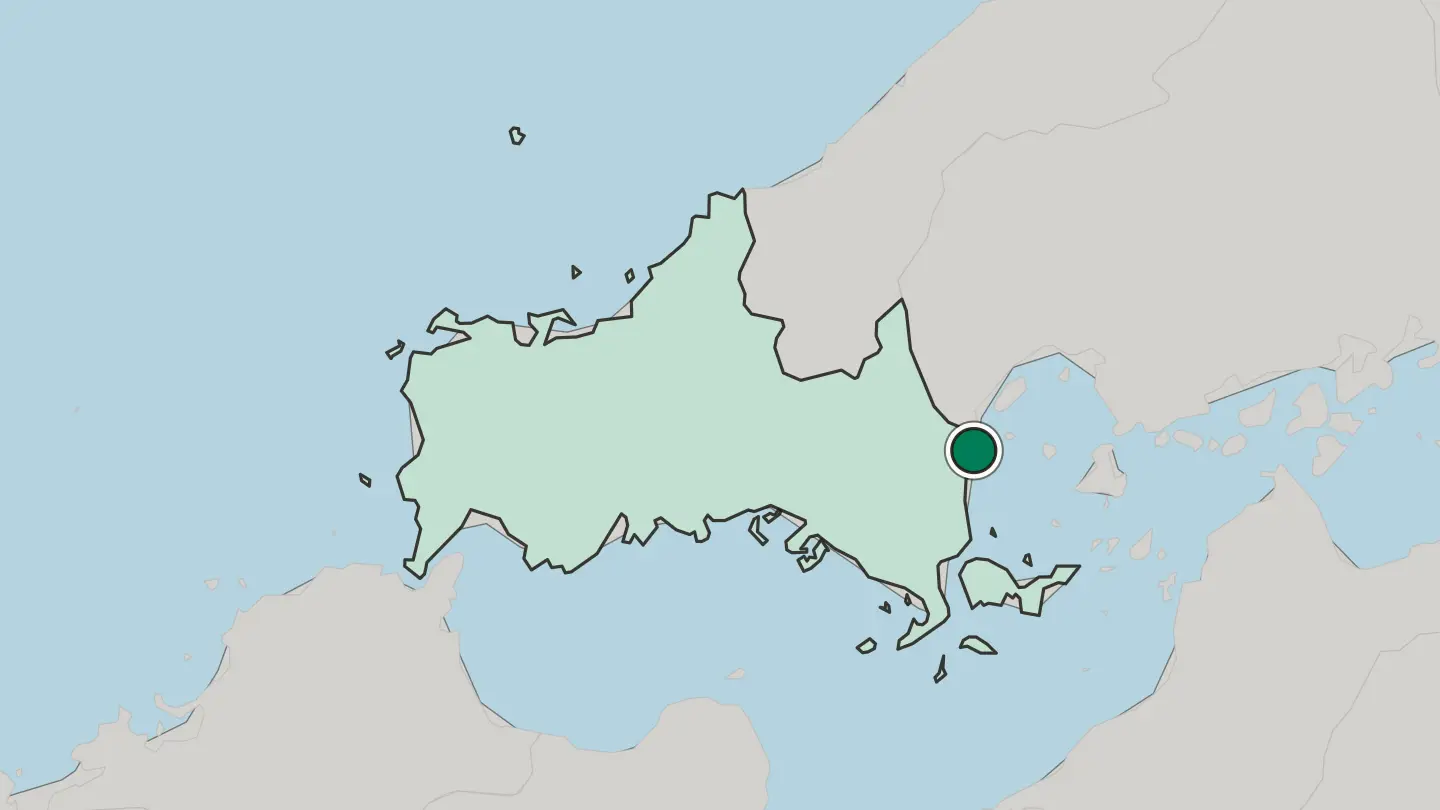
 Japan
Japan
Hōfu
A Yamaguchi Prefecture city named for its old role as the capital of Suō Province, with the Mōri Museum and Hōfu Tenmangū at its centre.Where to stay →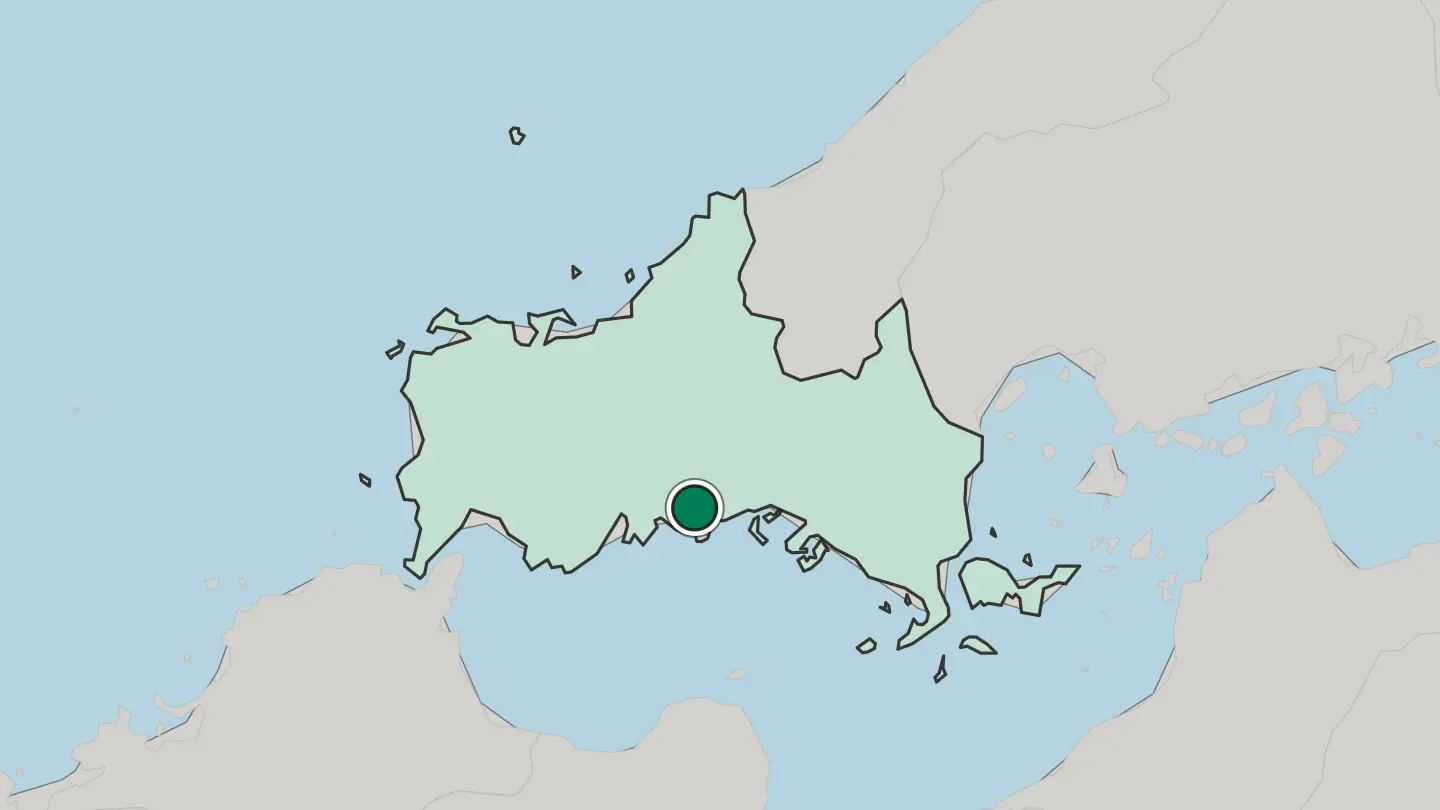 Japan
Japan
Tokuyama
Tokuyama is a former city of Yamaguchi in Japan, a name kept by the Tokuyama Zoo and by the Shūnan City Museum of Art and History.Where to stay →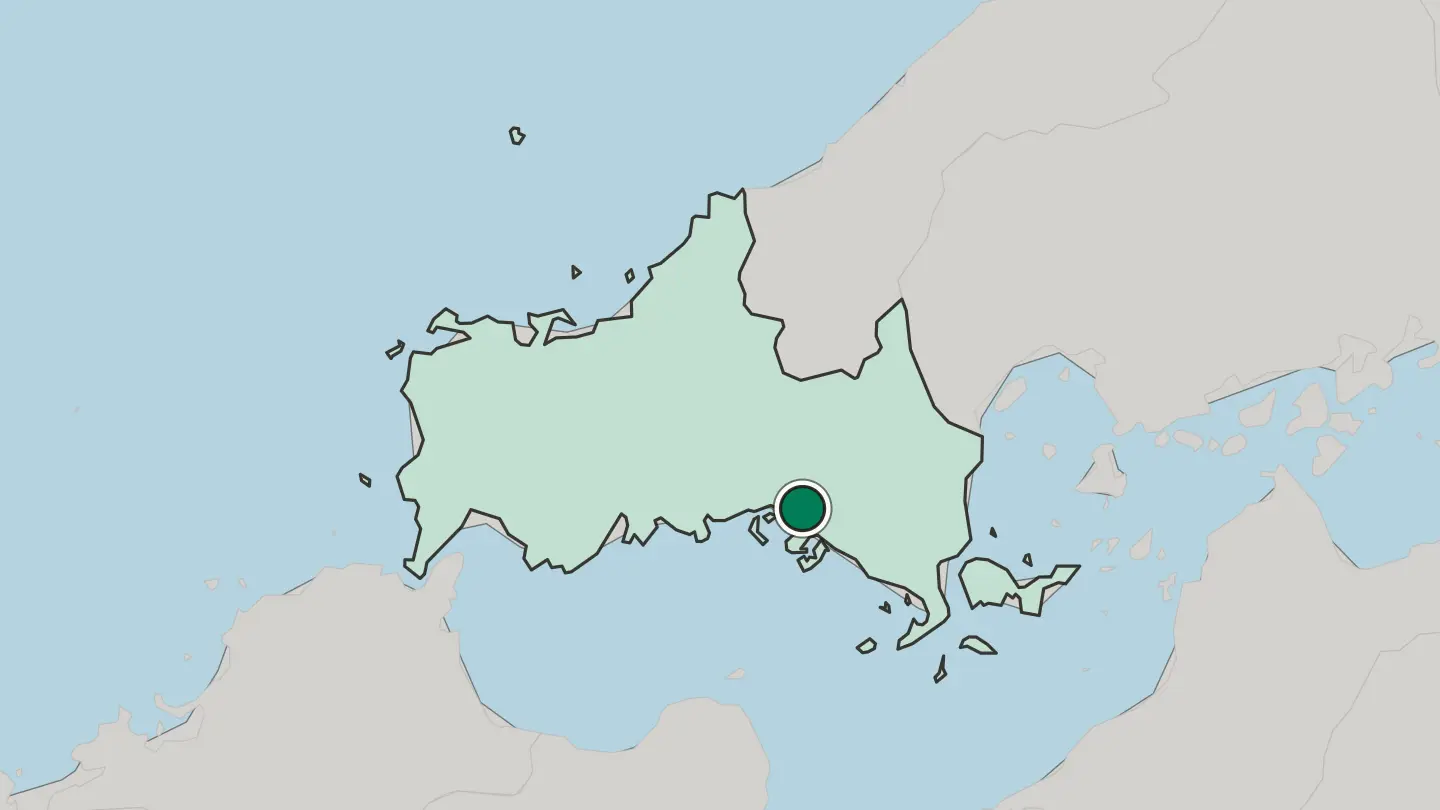
Hotel links are affiliate links: booking through them may earn us a commission, at no extra cost to you. It never affects how places are ranked. How this works
About Yamaguchi
Two names sit above the rest.
What is Yamaguchi known for?
Iwakuni's Kintai Bridge arcs across the Nishiki in five wooden spans, while Yamaguchi city keeps the five-storied pagoda of Rurikō-ji, raised in 1442 and counted among Japan's three finest. Inland rises Akiyoshidai, the country's largest karst plateau, with the Akiyoshidō cave running for kilometres beneath it. Shimonoseki built its name on fugu, the pufferfish landed at its Karato market.
Hagi turns out its own crackled pottery and keeps the castle-town lanes of the old Chōshū Domain.
Where is Yamaguchi?
Yamaguchi Prefecture forms the western cap of Honshu, the last stretch of Japan's main island before the land runs out. It belongs to the Chūgoku region. Two seas press on it.
The Seto Inland Sea laps the southern shore, sheltered and dotted with small islands, while the open Sea of Japan takes the northern and western coasts, rougher and more exposed. To the east the prefecture meets Hiroshima Prefecture, and along its northern flank it borders Shimane Prefecture. Nowhere here is the sea far off.
Beyond the coasts the land climbs into low, folded mountains that fill the interior and push most towns onto the plains and river mouths. The Nishiki River gathers in these hills before reaching the sea at Iwakuni. Inland, near the town of Mine, water has hollowed the limestone of Akiyoshidai into Japan's broadest karst plateau, its grassland studded with pale outcrops and undercut by the Akiyoshidō cave.
The prefecture ends at its southwestern corner. There the Kanmon Straits pinch to a narrow channel, and only that thread of water separates Honshu from the island of Kyushu.
What is Yamaguchi like?
Yamaguchi wears its old title lightly. Under the Ōuchi lords the capital grew into a rival of Kyoto, and people still call the city the Kyoto of the West. That inheritance is visible.
The Ōuchi laid out their town on the model of the imperial capital, endowed temples such as Rurikō-ji, and drew artists west, among them the painter-monk Sesshū, whose Zen garden survives at Jōeiji. Yamaguchi holds its crafts close and long-practised. Potters in Hagi have thrown their soft, crackle-glazed Hagi ware for four centuries, a tea-ware prized across Japan.
Food carries its own weight. Winter tables in Shimonoseki turn to fugu, the pufferfish that made the port's name, prepared by licensed hands and sliced thin. The prefecture also thinks of itself as a cradle of modern Japan.
In the old Chōshū Domain, the reformers schooled at Yoshida Shōin's academy in Hagi helped topple the shogunate and drive the Meiji Restoration. Belief keeps its own landmarks. Above the Sea of Japan at Nagato, the vermilion torii of the Motonosumi Inari shrine step down a headland to the water.
None of it feels like a museum piece. Pottery kilns, hot-spring towns, and working fishing ports carry the same traditions into ordinary weeks.
What is the history of Yamaguchi?
Power here has old roots. The Ōuchi clan ruled from Yamaguchi through the 14th and 15th centuries until a retainer's revolt destroyed them in 1551. The Mōri clan took the west next, and after their defeat at Sekigahara in 1600 the Tokugawa shogunate pared their lands down to the Chōshū Domain, covering the old provinces of Nagato and Suō.
Chōshū nursed a long grievance. Its samurai became the sharpest edge of the movement that ended the shogunate and restored the emperor, and the two provinces were merged into Yamaguchi Prefecture in 1871. The domain's alumni, Itō Hirobumi among them, went on to shape the new government.
What is the climate of Yamaguchi?
Two coasts, two weathers. The Seto Inland Sea shelters the southern side, giving it the mild, low-rain pattern shared across the Setouchi, while the Sea of Japan coast to the north runs wetter and sees real snow in winter, the southern tail of Honshu's snow belt. Summer brings the tsuyu rains in June, then a run of heat and the odd late-summer typhoon off the Pacific.
Winter is the season for fugu, when cold water firms the fish and the Shimonoseki markets fill. Spring and autumn stay dry and mild.
How do you get to Yamaguchi?
Most visitors ride the rails in. The Sanyō Shinkansen threads the southern side of the prefecture, stopping at Shin-Yamaguchi for the capital and at Shin-Shimonoseki near the tip, both a couple of hours from Osaka. Flying works too.
Yamaguchi Ube Airport links the coast with Tokyo, and Iwakuni holds a second airport in the east. At the far southwest the Kanmon Straits are crossed by road tunnel and bridge, putting Kyushu and its city of Kitakyushu minutes away. From there the whole of southern Japan opens up.
Good for
More regions in Japan
Updated September 2026