Morocco · Fès-Meknès
Where to Stay in Guercif, Fès-Meknès
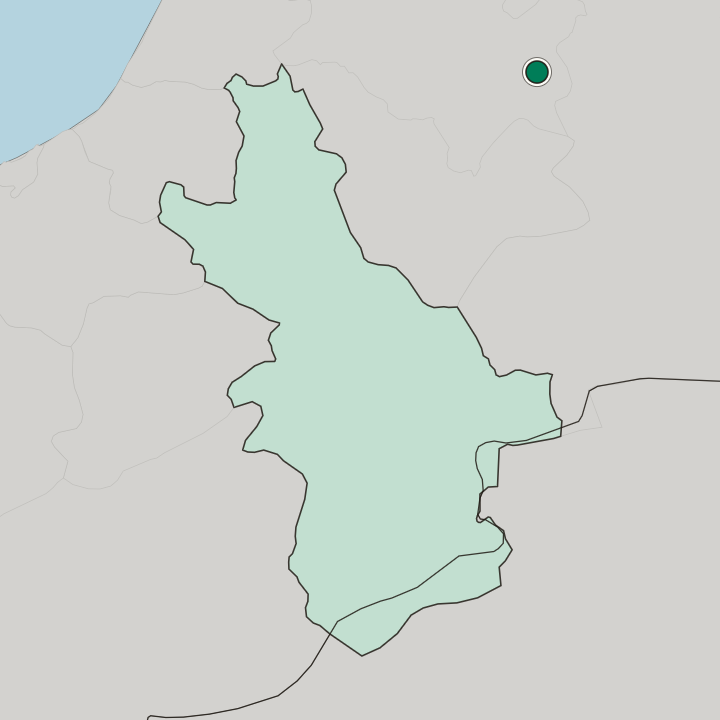
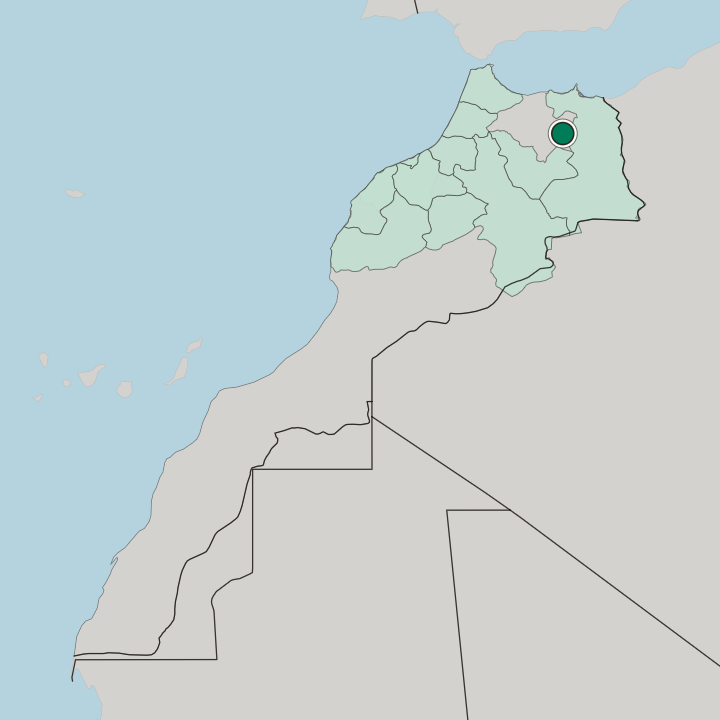
Guercif is the capital of Guercif Province, an olive town of the Oriental region at the junction of the Moulouya and the Mellou.
Hotel links are affiliate links: booking through them may earn us a commission, at no extra cost to you. It never affects how places are ranked. How this works


Where to stay in Guercif
How the choice of base plays out on the ground.
Guercif keeps its rooms where the traffic stops. The centre holds the provincial offices, the Souika, and the café that carries Allal ben Abdallah's name, and a short stay needs nothing that is not inside those few streets. Tuesday fills them first.
Most are taken by people with business at Guercif Province, by drivers breaking the run between Casablanca and Oujda, and by farming families come to sell livestock at the souk. Olive season tightens supply. Between the harvest and the Olive Festival the presses run flat out and seasonal labour arrives, so a room found late in autumn takes some asking.
The station side suits an arrival by rail. Ten daily services stop here for Oujda, Casablanca, Tangier, and the cities beyond, so a bed near the platforms spares a walk across town after dark. Drivers do better on the eastern approach.
The road toward Taourirt has space to park and puts the Oujda-Rabat motorway about eighteen kilometres off, which is the case for taking a room out there rather than in the middle of Guercif. The Souika then sits a drive away. That trade works for an early start into Guercif Province or a run down the National Road No. 15 toward Missour, and it works less well for anyone who came to see Kehf Sghir and walk the market streets.
Find hotels in Guercif
Direct booking searches for these neighbourhoods.
Guercif centre
The provincial offices, the Souika and the café renamed for Allal ben Abdallah stand within one walk, which is the whole case for a central room in Guercif.Find hotels in Guercif centreRail arrivals off the Oujda and Casablanca servicesGuercif station side
Beds near the platforms suit the ten daily trains calling at Guercif, and leave the Souika and the provincial offices a few minutes' walk rather than a taxi ride. Rooms are few around here — worth securing early.Find hotels in Guercif station sideDrivers bound for the Oujda-Rabat motorway or the National Road No. 15Taourirt approach
Rooms on the eastern edge of Guercif keep a car close to the Taourirt road and the motorway beyond, at the price of putting Kehf Sghir and the Souika out of walking reach. Lodging is scarce in this area; reserve in advance.Find hotels in Taourirt approachHotel links are affiliate links: booking through them may earn us a commission, at no extra cost to you. It never affects how places are ranked. How this works
About Guercif
Olives are the answer here.
What is Guercif known for?
Guercif ranks among Morocco's largest olive-producing cities, and the harvest carries its own annual Olive Festival, timed so that the presses and the celebrations run together. Tuesday belongs to the weekly souk. Livestock, vegetables, and fruit change hands there, while the permanent Souika market keeps clothes, furniture, and second-hand tools moving through the rest of the week.
Leather, ceramics, carpets, and tbourida harness stay handmade.
What are the main landmarks in Guercif?
Kehf Sghir is the catalogued site. Around it the town offers a different kind of sightseeing: the Souika trading through the week, the Tuesday souk with its livestock pens, and the café in the centre that took Allal ben Abdallah's name from the dyer who once rented it. Guercif Province looks to its hills.
The provincial authorities count mountain walking, heritage sites, and folklore performance among what the country outside the town can give a visitor.
What is the history of Guercif?
The name is Amazigh and it describes the ground. In Tamazight "jar" means between and "asif" a river, and Guercif carries the pair because its centre stands close to the confluence of the Moulouya and the Mellou. Tifinagh writes it ⴳⴰⵔⵙⵉⴼ.
Arabic writes it جرسيف, and both forms stayed in use as the settlement at that crossing grew from a market for the surrounding tribes into the administrative town of the plain. The Hawara of Ouled Rahou gave Guercif its most-remembered son. Allal ben Abdallah was born here, worked as a dyer, and rented a café in the centre facing the municipality, called al-Mawaid before a later owner put his name over the door.
Colonial harassment pushed him to Rabat. He settled in the Akkari quarter, built ties among the traders and nationalists of the capital, and on Friday 11 September 1953 drove a grey Ford at the procession of Sultan Mohammed ben Arafa as it approached the Ahl Fas mosque, a knife in his hand. An officer threw himself across the car.
Secret police fired eight shots, and the killing did what the attempt itself had not: strikes against the French protectorate multiplied, the Liberation Army rose in the north of the country on 1 October 1955, and the revolt held until Mohammed V returned from exile. A plaque was unveiled where he fell. Cheikh al-Arab later killed the policeman accused of his death, and in 2012 a frigate carrying the name Allal Ben Abdellah entered service with the Royal Moroccan Navy.
Administrative rank came late to the town. Guercif Province was created in 2010, and the built-up area has spread outward from the provincial offices since.
Where is Guercif?
Three rivers do the work here. The Moulouya gathers the Amsoun and the Mellou, two of its largest tributaries, close to the town, and it is that junction of water and road that fixed Guercif where it stands. Provinces ring it on three sides.
Nador and Driouch lie north, Taourirt sits fifty-four kilometres east, Boulemane closes the southern edge, and Taza is sixty-five kilometres west.
What is the climate of Guercif?
The farming year sets the calendar. Olive trees carry the plain around Guercif through a long dry stretch, and the harvest that follows brings the presses and the Olive Festival into the same few weeks. Commerce follows the warm months.
Trade across Guercif Province lifts through spring and summer, when the souks pull buyers in from the surrounding country, and the Moulouya matters more to what grows here than the rain does. This is subtropical ground.
How do you get to Guercif?
Ten trains a day call at Guercif. They run for Oujda in one direction and Casablanca, Tangier, and the western cities in the other, which makes rail the simplest way in. The bus station covers the provinces.
Grands taxis work from their own yard, the Oujda-Rabat motorway passes roughly eighteen kilometres out, and the National Road No. 15 carries traffic south toward Missour. Local buses and taxis handle the rest.
Common questions
What is the best area to stay in Guercif?
Guercif centre: Business at the provincial offices, with the Souika and the Tuesday souk on foot. Guercif station side: Rail arrivals off the Oujda and Casablanca services. Taourirt approach: Drivers bound for the Oujda-Rabat motorway or the National Road No. 15.
More cities in Fès-Meknès
Updated September 2026