Morocco
Fès-Meknès, Morocco — Towns & Travel Guide
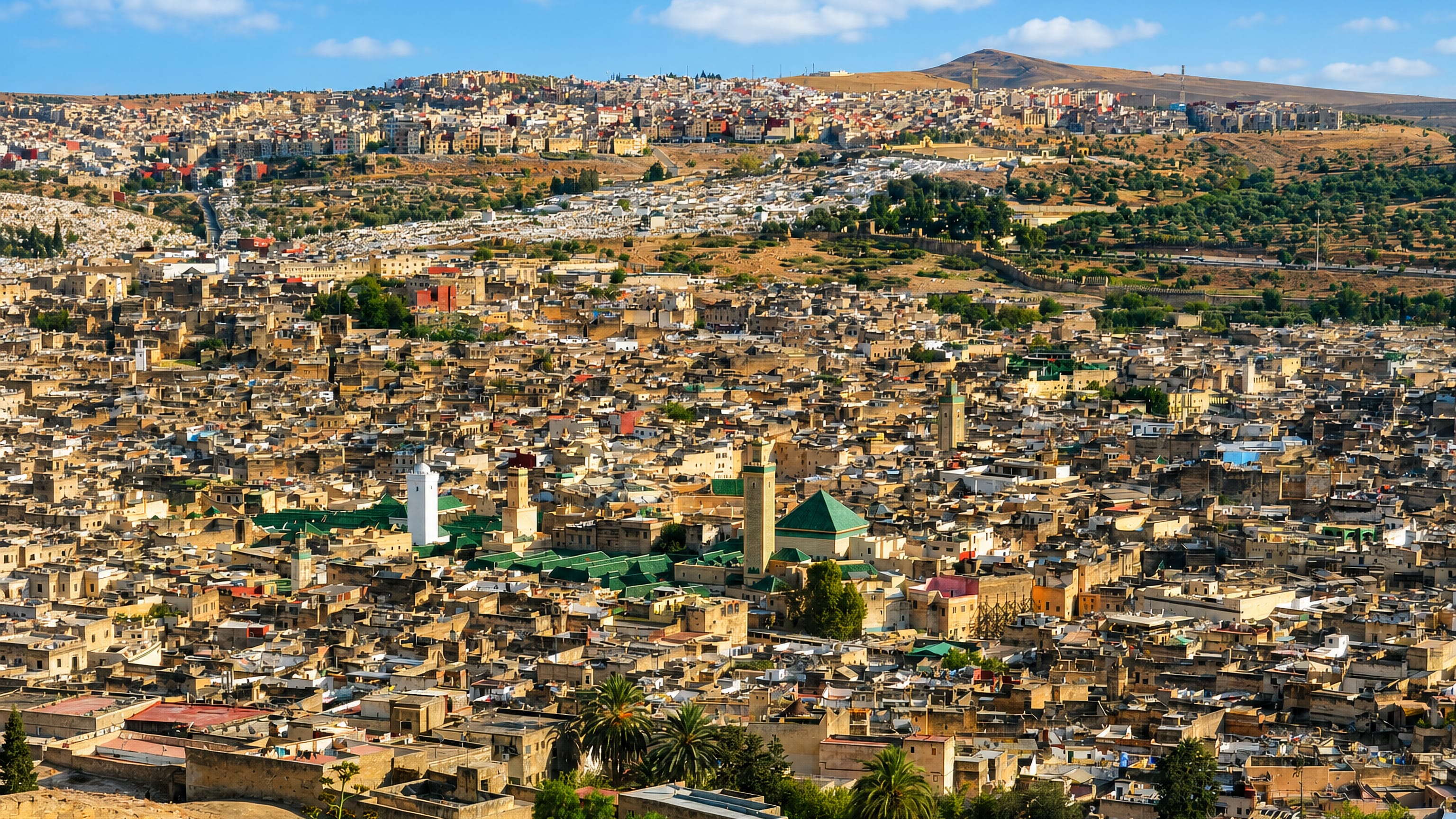
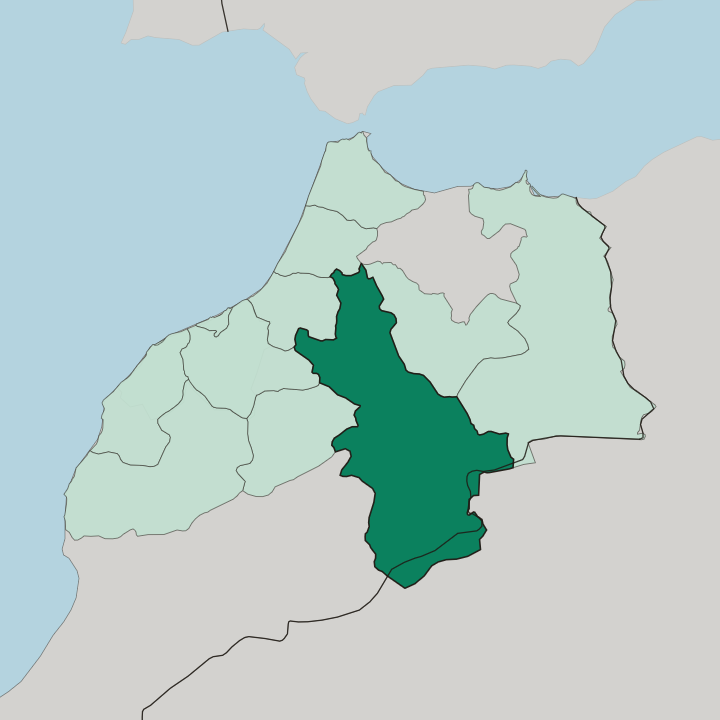
Fès-Meknès holds two of Morocco's imperial cities on the Saïss plain, between the Rif and the Middle Atlas.
Hotel links are affiliate links: booking through them may earn us a commission, at no extra cost to you. It never affects how places are ranked. How this works


Towns & cities in Fès-Meknès
Pick a town or city — each links to where to stay.
 Morocco
Fes
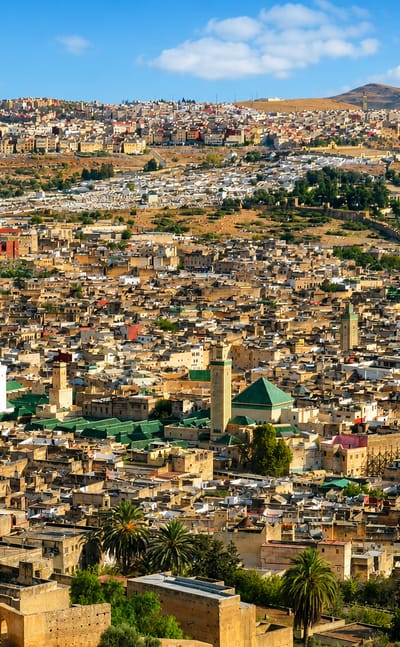
Fes is a walled inland city in Fès-Meknès, Morocco, ringed by hills on the Fez River and known for Dar Batha.Where to stay →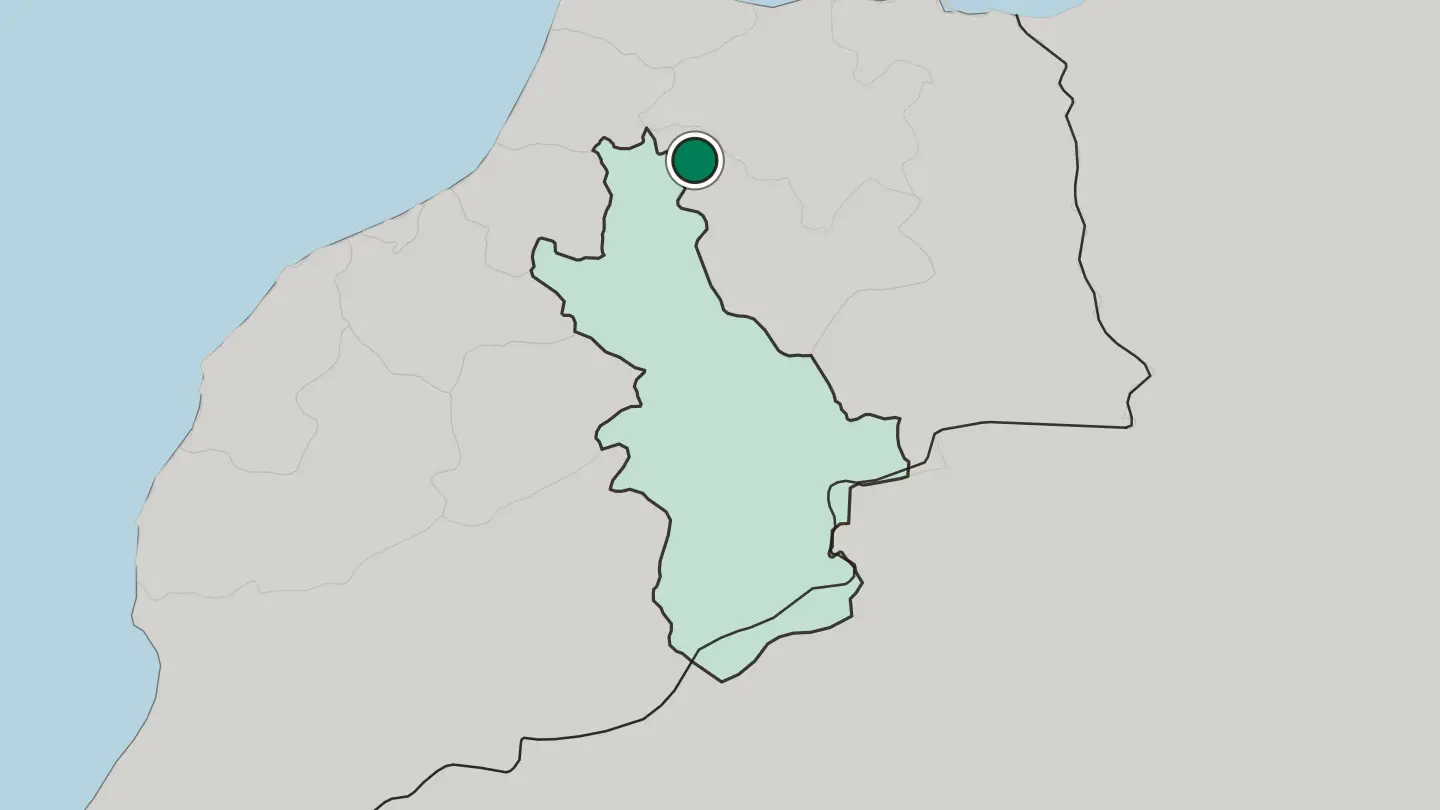
 Morocco
Meknes
Meknes is one of the four imperial cities of Morocco, a walled town of grand gates and palaces raised by Sultan Moulay Ismail behind the great Bab Mansour.Where to stay →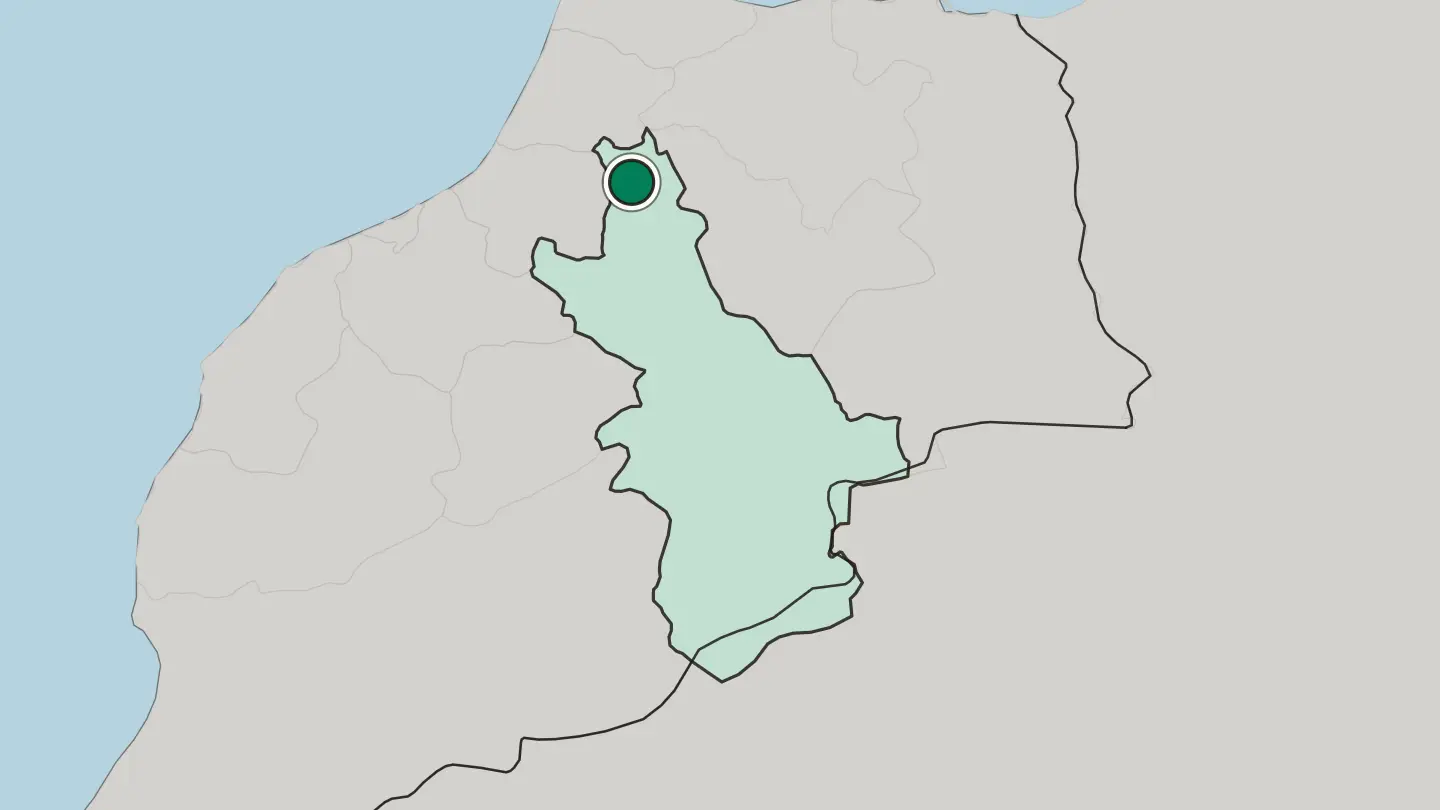
 Morocco
Taza
Taza is a walled hill town in northeastern Morocco, guarding the mountain gap between the Rif and the Middle Atlas.Where to stay →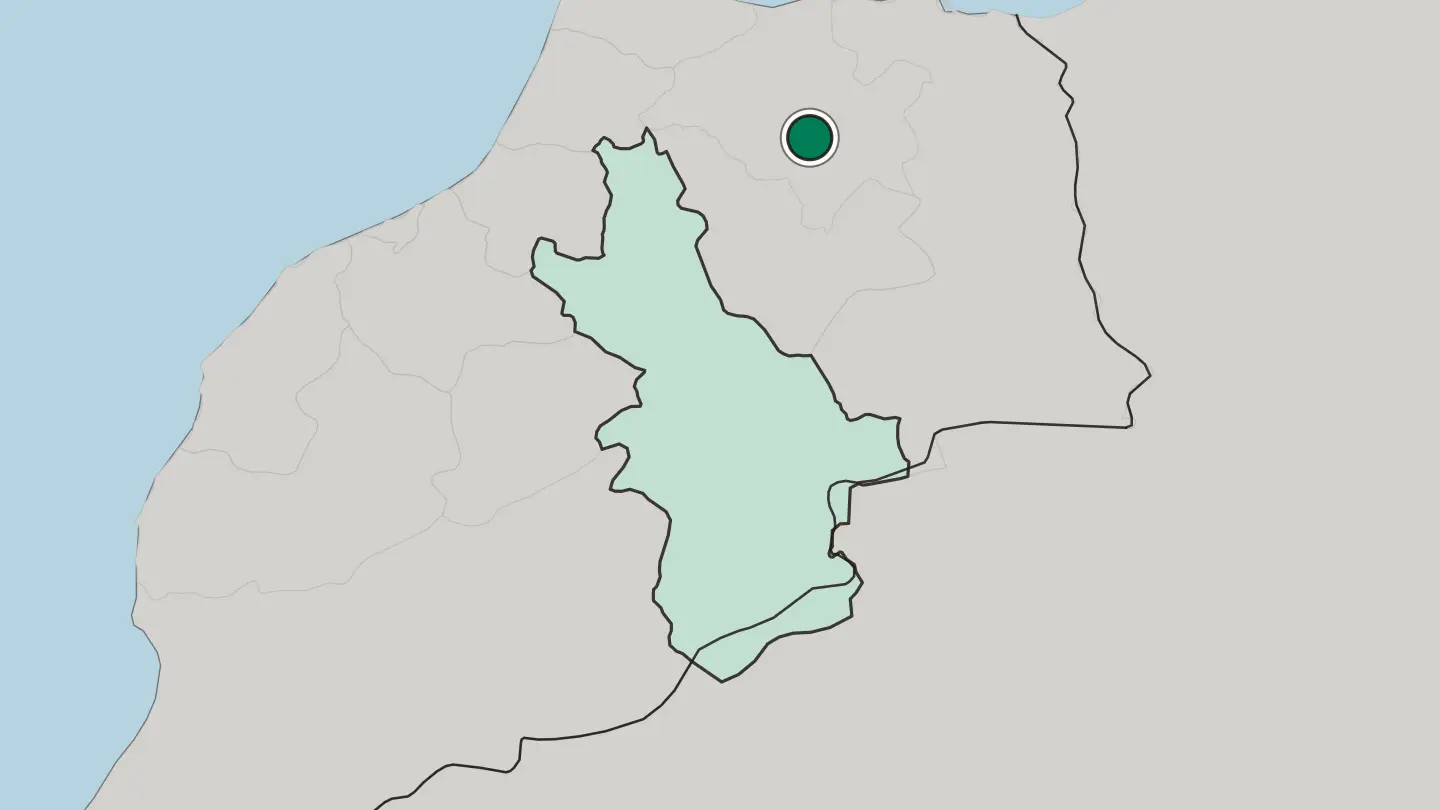 Morocco
Guercif
Guercif is the capital of Guercif Province, an olive town of the Oriental region at the junction of the Moulouya and the Mellou.Where to stay →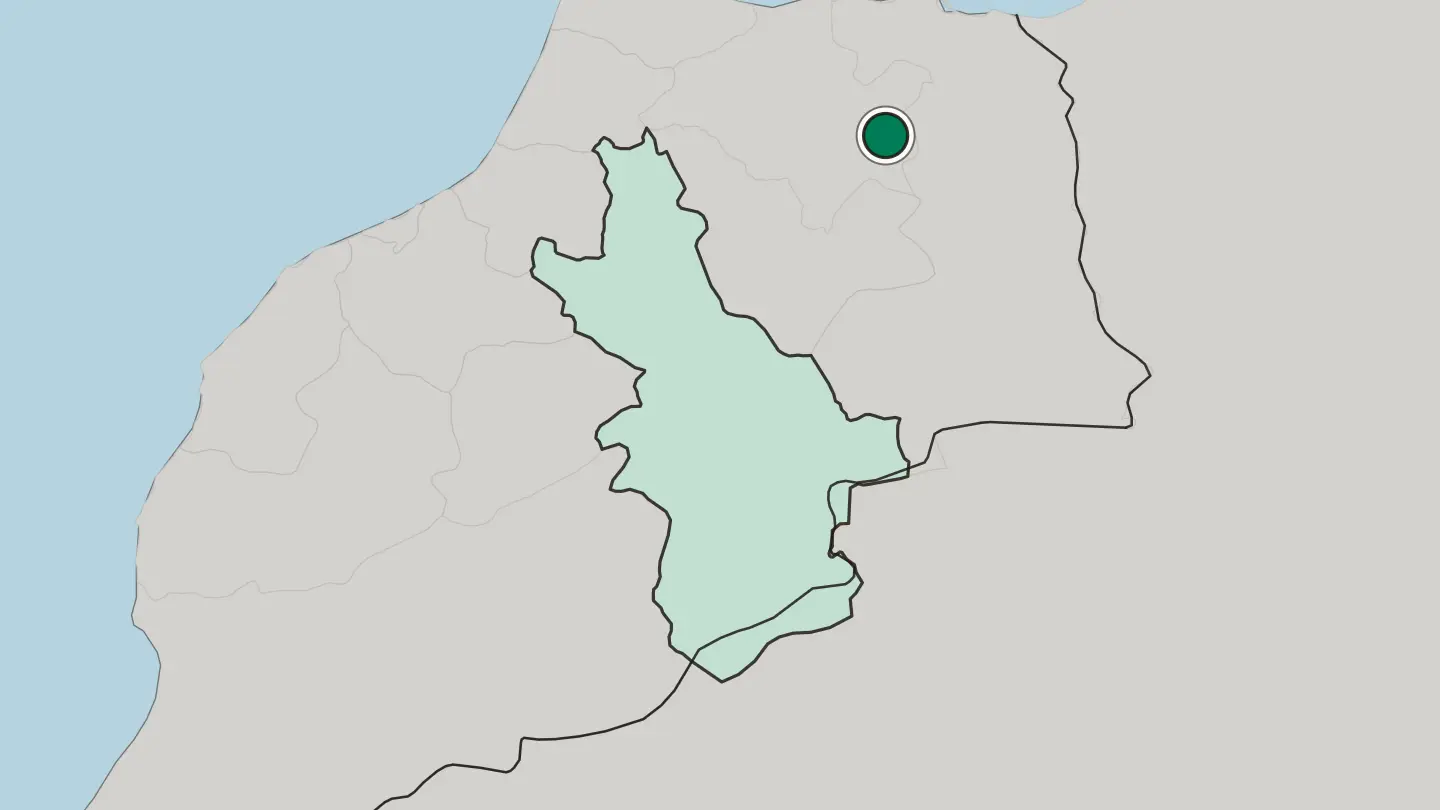
 Morocco
Sefrou
Sefrou is a walled city of central Morocco in the Fès-Meknès region, built around its medina. The ramparts still stand.Where to stay →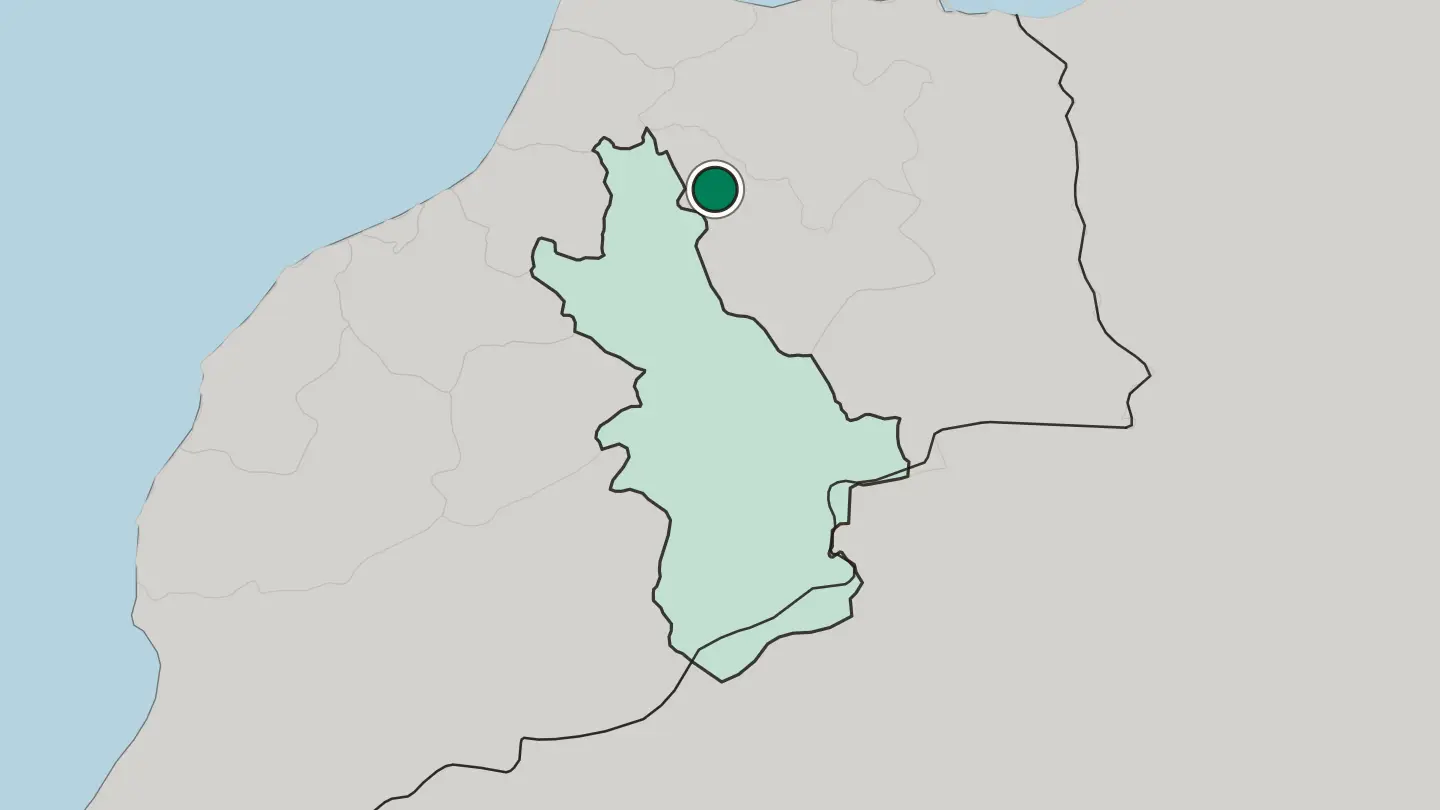
 Morocco
Ifrane
Ifrane is a high town in the Middle Atlas, capital of Ifrane Province in the Fès-Meknès region of Morocco.Where to stay →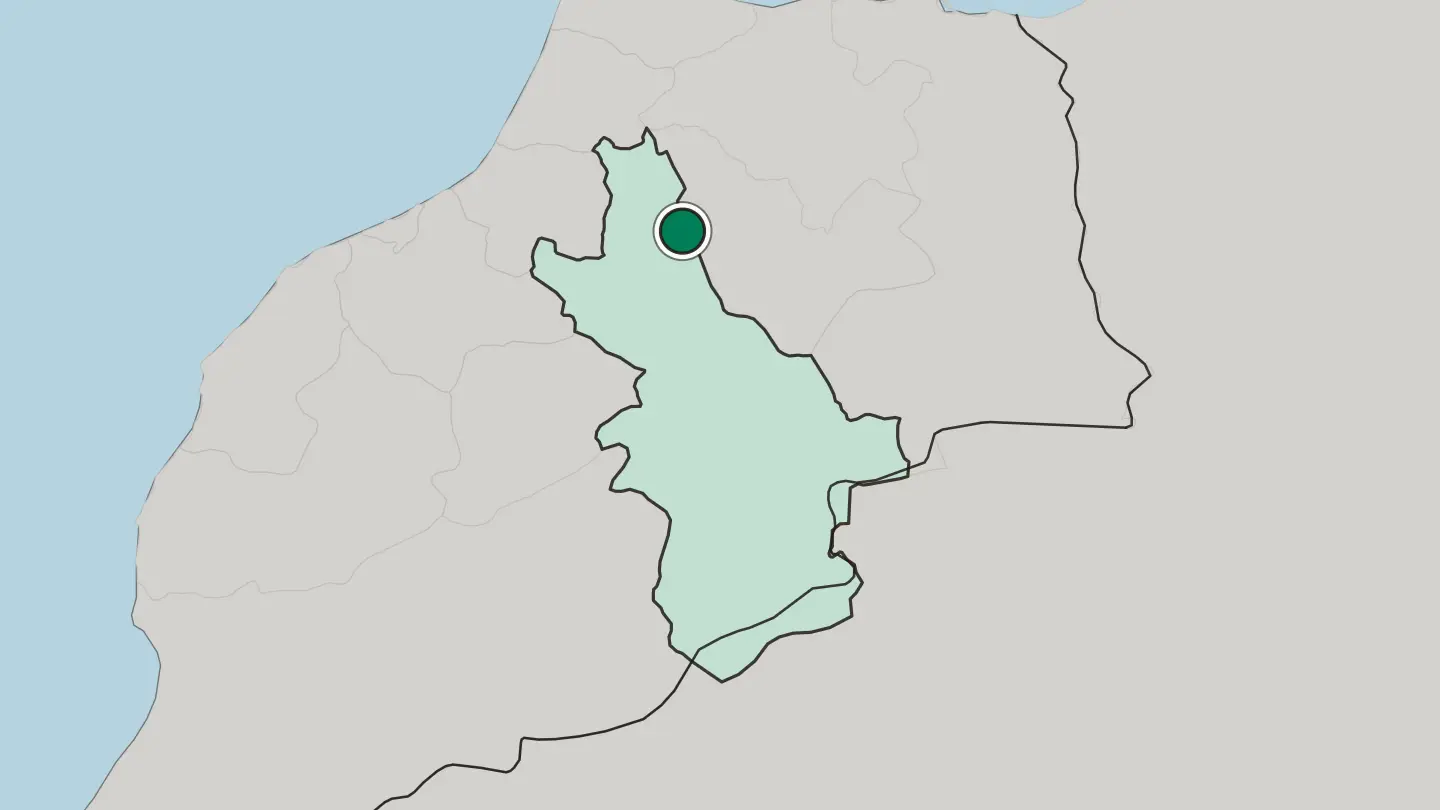
 Morocco
Azrou
Azrou is a Berber town of the Middle Atlas, standing inside Ifrane National Park in the Fès-Meknès region. Ifrane Province surrounds it.Where to stay →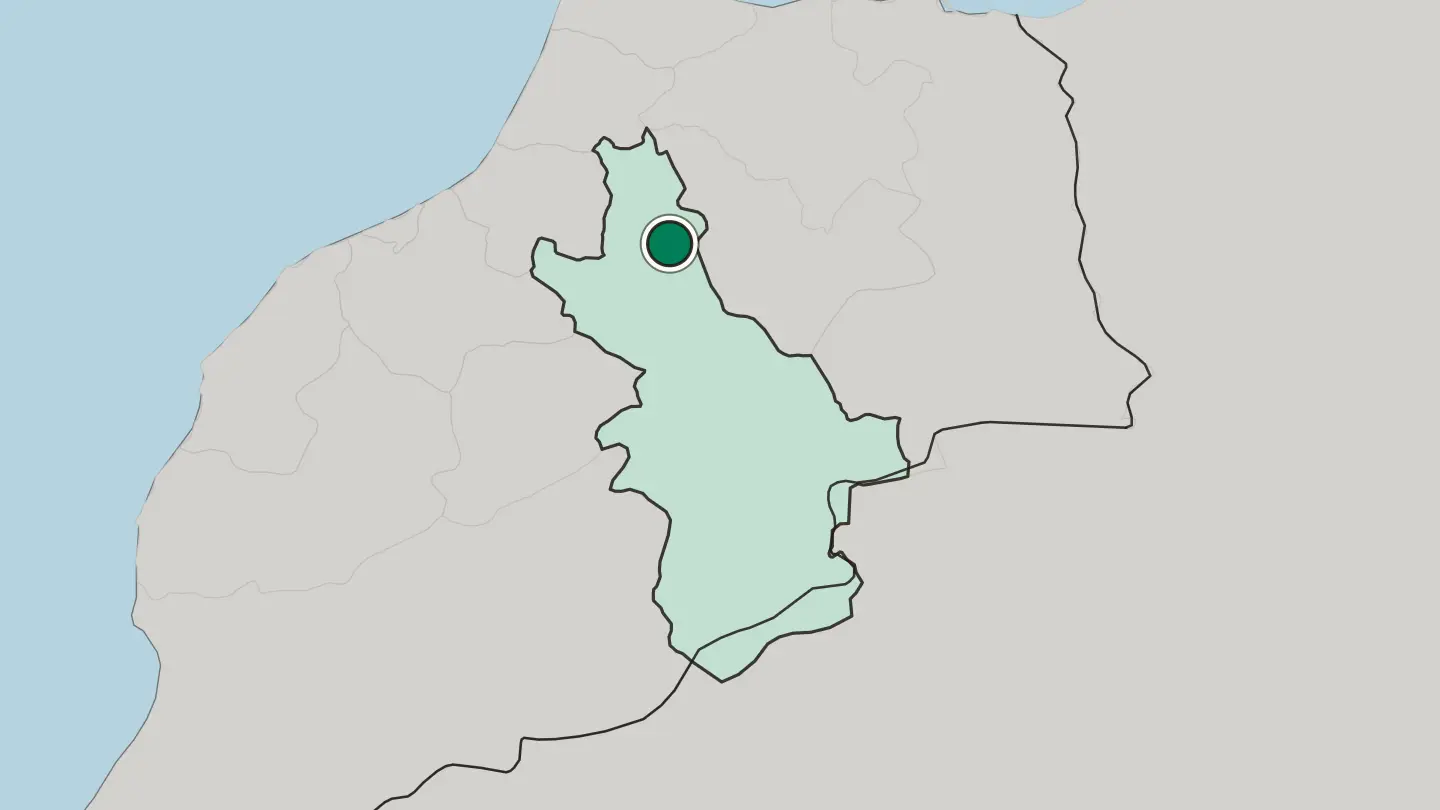
Hotel links are affiliate links: booking through them may earn us a commission, at no extra cost to you. It never affects how places are ranked. How this works
About Fès-Meknès
Two imperial cities define the region.
What is Fès-Meknès known for?
Fez holds the oldest continuously inhabited walled medina in the Arab world, and Meknès carries the monumental gates and granaries built by Sultan Moulay Ismail. The University of al-Qarawiyyin, founded in Fez in 857, is reckoned the oldest degree-granting institution still teaching. South of the cities the fertile Saïss plain gives way to the cedar forests and ski slopes of the Middle Atlas.
Roman Volubilis sits between them.
Where is Fès-Meknès?
Fès-Meknès sits in north-central Morocco, spread across the ground between two mountain systems. The Rif rises to the north and the Middle Atlas walls the region in to the south. Between them lies the Saïss plain, a fertile basin of alluvial soil and low hills that holds the two great cities, Fez and Meknès, a short hour apart.
That plain is the region's breadbasket, and its farms feed a large share of the local economy. The Sebou is the defining river. It gathers in the Middle Atlas, runs north past Fez, then bends west across the plain toward the Atlantic, draining most of the region on the way.
South of the plain the land climbs. Cedar and holm-oak forests cover the slopes of the Middle Atlas, snow settles above 600 metres in winter, and towns like Ifrane and Azrou sit among the pines. The eastern edge runs toward Taza, where a corridor between the Rif and the Atlas has carried travellers and armies for centuries.
Two national parks protect the highlands, Ifrane and Tazekka. Nine prefectures and provinces make up the whole. The result is a region of sharp contrasts, from the humid tanneries of the Fez medina to the ski lifts of the Michlifen, all within a couple of hours' drive.
What is Fès-Meknès like?
Fez is the spiritual and intellectual heart of Morocco, and the region wears that history openly. The al-Qarawiyyin mosque and university, founded in 857 by Fatima al-Fihri, drew scholars to the city for more than a thousand years and still keep their doors open to students. Craft defines the old cities.
In the Fez medina, dyers work the chouara tanneries by hand, coppersmiths hammer in the Place Seffarine, and weavers and woodcarvers keep to lanes that have not changed their trade in centuries. Meknès answers with monuments rather than workshops. Its scale is imperial.
Sultan Moulay Ismail poured decades into palace walls, ceremonial gates, and vast granaries, and the Bab Mansour still guards the Place el-Hedim. Both Arabic and Berber are spoken across the region, and the split runs deep. The plain cities keep an Arab, Andalusi-flavoured urban culture, while the Middle Atlas villages hold to Amazigh language and custom.
Food follows the same seam. Fez claims some of the country's most refined cooking, and the mountain towns bring honey, cheese, and grilled meat from the cedar country. Music, tilework, and the daily rhythm of the souk tie the whole region to a past that is never far from the surface.
What is the history of Fès-Meknès?
The story begins with Fez. Idris I founded the city on the banks of the Oued Fes in 789, and his son Idris II built a settlement on the far bank in 809, making it the seat of Morocco's first Muslim dynasty. Long before that, Rome ruled the plain from Volubilis, whose arches and mosaics still stand near Meknès.
Meknès had its own age of glory. Under Sultan Moulay Ismail, who reigned from 1672 to 1727, a modest town became a walled imperial capital to rival any in the land. The modern region drew these threads together, joining Fez, Meknès, and the Middle Atlas provinces into one administrative unit.
What is the climate of Fès-Meknès?
Altitude splits the region's weather in two. The Saïss plain around Fez and Meknès has a Mediterranean climate with hot, dry summers and mild, wet winters, and its farms live or die by an erratic rainy season. Climb into the Middle Atlas and the pattern turns continental.
Snow settles on the cedar slopes above Ifrane through winter and can lie from around 600 metres up, feeding the Michlifen ski runs. Spring and autumn are the kindest seasons on the plain.
How do you get to Fès-Meknès?
The great majority of arrivals to Fès-Meknès come by air. Fès-Saïss Airport lies about 15 kilometres south of Fez and handles the region's international and European flights, with a bus or taxi reaching the medina in under half an hour. Trains link Fez and Meknès with the coastal cities, and the two imperial capitals sit barely an hour apart by rail.
The mountains take road. Shared taxis and buses climb from Fez and Meknès up to Ifrane, Azrou, and the cedar country of the Middle Atlas beyond.
Common questions
What is the best area to stay in Fès-Meknès?
Fez: the labyrinth of the old medina. Meknès: Moulay Ismail's monuments and the Volubilis day trip. Ifrane: mountain cool and the Middle Atlas cedars.
Good for
More regions in Morocco
Updated September 2026