Morocco · Fès-Meknès
Where to Stay in Fes, Fès-Meknès
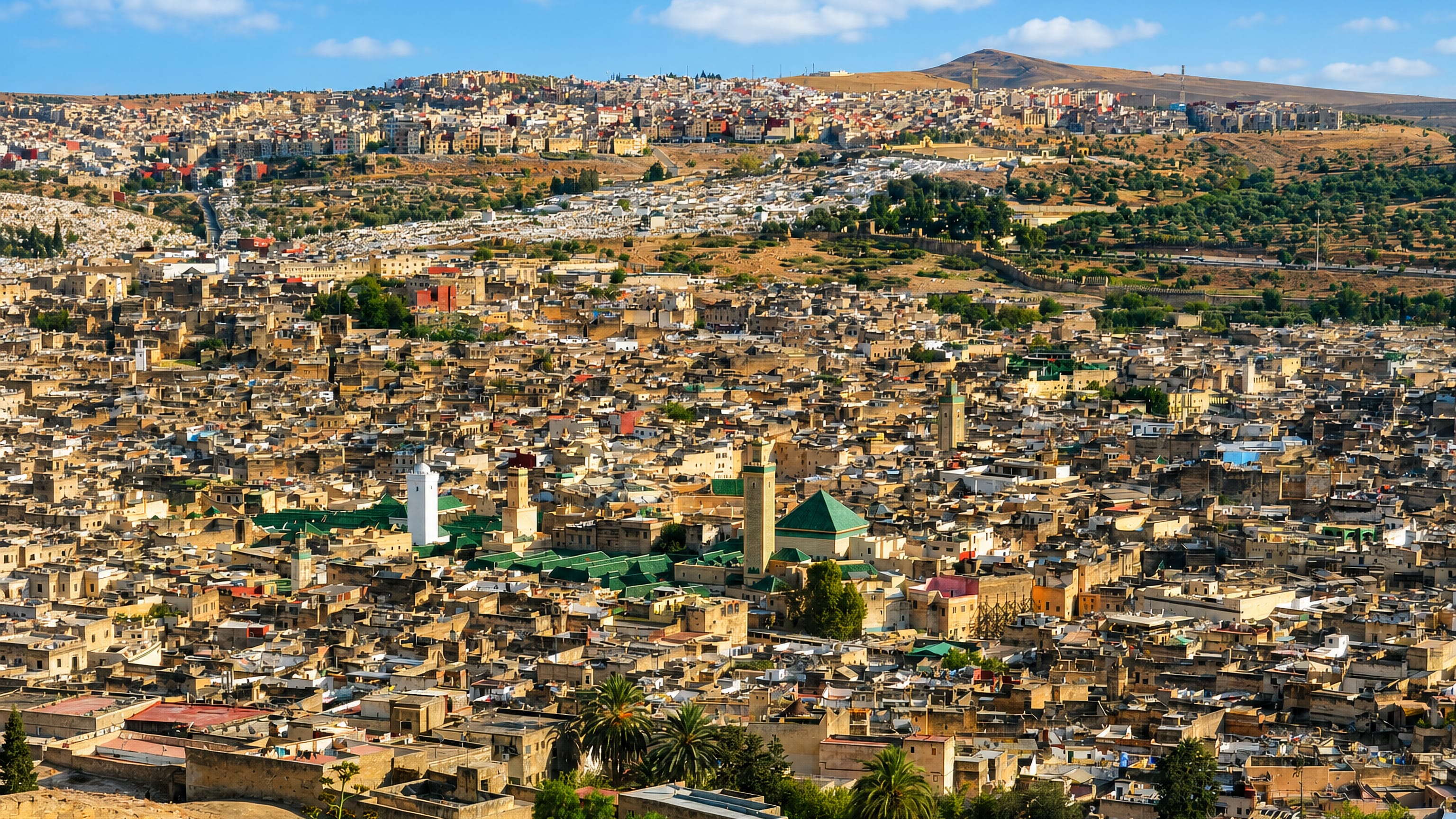
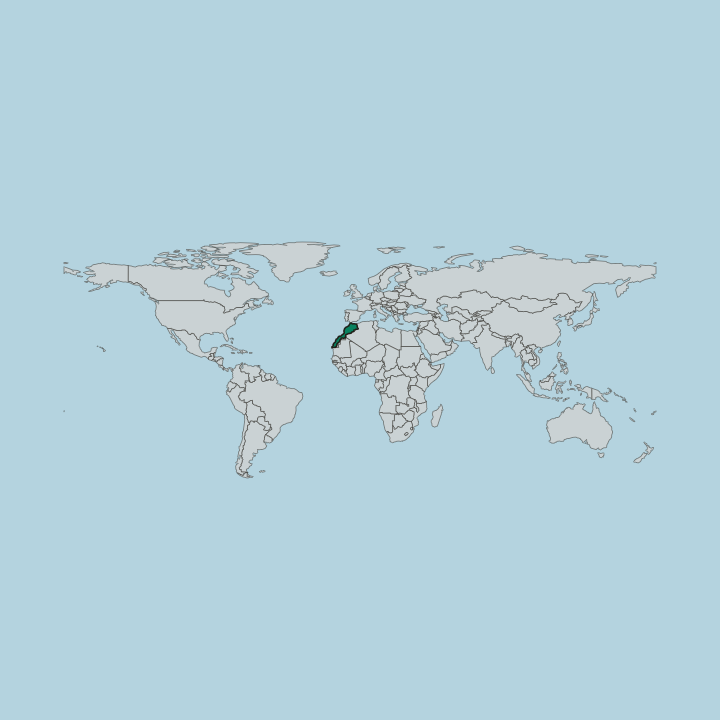
Fes is a walled inland city in Fès-Meknès, Morocco, ringed by hills on the Fez River and known for Dar Batha.
Hotel links are affiliate links: booking through them may earn us a commission, at no extra cost to you. It never affects how places are ranked. How this works


Where to stay in Fes
Each area has its own feel; here's who each one suits.

 FesMorocco
New Fes
New Fes, or Fes Jdid, was founded by the Marinids in 1276 as a royal citadel beside Fes el Bali, and the Royal Palace still fills much of it.Where to stay → FesMorocco
Fès al Bali
The medina of Fez begins here: Fès al Bali is its oldest quarter, listed by UNESCO with Fes Jdid for a surviving pre-modern plan.Where to stay →Hotel links are affiliate links: booking through them may earn us a commission, at no extra cost to you. It never affects how places are ranked. How this works
Find hotels in Fes
Direct booking searches for these neighbourhoods.
Medina core by Dar Batha
Courtyard riads hide behind plain doors near Dar Batha, minutes from the workshops around the Funduq al-Najjariyyin.Find hotels in Medina core by Dar BathaSlower stays near the Mnebhi PalaceMansion edge
Restored mansions around the Mnebhi Palace suit calmer visits a step back from the busiest medina alleys.Find hotels in Mansion edgeView rooms by the Museum of Arms of Borj NordHillside above the medina
Slopes near the Museum of Arms of Borj Nord look out over the medina and the Fez River below.Find hotels in Hillside above the medinaHotel links are affiliate links: booking through them may earn us a commission, at no extra cost to you. It never affects how places are ranked. How this works
Things to do in Fes
Ranked by global recognition; descriptions from Wikidata (CC0).
Museums & Galleries
3- Funduq al-Najjariyyin Heritage
- Dar Batha Heritage
- Museum of Arms of Borj Nord
Churches & Religious Sites
1- Al-Wad School Mosque Heritage
Castles & Historic Sites
1- Mnebhi Palace Heritage
Landmarks & Notable Places
2- Dar al-Magana Heritage
- Riad Ba Mohamed Chergui Heritage
worth knowingacross 4 categories in Fes
About Fes
What is Fes known for?
Fes is known for a World Heritage walled old city and a run of scholarly firsts within Fès-Meknès. A university dating to 859 counts among the oldest anywhere, paired with a library reaching back to 1359 in the same medieval core. Learning defines it.
The Funduq al-Najjariyyin and the Al-Wad School Mosque anchor the historic lanes, while Dar Batha holds the arts and crafts of the region. Few cities carry so long a record of building and study behind one set of walls.
What are the main landmarks in Fes?
Fes concentrates its main landmarks inside the walled medina of Fès-Meknès. Dar Batha leads the circuit, a former palace holding arts and crafts collected from across the region. Trade left its mark too.
The Funduq al-Najjariyyin survives as a restored merchants' inn, while Dar al-Magana keeps a rare medieval water clock built into a wall of the old lanes. The Al-Wad School Mosque and the hilltop Museum of Arms of Borj Nord round out the route, one deep in the medina and the other looking down over it from the northern slope.
What is the history of Fes?
Fes traces its founding to the year 789, when the first settlement rose on the banks of the Fez River in what is now Fès-Meknès. Scholarship followed early. A university dating to 859 took root within the medieval walls, counted among the oldest anywhere, and a library reaching back to 1359 joined it in the same core to preserve the written record of the growing town.
From that foundation the medina spread across the valley in a dense weave of lanes. Later centuries left palaces, inns, and mosques that still stand in the old quarters. Dar Batha and the Mnebhi Palace record the wealth of ruling and merchant families, their courtyards built to trap shade and water.
Craft and commerce shaped the rest. The Funduq al-Najjariyyin sheltered traders and their goods, Dar al-Magana marked the hours with its wall-mounted clock, and the Al-Wad School Mosque tied worship to learning in the heart of the lanes. Together these buildings hold the memory of a scholarly city grown up around its river and hills.
Where is Fes?
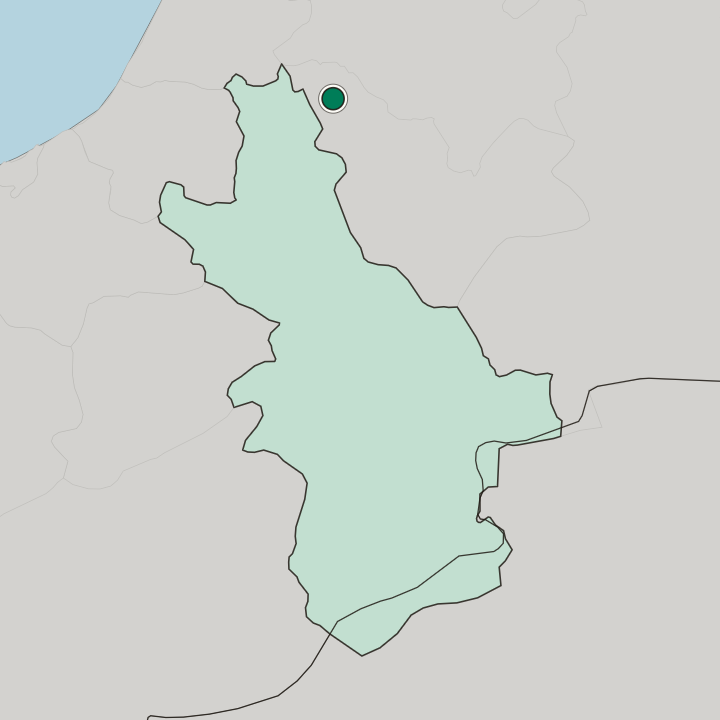
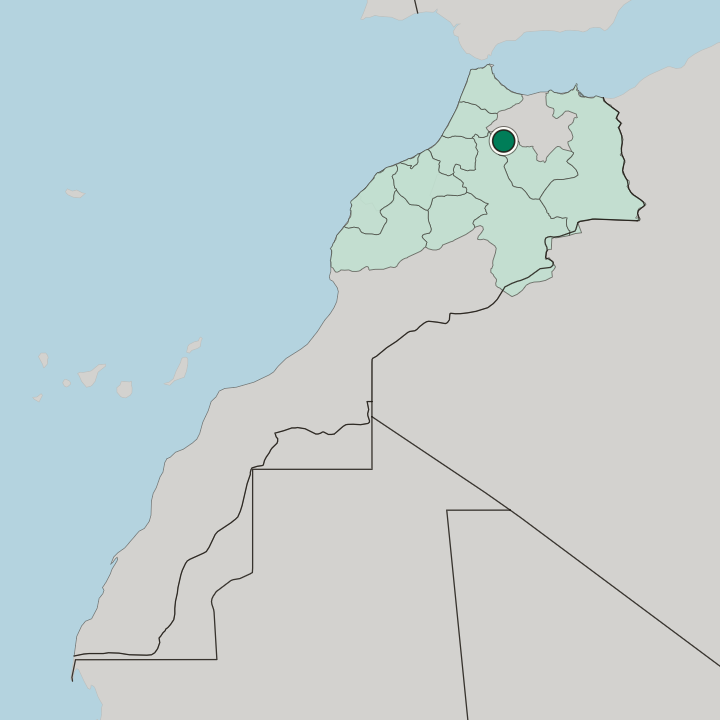
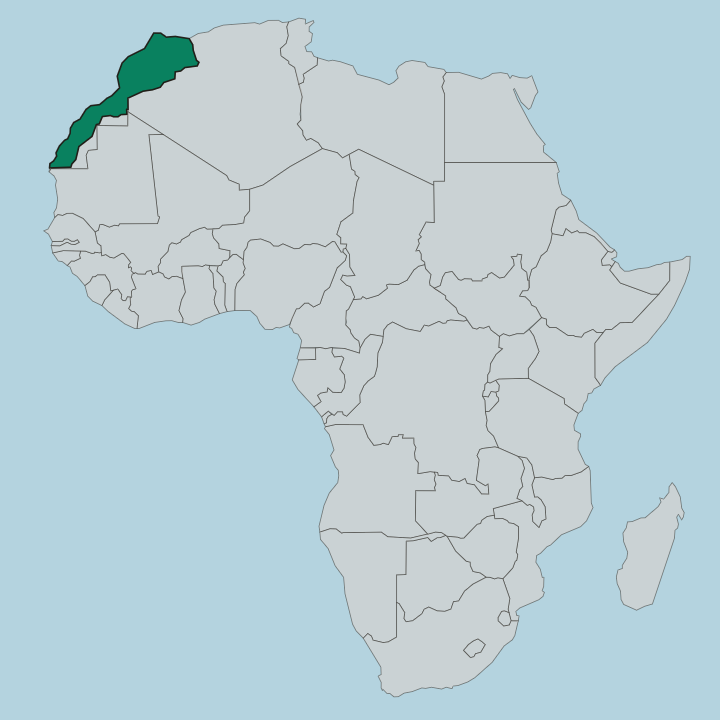
Fes lies in northern inland Morocco, northwest of the Atlas Mountains and at the heart of Fès-Meknès. Hills surround the site, and the Fez River threads through the valley from west to east, watering the dense medina that grew along its banks. The setting is enclosed and green.
From the northern slope near the Museum of Arms of Borj Nord the ground falls toward the river and the walled quarters below, while the higher mountains rise beyond the ring of hills that shelters the old city on every side.
What is the climate of Fes?
Fes has a hot-summer inland climate shaped by its position northwest of the Atlas Mountains in Fès-Meknès. Summers turn long and dry, with strong heat settling over the walled medina and the valley of the Fez River through the middle of the year. Winters run cool and wet.
Rain and cold air spill down from the mountains and the surrounding hills, greening the slopes near the Museum of Arms of Borj Nord before the dry heat returns and the old city bakes again beneath a clear sky.
How do you get to Fes?
Fes serves as a hub of Fès-Meknès in northern inland Morocco, northwest of the Atlas Mountains. Rail lines reach the city along the interior corridor, arriving within a short ride of the walled medina and Dar Batha. Roads climb in over the hills.
Coaches and buses cross the passes and drop down into the valley of the Fez River, setting travellers near the gates, from where the narrow lanes toward the Funduq al-Najjariyyin lie a short walk inside the ramparts.
Common questions
What is the best area to stay in Fes?
Medina core by Dar Batha: First stay among the lanes near Dar Batha. Mansion edge: Slower stays near the Mnebhi Palace. Hillside above the medina: View rooms by the Museum of Arms of Borj Nord.
Good for
More cities in Fès-Meknès
Updated September 2026