Mali
Gao Region, Mali — Towns & Travel Guide
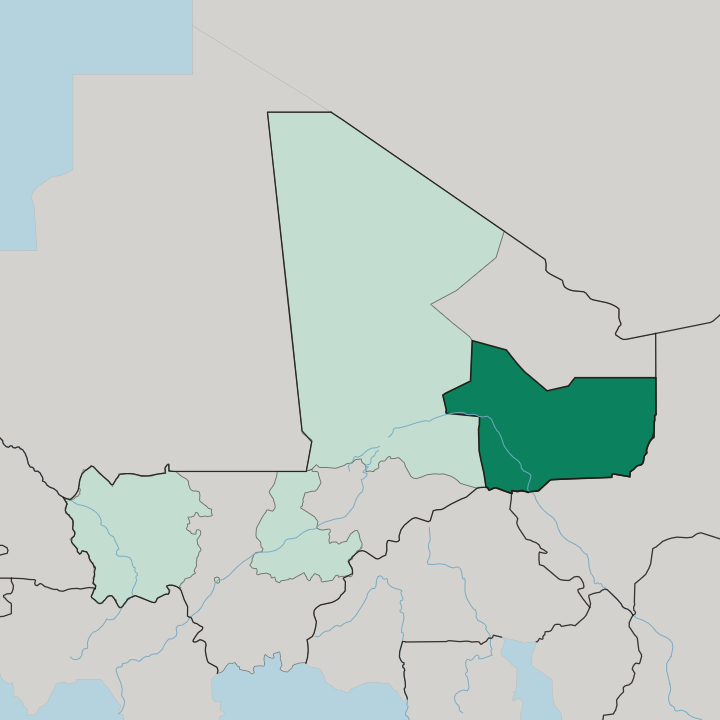
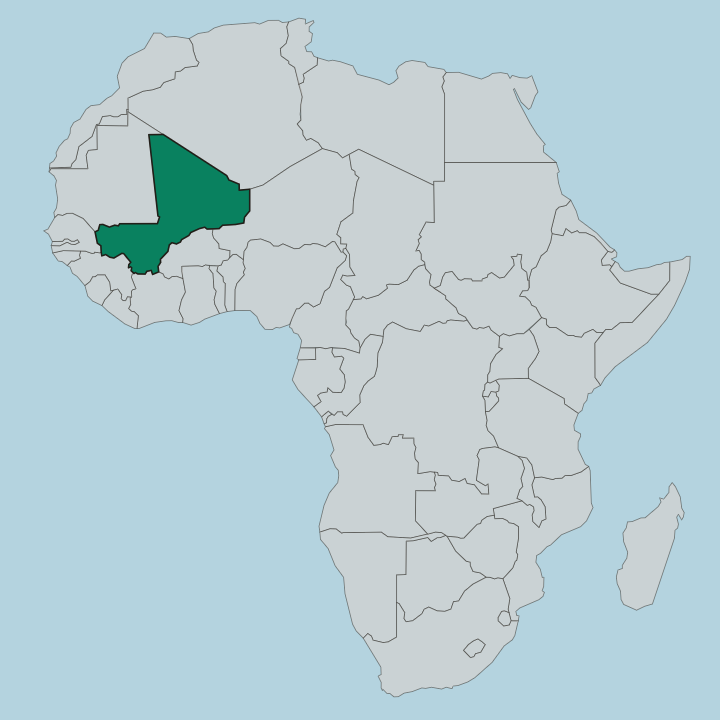
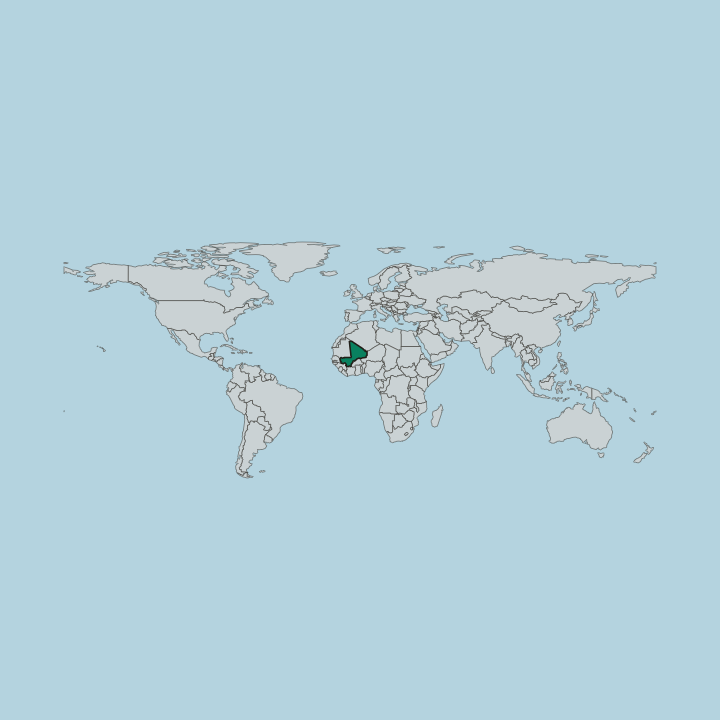
Gao Region reaches east from Tombouctou Region along the Niger, and the city of Gao is its capital.
Hotel links are affiliate links: booking through them may earn us a commission, at no extra cost to you. It never affects how places are ranked. How this works


Towns & cities in Gao Region
One town here has its own guide — it links to where to stay.
 Mali
Mali
Gao
Gao is the capital of the Gao Region in Mali, standing on the left bank of the River Niger at the junction with the Tilemsi valley.Where to stay →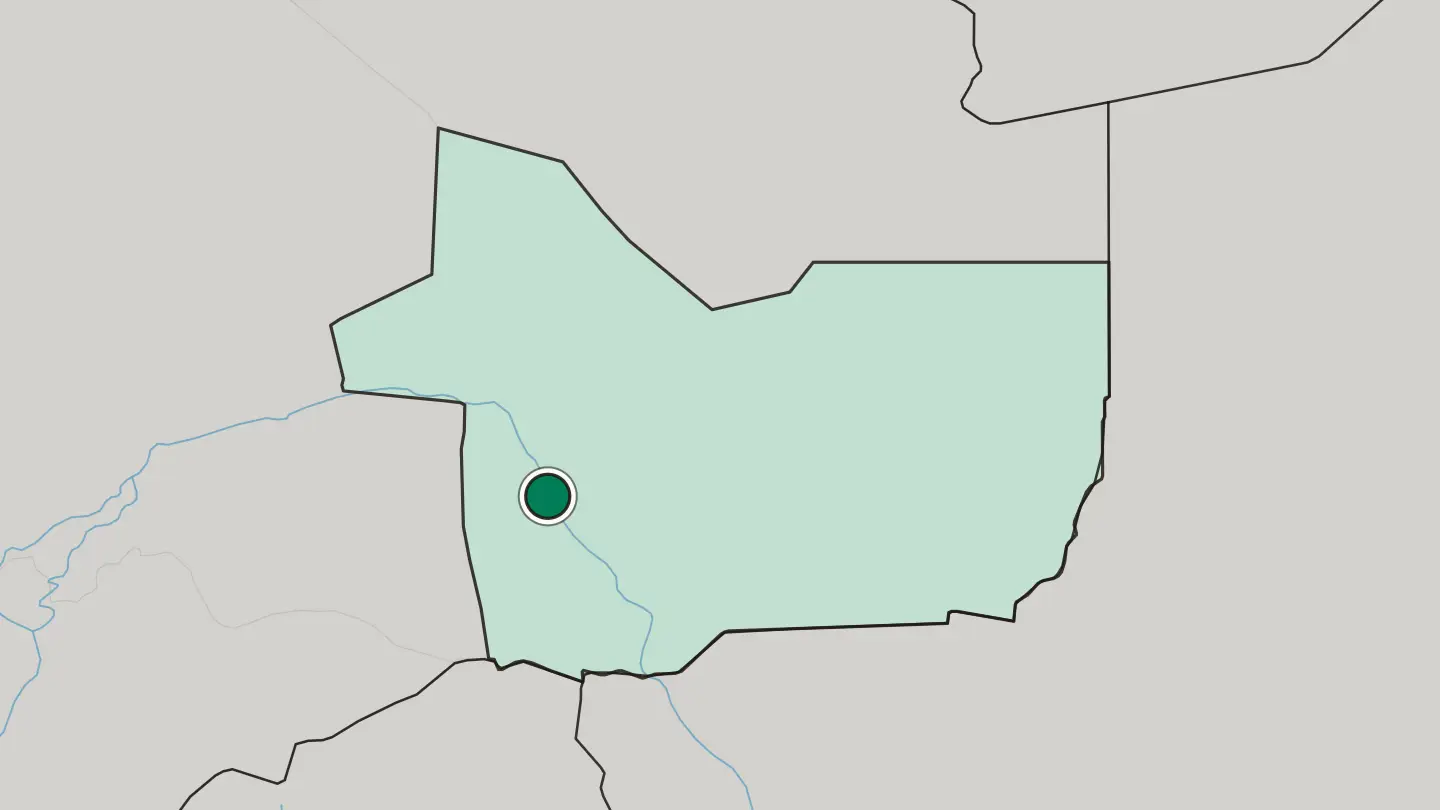
Hotel links are affiliate links: booking through them may earn us a commission, at no extra cost to you. It never affects how places are ranked. How this works
About Gao Region
What is Gao Region known for?
Mali's seventh administrative region dates from June 1960. The Niger crosses it, and the river carries every town that matters, Gao, Bourem, and Bamba, while the Taoussa dam site sits upstream in the cercle of Bourem. Songhai form the majority here, the Tuareg are the largest minority, and Arab, Bambara, Fula, and Bozo families share the same river bend.
Wider fame came in 2012. The MNLA declared Azawad independent during the Tuareg rebellion, then lost Gao to Islamist militias after the first battle fought there.
Where is Gao Region?
The Niger organises everything here. Gao Region lies in the river's basin and the Niger crosses it, which is why the towns, the irrigated ground, and the main line of movement all follow a single channel. Administrative names do the rest of the work.
Gao holds the arrondissements of Wabaria, Djébock, and Tin-Aouker; Bourem takes in Bamba and Téméra; Ansongo runs south through Ouattagouna to Tessit; and Almoustrat covers Agharous, Ersane, and Tabankort. Then there are the edges. Kidal Region closes the region off to the north, Tombouctou Region and Taoudénit Region lie to the west, Ménaka Region was cut away from the eastern cercle of the same name, and the long southern edge is Niger, with Tahoua Region and Tillabéri Region across it and a short run of Burkina Faso at one corner.
Protected ground is mapped as well. The Ansongo Ménaka partial faunal reserve straddles that eastern boundary, four classified forests are gazetted inside the region, and two hunting zones, Tidermène-Alata and Inékar, are marked on the same sheets. Away from the water the pattern is plain.
Every seat named above stands on or near the Niger, while the wide ground between them holds villages, fractions, and quarters counted in the hundreds rather than drawn on any regional map.
What is Gao Region like?
Gao Region is the only Songhai-majority region in Mali, and the Tuareg are its largest minority, close to a third of the whole. Arab lineages hold ground alongside them, the Kounta, Lamhar, and Tajakant, while Fula families such as the Gabéro and the Sidibé, Bozo fishers, and Bambara arrivals fill in the rest. Migration made that mixture.
Islam is practised by very nearly everyone in all of those groups, with small Christian and traditional minorities recorded beside it. The name itself is contested. Al-Bakrī wrote that Gao began as an onomatopoeia for the tom-tom drums beaten when the king sat down to eat, a sound that older writings preserved in spellings like Kawkaw, Kaukau, and Kounkou.
Houdas read it otherwise. In his French translation of the Tarikh al-Sudan he traced the word to the Songhay phrase Kokoy Korya, the king's town, and argued that a description of the capital had been mistaken for a toponym. Both readings put a court at the centre of it.
The Musée du Sahel has held the region's material record in Gao since 1981, and the Conseil régional, created in 1999, carries the economic, social, and cultural affairs that no colonial cercle ever handled.
What is the history of Gao Region?
Colonial hands drew it and undrew it. A cercle and a région of Gao appeared in 1907, three years after the military territory of the Niger was organised, and the région was suppressed in 1912 with the cercle handed back to Tombouctou. June 1960 restored it, one of six regions of the République soudanaise, holding the cercles of Gao, Goundam, and Tombouctou.
Then came the subtractions. The Comité militaire de libération nationale detached Goundam and Tombouctou in 1977, the northern half became Kidal Region in 1991, and the redistricting Amadou Toumani Touré launched in 2011 turned the Ménaka cercle into a region.
What is the climate of Gao Region?
The Niger is the dependable water here. Everything green in Gao Region follows the river and its flood, the four classified forests, the land the Taoussa scheme was drawn to irrigate, and the grazing under the Tidermène-Alata and Inékar hunting zones. Sahelian dryness does the rest.
Beyond the channel the country thins to pasture, which is the setting the Musée du Sahel names, and the reason settlement crowds the banks from Bourem down to Ansongo.
How do you get to Gao Region?
Everything funnels through Gao. Roads reach the regional seat from Tombouctou Region in the west and up from the Niger frontier in the south, while the Taoussa project added an access road of 130 km running to Gao by way of Bourem. Beyond the roads the Niger does the work.
Bamba, Téméra, and the Ansongo reach all sit on the river, and the seats further off it, Wabaria and Djébock among them, come at the end of tracks.
Common questions
What is the best area to stay in Gao Region?
Gao: stays that want the Musée du Sahel and the Niger crossing on foot. Bourem: road trips staging for the Taoussa dam site and the Bamba stretch. Ansongo: travellers bound for the Ansongo Ménaka reserve or the Burkina Faso corner.
More regions in Mali
Updated September 2026