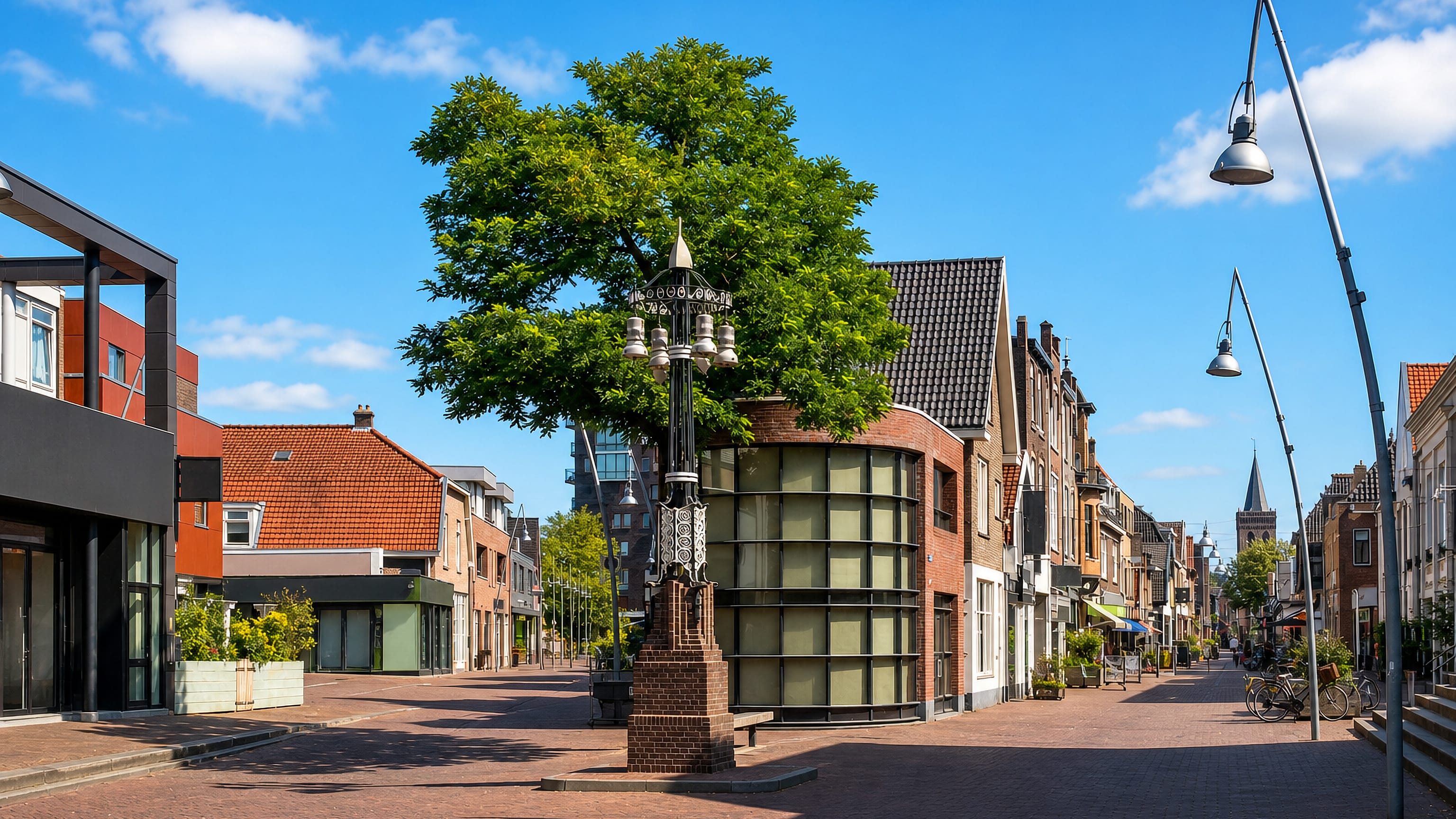
Netherlands · Provincie Gelderland
Where to Stay in Ede, Provincie Gelderland
Ede is a Gelderland town on the Veluwe, used above all as an entry point to Hoge Veluwe National Park and the forest and farmland around it.
Hotel links are affiliate links: booking through them may earn us a commission, at no extra cost to you. It never affects how places are ranked. How this works


Where to stay in Ede
One neighbourhood here has its own guide — here's what it is best for.

 EdeNetherlands
Veldhuizen
Veldhuizen is a quarter in the north-west of Ede that grew from a medieval buurschap whose oldest surviving Buurtboek begins in 1596.Where to stay →Hotel links are affiliate links: booking through them may earn us a commission, at no extra cost to you. It never affects how places are ranked. How this works
Find hotels in Ede
Direct booking searches for these neighbourhoods.
Ede town centre
Cultura, the Ede Historical Museum and the Oude Kerk Ede stand within the same central streets.Find hotels in Ede town centreWalkers who want Hoge Veluwe National Park before breakfastThe forest edge
Rooms on this side start several kilometres nearer the trees of Hoge Veluwe National Park. Beds are limited here, so book early.Find hotels in The forest edgeDrivers wanting farmland quiet near the Ede burial mound sitesThe outlying villages
Village stays sit among the farmland that holds the sites of five and of seven burial mounds. Rooms are few around here — worth securing early.Find hotels in The outlying villagesHotel links are affiliate links: booking through them may earn us a commission, at no extra cost to you. It never affects how places are ranked. How this works
Things to do in Ede
Ranked by global recognition; descriptions from Wikidata (CC0).
Museums & Galleries
2- Ede Historical Museum
- Cultura
Churches & Religious Sites
7- Oude Kerk Ede Heritage
- Noorderkerk Heritage
- Sint-Antonius van Paduakerk Heritage
- Bethelkerk Heritage
- Beatrixkerk Heritage
Show 2 more →
- Nieuwe Kerk Heritage
- Lutherse kerk Heritage
Castles & Historic Sites
3- Gaslantaarn Heritage
- Terrein met zeven grafheuvels Heritage
- Terrein waarin vijf grafheuvels Heritage
Landmarks & Notable Places
3- De Linden Heritage
- Fischershuis Heritage
- Woonhuis met invloeden vanuit de Amsterdamse School en de Gooise landhuisstijl Heritage
worth knowingacross 4 categories in Ede
About Ede
Bicycles do well here.
What is Ede known for?
Ede is known first as an entry point to Hoge Veluwe National Park, and the country it opens onto, the forests and farmlands of the Veluwe dotted with villages, is what brings most visitors rather than the town itself. Cultura and the Ede Historical Museum handle the indoor half. Older ground survives too, since the municipality holds one site of five burial mounds and another of seven, and the Oude Kerk Ede anchors a list of churches that runs on for some length.
What are the main landmarks in Ede?
Ede's list runs heavily to churches. Oude Kerk Ede is the oldest of them, and behind it come the Nieuwe Kerk, the Noorderkerk, the Zuiderkerk, the Bethelkerk, the Beatrixkerk, the Lutherse kerk and the Sint-Antonius van Paduakerk, a spread of denominations unusual for a town of this size. Two museums balance the list.
Cultura and the Ede Historical Museum sit alongside the Anna Maria Moens memorial, the Gaslantaarn, the houses at Fischershuis, De Linden and Hanenburg, and the two protected sites that hold five burial mounds and seven.
What is the history of Ede?
The mounds came long before the town. Two protected sites in the municipality hold burial mounds, five on one and seven on the other, which places people on this sandy ground of the Veluwe far earlier than any church or charter can, and the Oude Kerk Ede is merely the oldest building still standing above them. Faith then split many ways.
Ede ended up with the Nieuwe Kerk, the Noorderkerk, the Zuiderkerk, the Bethelkerk, the Beatrixkerk, a Lutherse kerk and the Sint-Antonius van Paduakerk, a range of congregations that says more about the town's character than any single monument does. Ordinary buildings carry the rest of the record. Fischershuis, De Linden, Hanenburg and the Doolhof stand for the houses and grounds that a farming and market town accumulated, and one listed dwelling was built under the influence of the Amsterdam School and the Gooi country-house manner.
A single Gaslantaarn survives. The Anna Maria Moens memorial keeps a name attached to the place, and Cultura and the Ede Historical Museum are where the town now sets out its own account of itself. Then the Veluwe changed the terms.
Being an entry point to Hoge Veluwe National Park has made Ede a base for forests, farmland and cycling rather than a destination in its own right, and the town has been content enough with that role to build much of its visitor trade around it.
Where is Ede?
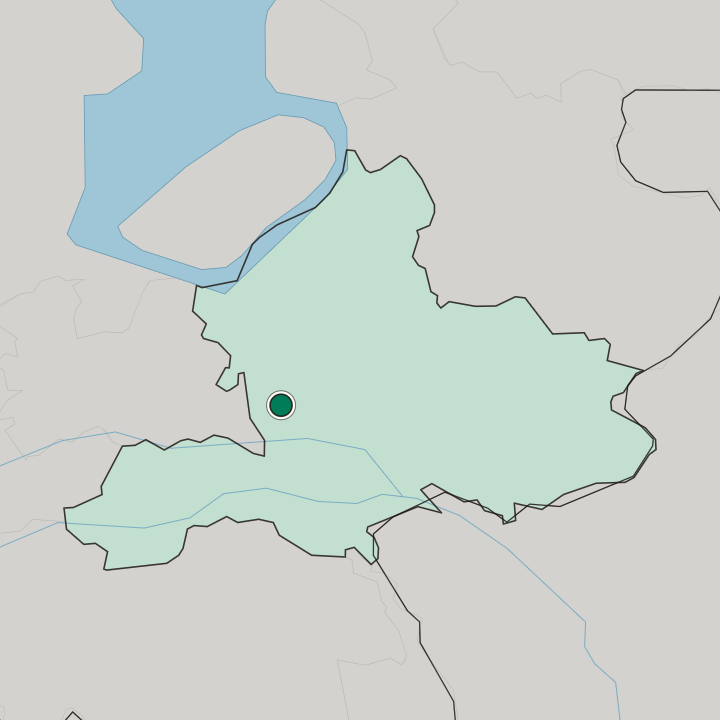
Ede lies in Gelderland, on the Veluwe, with Hoge Veluwe National Park at hand and a municipality of some three hundred and nineteen square kilometres taking in forest, farmland and a scatter of villages. Trees run to the horizon. The sandy ground under them is old settled country, as the two mound sites in the municipality show, and the built-up town occupies only a modest share of the whole.
What is the climate of Ede?
The Veluwe woods do the moderating. Under the trees the air holds cooler through a warm afternoon and damper after rain, while the open farmland beyond them warms and cools faster, so a day in Ede can feel like two depending on where it is spent. Temperate is the word for it.
Cold months stay damp rather than hard, warm months are moderate, and rain turns up across the whole calendar instead of gathering into one season, which is why the cycling holds up in most weeks of the year.
How do you get to Ede?
Ede works as an entry point, which shapes how people arrive: many come for Hoge Veluwe National Park and treat the town as the last built-up thing before the forest. Bicycles carry the rest. Routes lead out from the centre into the Veluwe, past farmland and villages, and riders can reach the trees without ever needing a car.
Cultura, the Oude Kerk Ede and the Ede Historical Museum are walkable from the middle, while the outer villages of a municipality this wide are not.
Common questions
What is the best area to stay in Ede?
Ede town centre: Riders starting Veluwe days from Cultura and the Oude Kerk Ede. The forest edge: Walkers who want Hoge Veluwe National Park before breakfast. The outlying villages: Drivers wanting farmland quiet near the Ede burial mound sites.
Good for
More cities in Provincie Gelderland
Updated October 2026