Norway · Vestland
Where to Stay in Eidfjord, Vestland
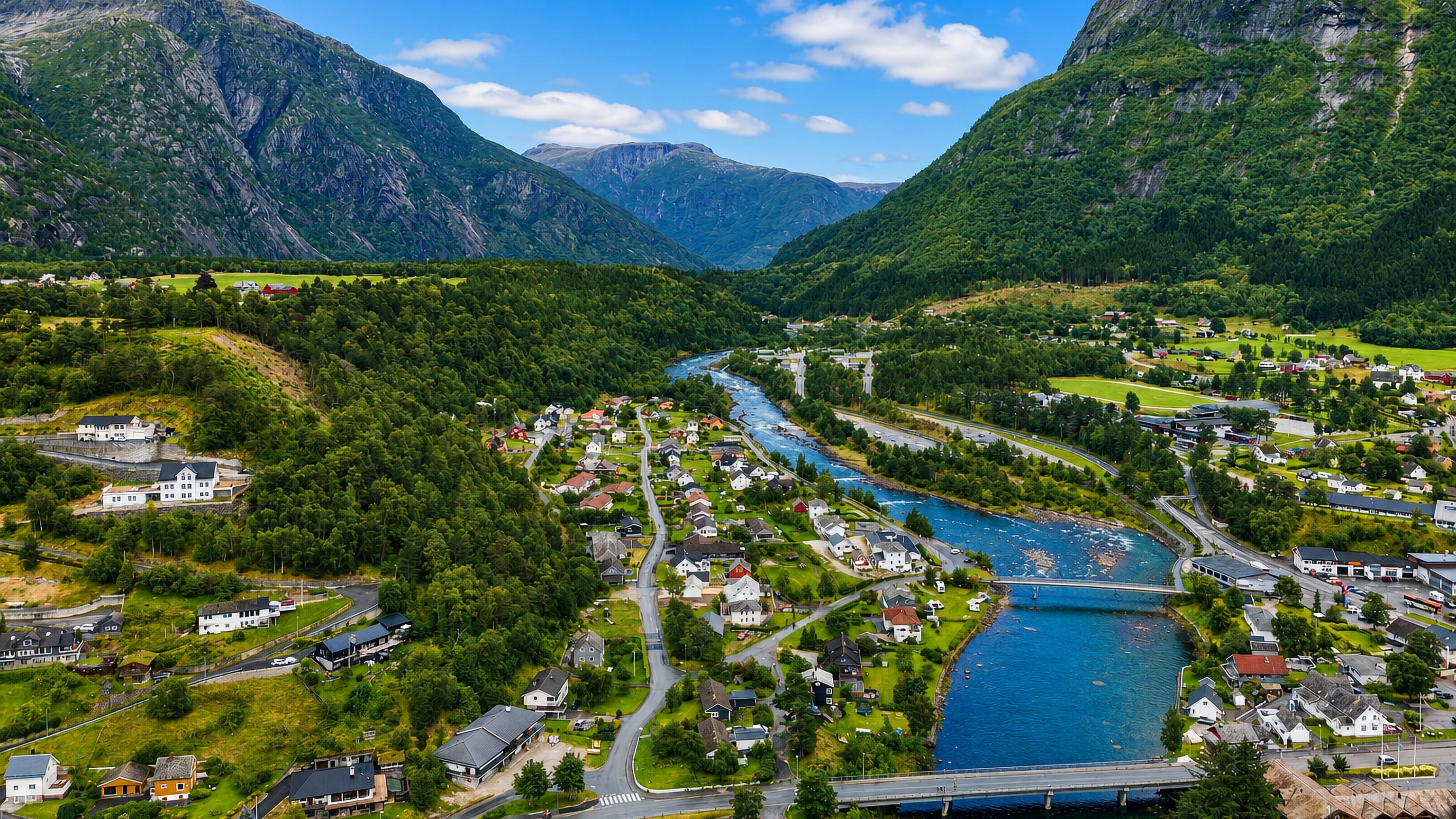
Eidfjord is a fjord village in Hardanger, set below the Hardangervidda plateau in western Norway.
Hotel links are affiliate links: booking through them may earn us a commission, at no extra cost to you. It never affects how places are ranked. How this works


Where to stay in Eidfjord
The practical side of choosing where to sleep.
Beds in Eidfjord gather along the fjord front, where hotels and guest houses sit within a short walk of the quay, Eidfjord kirke and the Norsk Natursenter Hardanger. The waterfront suits travellers who want the fjord, the cruise quay and the plateau routes close at hand. The fjord-front waterfront is the natural base.
Up the valley toward Vøringsfossen and the rim of the Hardangervidda, cabins and mountain lodges stand among the high pastures, a base for walkers and skiers drawn to the plateau of Hardanger. Beds there are scattered. Out along the fjord toward Eidfjord gamle kirke, farm rooms and holiday houses spread among the orchards and the steep shore, a quieter berth for visitors touring the inner fjord of Vestland.
Rooms thin between the farms. Cruise ships call at the quay through the season, and the village fills when the great ships are in. Book ahead in the bright summer, when the waterfall and the long western daylight draw travellers to this part of Vestlandet.
Find hotels in Eidfjord
Direct booking searches for these neighbourhoods.
Eidfjord waterfront
hotels by the quay, Eidfjord kirke and the Norsk Natursenter HardangerFind hotels in Eidfjord waterfrontwalkers and skiers of the HardangerviddaVøringsfossen and the plateau rim
mountain lodges among the high pastures by Vøringsfossen. Lodging is scarce in this area; reserve in advance.Find hotels in Vøringsfossen and the plateau rimvisitors touring the inner Hardanger fjordFjord shore by the old church
farm rooms among the orchards near Eidfjord gamle kirke. Rooms are few around here — worth securing early.Find hotels in Fjord shore by the old churchHotel links are affiliate links: booking through them may earn us a commission, at no extra cost to you. It never affects how places are ranked. How this works
About Eidfjord
What is Eidfjord known for?
Eidfjord is a small municipality of Vestland at the inner end of the Hardanger fjord country, in western Norway. The village sits where the fjord meets the steep edge of the Hardangervidda plateau, and the great Vøringsfossen waterfall plunges from the highland nearby. Falling water draws the visitors.
The Norsk Natursenter Hardanger reads the nature of the plateau for travellers, and the old stone Eidfjord gamle kirke stands among the farms of this corner of Vestlandet.
What are the main landmarks in Eidfjord?
The Vøringsfossen waterfall is the signature landmark of Eidfjord, a great fall plunging from the rim of the Hardangervidda above the valley. A step bridge and viewing platform span the gorge at the falls. Water rules the scene.
Below, the listed Eidfjord gamle kirke stands in stone among the farms, the newer Eidfjord kirke serves the village, and the Norsk Natursenter Hardanger reads the nature and the highland of this corner of Hardanger for the travellers who come up the fjord.
What is the history of Eidfjord?
Eidfjord grew at the inner end of the fjord, where the water meets the steep wall of the Hardangervidda in western Norway. Farms worked the narrow shelves and the orchards along the shore for centuries, and the parish raised its stone church, the Eidfjord gamle kirke, among the fields above the fjord. The plateau loomed over the living.
Old tracks climbed from the village to the high country of the Hardangervidda, and the people drove their stock to the summer pastures of Hardanger. Travel came up the fjord to Eidfjord in time. Visitors were drawn by the great Vøringsfossen waterfall and the wild plateau, and the newer Eidfjord kirke served the growing village by the water.
Mountains brought the world. The Norsk Natursenter Hardanger was later raised to read the nature of the highland for travellers, and Eidfjord remained a small fjord municipality of Vestland beneath the plateau.
Where is Eidfjord?
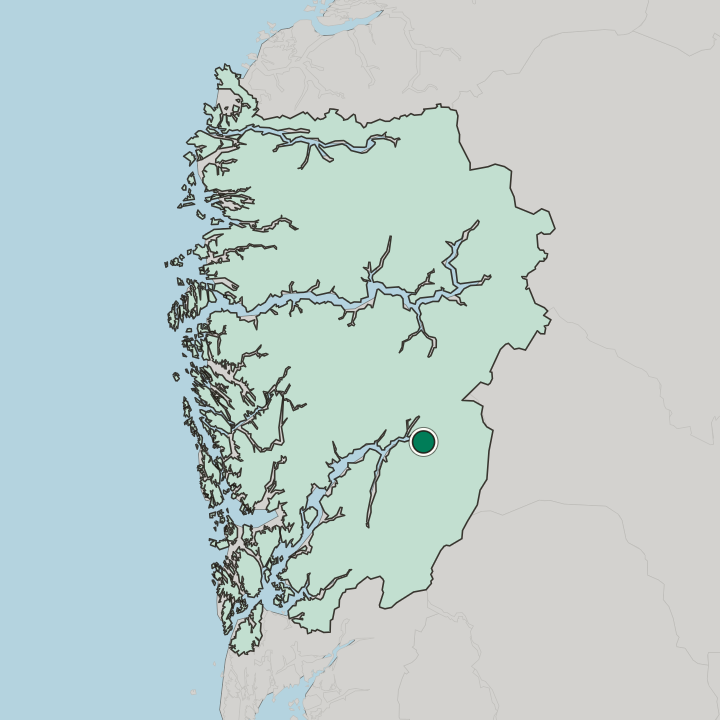
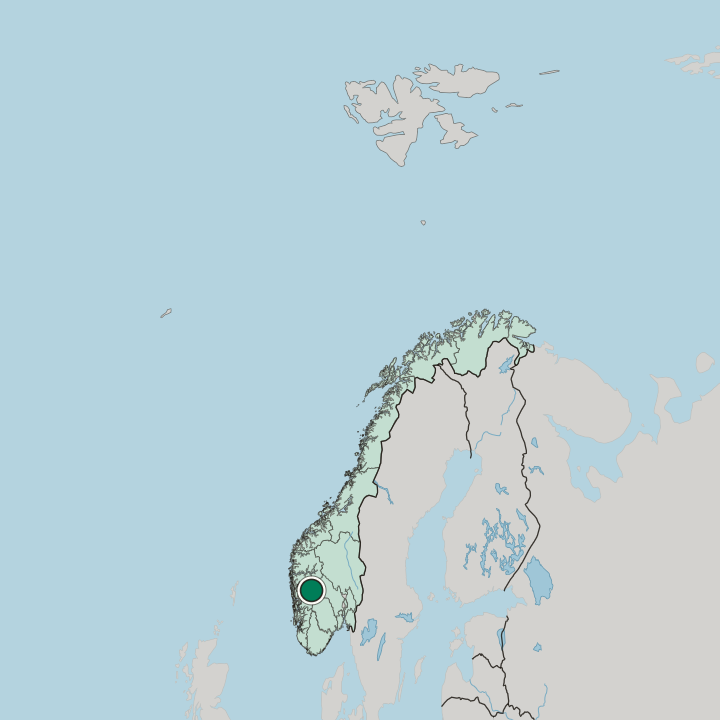
Eidfjord lies at the inner end of the fjord in the south-eastern part of Vestland, in western Norway. The village sits where the water meets the steep western edge of the Hardangervidda plateau, the Vøringsfossen waterfall plunging from the highland above the valley. Plateau and fjord frame the place.
The high country of Hardanger spreads east and north from the village, and Eidfjord holds the service core at the meeting of the water and the mountain.
What is the climate of Eidfjord?
Eidfjord has a fjord climate sharpened by the highland behind it. Winters stay grey and damp by the water, while deep snow lies for months on the Hardangervidda plateau above the village. Summers stay cool and green by the fjord.
The fjord softens the cold along the shore, but the cold air of the plateau spills down the valley of Hardanger, and rain off the water reaches Eidfjord in nearly every month of the year in this corner of Vestlandet.
How do you get to Eidfjord?
Eidfjord is reached by road along the inner fjord of Hardanger. The mountain roads climb over the Hardangervidda from the east and run the fjord shore from the west, meeting at the village, and cruise ships call at the quay. Many drive in.
Buses and the cruise routes carry travellers to the falls and the plateau, while Bergen and the regional airports handle the longer journeys of visitors arriving in this corner of western Norway from farther afield.
Common questions
What is the best area to stay in Eidfjord?
Eidfjord waterfront: travellers wanting the cruise quay and plateau routes at hand. Vøringsfossen and the plateau rim: walkers and skiers of the Hardangervidda. Fjord shore by the old church: visitors touring the inner Hardanger fjord.
Good for
More cities in Vestland
Updated September 2026