Norway · Vestland
Where to Stay in Gaupne, Vestland
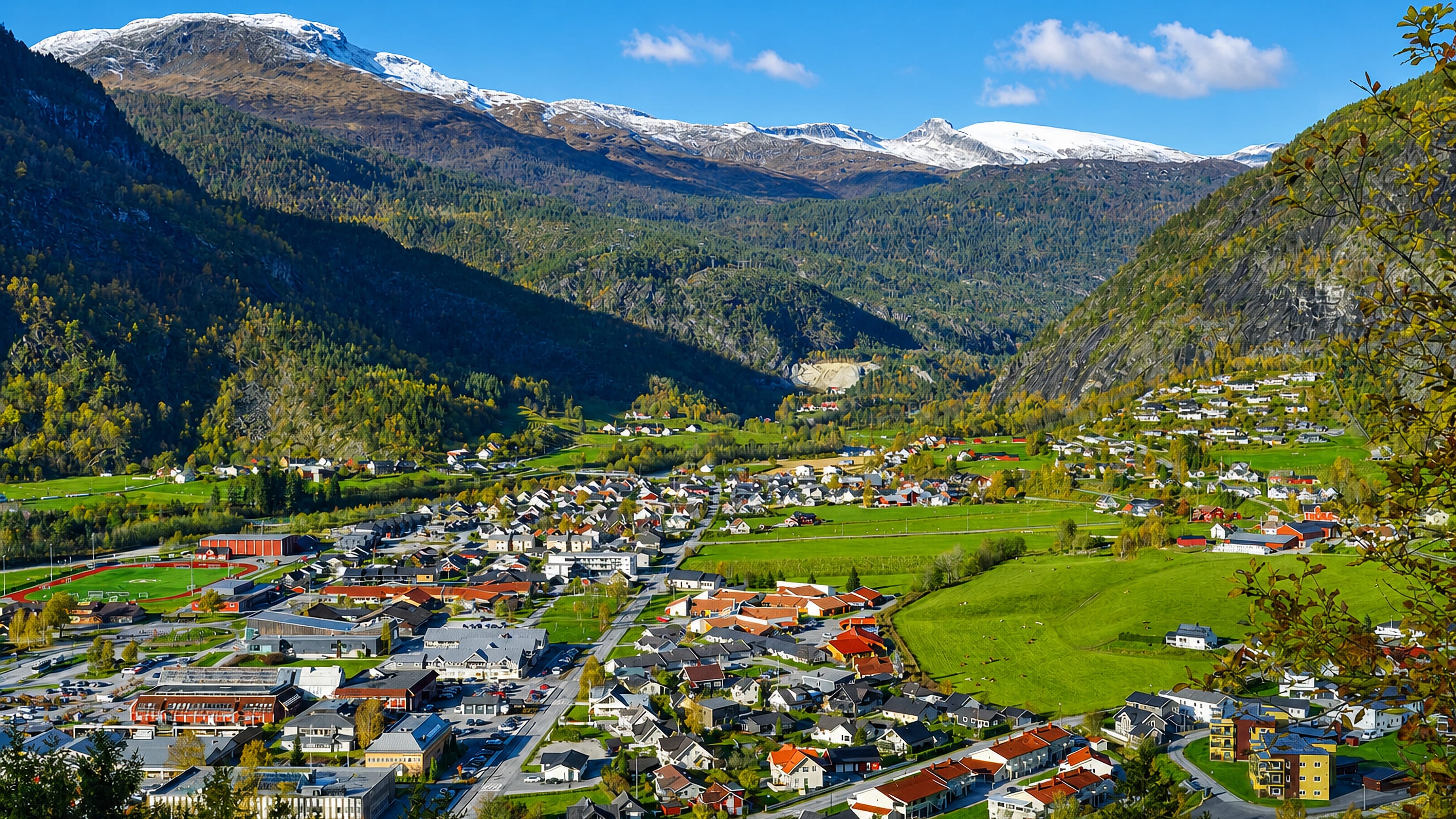
Gaupne is the centre of Luster Municipality in western Norway, set on the Gaupnefjorden where it branches off the Lustrafjorden.
Hotel links are affiliate links: booking through them may earn us a commission, at no extra cost to you. It never affects how places are ranked. How this works


Where to stay in Gaupne
The practical side of choosing where to sleep.
Beds gather at the fjord head. Gaupne carries the lodging near the centre, where the Gaupnefjorden ends against the slopes and the Sognefjellsvegen begins its climb toward the mountains, within reach of the shops and the services of the municipality. Stay here for the passes.
Out along the Lustrafjorden the smaller village of Solvorn offers a quieter base, its waterfront and the ferry to the Urnes stavkirke drawing summer travellers who come for the medieval church above the water. Up the valley toward Hafslo the older parishes spread across the farmland, with rooms near the Hafslo kirke and the lake country that suit drivers touring the inner fjords. Lodging thins beyond the centre.
Book ahead in summer, since Luster keeps only a modest stock of beds and the Sognefjellsvegen brings walkers and drivers through Gaupne when the high road opens for the season.
Find hotels in Gaupne
Direct booking searches for these neighbourhoods.
Gaupne fjord head
beds where the Gaupnefjorden ends and the Sognefjellsvegen begins its climb. Few places to stay nearby — book ahead.Find hotels in Gaupne fjord headvisitors to the Urnes stave churchSolvorn waterfront
a quiet base by the Lustrafjorden with the ferry to the Urnes stavkirke. Rooms are few around here — worth securing early.Find hotels in Solvorn waterfrontdrivers touring the inner parishesHafslo lake country
farmland rooms near the Hafslo kirke up the valley from the fjord. Rooms are few around here — worth securing early.Find hotels in Hafslo lake countryHotel links are affiliate links: booking through them may earn us a commission, at no extra cost to you. It never affects how places are ranked. How this works
About Gaupne
The fjord and the mountains meet here.
What is Gaupne known for?
Gaupne holds the head of the Gaupnefjorden where it splits from the Lustrafjorden, the administrative centre of Luster in the north-eastern part of Vestland and the village where the road to the high passes begins. The road climbs from here. The Sognefjellsvegen runs up through the village toward Skjolden and the mountains, while the wider municipality keeps the Urnes stavkirke, the medieval stave church that stands above the fjord near Solvorn, a draw for the whole district.
What are the main landmarks in Gaupne?
The stave church is the great draw. Urnes stavkirke stands above the Lustrafjorden near Solvorn, a medieval timber church on the world heritage list and the oldest of its kind, while Gaupne itself keeps the smaller Gaupne gamle kirke at the fjord head. The valleys hold many more.
Across Luster the parish churches gather their congregations, among them Dale kirke, Hafslo kirke, Joranger kirke, Fet kirke, Nes kirke and Solvorn kirke, each marking an old settlement along the fjords and lakes of this mountain country.
What is the history of Gaupne?
Gaupne grew at a meeting of routes. The fjord head where the Gaupnefjorden branches from the Lustrafjorden gathered the farms of the inner valleys, and from this point the old tracks climbed over the mountains toward the eastern dales, a crossing place long before any modern road. Faith ran deep in the valleys.
The medieval Urnes stavkirke, raised above the Lustrafjorden near Solvorn, carries carving older than the church itself and marks how early and how richly this country was settled, while parish churches like Dale kirke and Hafslo kirke spread across the farmland of Luster. The fjord carried the trade. For centuries boats moved the people and goods of the district up and down the Lustrafjorden, and Gaupne held the centre where the water and the mountain tracks met.
The modern road changed the scale but not the role. The Sognefjellsvegen now climbs from Gaupne toward Skjolden and the high passes, and the village remains the working centre of Luster, gathered where the fjord ends and the mountains begin.
Where is Gaupne?
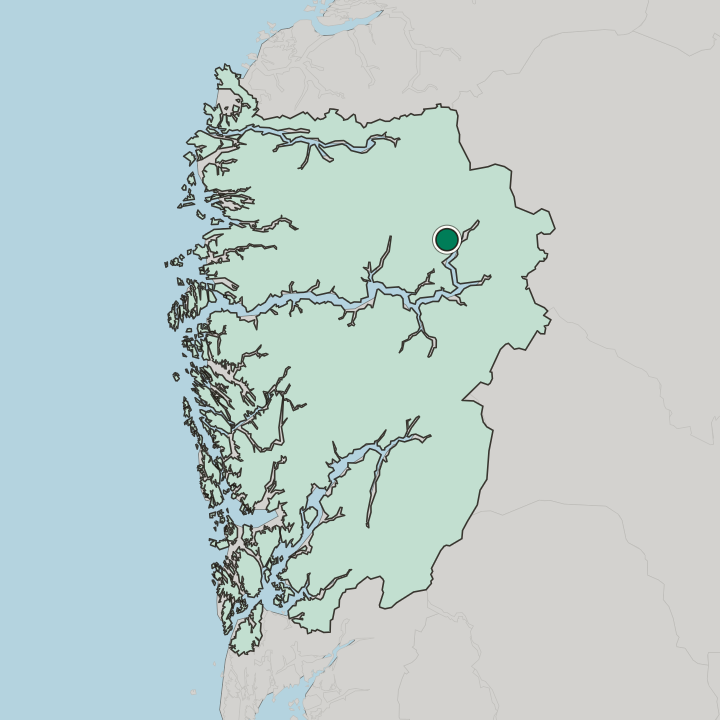
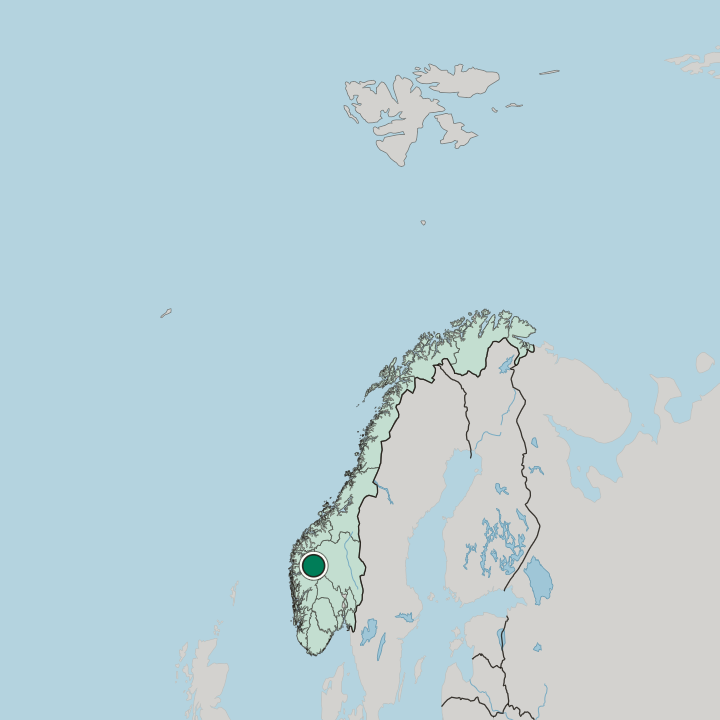
Gaupne sits at the head of the Gaupnefjorden, the short arm that branches from the Lustrafjorden in the north-eastern part of Vestland. Steep mountains rise on every side, leaving a narrow shelf of settled ground where the fjord ends and the valleys open inland toward Hafslo and the lake country. North-west across the mountains lies Veitastrond, reached over the high ground.
The fjord rules. From its head the Sognefjellsvegen climbs east toward Skjolden and the passes beyond, the only easy way out of this deep mountain corner.
What is the climate of Gaupne?
Gaupne has the sharper weather of the inner fjords. Lying deep among the mountains at the fjord head, far from the open coast, it sees colder, snowier winters than the seaward villages of Vestland, with the high country toward Skjolden and the Sognefjellsvegen holding deep snow long into the season. Frost settles hard here.
Summers are short but warm in the sheltered valley, the long northern daylight lighting the peaks, and the deep fjord keeping the air cool below them.
How do you get to Gaupne?
The road follows the fjord. Gaupne is reached along the inner waterways of Luster, with the route running up from Hafslo and the lower valleys to the fjord head, and the Sognefjellsvegen climbing on from the village toward Skjolden and the eastern passes. Buses serve the larger centres.
Cars do the rest. The municipality has no railway, so the fjord roads and the high mountain crossing carry all the traffic into this deep corner of north-eastern Vestland.
Common questions
What is the best area to stay in Gaupne?
Gaupne fjord head: drivers bound for the mountain passes. Solvorn waterfront: visitors to the Urnes stave church. Hafslo lake country: drivers touring the inner parishes.
Good for
More cities in Vestland
Updated September 2026