Pakistan · Punjab Province
Where to Stay in Chakwal, Punjab Province
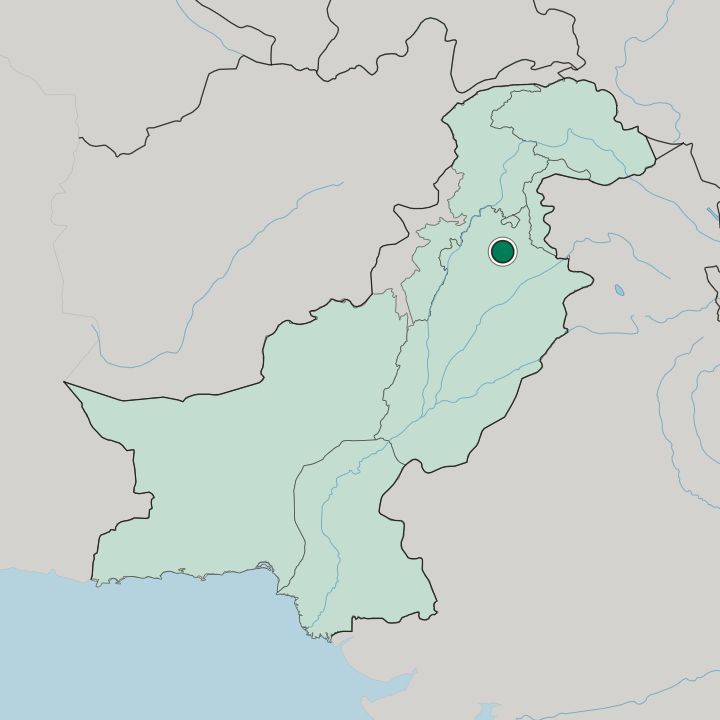
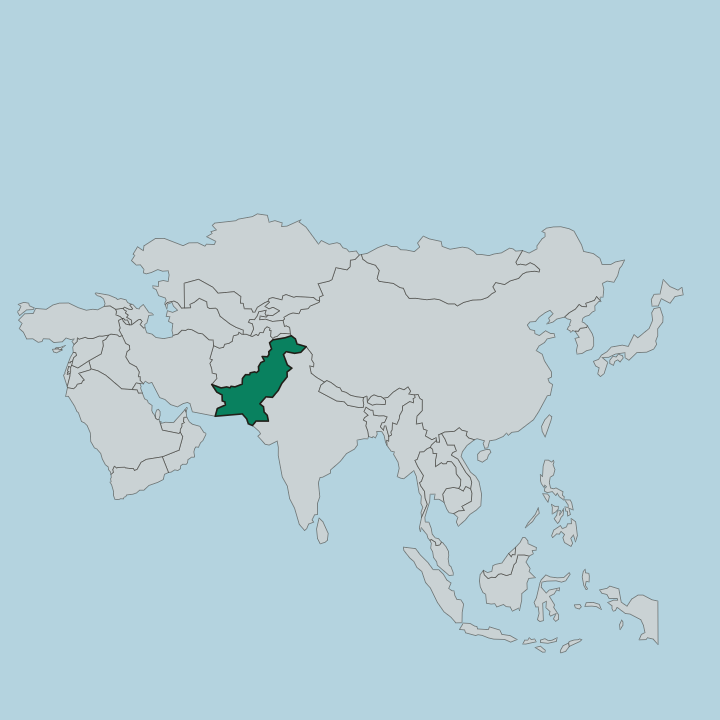
Chakwal is a city on the Pothohar Plateau, in Chakwal District in the Punjab province of Pakistan, and the district carries the city's name.
Hotel links are affiliate links: booking through them may earn us a commission, at no extra cost to you. It never affects how places are ranked. How this works


Where to stay in Chakwal
How the choice of base plays out on the ground.
Chakwal is a district town, and the choice of a room is a choice about which road to be on in the morning. The middle of the city is compact: the bazaar, the district offices and Government Graduate College Chakwal sit within a few hundred metres of one another, so a central room keeps the shops and the bus traffic inside walking distance. That is the argument for staying there.
The other option faces the motorway. The Talagang-Chakwal Road runs south-west out of the city to the Balkasar Interchange on the M-2 motorway between Islamabad and Lahore, and a room on that side saves the first half-hour of a long drive. Anyone whose business lies out in Chakwal District will lose less time there than in the centre.
There is a third answer, which is not to stay in Chakwal at all. Kallar Kahar, about 22 km south-west and beside the motorway interchange of the same name, has a lake that Babur called a child of Kashmir in his memoirs, and it carries the tourist rooms the district town does not. Chakwal keeps the offices; Kallar Kahar keeps the water.
Stays in the city are working stays, made by people dealing with Chakwal District rather than looking at it, and the practical question is driving time rather than outlook. Book on that basis.
Find hotels in Chakwal
Direct booking searches for these neighbourhoods.
The centre of Chakwal
The bazaar, the district offices and Government Graduate College Chakwal stand within a few hundred metres of one another, so a central room keeps the shops and the bus traffic inside walking distance.Find hotels in The centre of ChakwalDrivers joining the M-2 motorwayThe Talagang-Chakwal Road
Rooms on the south-west side of the city sit on the road out to the Balkasar Interchange, which trades the walkable centre for a faster start towards Islamabad or Lahore.Find hotels in The Talagang-Chakwal RoadMotorway travellers with a night to spendKallar Kahar
The lake town on the M-2 about 22 km south-west carries tourist rooms that Chakwal itself does not, and it is the closer base for the drive to the Katas Raj Temples.Find hotels in Kallar KaharHotel links are affiliate links: booking through them may earn us a commission, at no extra cost to you. It never affects how places are ranked. How this works
About Chakwal
Chakwal names its district.
What is Chakwal known for?
The city stands within Chakwal District in the Punjab province of Pakistan, and the shared name is the plainest statement of what the place does: it is the reference point the surrounding country is defined against. Two things carry the name past the district line. One is the groundnut, grown on rain-fed fields here and sold on as peanuts across Pakistan; the other is a recruiting record that put 460 men from Chakwal into the British Army in the First World War.
Khudadad Khan, born at Dab in the district, was the first South Asian to receive the Victoria Cross.
What are the main landmarks in Chakwal?
Chakwal's landmarks are working buildings rather than monuments. Government Graduate College Chakwal opened in 1949 on land given by Raja Sarfaraz Khan, a member of the Punjab Assembly, and it took its first intake of about 300 students under fourteen professors. In January 2020 the same assembly folded the college, and an engineering sub-campus at Balkassar, into the new University of Chakwal.
Chakwal railway station stands about a kilometre north of the centre. No train calls there now.
What is the history of Chakwal?
Chakwal is older than its district. Under British rule it was a tehsil of Jhelum district, and the 1901 census found fewer than seven thousand people in the town itself, with 248 villages under the tehsil. The district came much later.
Chakwal District was created on 1 July 1985, assembled out of the Chakwal subdivision of Jhelum, the Talagang subdivision of Attock and the police station at Choa Saidan Shah, and that is the frame every other administrative fact about the city hangs from. What the censuses also record is a population that left. In 1941 nearly a quarter of the town was Hindu and a fifth was Sikh.
At Partition in 1947 those families went to India, and the Muslim majority that stayed built the district that followed; by the 2017 census nineteen Hindus were left in the city. One of those who went was Manohar Lal Kapur, born in Chakwal on 13 May 1900, who wrote Urdu ghazals and nazms under the pen name Talib Chakwali and died in Delhi in 1988. The deeper past sits outside the city.
The Katas Raj Temples, about 25 km south in the Salt Range, stand around a pond Hindus hold sacred, and the oldest of them dates to the 6th century CE. Yahya Khan, born in Chakwal in 1917, carried the name furthest: he became the third President of Pakistan.
Where is Chakwal?
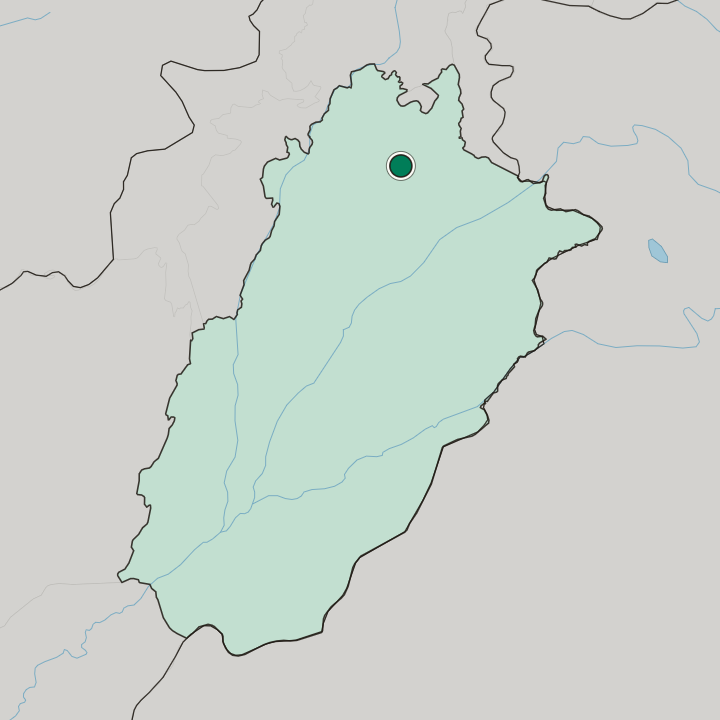
Chakwal sits on the Pothohar Plateau, on flat to gently undulating land broken by gullies and low hill ranges. The Soan River follows the northern boundary of Chakwal District, while the southern boundary runs up into the Salt Range. Chail tops out at 3,701 feet.
That is the highest point in the district, and between it and the Soan River the ground falls from about 2,000 feet below the hills to 1,400 feet, across a plain so cut up by ravines that it is difficult ground to cross.
What is the climate of Chakwal?
Punjab's interior governs the year. Chakwal lies well inside the province, away from any coast, and the climate is semi-arid to sub-humid, with almost all the rain arriving in the monsoon. How much arrives is the open question.
Annual totals swing between 250 mm and 1,500 mm, and the wet extreme brings soil erosion and occasional flooding to fields that depend on rain alone.
How do you get to Chakwal?
Every arrival in Chakwal is by road. The city lies about 90 km south-west of Islamabad and 270 km from Lahore, and the usual approach is the M-2 motorway between those two cities, leaving it at the Balkasar Interchange for the Talagang-Chakwal Road. Islamabad International Airport is the nearer of the two airports the city is reached from.
Chakwal railway station takes no trains. The Mandra-Bhaun Branch Line through it is closed, and the local traffic of Chakwal District now runs on the same roads a visitor arrives on.
Common questions
What is the best area to stay in Chakwal?
The centre of Chakwal: Short stops with district business. The Talagang-Chakwal Road: Drivers joining the M-2 motorway. Kallar Kahar: Motorway travellers with a night to spend.
Good for
More cities in Punjab Province
Updated September 2026