Russia · Leningrad Oblast
Where to Stay in Kirishi, Leningrad Oblast
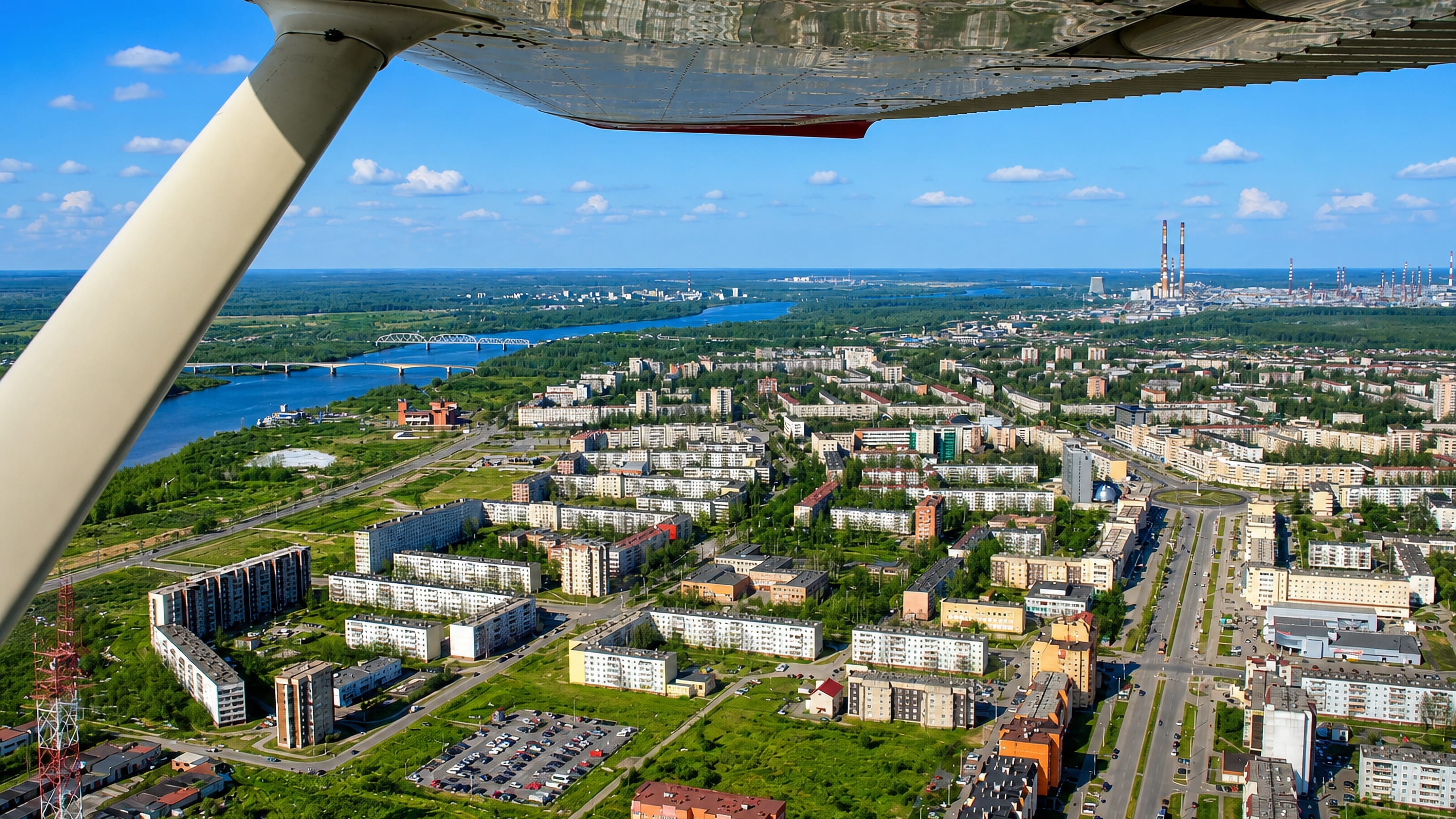
Kirishi stands on the right bank of the Volkhov southeast of Saint Petersburg, a town whose landmarks are memorials and a local museum.
Find your area →


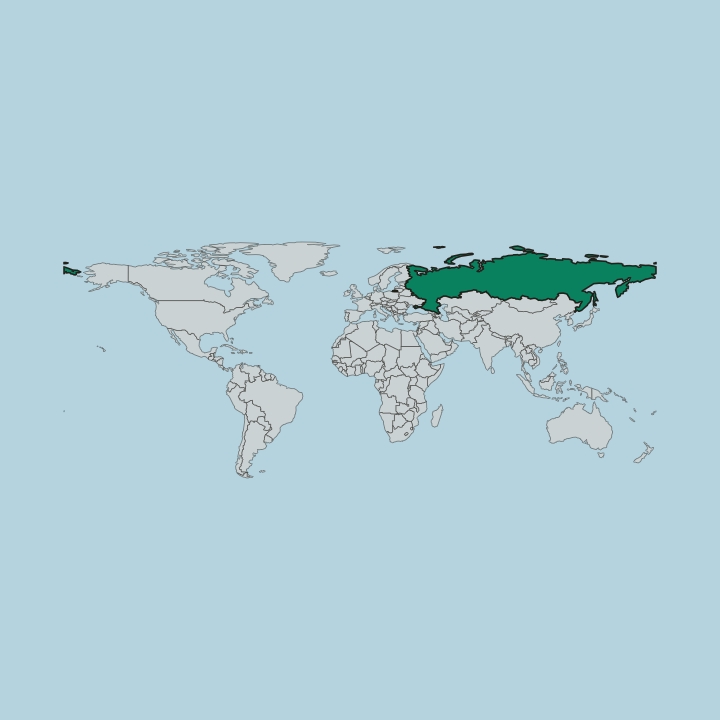
Where to stay in Kirishi
Where visitors usually base themselves, and why.
Kirishi is a working town. Beds are found in the built centre rather than at any edge, and the practical reason to sleep here is position: the Volkhov River, Kirishsky District around it, and Saint Petersburg 115 kilometres off. Kirishi's built-up part is small.
From it the Kirishi local museum, the T-34 monument and the ground where five stelae circle an Eternal Flame are all reachable on foot in an hour or so. That is the whole itinerary. The Volkhov side is the alternative.
Rooms facing the right bank trade the memorial squares for water and the flat country beyond, which is the better choice for anyone here on business who wants the evening to feel different from the day. No corner of the town takes long to reach. Kirishsky District is administered from the town, so the road and rail links that serve the district serve a visitor equally well, and the Line of Defence stele and the Echo of War memorial can be taken in between other errands.
Stay in Kirishi if you are working in the district or following the war memorials of the Volkhov, and if a quiet river town suits you better than another hour on the road.
About Kirishi
Memory is the subject here.
What is Kirishi known for?
The Mass Grave of Soviet Soldiers, the Echo of War memorial and the Line of Defence stele account for most of what Kirishi has set aside as landmarks, and five stelae stand in a circle around an Eternal Flame. A T-34 sits on a plinth. The Kirishi local museum holds the rest of the record, and the Volkhov River supplies the one piece of scenery the town did not have to build.
What are the main landmarks in Kirishi?
The memorials come first. The Mass Grave of Soviet Soldiers is the largest of them, with names carried on plaques across the burial ground and on five stelae ranged in a circle around an Eternal Flame. A gun stands on its own.
That monument records the Soviet troops who took Kirishi in 1943, the T-34 monument marks the same years, and the Echo of War memorial and the Line of Defence stele complete the set. The Kirishi local museum explains them.
What is the history of Kirishi?
Kirishi's founding year went unrecorded. What the register of Kirishi holds instead is a run of monuments, and every one of them points at the same few years in the middle of the twentieth century rather than at any founding. The Volkhov set the line.
A stele marks the Line of Defence, which is the plainest statement the town makes about what the river meant when the front stood along it. Fighting reached the town. The gun monument gives the year 1943 for the Soviet troops who took Kirishi, and the T-34 monument stands for the armour of that campaign.
The dead are counted carefully. A section of the burial ground carries the names of the fallen on plaques, and five stelae stand in a circle with an Eternal Flame at the centre of them, which is the arrangement chosen for the central memorial. The Echo of War memorial belongs to the same ground.
Afterwards came the ordinary things, a local museum to hold the papers and the photographs, and the administration of Kirishsky District, which is run from the town and gives it the traffic a small centre needs. The Volkhov does the rest. Its right bank is where Kirishi was built, and it remains the feature that settles how far the streets run and where the town stops.
Where is Kirishi?
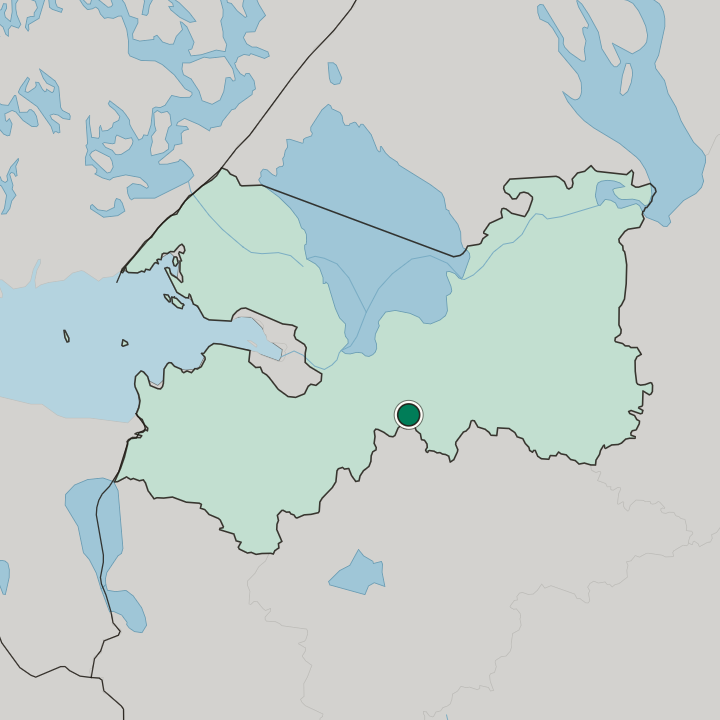
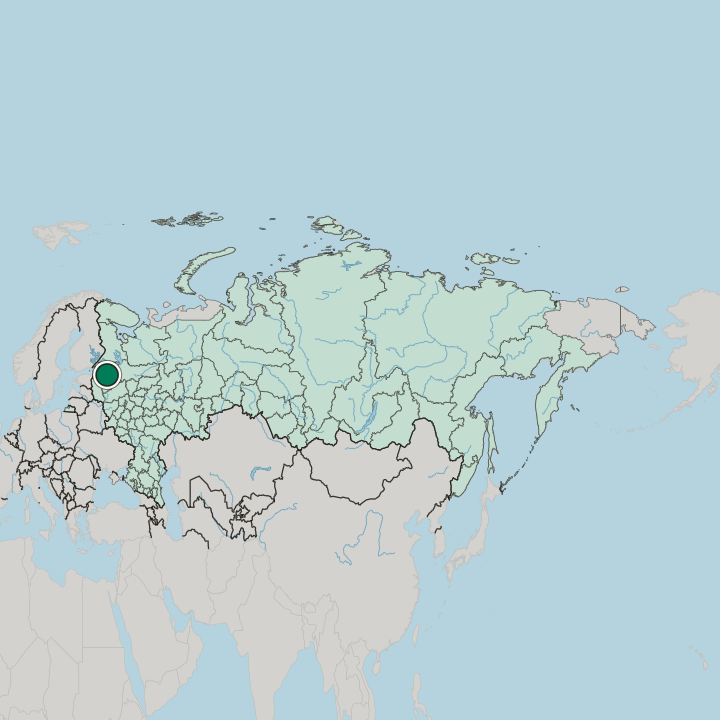
The right bank holds the town. Kirishi covers about 32 square kilometres of Leningrad Oblast, Russia, on the Volkhov River 115 kilometres southeast of Saint Petersburg, with Kirishsky District spreading around it. The country here is low.
The river is the only feature of any size, and it gives the town its water and its one open outlook.
What is the climate of Kirishi?
The Volkhov freezes each winter. Cold settles over this part of Leningrad Oblast for months at a stretch, and the memorial ground with its Eternal Flame is a bleak place to stand in January. The light returns by May.
Between then and the first frosts the Volkhov bank is worth an hour, and the Kirishi local museum takes the wet days that come with either half of the year.
How do you get to Kirishi?
Saint Petersburg is the reference point. Kirishi lies 115 kilometres southeast of it in Leningrad Oblast, which puts the town within a half-day of the city by road or by rail and makes it an easy detour rather than an expedition. The district runs from here.
Kirishsky District is administered in the town, so the roads that gather its villages also bring a visitor to the Volkhov River, the Kirishi local museum and the memorial ground in one arrival.
More cities in Leningrad Oblast
Updated September 2026