Taiwan
Fukien, Taiwan — Towns & Travel Guide
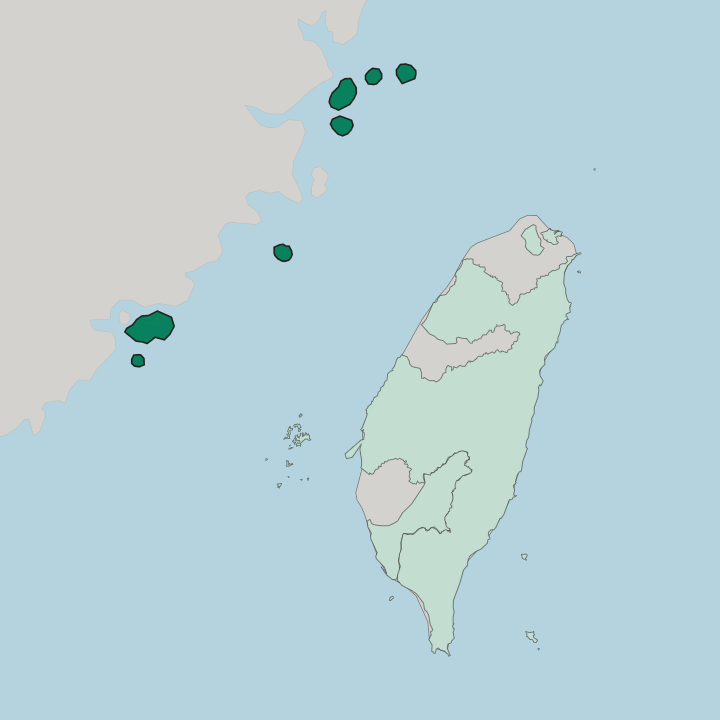
Fukien is Taiwan's tiny offshore province: the granite islands of Kinmen and Matsu, hugging the Chinese coast.
Hotel links are affiliate links: booking through them may earn us a commission, at no extra cost to you. It never affects how places are ranked. How this works


Towns & cities in Fukien
One town here has its own guide — it links to where to stay.
 Taiwan
Jincheng
Jincheng holds the south-western corner of Kinmen, county seat of Kinmen County and twice the seat of Fuchien Province.Where to stay →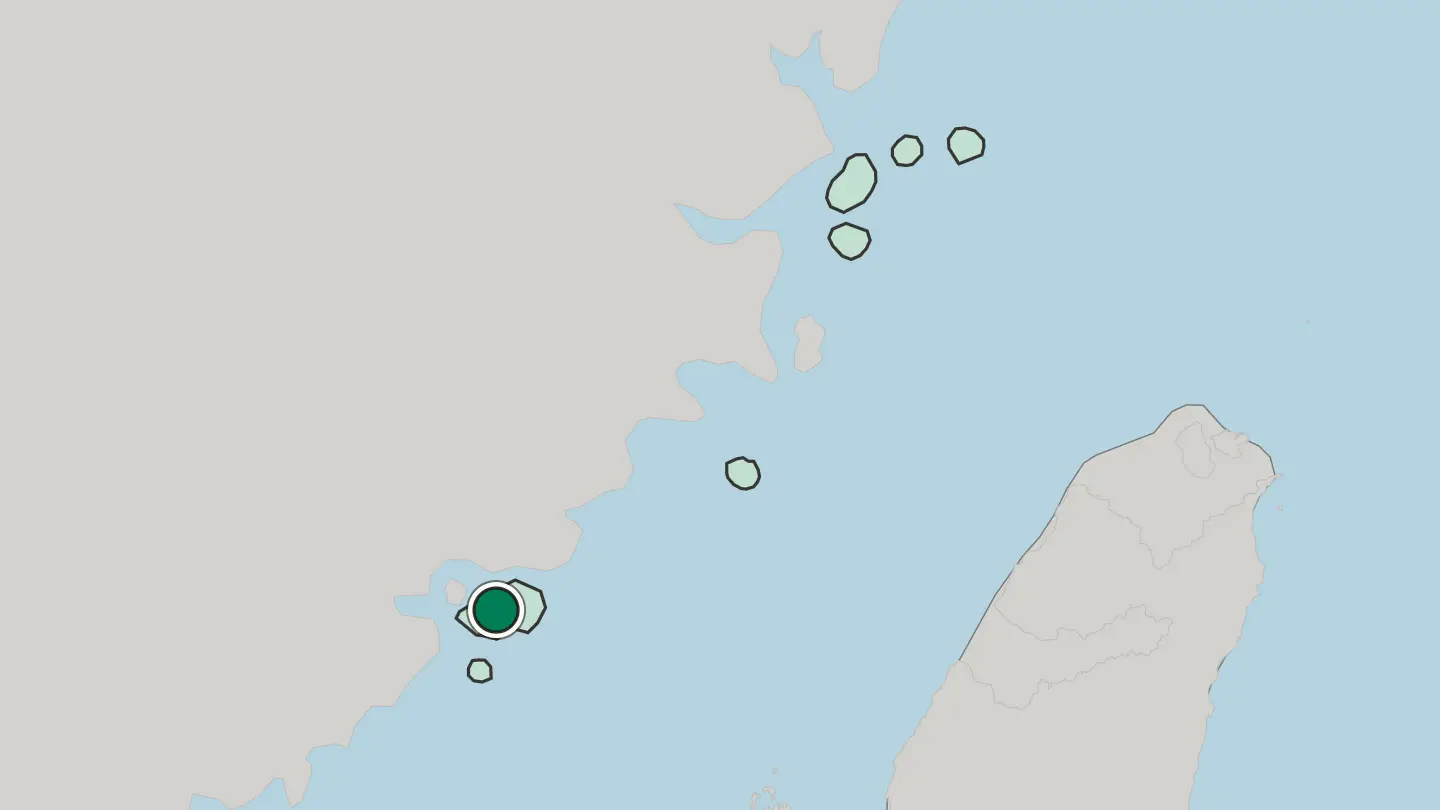
Hotel links are affiliate links: booking through them may earn us a commission, at no extra cost to you. It never affects how places are ranked. How this works
About Fukien
What is Fukien known for?
Fukien is Taiwan's front line made small. It gathers two clusters of islands that sit within sight of mainland China rather than near Taiwan proper: Kinmen, a short hop east of Xiamen, and the Matsu Islands off the mouth of the Min River. Cold War history is everywhere on the ground, from artillery tunnels bored into granite to villages once fought over.
The province is also known for the sorghum spirit distilled on Kinmen, Kaoliang, which most of Taiwan drinks.
Where is Fukien?
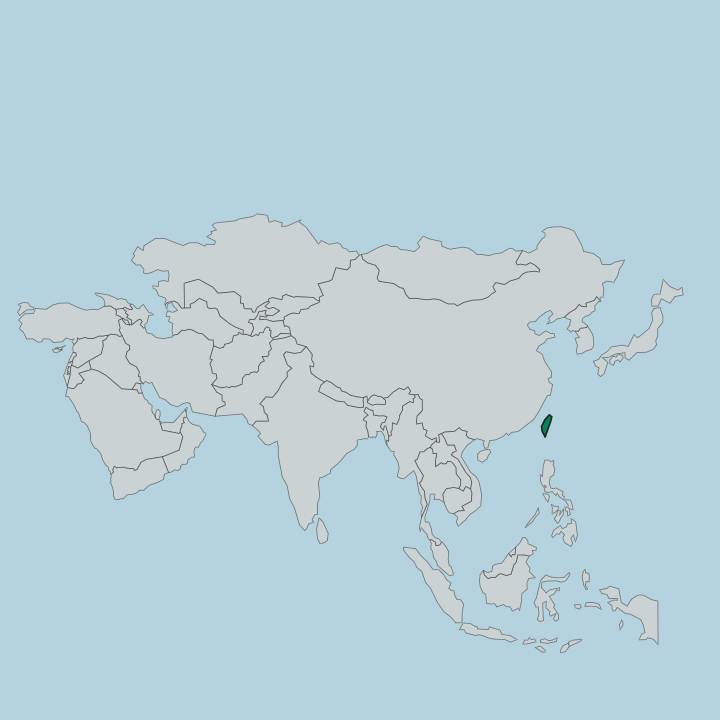
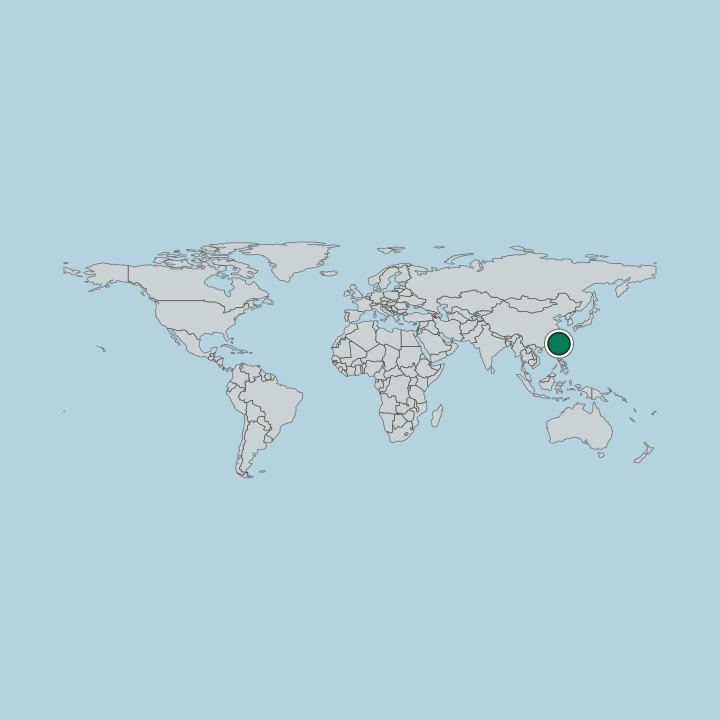
Fukien is scattered, not solid. It is Taiwan's offshore province, and its land does not touch the main island at all. Instead it is three small archipelagos strung along the Chinese seaboard, closer to the People's Republic than to the territory that governs them.
Kinmen, the larger group, lies only about 6 miles east of the port city of Xiamen, across the shallow water of Xiamen Bay. The main island there, Greater Kinmen, is a low granite plain of scrub and reservoirs, joined by the smaller Lesser Kinmen and a scatter of islets. From Kinmen it is roughly 116 miles west across the Taiwan Strait to the nearest shore of Taiwan proper.
The Matsu Islands sit far to the north of Kinmen, off the estuary of the Min River near Fuzhou, a chain of steep granite islets rather than a single landmass. Nangan and Beigan are the principal Matsu islands, cliff-edged and rugged where Kinmen is flat. Between the two counties lies open sea and a long stretch of the mainland coast.
The whole province adds up to a fraction of a normal Taiwanese county, its territory measured in dozens of islands rather than square miles of ground. This is geography defined by a strait and a border.
What is Fukien like?
Fukien feels like the mainland that stayed. Its people descend from Fujianese fishermen and farmers who crossed the narrow water generations ago, and the culture carries their speech and their building styles far more than it echoes Taipei. On Kinmen the everyday language is Hokkien, the Southern Min tongue of the Xiamen coast; on Matsu people speak the Fuzhou dialect of the Min River estuary, a separate branch that Kinmen's islanders cannot readily follow.
That split runs through the architecture too. The villages are built in the swallowtail-roofed Fujian courtyard style, in grey granite and red brick, and many of Kinmen's finest houses were paid for by emigrants who made money in Southeast Asia and sent it home. War is the other thread.
Decades on the front line left the islands studded with bunkers, slogans and reclaimed battlefields, and the memory of the shelling is woven into daily life rather than filed away. Kinmen turned its old artillery casings into a famous line of forged steel knives. Its distillery turned locally grown sorghum into Kaoliang, the fierce spirit that now funds much of the county.
Faith is close to the surface as well, with Mazu, the sea goddess who gives Matsu its name, watched over by fishing families on both groups of islands. It is a small and insular world, and a deeply traditional one.
What is the history of Fukien?
Kinmen has guarded this coast for a long time. Walls went up on the island in 1387 to hold off pirates, and the fortified gateway gave Kinmen its name, meaning golden gate. The modern province was forged in the Chinese Civil War.
When the mainland fell in 1949, Republic of China forces held Kinmen against a communist landing at the Battle of Guningtou, keeping this sliver of Fujian while losing the rest. The islands then endured years as the front line, most fiercely during the 1958 artillery bombardment that rained shells on Kinmen from the mainland. The guns fell silent.
Military rule was not lifted until 1992, and the shift to tourism followed.
What is the climate of Fukien?
Fukien is warm and humid. The islands share the subtropical climate of the Fujian coast, with hot muggy summers and mild winters that rarely turn cold. Rain arrives mostly in the warmer half of the year, and the granite plains of Kinmen bake and dry between downpours.
Sea winds off the Taiwan Strait keep the air moving and can whip up spring fog, the same haze that draws visitors to Matsu when its shores glow with blue bioluminescent tides. It is a maritime climate, never far from the water.
How do you get to Fukien?
For Fukien, the plane is how nearly all travellers arrive. Kinmen and Matsu each have their own airport, served by short domestic hops from Taipei and other Taiwanese cities across the Taiwan Strait. No direct flight links the two groups.
Most travellers pick one, or route back through the main island between them, since the province holds no bridge across its own waters. Ferries also cross the narrow channel from Xiamen to the Shuitou pier on Kinmen, linking the province to the mainland it sits beside. Scooters and local buses reach the villages and old battlefields.
Common questions
What is the best area to stay in Fukien?
Jincheng: arriving in Fukien and seeing Kinmen. Kinmen's outer villages: sleeping inside a century-old Kinmen dwelling. Nangan, Matsu: Matsu's stone villages and night skies.
Good for
More regions in Taiwan
Updated September 2026