United States · California
Where to Stay in Bellflower, California
Bellflower is a city of the Gateway Cities in Los Angeles County, California, settled from 1906 and incorporated as a municipality in 1957.
Hotel links are affiliate links: booking through them may earn us a commission, at no extra cost to you. It never affects how places are ranked. How this works


Where to stay in Bellflower
The practical side of choosing where to sleep.
Bellflower works as a base rather than a stop. The city was settled from 1906 and incorporated only in 1957, and it kept the shape of a residential suburb throughout, which means the reason to sleep here is what lies within a short drive rather than what stands on its own streets. Position is the whole argument.
Days aimed at the Columbia Memorial Space Center, the Los Angeles County Fire Museum or the Hathaway Ranch Museum all begin comfortably from a Gateway Cities address, and the dense road grid of Los Angeles County keeps those runs short. Two ways to think about it. Staying in Bellflower itself trades evening choice for quiet streets, easy parking and a shorter run out to Long Beach and Pico Rivera than a central room would give.
Pick Los Angeles if the nights matter. The centre carries the range of rooms and the transit that a suburb of this size cannot match, and it stays close enough that Bellflower becomes an outing from it rather than the reverse. Watts Towers and El Dorado Park both fall inside the same day either way.
Find hotels in Bellflower
Direct booking searches for these neighbourhoods.
Bellflower
The incorporated suburb itself, quiet around Holy Family Catholic Church and easy to park in, with short drives across the Gateway Cities. Rooms are few around here — worth securing early.Find hotels in Bellflowerevenings near El Dorado Park with a wider choice of roomsLong Beach
The larger neighbour whose hotel trade covers what a small Gateway Cities municipality like Bellflower cannot, with El Dorado Park on its own ground.Find hotels in Long Beachtravellers wanting the metropolitan centre with Bellflower as a short outingLos Angeles
The core of the Los Angeles metropolitan area, where the fullest range of rooms sits and Watts Towers falls inside the same day.Find hotels in Los AngelesHotel links are affiliate links: booking through them may earn us a commission, at no extra cost to you. It never affects how places are ranked. How this works
Things to do in Bellflower
Ranked by global recognition; descriptions from Wikidata (CC0).
Museums & Galleries
2- Oldest McDonald's restaurant Heritage
- Hathaway Ranch Museum
Churches & Religious Sites
2- St. Isidore Catholic Church Heritage
- Holy Family Catholic Church
Stadiums & Sports
3- Lions Drag Strip
- El Dorado Park, Long Beach, California
- Pico Rivera Sports Arena
Parks & Gardens
1- Japanese Village and Deer Park
Landmarks & Notable Places
2- Orin Jordan House Heritage
- Henry Gage Mansion
worth knowingacross 5 categories in Bellflower
About Bellflower
Suburban Los Angeles County, plainly.
What is Bellflower known for?
Bellflower belongs to the Gateway Cities, a cluster of small municipalities packed into the Los Angeles metropolitan area, and what recommends it to a traveller is position rather than spectacle. The landmark record nearby runs to the Columbia Memorial Space Center, the Los Angeles County Fire Museum and the Hathaway Ranch Museum. Holy Family Catholic Church marks the civic core.
Motor-sport history sits close, at the old Lions Drag Strip.
What are the main landmarks in Bellflower?
Watts Towers is the name that carries furthest. The towers stand on the landmark record kept around Bellflower, next to the Columbia Memorial Space Center and the Los Angeles County Fire Museum, though none of the three belong to the city's own street grid. Closer in, the record turns domestic.
Casa de Parley Johnson, the Henry Gage Mansion, Heritage House, the Orin Jordan House and the Darius David Johnston House form a run of preserved dwellings, and Holy Family Catholic Church covers the ecclesiastical side.
What is the history of Bellflower?
Two dates frame the place. The founding is put at 1906, but incorporation waited until 1957, and that half-century is the interesting part, since it covers the years when the ranch country preserved in the older house names gave way to continuous suburb. Ranch names survive the change.
Los Cerritos Ranch House and the Hathaway Ranch Museum both hold the older land use in view, while Casa de Parley Johnson and the Henry Gage Mansion carry the names of families who held ground here before the street grid was drawn. Later layers sit lighter on the ground. The Lions Drag Strip records a motor-sport chapter, and the Japanese Village and Deer Park the same mid-century appetite for roadside attractions built around the car.
Then came preservation. Heritage House, the Orin Jordan House and the Darius David Johnston House were kept when most of their neighbours were not, while Holy Family Catholic Church held its place in the civic fabric. The Columbia Memorial Space Center and the Los Angeles County Fire Museum added a museum layer the older Bellflower never had, and Watts Towers stands on the same county record further out.
Where is Bellflower?
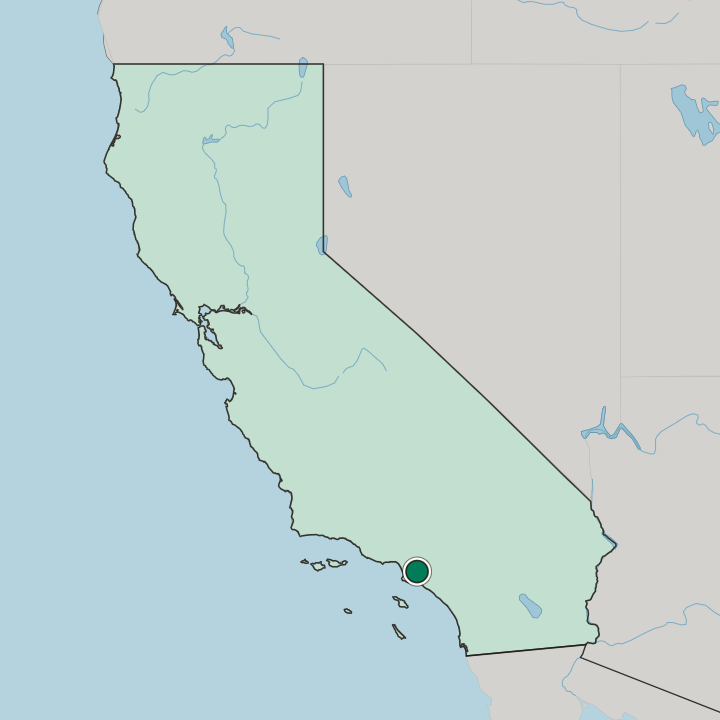
Flat ground, tightly built. Bellflower covers about sixteen square kilometres of the Gateway Cities, which puts it among the more densely built municipalities in Los Angeles County and explains the uninterrupted run of its street grid. No river or ridge organises it.
The setting is the metropolitan floor itself, and the line between Bellflower and Long Beach or Pico Rivera reads as a change of sign rather than a change in the land.
What is the climate of Bellflower?
Bellflower shares the weather of the Los Angeles metropolitan area entirely. The city sits in the subtropical band, which here means a long dry warm season through the middle of the year and a cooler, damper stretch at either end of it. Rain is the exception.
Anyone timing a visit around the Columbia Memorial Space Center or an afternoon at El Dorado Park is choosing between degrees of warmth rather than between seasons, and the calendar changes what goes in the suitcase more than what is open.
How do you get to Bellflower?
Arrival is by road, through Los Angeles. Bellflower runs no airport and no long-distance terminal of its own, so a visitor lands elsewhere in the Los Angeles metropolitan area and finishes the journey by car, which in a county built this densely is a question of interchanges rather than miles. The Gateway Cities sit tight together.
Pico Rivera and Long Beach are close enough that crossing between them barely registers, and the run in from central Los Angeles is short by the standards of the region.
Common questions
What is the best area to stay in Bellflower?
Bellflower: days built around the Columbia Memorial Space Center and the Hathaway Ranch Museum. Long Beach: evenings near El Dorado Park with a wider choice of rooms. Los Angeles: travellers wanting the metropolitan centre with Bellflower as a short outing.
Good for
More cities in California
Updated October 2026