United States · California
Where to Stay in Santa Ana, California
Santa Ana is the county seat of Orange County, a Southern California city whose museums, zoo, and old courthouse stand inland from the Orange Coast.
Hotel links are affiliate links: booking through them may earn us a commission, at no extra cost to you. It never affects how places are ranked. How this works


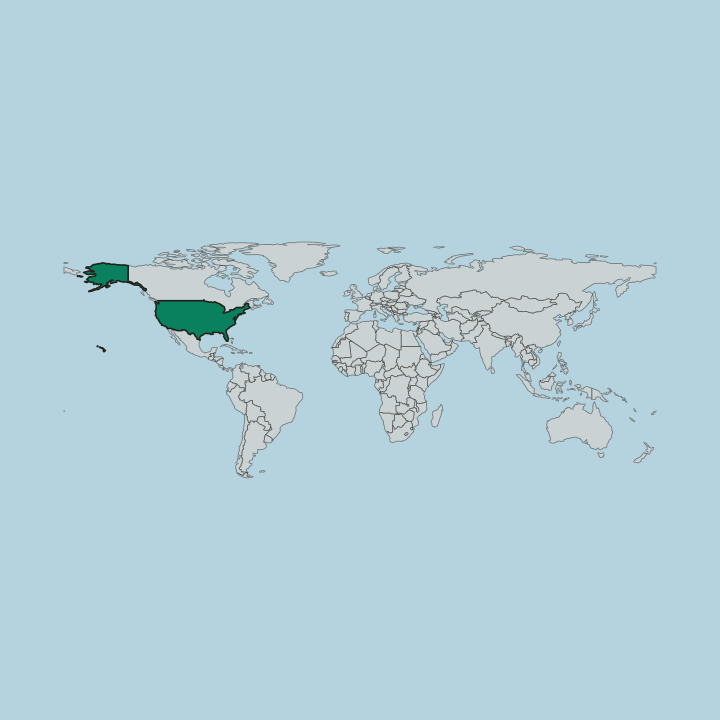
Where to stay in Santa Ana
How the choice of base plays out on the ground.
The Old Orange County Courthouse is the pivot. Rooms in the blocks around it put the civic core, the restaurants, and the oldest surviving streetfront within walking distance, which counts for a lot in a city otherwise laid out for cars, and this is the one quarter where an evening happens on foot. Downtown fills on court days.
Booking ahead pays off whenever the county is sitting. Museums make the second case. Beds near the Bowers Museum and the Heritage Museum of Orange County trade the nightlife for a short approach to the collections, while the Santa Ana Zoo and the Discovery Science Center pull families to a quieter residential quarter again.
Distances inside the city are small. Roughly 71 square kilometres of flat ground means a stay in any of the three reaches the other two in minutes by car. The region is the other half of the calculation.
Santa Ana sits inside Greater Los Angeles and a short run from the Orange Coast, so beach mornings and county-seat nights combine easily for anyone willing to drive, and mid-week rooms here tend to be easier to find than on the shore. Want the courthouse, the museums, and dinner without a car? Stay central. If the sand is the reason for the trip, treat this as the inland base and plan the driving around it.
Find hotels in Santa Ana
Direct booking searches for these neighbourhoods.
Courthouse downtown
The grid around the Old Orange County Courthouse, where the county's civic business and the city's oldest streetfront share the same few blocks.Find hotels in Courthouse downtownmuseum days with a short walk inThe Bowers Museum quarter
Streets within a short approach of the Bowers Museum and the Heritage Museum of Orange County, where the collections rather than the bars set the pace. Beds are limited here, so book early.Find hotels in The Bowers Museum quarterfamilies splitting a day between the zoo and the science centreSanta Ana Zoo side
Residential ground beside the Santa Ana Zoo and within a short drive of the Discovery Science Center, aimed at families rather than county business. Lodging is scarce in this area; reserve in advance.Find hotels in Santa Ana Zoo sideHotel links are affiliate links: booking through them may earn us a commission, at no extra cost to you. It never affects how places are ranked. How this works
Things to do in Santa Ana
Ranked by global recognition; descriptions from Wikidata (CC0).
Museums & Galleries
3- Old Orange County Courthouse Heritage
- Bowers Museum
- Discovery Science Center
Landmarks & Notable Places
3- Howe-Waffle House and Carriage House Heritage
- George W. Minter House Heritage
- George L. Wright House Heritage
worth knowingacross 2 categories in Santa Ana
About Santa Ana
County business, and a lot of collections.
What is Santa Ana known for?
Santa Ana holds the seat of Orange County, which stacks the courts, the county offices, and a downtown of old civic buildings into one grid instead of scattering them across the Greater Los Angeles sprawl. The Bowers Museum carries the largest name. Families more often turn to the Santa Ana Zoo or the Discovery Science Center.
Its own description as a regional economic and cultural hub for the Orange Coast is borne out by the sheer number of institutions packed inside a city this size.
What are the main landmarks in Santa Ana?
Collections outnumber monuments. The Bowers Museum holds the widest reputation of the three big draws, the Discovery Science Center takes the hands-on end, and the Santa Ana Zoo keeps the small animal collection that families across Orange County have used for decades. Civic and domestic buildings supply the rest.
The Old Orange County Courthouse still sits at the centre of county business, while the Heritage Museum of Orange County, the Howe-Waffle House and Carriage House, the George W. Minter House, and the George L. Wright House hold the older residential scale in place.
What is the history of Santa Ana?
The city counts from 1869. It was laid out that year on the flat ground inland from the Orange Coast, and the decision that mattered came soon after, when Orange County settled its seat here and brought the courts, the records, and the salaried business of running a county into a town that had been farmland. The name itself is Spanish and older than the grid.
Buildings record the sequence. The Old Orange County Courthouse is the plainest evidence, a civic pile raised at the middle of a place whose founders could still remember the fields. Around it stood the houses of the people who ran the county, and the Howe-Waffle House and Carriage House, the George W. Minter House, and the George L. Wright House survive from that stratum.
The Heritage Museum of Orange County keeps the agricultural half of the same account, the ranch and orchard version that the courthouse displaced. Growth then came from outside. As Greater Los Angeles spread across Southern California, Santa Ana stopped being a county town and turned into one of the region's larger cities, a regional economic and cultural hub for the Orange Coast with the county's institutions still stacked in the middle of it.
The orchards went. Museums took over the job of remembering them, which is how the Bowers Museum and the Discovery Science Center came to sit within a few minutes of a nineteenth-century courtroom.
Where is Santa Ana?
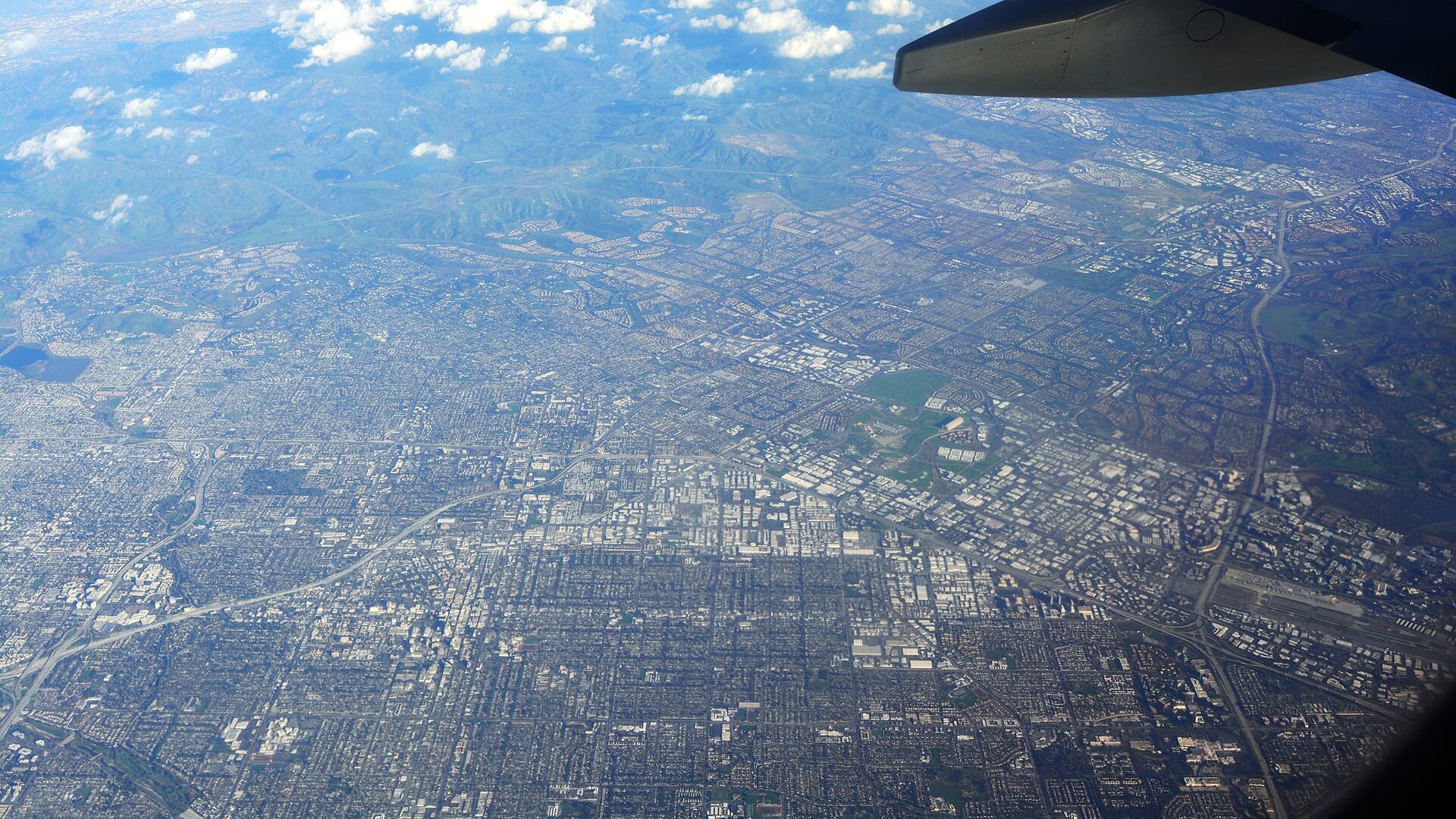
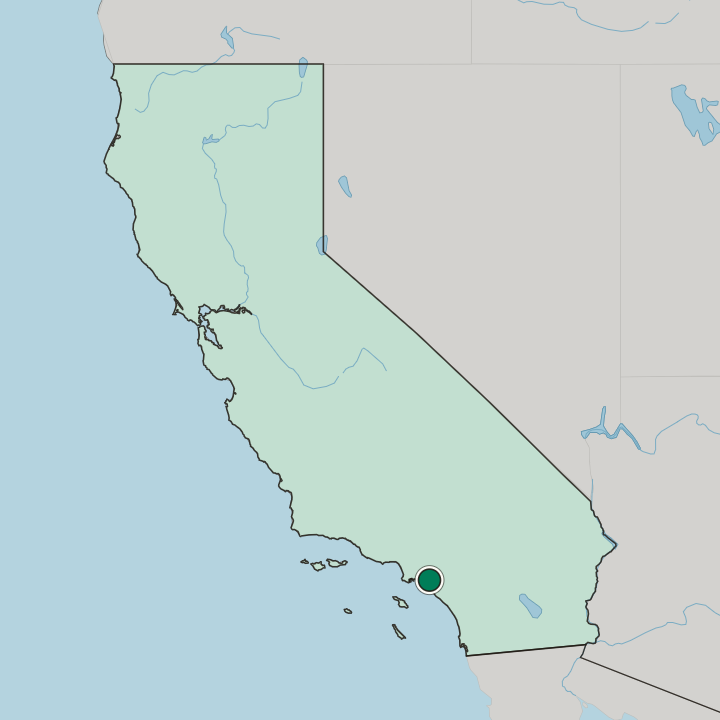
Flat ground, no relief to speak of. Santa Ana occupies part of the coastal plain of Orange County, set back from the Orange Coast on the inland side, with roughly 71 square kilometres of level street grid and nothing steep enough inside the city to break the pattern. It falls within Greater Los Angeles.
That places it in the continuous built-up belt of Southern California, where one city's edge is usually another city's beginning rather than open country.
What is the climate of Santa Ana?
The ocean gets the first word. Sea air reaches Santa Ana off the Orange Coast without much ground to cross, trimming the summer highs and holding winter nights well clear of freezing, though the marine layer burns off earlier here than it does over the sand. Rain belongs to winter.
The subtropical band this stretch of Southern California falls in strings the dry months back to back, so the flat land around the city reads brown far longer than it reads green.
How do you get to Santa Ana?
Roads bring in nearly everyone. Santa Ana sits inside the Greater Los Angeles freeway grid, so arriving from anywhere in Southern California is a question of traffic rather than distance, and the county's own network converges on the seat because the courts and the offices do. The Orange Coast is one more freeway out.
Once here, the flat grid links the Bowers Museum, the Old Orange County Courthouse, and the Santa Ana Zoo tightly enough to take all three in a single day.
Common questions
What is the best area to stay in Santa Ana?
Courthouse downtown: an evening on foot near the Old Orange County Courthouse. The Bowers Museum quarter: museum days with a short walk in. Santa Ana Zoo side: families splitting a day between the zoo and the science centre.
Good for
More cities in California
Updated October 2026