United States · California
Where to Stay in Oakland, California
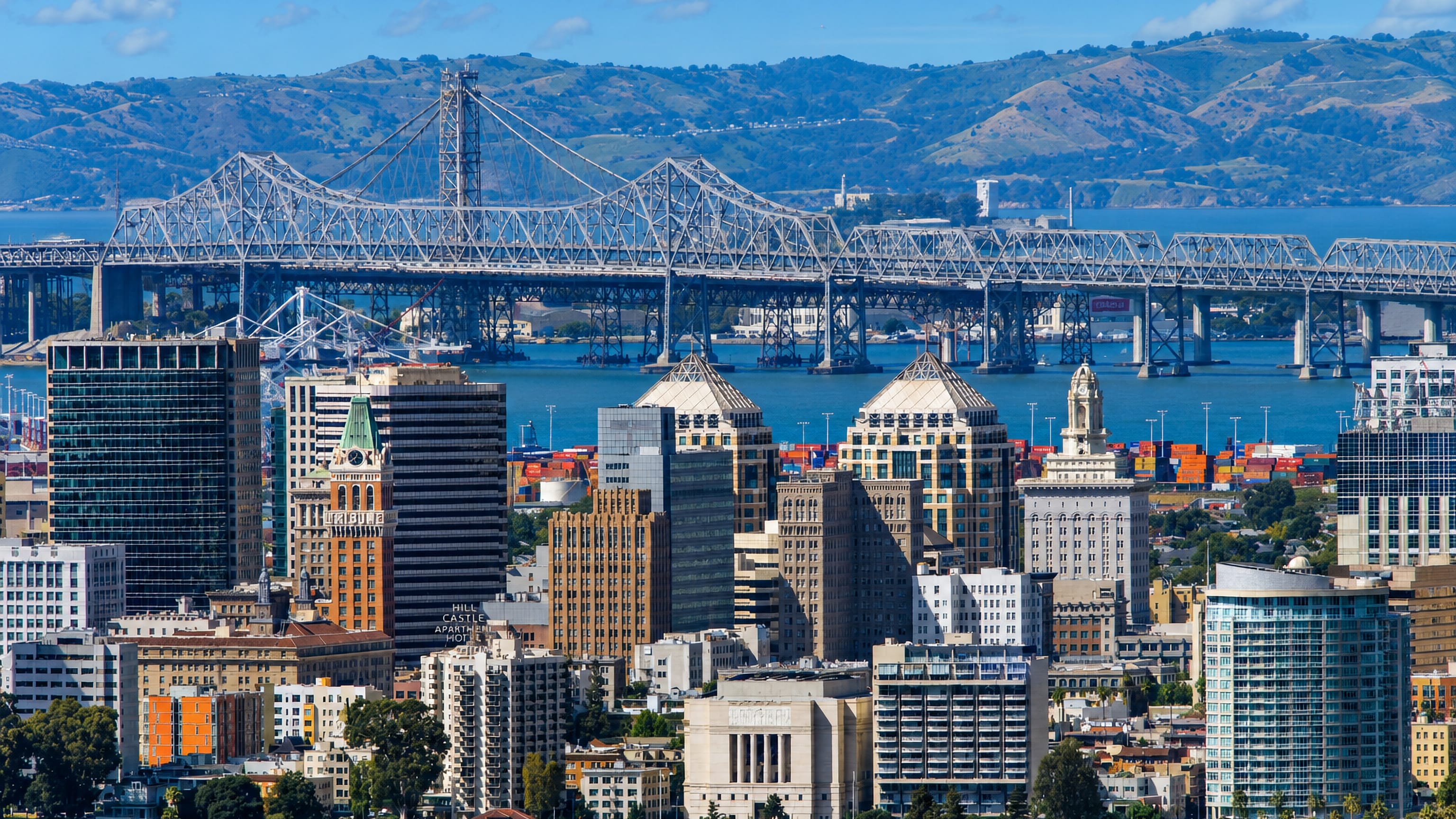
Container cranes line the water at Oakland, a port city in California's East Bay, known for the Port of Oakland and the Oakland Museum of California.
Hotel links are affiliate links: booking through them may earn us a commission, at no extra cost to you. It never affects how places are ranked. How this works


Where to stay in Oakland
Where you base yourself shapes the visit — here's the character of each area.

 OaklandUnited Statesleafy, residential slower stays
Rockridge
Hillside avenues above the centre near the Pardee Home museum, quieter than the waterfront.Rockridge →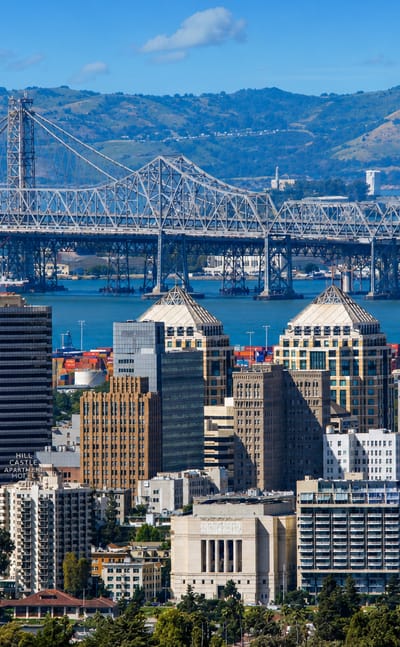 OaklandUnited States
Chinatown
Oakland Chinatown dates from 1850, a traditionally Chinese quarter that shares its streets with the Cathedral of Christ the Light.Where to stay →OaklandUnited StatesDimond District
The Dimond District centres on the MacArthur Boulevard and Fruitvale Avenue crossing in East Oakland, two miles east of Lake Merritt.Where to stay →OaklandUnited StatesFruitvale
Fruitvale sits four miles southeast of Downtown Oakland, holding the city's largest Hispanic community and the Antonio Maria Peralta House.Where to stay → OaklandUnited States
West Oakland
West Oakland fills the northwestern corner of Oakland, with the Port of Oakland along its waterfront and Emeryville just to the north.Where to stay →OaklandUnited StatesElmhurst
Elmhurst is a residential neighborhood at the southernmost edge of Oakland, a separate town until 1909 and reckoned part of East Oakland since.Where to stay →Hotel links are affiliate links: booking through them may earn us a commission, at no extra cost to you. It never affects how places are ranked. How this works
Find hotels in Oakland
Direct booking searches for these neighbourhoods.
Downtown
Rail lines, office towers, and the Cathedral of Christ the Light gathered around the transit core.Find hotels in Downtownparkland and lagoon morningsLake Merritt
A tidal lagoon ringed with parkland and the storybook grounds of Children's Fairyland.Find hotels in Lake Merrittwaterfront and the working portJack London Square
Restored estuary piers and old produce warehouses in salt air beside the harbour.Find hotels in Jack London SquareHotel links are affiliate links: booking through them may earn us a commission, at no extra cost to you. It never affects how places are ranked. How this works
Things to do in Oakland
Ranked by global recognition; descriptions from Wikidata (CC0).
Museums & Galleries
3- Oakland Museum of California
- Pacific Pinball Museum
- Friends of Peralta Hacienda Historical Park
Churches & Religious Sites
6- First Unitarian Church of Oakland Heritage
- Greek Orthodox Church of the Assumption Heritage
- Trinity Church Heritage
- First Presbyterian Church Sanctuary Building Heritage
- Church of St. James the Apostle Heritage
Show 1 more →
- Brooklyn Presbyterian Church Heritage
Stadiums & Sports
1- Oakland Ballpark
Parks & Gardens
1- Children's Fairyland
Landmarks & Notable Places
5- Camron-Stanford House Heritage
- White Mansion Heritage
- Alfred H. Cohen House Heritage
- Antonio Maria Peralta House Heritage
- Locke House Heritage
worth knowingacross 5 categories in Oakland
About Oakland
Oakland is known first as a working harbour.
What is Oakland known for?
The Port of Oakland lines the tidal edge of the East Bay, its cranes moving cargo across the West Coast trade that the city has handled since the gold rush years. Culture sits close behind the docks. The Oakland Museum of California gathers the state's art and history under one roof, Children's Fairyland keeps its storybook grounds beside Lake Merritt, and the Cathedral of Christ the Light rises in glass and timber near the water.
Sport and music carry the rest of the name.
What are the main landmarks in Oakland?
Oakland's landmarks range from harbour cranes to old family homes. The Oakland Museum of California holds the flagship collection of state art and natural history, while the glass-and-timber Cathedral of Christ the Light marks the downtown skyline. Beside Lake Merritt, Children's Fairyland keeps its storybook sets, and the lakeside Camron-Stanford House preserves a Victorian villa from the city's early decades.
The African American Museum and Library at Oakland records the community's own history, and the Pardee Home keeps a governor's residence intact. History stands on many corners. Sport gathers at the Oakland Ballpark by the estuary.
What is the history of Oakland?
Oakland was incorporated in 1852, a town chartered on the East Bay flats in the surge of settlement that the California gold rush drove into the young state. The land had belonged to the Peralta family under Mexican rule, their ranch spreading across the oak groves that gave the place its name. The Antonio Maria Peralta House still stands from that earlier world.
Railways made the rest. The transcontinental line reached the estuary in the following decades, and Oakland became the terminus where the tracks met the water, a role that fixed its future as a shipping town. The harbour deepened into the Port of Oakland, and cargo replaced gold.
Newcomers came by ship and rail across the generations, and neighbourhoods spread up from the shore toward the hills as each wave of settlers reshaped the streets. The African American Museum and Library at Oakland keeps the record of the communities who settled here through the great migrations. Churches, homes, and civic buildings from those years survive as landmarks, among them the Camron-Stanford House on Lake Merritt and the Pardee Home, both raised while the town was still finding its shape.
The oaks are gone. The name they left endures.
Where is Oakland?
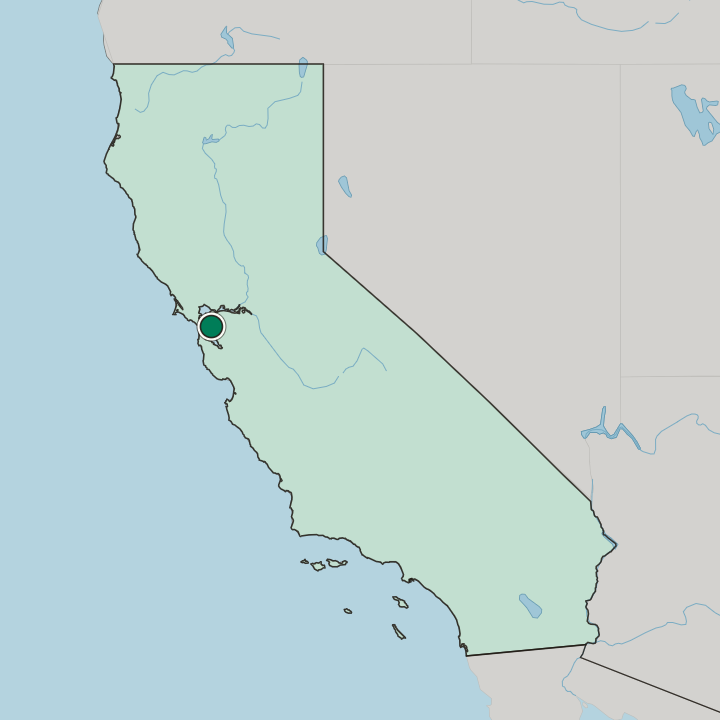
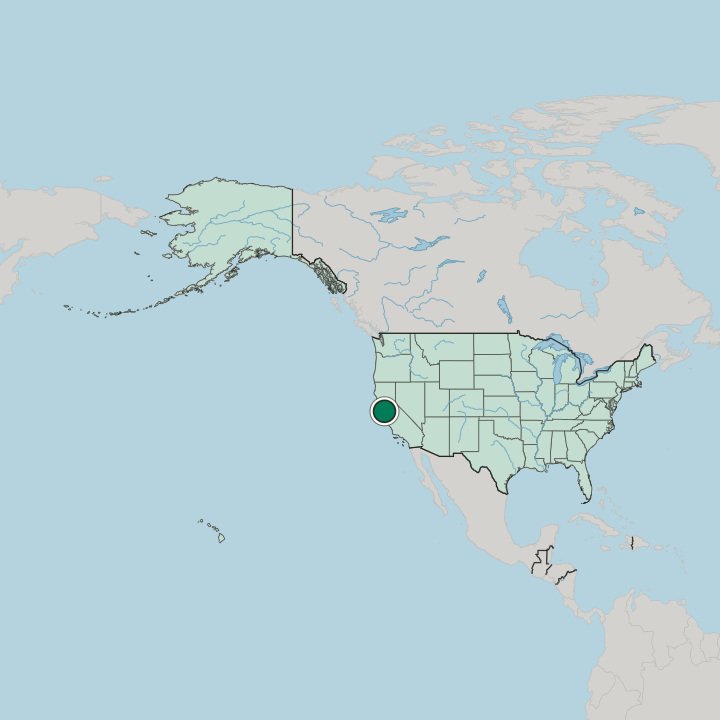
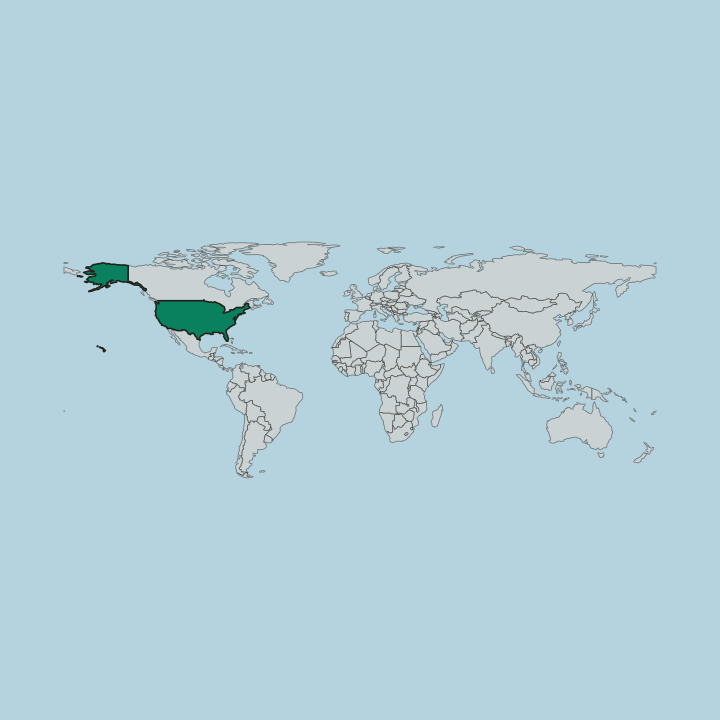
Oakland sits in the East Bay of the San Francisco Bay Area, on the eastern shore of the bay opposite San Francisco across the water. The city runs from the tidal estuary and the flats of the Port of Oakland up into the wooded slopes of the East Bay hills. Lake Merritt, a tidal lagoon left by the old marshes, lies near its centre and gives the downtown its green heart.
Alameda County spreads inland behind the ridgeline. The Pacific weather reaches the shore through the bay's gap in the coastal range.
What is the climate of Oakland?
Oakland has a mild Mediterranean climate, softened further by the bay water around it. Summers stay dry and warm, with the marine fog that pushes through the San Francisco Bay Area gap trimming the worst of the heat off the East Bay shore. Winters are cool and wet, the season's rain greening the East Bay hills before the dry months return.
Frost is rare on the flats. The lagoon of Lake Merritt seldom feels a cold snap, and the harbour works the year round.
How do you get to Oakland?
Oakland is one of the most reachable cities in the San Francisco Bay Area. Oakland International Airport sits south of the centre on the bay shore, handling West Coast and long-haul flights. Rail runs deep into the city: the regional metro links downtown to San Francisco under the bay, and long-distance trains call at the estuary station near Jack London Square.
Ferries cross the bay from the waterfront. Interstate highways ring the East Bay and feed the Port of Oakland, and buses reach the hill neighbourhoods above the flats.
Common questions
What is the best area to stay in Oakland?
Downtown: transit and the San Francisco ferry. Lake Merritt: parkland and lagoon mornings. Jack London Square: waterfront and the working port. Rockridge: leafy, residential slower stays.
Good for
More cities in California
Updated October 2026