United States · California
Where to Stay in Berkeley, California
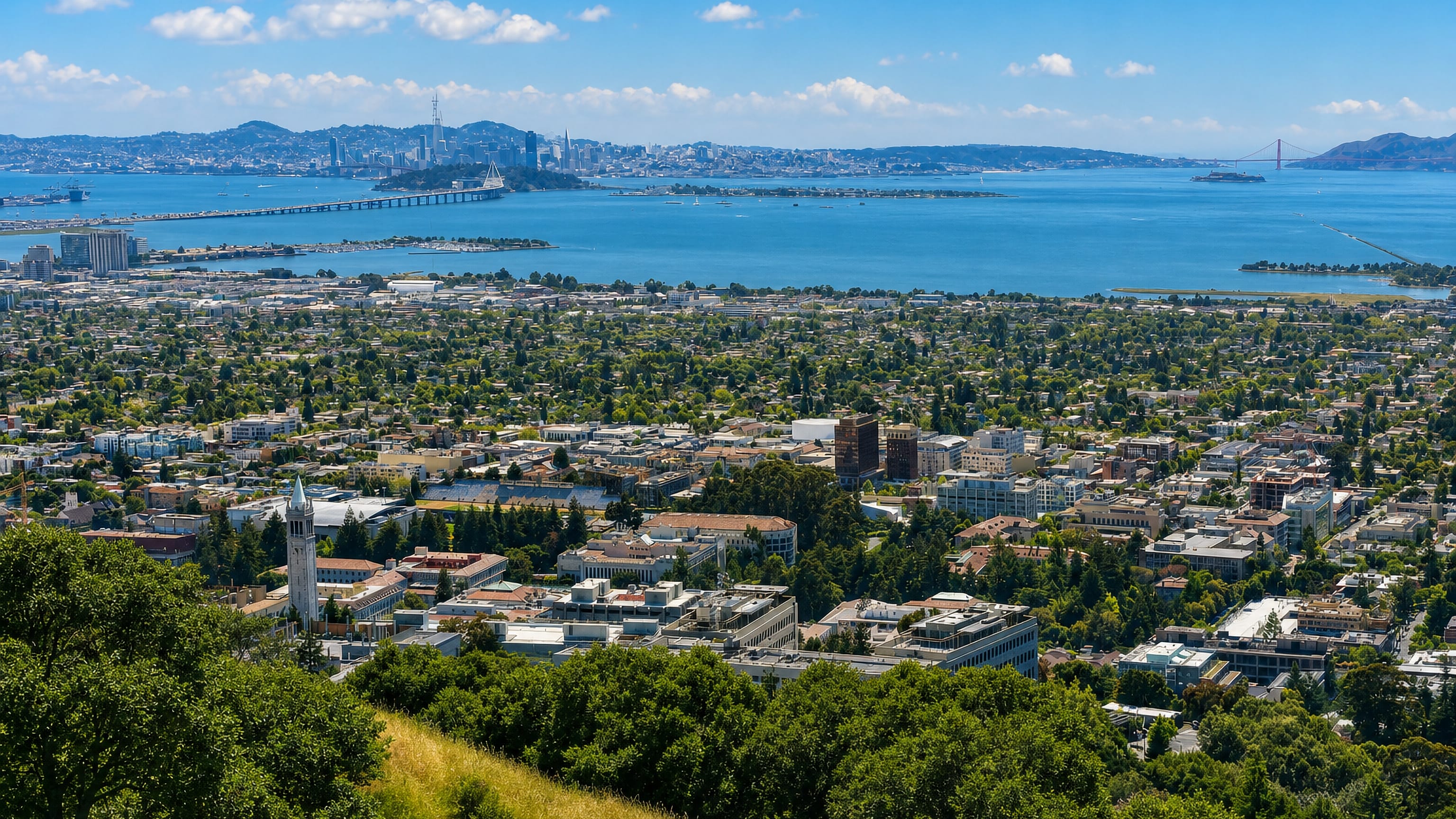
A campus bell tower marks the skyline of Berkeley, a university city in California, known for Sather Tower and the University of California.
Hotel links are affiliate links: booking through them may earn us a commission, at no extra cost to you. It never affects how places are ranked. How this works


Where to stay in Berkeley
Where the beds are, and what that means for the visit.
Berkeley arranges its lodging around the university and the shops that serve it, so your base depends on how close you want to be to the campus. The blocks nearest the University of California and Sather Tower put you in the thick of student life, within a short walk of lecture halls and the museums that ring the campus. Stay near the tower.
The streets by the Berkeley Art Museum and Pacific Film Archive suit visitors who came for culture, close to galleries, cinemas, and the cafes that fill the university's edge. Higher up, the ground toward the Lawrence Hall of Science and the hills trades the campus bustle for quiet views and easy reach of Tilden Park. Families often prefer these upper slopes, handy for the Tilden Park Merry-Go-Round and green space.
The campus rules the map. Because so much of Berkeley orbits the University of California, a base near the campus keeps you within walking reach of the museums, the towers, and the intellectual current that gives the city its name and its enduring character.
Find hotels in Berkeley
Direct booking searches for these neighbourhoods.
University campus edge
Short walk to Sather Tower and the lecture halls of the University of CaliforniaFind hotels in University campus edgeCulture-seekers after galleries and cinemaArt Museum quarter
Close to the Berkeley Art Museum and Pacific Film Archive and the campus cafesFind hotels in Art Museum quarterFamilies wanting quiet views and green spaceUpper Berkeley slopes
Near the Lawrence Hall of Science and the Tilden Park Merry-Go-RoundFind hotels in Upper Berkeley slopesHotel links are affiliate links: booking through them may earn us a commission, at no extra cost to you. It never affects how places are ranked. How this works
Things to do in Berkeley
Ranked by global recognition; descriptions from Wikidata (CC0).
Museums & Galleries
3- Berkeley Art Museum and Pacific Film Archive
- Magnes Collection of Jewish Art and Life
- Phoebe A. Hearst Museum of Anthropology
Churches & Religious Sites
5- First Church of Christ, Scientist Heritage
- St. John's Presbyterian Church Heritage
- First Unitarian Church Heritage
- Episcopal Church of the Good Shepherd Heritage
- South Berkeley Community Church Heritage
Stadiums & Sports
3- Evans Diamond
- California Field
- Levine-Fricke Field
Landmarks & Notable Places
3- Sather Tower Heritage
- Donald and Helen Olsen House Heritage
- Peterson House Heritage
worth knowingacross 4 categories in Berkeley
About Berkeley
What is Berkeley known for?
Berkeley is a California city known above all for the University of California and the intellectual life around it. The campus bell tower, Sather Tower, rises over a city of scholars. Learning shapes the town.
Its many museums draw from the university, among them the Berkeley Art Museum and Pacific Film Archive and the Phoebe A. Hearst Museum of Anthropology, while the Lawrence Hall of Science looks out over the whole city from the slopes above. The city carries the name of the philosopher George Berkeley.
What are the main landmarks in Berkeley?
Berkeley's landmarks cluster around the University of California and the hills above it. Sather Tower rises tallest, the campus bell tower visible for miles. The rest of Berkeley's landmarks are museums.
The Berkeley Art Museum and Pacific Film Archive, the Phoebe A. Hearst Museum of Anthropology, and the Lawrence Hall of Science each draw visitors, while the older First Church of Christ, Scientist and the hillside Tilden Park Merry-Go-Round add landmarks beyond the campus core.
What is the history of Berkeley?
Berkeley took shape in 1866, its name chosen to honour the philosopher George Berkeley. The choice fit its future. Within a few years the new University of California settled here, and the town grew up around the campus as scholars, students, and their families arrived to fill the streets below the hills.
The nineteenth-century city built the institutions that still define it. Sather Tower rose over the campus as its landmark, and museums such as the Phoebe A. Hearst Museum of Anthropology gathered the collections that a research university draws to itself. Through the twentieth century Berkeley became a name known far beyond California, a centre of learning and of the movements that grew from its campus.
The Lawrence Hall of Science carried its scientific reputation into the hills. From a settlement named for a philosopher, the town became a California city whose history is inseparable from the university that shares its streets and its enduring intellectual life.
Where is Berkeley?
Berkeley sits on sloping ground in California, rising from a flat lowland toward the hills at its back. The land climbs steadily eastward. The University of California and Sather Tower stand on the mid-slope, while the streets fall away below and the ground rises sharply above toward the parkland at the crest.
Higher still, the Lawrence Hall of Science looks out from the upper slopes, with the green ridge of Tilden Park spreading across the heights behind. This tilted setting gives the city its stepped streets and its long views across California.
What is the climate of Berkeley?
Berkeley has the mild, dry-summer climate typical of coastal California. Its seasons are gentle. Summers stay warm and rainless, often cooled by fog that drifts in over the lowland, while winters turn cool and wet with the rains that green the hills above the city.
Frost is rare on the slopes. The nearby water and the rising ground keep temperatures even through the year, giving the city a temperate character that draws students and scholars alike to its campus.
How do you get to Berkeley?
Berkeley is reached by road and rail from across the California lowland. Highways skirt the flat ground below the city, linking it with the metros around the bay. Regional trains stop here, carrying students and commuters to the campus and the surrounding neighbourhoods.
The main regional airports lie a short drive away. Once in town, the campus core around Sather Tower and the University of California is easily walked, though the steep hills reward transit or a car.
Common questions
What is the best area to stay in Berkeley?
University campus edge: Visitors wanting student life at the door. Art Museum quarter: Culture-seekers after galleries and cinema. Upper Berkeley slopes: Families wanting quiet views and green space.
Good for
More cities in California
Updated October 2026