United States · California
Where to Stay in Moreno Valley, California
Moreno Valley was incorporated in 1984, a Riverside County city in the Inland Empire and the second-largest in the county.
Hotel links are affiliate links: booking through them may earn us a commission, at no extra cost to you. It never affects how places are ranked. How this works


Where to stay in Moreno Valley
Where the beds are, and what that means for the visit.
The city is unusually large on the ground. Moreno Valley covers roughly 133 square kilometres, which is a lot of Riverside County to spread a single street grid across, and it means a bed at one end of the city is a genuine drive from the other. Pick the end first.
The March Field Air Museum anchors one side of that decision, and a room within reach of it turns the museum into a morning rather than an expedition. History sits at the other end. The San Bernardino de Sena Estancia and Benedict Castle give the city two names older than its 1984 incorporation, and beds chosen near them suit you if the trip is about what stood here before the grid arrived.
Riverside County spreads out around it. The Inland Empire is a driving region, so a stay in Moreno Valley usually means a car, and the Entomology Research Museum and the Saint Andrew Orthodox Christian Church are stops on a route rather than places to walk to. The metropolitan pull runs two ways.
Moreno Valley belongs to the Riverside-San Bernardino metropolitan area and to the greater Los Angeles metropolitan area at the same time, which makes it a base for either, at the cost of being the centre of neither.
Find hotels in Moreno Valley
Direct booking searches for these neighbourhoods.
Around the March Field Air Museum
The aviation end of Moreno Valley, where the museum is a short run rather than a crossing of the city's full width.Find hotels in Around the March Field Air MuseumStays near Benedict Castle and the older registerThe Benedict Castle side
The part of the city where Benedict Castle and the San Bernardino de Sena Estancia stand for what preceded the 1984 grid. Rooms are few around here — worth securing early.Find hotels in The Benedict Castle sideDrivers using Moreno Valley as an Inland Empire baseThe Riverside County road belt
Beds on the routes out towards the rest of Riverside County and the Riverside–San Bernardino metropolitan area, taken for the road rather than the street.Find hotels in The Riverside County road beltHotel links are affiliate links: booking through them may earn us a commission, at no extra cost to you. It never affects how places are ranked. How this works
About Moreno Valley
The Inland Empire frames it.
What is Moreno Valley known for?
Moreno Valley is the second-largest city in Riverside County and part of the Riverside-San Bernardino metropolitan area, which itself sits inside the greater Los Angeles metropolitan area. Aviation supplies the best-known name. The March Field Air Museum is the register's most specific draw, while the San Bernardino de Sena Estancia and Benedict Castle carry its older end.
What are the main landmarks in Moreno Valley?
Nine entries on the register. The March Field Air Museum heads the list, with the San Bernardino de Sena Estancia and Benedict Castle behind it, and the Entomology Research Museum adding a specialist collection that most cities of this size do not carry. Houses fill the remainder.
The William Childs House appears twice on the register, and the Saint Andrew Orthodox Christian Church is the one congregation among a list otherwise made of museums and private buildings.
What is the history of Moreno Valley?
Incorporation is recent. Moreno Valley became a city in 1984, which is a recent date for a city of its size and places its municipal history well inside living memory. The ground was older.
The San Bernardino de Sena Estancia records a Spanish-era use of this part of Riverside County, and Benedict Castle and the William Childs House stand for what was built here before the city had a name of its own. Aviation shaped the middle of the story. The March Field Air Museum keeps the record of the airfield it is named for, and it is the reason a city incorporated in 1984 carries an aviation name on its register.
Research left a mark too. The Entomology Research Museum belongs to the same institutional layer, and the Saint Andrew Orthodox Christian Church records a congregation that put down roots in the Riverside-San Bernardino metropolitan area. Growth explains the rest.
Moreno Valley became the second-largest city in Riverside County and one of the centres of the Inland Empire within a few decades of incorporation, and the 133 square kilometres it covers is the physical record of that. The two Los Angeles-facing labels came with it. Membership of the greater Los Angeles metropolitan area put Moreno Valley inside a regional economy that reaches far past Riverside County, and the city's landmark register still reads local while its address reads metropolitan.
Where is Moreno Valley?
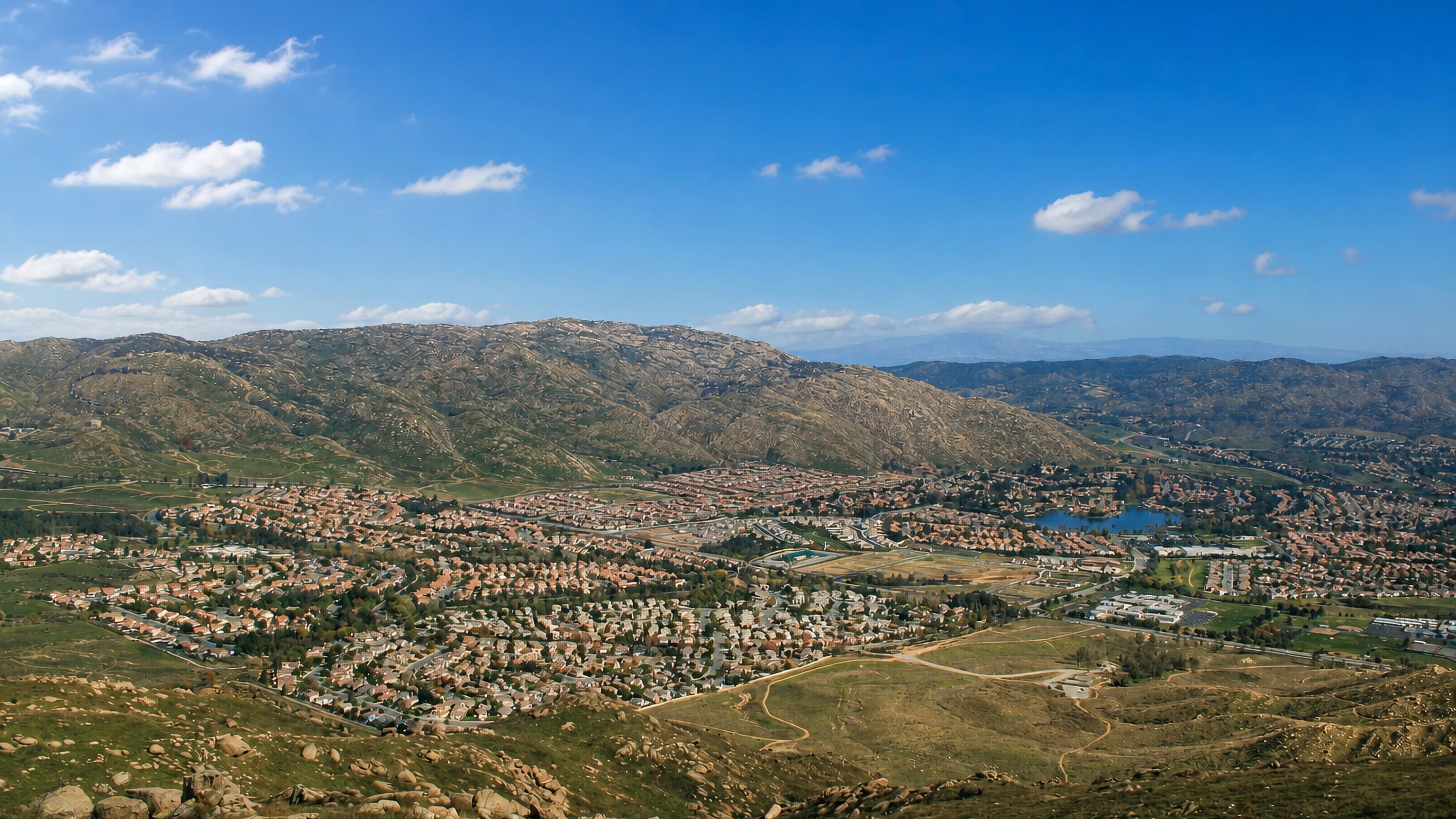
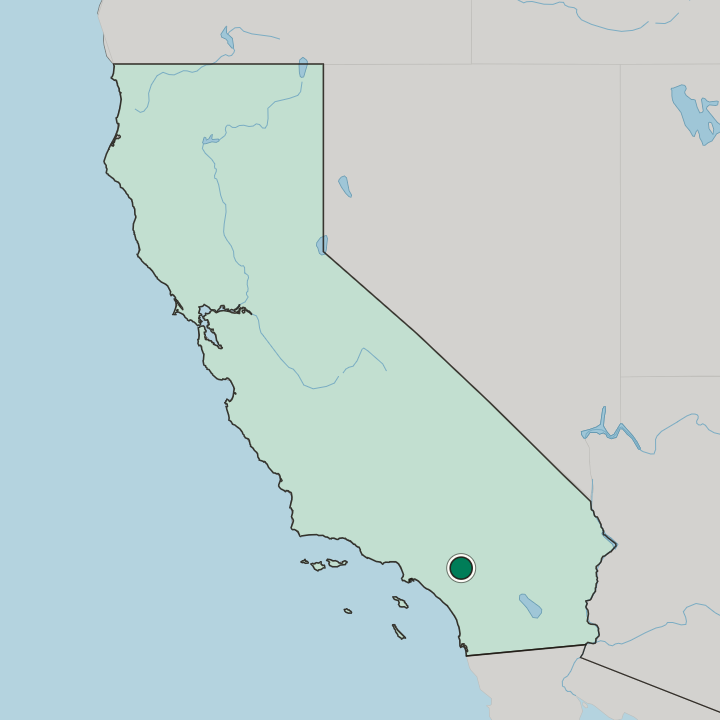
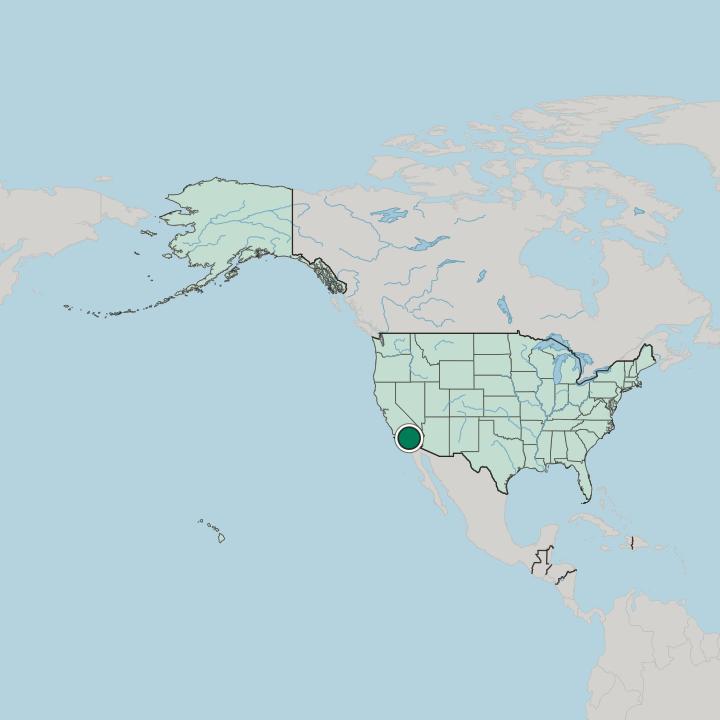
This is a wide city. Moreno Valley occupies a broad stretch of Southern California inland from the coast, inside the Inland Empire and within the Riverside-San Bernardino metropolitan area, on ground open enough to carry a city of that footprint. It covers 133 square kilometres.
The city spreads wide enough that the distance between the March Field Air Museum and the far side of the grid is a drive rather than a walk.
What is the climate of Moreno Valley?
Nothing tempers the heat here. The Inland Empire sits away from any moderating water, which leaves Moreno Valley with the hard version of a subtropical year: a long hot stretch and a short cool one. Timing beats gear here.
An air museum is an outdoor proposition for at least part of a visit, which matters more in the Inland Empire than it would nearer the coast, and the walking half of any day here belongs to the morning.
How do you get to Moreno Valley?
Roads, and only roads. Moreno Valley sits inside the Riverside-San Bernardino metropolitan area, and the approach is a drive across the Inland Empire from Riverside County's other centres or from the greater Los Angeles metropolitan area. The city's size matters on arrival.
A destination inside 133 square kilometres is worth checking before setting out, because the March Field Air Museum, Benedict Castle and the Entomology Research Museum are not neighbours in any walkable sense.
Common questions
What is the best area to stay in Moreno Valley?
Around the March Field Air Museum: Visits centred on the March Field Air Museum. The Benedict Castle side: Stays near Benedict Castle and the older register. The Riverside County road belt: Drivers using Moreno Valley as an Inland Empire base.
Good for
More cities in California
Updated October 2026