United States · California
Where to Stay in Pleasanton, California
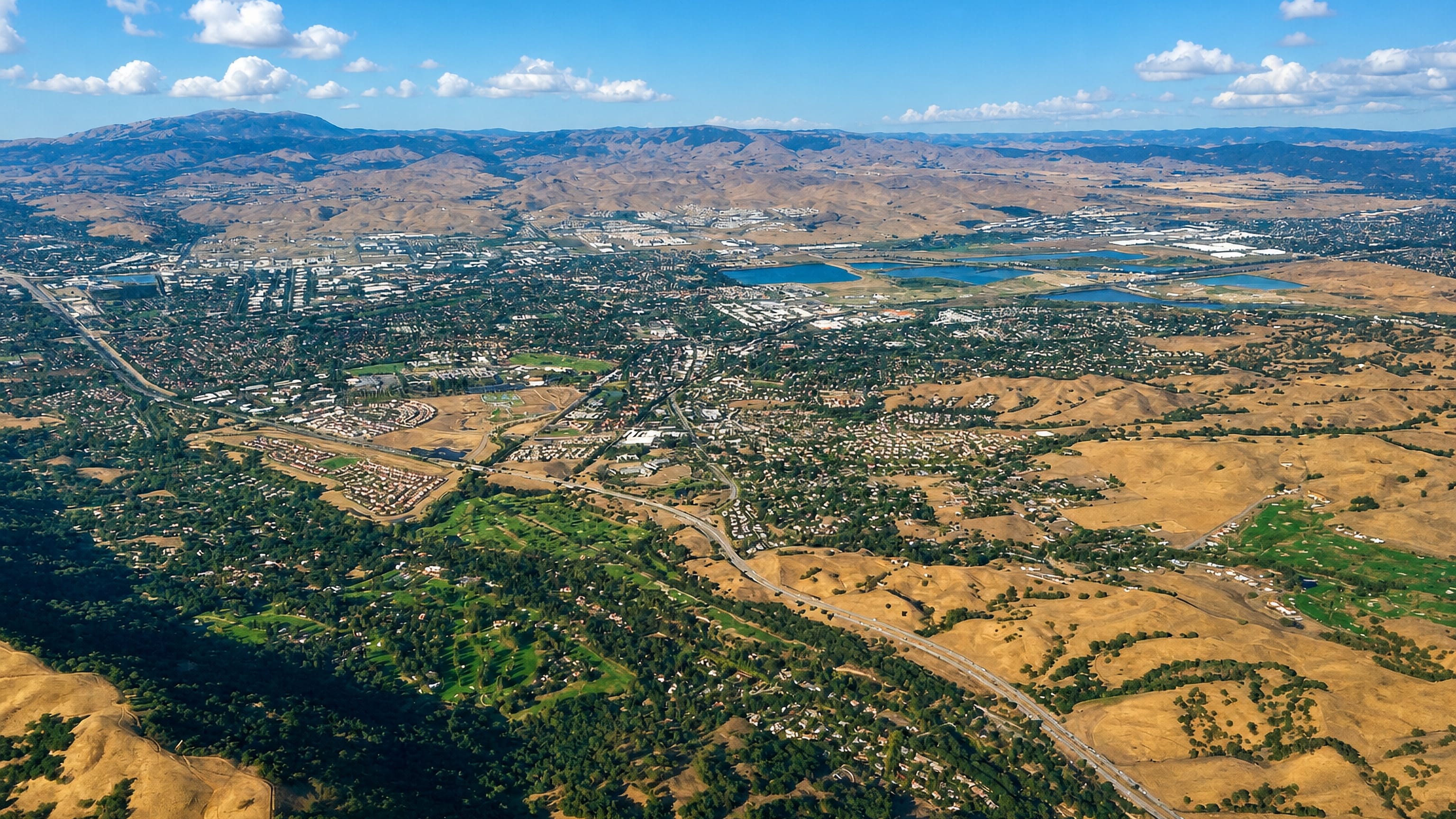
Pleasanton lies in the Amador Valley of Alameda County, an affluent East Bay suburb ringed by oak-covered hills and vineyard country.
Hotel links are affiliate links: booking through them may earn us a commission, at no extra cost to you. It never affects how places are ranked. How this works


Where to stay in Pleasanton
Where visitors usually base themselves, and why.
Two sides split the choice here. The old commercial street carries the restaurants and the preserved frontages, and a room on those blocks puts the Heathcote-MacKenzie House and the town's other early survivors within a few minutes on foot. Amador Pavilion draws its own traffic, and staying near it trades the restaurant blocks for easier parking and a quicker exit toward the Golden Gate Railroad Museum.
Cornerstone Fellowship and Rock Bible Church stand out this way too. Old St. Raymond's Church sits apart from the commercial blocks and gives that side of town its landmark. Beyond the built edge the Amador Valley runs into oak-covered hills, and vineyards take over the countryside where rooms grow scarce and the roads narrow.
You trade walking for driving. That suits anyone whose plan is the wine country rather than the restaurants, since Pleasanton sits in the outer East Bay and the rest of the San Francisco Bay Area stays within reach from the valley floor. Alameda County holds the whole of it.
The valley is small enough that the drive between the restaurant blocks and the vineyards takes only a few minutes, so neither base cuts off the other.
Find hotels in Pleasanton
Direct booking searches for these neighbourhoods.
The old commercial street
Pleasanton's historic district keeps its shopfronts in use, and the Heathcote-MacKenzie House stands close enough to reach on the same walk.Find hotels in The old commercial streetVisitors timing a stay around what is on at Amador PavilionAround Amador Pavilion
Amador Pavilion and the Golden Gate Railroad Museum pull traffic to this side, where parking comes easier than on the restaurant blocks.Find hotels in Around Amador PavilionDrivers whose plan is the vineyards under the Amador Valley ridgelinesThe oak hills and vineyard edge
Rooms grow scarce where the Amador Valley climbs into oak cover, but the vineyards and the narrow country roads start immediately. Lodging is scarce in this area; reserve in advance.Find hotels in The oak hills and vineyard edgeHotel links are affiliate links: booking through them may earn us a commission, at no extra cost to you. It never affects how places are ranked. How this works
Things to do in Pleasanton
Ranked by global recognition; descriptions from Wikidata (CC0).
Museums & Galleries
1- Golden Gate Railroad Museum
Churches & Religious Sites
2- Cornerstone Fellowship
- Rock Bible Church
Stadiums & Sports
1- Amador Pavilion
Landmarks & Notable Places
2- Heathcote-MacKenzie House Heritage
- John W. Kottinger Adobe Barn Heritage
worth knowingacross 4 categories in Pleasanton
About Pleasanton
What is Pleasanton known for?
Pleasanton reads as an affluent suburb of the East Bay, with upscale restaurants along its old main blocks and historic districts kept in ordinary use. Vineyards begin past the edge. Oak-covered hills close the Amador Valley on both sides, and the Golden Gate Railroad Museum, Amador Pavilion, and Old St. Raymond's Church give the town its fixed points.
Alameda County holds it, and the wine country beyond the ridgelines is part of what draws people out here.
What are the main landmarks in Pleasanton?
Old St. Raymond's Church sits apart from the commercial blocks, a plain early building the town kept. Amador Pavilion handles the crowds. The Golden Gate Railroad Museum covers the railway side, and the Heathcote-MacKenzie House survives from the valley's farming years alongside the adobe barn and houses raised beside it.
The D. J. Murphy House and the John W. Kottinger Adobe Barn carry the earliest of that building. Cornerstone Fellowship and Rock Bible Church stand among the newer work.
What is the history of Pleasanton?
The valley came first. Farming worked the flat ground of the Amador Valley long before the East Bay reached this far out, and the John W. Kottinger Adobe Barn survives from that period as the plainest structure the town has kept. Adobe gave way to timber and brick.
The D. J. Murphy House and the Heathcote-MacKenzie House belong to the settled decades that followed, when a commercial street formed and the frontages now treated as a historic district went up along it. Old St. Raymond's Church stands from the same stretch of years. Alameda County filled in around the valley as the San Francisco Bay Area spread outward, and Pleasanton ended up an affluent suburb on the outer edge of the East Bay rather than a farm town.
Vineyards held on in the countryside. Newer institutions arrived with the growth: Cornerstone Fellowship and Rock Bible Church draw from across the Amador Valley, Amador Pavilion serves the events that come with it, and the Golden Gate Railroad Museum keeps the railway record. Upscale restaurants followed the money.
What is left of the older town survives inside a walkable centre, so the adobe barn, the early houses, and the church sit within the same few blocks as the newer trade.
Where is Pleasanton?
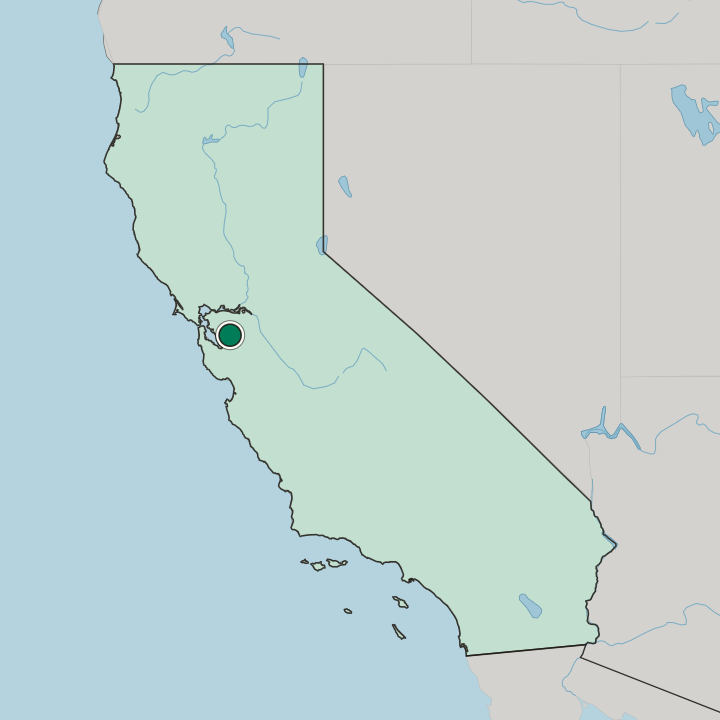
Pleasanton occupies the Amador Valley in Alameda County, ringed by hills under oak cover on the valley's outer sides. The floor is flat and open. This is the outer East Bay, far enough from the water that the built-up parts of the San Francisco Bay Area give way to vineyards and open hill country within a short drive of the commercial street.
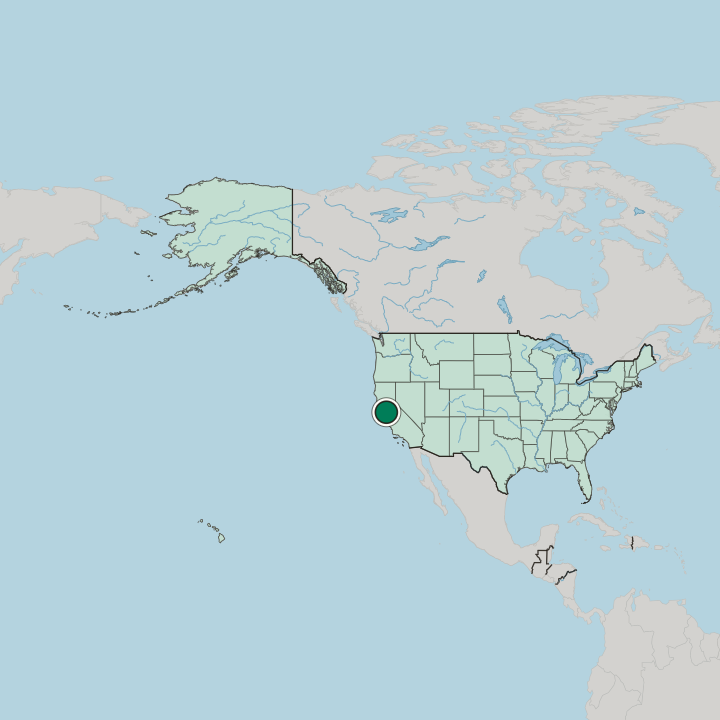
Within California this is suburban valley ground, held between ridgelines rather than opening onto the bay.
What is the climate of Pleasanton?
Summers run hot on the valley floor. The Amador Valley sits back from the water, so the marine influence that cools the inner East Bay arrives weakened here and the Mediterranean pattern of hot summers and mild winters comes through plainly. Winters stay fairly mild.
That combination is what puts vineyards in the countryside around the town, with oak cover holding the hills through the dry half of the year.
How do you get to Pleasanton?
Pleasanton sits at the outer end of the East Bay, so arrivals come overland from the rest of the San Francisco Bay Area, crossing into the Amador Valley through the hills that ring it. Driving is the normal way in. The valley floor is flat and the distances short, which is why the commercial street, Amador Pavilion, and the Golden Gate Railroad Museum can all be reached without much thought about traffic.
Alameda County roads carry the rest, linking the town with the vineyards and oak hills beyond the valley's rim.
Common questions
What is the best area to stay in Pleasanton?
The old commercial street: Diners working through the upscale restaurants of the preserved frontages. Around Amador Pavilion: Visitors timing a stay around what is on at Amador Pavilion. The oak hills and vineyard edge: Drivers whose plan is the vineyards under the Amador Valley ridgelines.
Good for
More cities in California
Updated October 2026