United States · California
Where to Stay in Santa Clara, California
Santa Clara is a city in California, United States, founded in 1777 and known for Mission Santa Clara de Asís and the Triton Museum of Art.
Hotel links are affiliate links: booking through them may earn us a commission, at no extra cost to you. It never affects how places are ranked. How this works


Where to stay in Santa Clara
How the choice of base plays out on the ground.
Santa Clara sorts into stay areas set around the mission and the campus. The university district near Mission Santa Clara de Asís and the De Saisset Museum suits travelers who want the founding landmark and the galleries within a short walk of the door. Base here for the mission.
A short way off, the streets around the Triton Museum of Art give a walkable, art-minded base near the civic center and its gardens. Visitors drawn to the city's older heritage do well nearer the Charles Copeland Morse House and the Andrew J. Landrum House, where the surviving Victorian homes line the quieter residential lanes. The rail-history side by the South Bay Historical Railroad Society works for those pairing the depot collection with a calmer base.
Each pocket trades a different asset for its quiet. Choose the bed by the itinerary, and the flat street grid keeps the city easy to cross.
Find hotels in Santa Clara
Direct booking searches for these neighbourhoods.
University district by Mission Santa Clara de Asís
Mission Santa Clara de Asís and the De Saisset Museum sit within a short walk, keeping the founding landmark and galleries at the door.Find hotels in University district by Mission Santa Clara de AsísArt-minded stays near the gardensTriton Museum civic center
The streets around the Triton Museum of Art give a walkable base near the civic center and its landscaped grounds.Find hotels in Triton Museum civic centerTravelers drawn to older residential heritageVictorian heritage lanes
The quieter lanes near the Charles Copeland Morse House and Andrew J. Landrum House hold the surviving Victorian homes.Find hotels in Victorian heritage lanesHotel links are affiliate links: booking through them may earn us a commission, at no extra cost to you. It never affects how places are ranked. How this works
Things to do in Santa Clara
Ranked by global recognition; descriptions from Wikidata (CC0).
Museums & Galleries
3- De Saisset Museum
- Triton Museum of Art
- South Bay Historical Railroad Society
Churches & Religious Sites
3- Mission Santa Clara de Asís
- Coachella Valley Church
- Oratory of Our Mother of Perpetual Help Chapel
Castles & Historic Sites
1- Mission Santa Clara de Asis Historical Monument
Landmarks & Notable Places
2- Charles Copeland Morse House Heritage
- Andrew J. Landrum House Heritage
worth knowingacross 4 categories in Santa Clara
About Santa Clara
What is Santa Clara known for?
Santa Clara is known for its Spanish mission and its university museums. Mission Santa Clara de Asís stands as the founding heart of the city, one of the earliest missions on this stretch of the coast. Museums cluster around the campus.
The Triton Museum of Art holds the regional art collection, while the De Saisset Museum keeps the university's art and history galleries on the mission grounds, and the Oratory of Our Mother of Perpetual Help Chapel adds a small devotional landmark nearby.
What are the main landmarks in Santa Clara?
Santa Clara centers its landmarks on the old mission grounds. Mission Santa Clara de Asís is the signature site, the founding church rebuilt on the university campus and marked by the Mission Santa Clara de Asis Historical Monument. Museums stand close by.
The Triton Museum of Art and the De Saisset Museum hold the regional and university collections, while the South Bay Historical Railroad Society keeps the local rail record. The Charles Copeland Morse House and the Santa Clara Campaign Treaty Site mark the older civic ground nearby.
What is the history of Santa Clara?
Santa Clara began in 1777 with the founding of Mission Santa Clara de Asís in what became California. The mission came first. Its church, rebuilt across the generations on the same grounds, gave the settlement its name and its earliest streets, and the Santa Clara Campaign Treaty Site records an event from those early frontier years before American statehood reshaped the town.
Farming and a college campus then shaped the growing town. Victorian families built the fine homes that the Charles Copeland Morse House and the Andrew J. Landrum House still preserve along the old lanes, while the university rose on the mission land and drew scholars to the valley. Learning and collecting followed.
The De Saisset Museum opened on the campus, the Triton Museum of Art gathered the regional collection at the civic center, and the South Bay Historical Railroad Society later kept the rail heritage of the valley within United States. Each era left a building still standing near the mission core.
Where is Santa Clara?
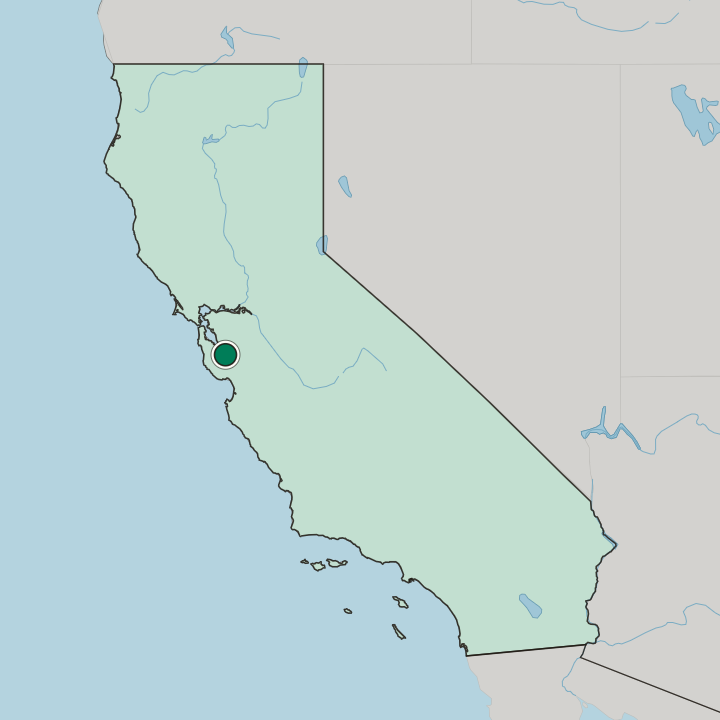
Santa Clara spreads across a flat valley floor in California, United States, covering roughly 48 square kilometres of level ground. The setting is low and temperate. Its historic core gathers around the mission, so Mission Santa Clara de Asís, the De Saisset Museum, and the Triton Museum of Art all fall within a walkable band.
The regular street grid then runs out across the plain toward the residential lanes near the Charles Copeland Morse House.
What is the climate of Santa Clara?
Santa Clara has a mild, dry-summer climate typical of the inland valleys of California. Summers run warm and rainless. Long stretches of clear, dry weather hold from late spring through autumn, so the open mission grounds around Mission Santa Clara de Asís stay usable across most of the year.
Winters turn cool and briefly wet, and the indoor galleries of the Triton Museum of Art and the De Saisset Museum carry the off-season visiting.
How do you get to Santa Clara?
Santa Clara sits at a rail and freeway junction on the flat valley floor of California, so most visitors arrive by car or by train. Regional lines stop in the city. From the station, the campus core stays walkable, with Mission Santa Clara de Asís, the De Saisset Museum, and the Triton Museum of Art within a short circuit.
Drivers use the valley freeways to reach the residential grid and the South Bay Historical Railroad Society.
Common questions
What is the best area to stay in Santa Clara?
University district by Mission Santa Clara de Asís: Mission and campus stays within a short walk. Triton Museum civic center: Art-minded stays near the gardens. Victorian heritage lanes: Travelers drawn to older residential heritage.
Good for
More cities in California
Updated October 2026